Why Do Lights Flicker in RAK Homes | Causes and Fixes

Why Do Lights Flicker? Lights flicker because of an unstable electrical connection somewhere between your switchboard and the bulb, most often a loose fitting, a voltage fluctuation from the supply or an overloaded circuit. In most Ras Al Khaimah homes, the cause is minor and easy to fix. In some cases, though, flickering is an early warning sign of faulty wiring that needs a licensed electrician before it becomes a fire risk.
Ras Al Khaimah grid runs on Etihad Water and Electricity (EtihadWE) and like any supply network, it experiences small voltage swings during peak demand hours, particularly in summer when air conditioning load across the emirate spikes. According to EtihadWE own service standards, residential voltage is expected to stay within a narrow tolerance band, so flickering that happens only during the hottest part of the day often points to supply side fluctuation rather than a fault inside your home.
This guide walks through the seven most common causes of flickering lights, explains when flickering is harmless versus dangerous and tells you exactly what to check yourself before calling in a professional. If the checks below do not resolve the issue, our Electrical Services team in Ras Al Khaimah can diagnose and fix the wiring fault safely.
What Does It Mean When Your Lights Flicker?
Flickering lights mean the electrical current reaching the bulb is briefly interrupted or unstable, causing the light to blink, dim or pulse instead of glowing steadily. On its own, an occasional flicker is not an emergency, but if it happens often, in a pattern or across multiple rooms at once, it usually points to a problem worth investigating rather than ignoring.
Normal Voltage Fluctuation vs a Warning Sign
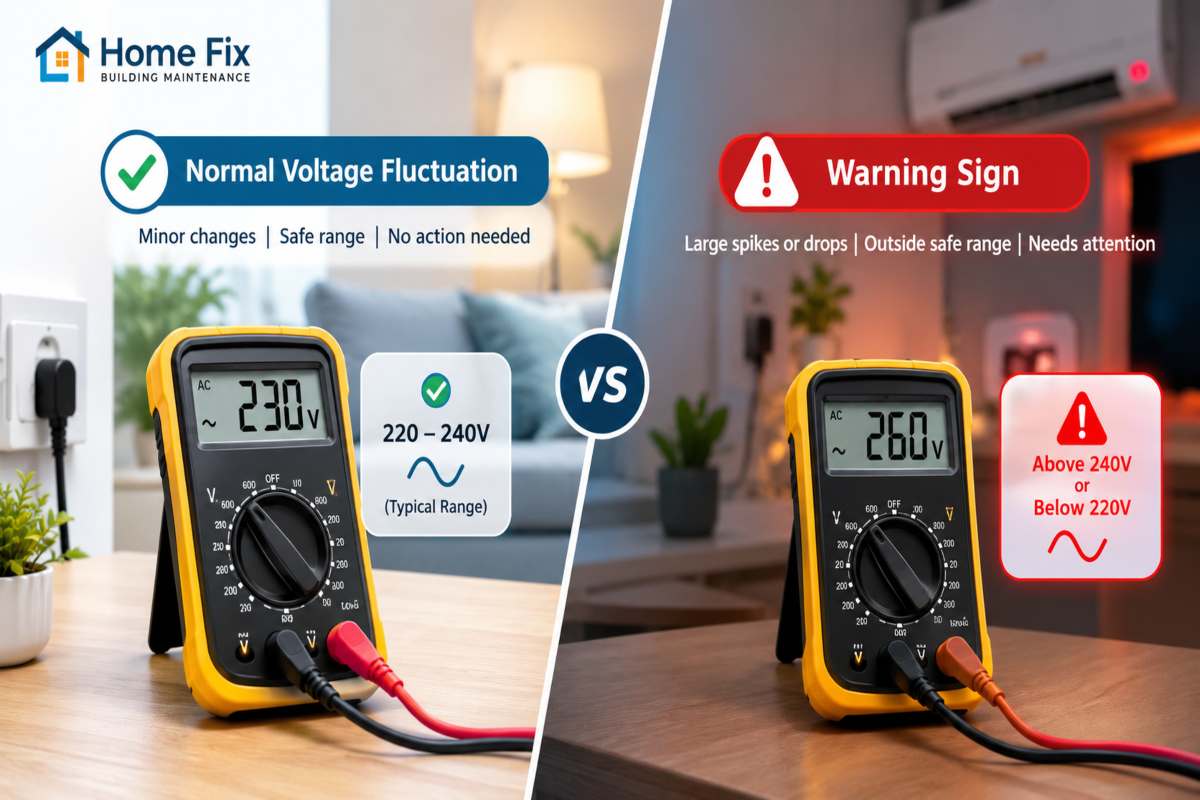
A single, brief flicker, especially right when a large appliance like your AC compressor or washing machine kicks on, is usually normal. That is simply the extra startup current pulling power away from the lighting circuit for a split second and it settles almost immediately in a healthy electrical system. It becomes a warning sign, though, when the flickering repeats constantly, affects several rooms rather than one fixture or is accompanied by a burning smell, a warm switch plate or a faint buzzing sound. Those signs point to a wiring fault or an overloaded circuit rather than a normal power draw and they should not wait for a convenient time to check.
Flickering vs Dimming vs Pulsing, What is the Difference?
These three terms describe different electrical behaviors and telling them apart helps narrow down the cause. Flickering is a rapid, brief on off blink, typically caused by a failing bulb or a loose connection. Dimming is a slower, sustained drop in brightness across the whole home, usually tied to voltage sag from the utility supply or an undersized electrical panel struggling under heavy load.
Pulsing sits in between, a rhythmic, repeating rise and fall in brightness, often linked to a faulty dimmer switch or an LED driver that is incompatible with your current dimming hardware. Identifying which one you are seeing is the fastest way to know whether the fix is a five minute bulb swap or a job for a licensed electrician.
The Most Common Causes of Flickering Lights
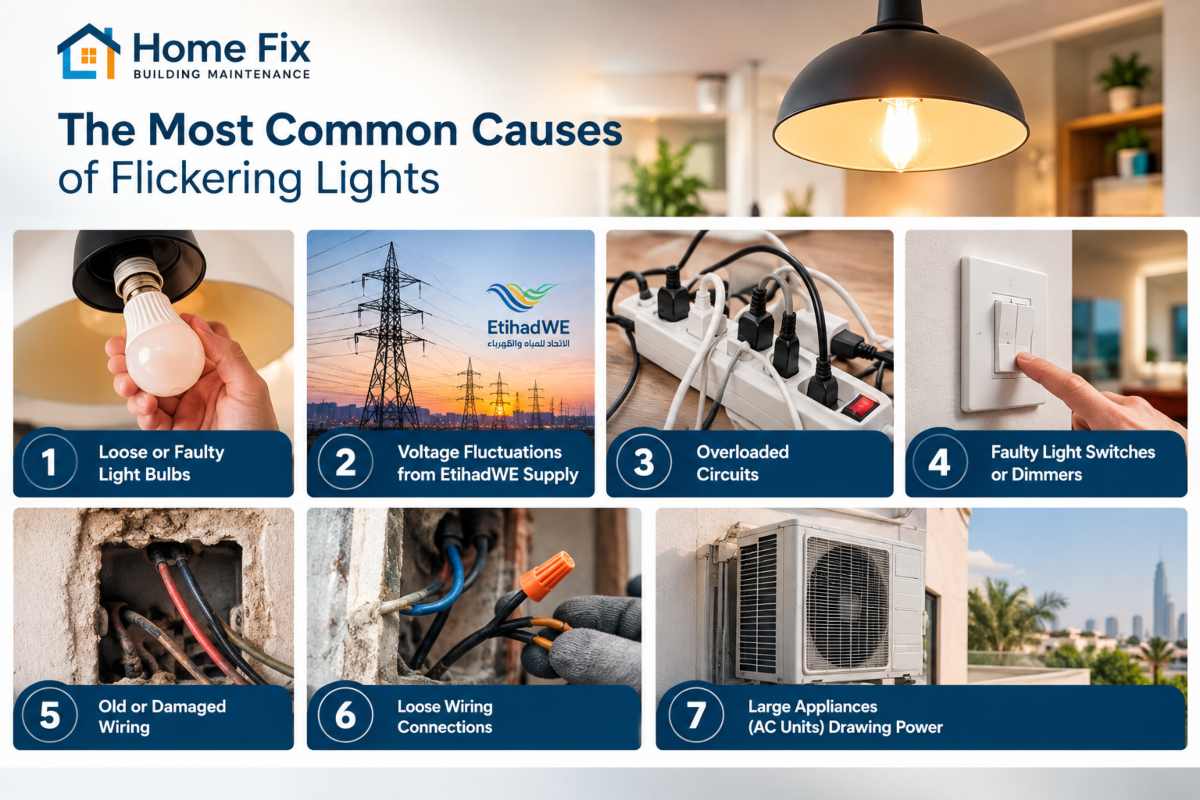
Flickering lights in a Ras Al Khaimah home almost always trace back to one of seven causes: a loose bulb, unstable supply voltage, an overloaded circuit, a faulty switch, aging wiring, a loose connection or a large appliance pulling power. Working through them in order, starting with the simplest, is the fastest way to find the actual fault.
Loose or Faulty Light Bulbs
The single most common cause of a flickering light is also the easiest to fix: a bulb that isn’t screwed in tightly enough to maintain a steady connection with the socket. This is especially common with LED bulbs, which are more sensitive to loose contact than older incandescent bulbs were. Before assuming anything more serious, turn off the power, tighten the bulb fully and if the flickering continues, swap it for a new bulb of the same wattage, a faulty or aging bulb nearing the end of its life often flickers as one of its final symptoms.
Voltage Fluctuations from EtihadWE Supply
Ras Al Khaimah homes run on power supplied by Etihad Water and Electricity (EtihadWE) and like any grid, it experiences small voltage swings during periods of high demand, most noticeably on hot afternoons when air conditioning load spikes across the emirate. This kind of fluctuation typically causes brief, house wide flickering rather than a problem isolated to one fixture and it is rarely something you can fix from inside the home. If flickering consistently lines up with peak heat hours, the fluctuation is coming from the supply side, not your internal wiring.
Overloaded Circuits
Every circuit in your home is rated to carry a specific electrical load and once too many high draw devices run on the same circuit at once, the lights on that circuit will flicker or dim under the strain. This is common in older RAK villas where kitchens, laundry rooms or home offices have been added onto circuits that were not originally designed for that much equipment. If the flickering happens only when a specific appliance turns on, that circuit is likely carrying more than it should.
Faulty Light Switches or Dimmers
A worn out switch or an incompatible dimmer is a frequent and often overlooked cause of flickering. Older dimmer switches were not built for LED bulbs and pairing the two can cause a visible pulse or flicker even when everything else in the circuit is working correctly. Loose internal contacts inside a switch, from age, heat or simple wear, produce the same symptom and the flickering is typically isolated to whatever that specific switch controls.
Old or Damaged Wiring
Wiring that is aged, corroded or was installed to outdated standards can develop resistance points that cause flickering and in a home over 15–20 years old, this is worth ruling out early. Deteriorating insulation, rodent damage or connections that have loosened over years of heat exposure all fall into this category and none of them are safe to diagnose without opening a wall or a panel. This is one of the few causes on this list that always calls for a professional inspection, our guide on electrical wiring covers the warning signs of aging wiring in more detail.
Loose Wiring Connections
Distinct from wiring that is simply old, a loose connection can happen in wiring of any age, at a junction box, behind a switch plate or inside the panel itself, usually from vibration, thermal expansion and contraction or an installation that was not tightened to spec. A loose connection creates intermittent contact, which shows up as flickering that seems random and unpredictable rather than tied to any obvious trigger. It is also one of the more serious causes on this list, since a loose connection under load generates heat and is a recognized contributor to electrical fires.
Large Appliances (AC Units) Drawing Power
Air conditioning units are the single biggest power draw in most Ras Al Khaimah homes and the moment a compressor kicks on, it pulls a surge of startup current that can cause a brief, harmless dip or flicker in nearby lights. This is completely normal in a healthy electrical system and typically lasts less than a second. It only becomes a concern if the flicker is severe, lingers longer than a moment or happens even when the AC has been running steadily, both of which suggest the circuit supplying the AC is undersized or under strain.
Why Does One Light Bulb Flicker While Others Do not?
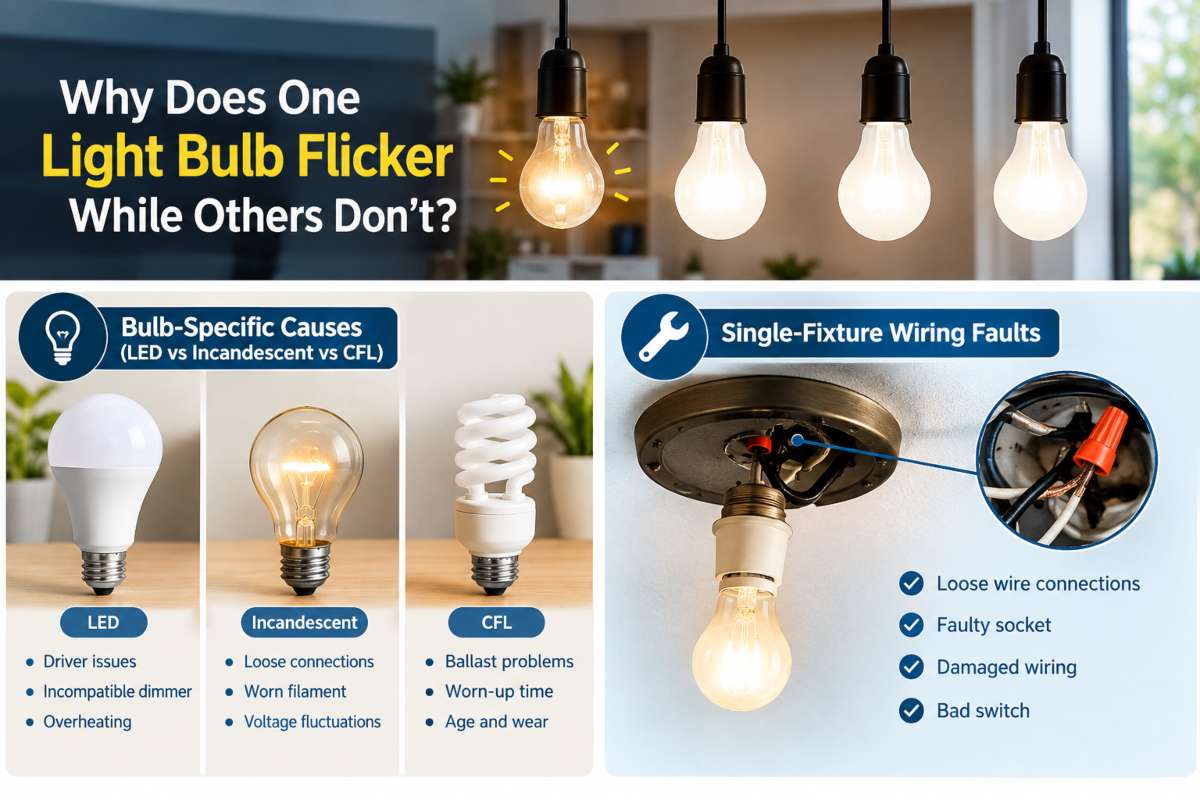
If only one flickering light bulb while every other fixture in the house works fine, the problem is almost always isolated to that single bulb or the fixture it sits in, not your home main electrical supply. A house wide voltage issue affects everything at once, so when the fault stays confined to one spot, the cause is local, the bulb itself, its wiring type or the fixture connection.
Bulb Specific Causes (LED vs Incandescent vs. CFL)
Different bulb types fail and flicker, in different ways. LED bulbs are the most sensitive to voltage inconsistency because their internal driver reacts to even small fluctuations, so a flickering LED often points to a mismatch with an old dimmer switch or a driver nearing failure. CFL bulbs tend to flicker briefly when first switched on as their gas fully ionizes, which is normal, but persistent flickering after warm up usually signals the bulb is failing.
Incandescent bulbs flicker least often from the bulb itself, so if you see flickering in an incandescent fixture, it is more likely the socket or wiring than the bulb. The U.S Energy Department notes that LED bulbs typically last 15 to 25 times longer than incandescent bulbs, but that same sensitive internal electronics is exactly what makes them flicker sooner when voltage is not clean.
Single Fixture Wiring Faults
When one fixture flickers consistently regardless of which bulb is installed in it, the fault has moved from the bulb to the fixture own wiring or connection point. This usually means a loose wire nut inside the fixture box, a worn out socket that no longer grips the bulb base firmly or a connection at the switch that only serves that one fixture. Because this kind of fault sits behind the wall or inside the fixture housing, it is not something to open up and inspect yourself and if the flickering fixture is tied to a specific breaker that also feels warm or trips repeatedly, the issue may extend back to your electrical panel rather than the fixture alone.
Why Do Lights Flicker When You Turn Them On?
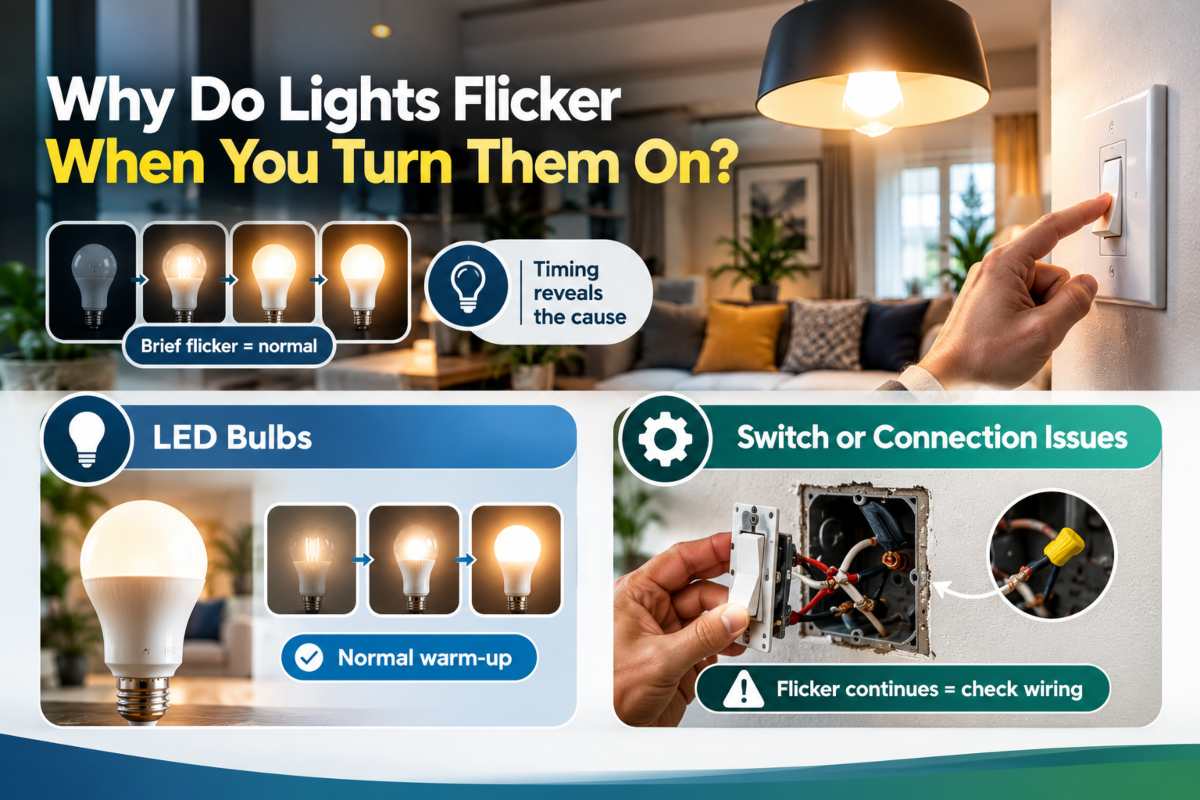
Lights that flicker briefly the moment they are switched on are usually just warming up, a normal behavior in certain bulb types, but if the flicker continues well after the light should have stabilized, the switch or connection is more likely to blame. The timing of the flicker is the key clue, a flash at the instant of power on points to the bulb, while a flicker that lingers points to the switch or wiring behind it.
Cold Start Behavior in LED Bulbs
Many LED bulbs briefly flash, flicker or take a fraction of a second to reach full brightness when first powered on, because their internal driver needs a moment to regulate the current flowing to the diodes. This is normal and expected in most quality LED bulbs and typically resolves within a second or two without any further symptoms.
It becomes worth investigating only if the flicker repeats every single time the light is used, lasts noticeably longer than a couple of seconds or is paired with a warm switch plate or a faint buzzing sound, signs that move the issue from bulb behavior into an electrical safety concern. If you notice any of those warning signs, our electrical safety guide covers what to check before continuing to use that fixture.
Switch and Connection Issues
If a light flickers every time it is switched on and the flicker does not fade the way a normal LED warm up does, the fault is more likely sitting in the switch or the connection behind it rather than the bulb. A worn switch mechanism can make brief, inconsistent contact at the moment it is flipped, producing a flicker right at power on that a brand new bulb won’t fix.
Loose wiring at the switch terminal behaves the same way, the connection makes contact just enough to power the light, but not firmly enough to hold a steady current the instant load is applied. This type of flicker tends to be repeatable and specific to one switch, which is a useful sign that it is electrical rather than the bulb reaching end of life and it is worth having checked before the loose contact generates enough heat to become a safety issue.
Lamp Flickering vs Ceiling Light Flickering, Different Causes
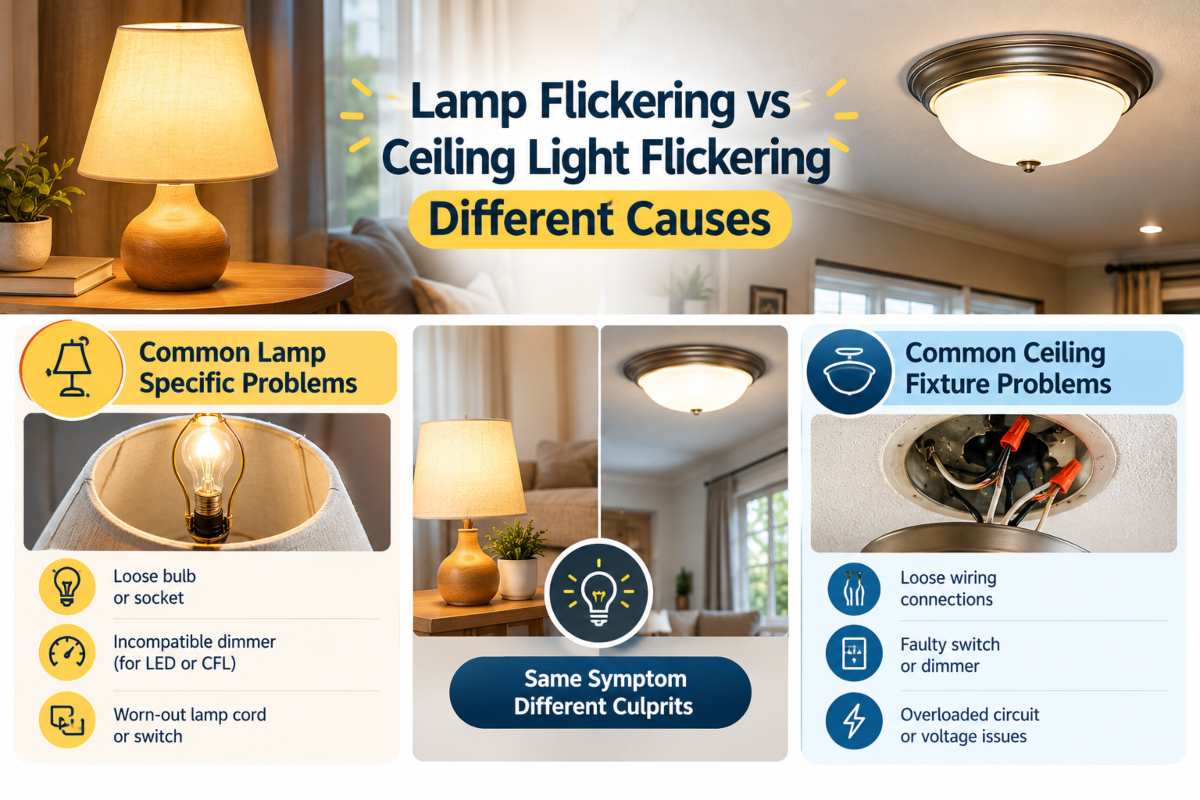
A flickering lamp and a flickering ceiling light usually point to different problems, because one runs through a plug and cord while the other is hardwired directly into your home electrical system. A lamp fault is almost always contained within the lamp itself or the outlet it is plugged into, while a ceiling fixture fault usually sits somewhere inside the wall or ceiling wiring, which is why the two need different troubleshooting approaches entirely.
Common Lamp Specific Problems
Lamps flicker most often because of something in the short chain between the wall outlet and the bulb, a worn cord, a loose plug connection, a failing internal switch or a socket that no longer grips the bulb tightly enough for steady contact. Because a lamp is portable, testing it is simple, plug it into a different outlet and if the flickering stops, the original outlet is the problem rather than the lamp. If the flickering follows the lamp to the new outlet, the fault is inside the lamp’s cord, switch or socket and replacing the lamp or its cord usually resolves it.
Common Ceiling Fixture Problems
Ceiling lights flicker for reasons that are almost always structural rather than something you can swap out, a loose wire nut inside the junction box, a failing dimmer switch feeding the circuit or aging wiring in the ceiling cavity that has developed resistance over time. Unlike a lamp, a ceiling fixture can not be unplugged and tested elsewhere, so ruling out the cause means checking the switch, the bulb and, if both check out, the wiring behind the fixture itself. Because ceiling wiring runs through walls and ceilings shared across a property, this is also one of the more common flickering complaints we see across both homes and offices through our residential and commercial services, particularly in units over a decade old.
When Flickering Lights Are Dangerous (Warning Signs)
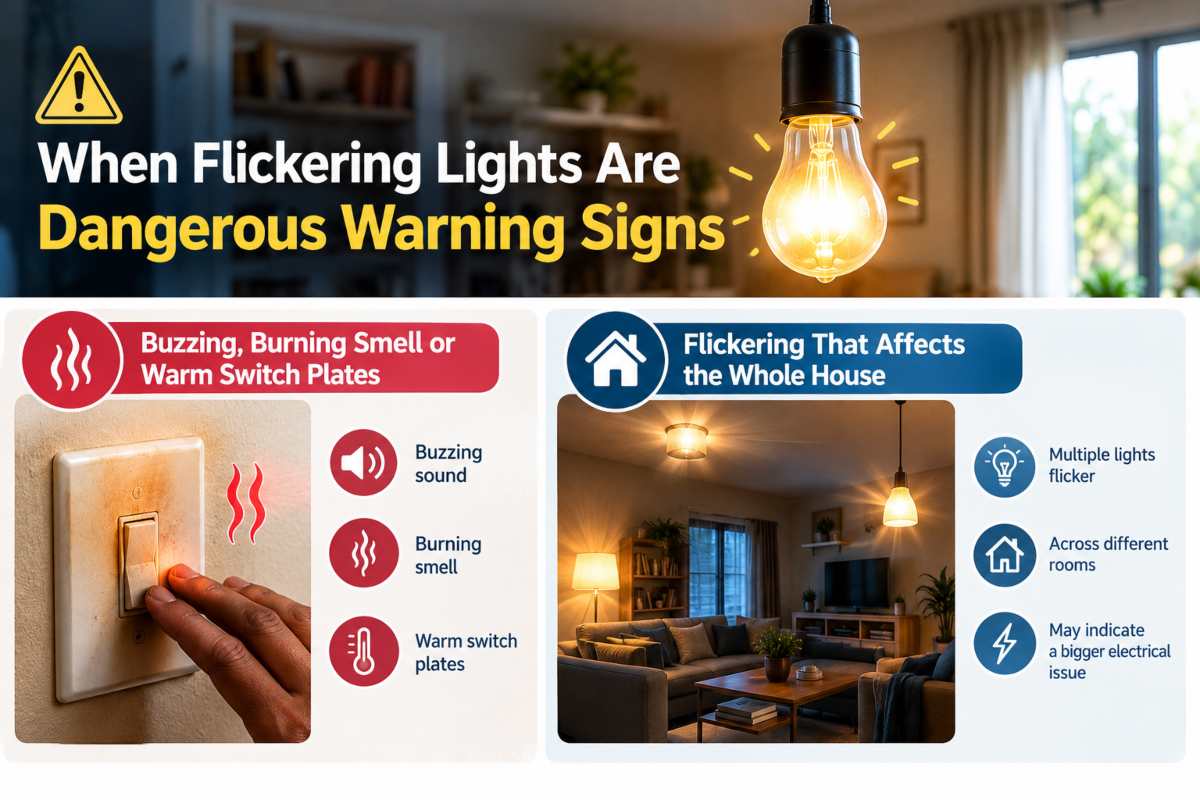
Flickering lights become dangerous when they are paired with heat, sound or smell, because those signs mean the electrical fault is generating energy as heat rather than simply losing contact. On its own, flickering is an annoyance, flickering combined with any of these warning signs is a fire risk that needs attention immediately, not on a convenient day.
Buzzing, Burning Smell or Warm Switch Plates
A switch plate or outlet that feels warm to the touch, a faint buzzing sound near a fixture or any hint of a burning or plastic smell means current is meeting resistance somewhere it should not, usually at a loose or corroded connection and that resistance is producing heat. The U.S. Fire Administration attributes a significant share of home electrical fires to faulty wiring and worn electrical connections, which is exactly the kind of fault these symptoms indicate. If you notice any of these signs, switch off the breaker for that circuit and avoid using the fixture until it’s been inspected, this is not a symptom to wait out.
Flickering That Affects the Whole House
When every light in the home flickers at once, rather than just one room or fixture, the problem sits upstream, either in the main electrical panel, the meter connection or the incoming supply line itself and it is beyond anything safely diagnosed from inside a single room. This kind of house wide flickering can also indicate a loose main neutral connection, which is a serious fault that can damage appliances and electronics throughout the home if left unresolved. Because panel level and supply level issues tend to resurface if the root cause is not addressed, homes that experience this are also good candidates for an annual maintenance contract, which catches these faults during routine inspection before they escalate.
What to Do When Your Lights Keep Flickering
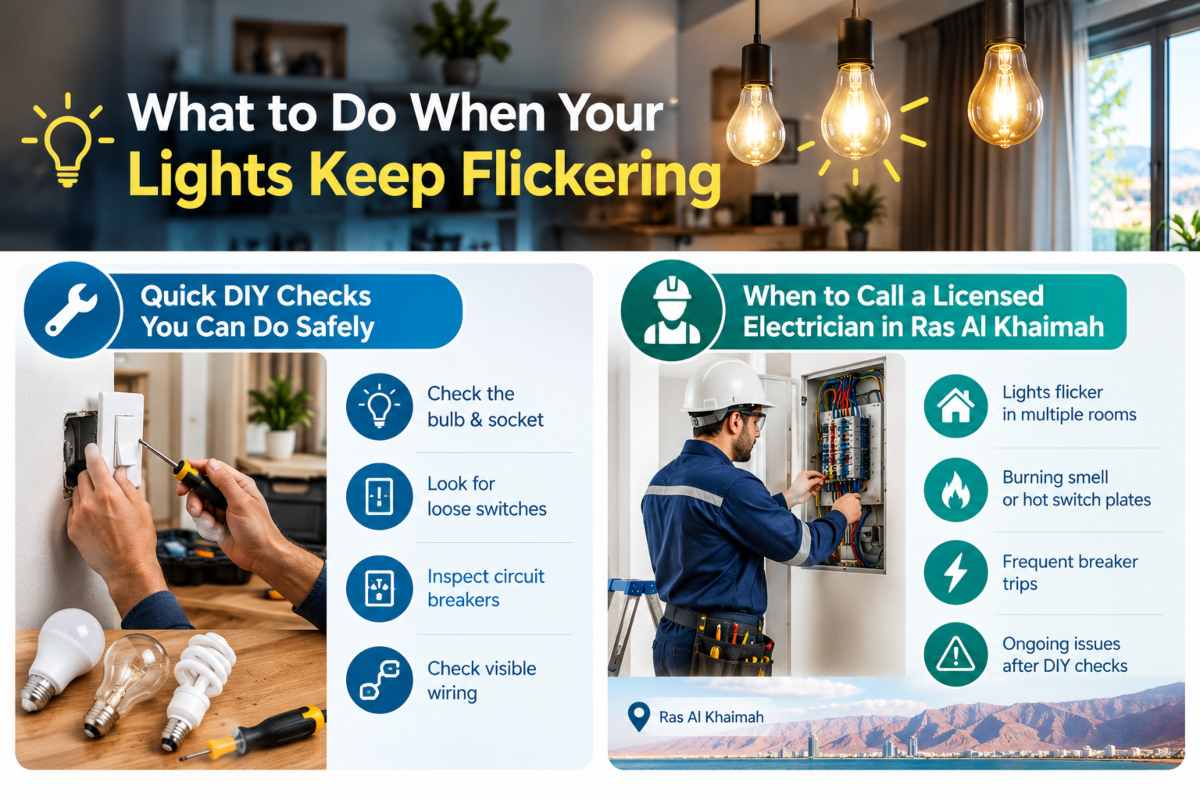
If your lights keep flickering, start with the simple checks you can safely do yourself and if the problem does not clear up or if it comes with warning signs like heat or buzzing, stop troubleshooting and call a licensed electrician. Most flickering resolves with a five minute check; the cases that do not are exactly the ones worth having a professional look at rather than guessing further.
Quick DIY Checks You Can Do Safely
Begin by tightening the bulb and confirming it is fully seated in the socket, since a loose bulb is the most common cause and the easiest to rule out. Next, swap in a bulb you know works to see if the flickering follows the bulb or stays with the fixture and if you have a lamp, test it in a different outlet to isolate whether the fault is in the lamp or the wall.
It is also worth noting whether the flickering lines up with a specific appliance turning on, if it consistently happens when your AC compressor starts, that points to a shared circuit rather than a fixture fault and it may be worth having your AC unit checked through our AC repair and installation services alongside the electrical inspection. None of these checks require opening a switch plate, a panel or any wiring, if the flickering continues past this point, it is time to stop DIY troubleshooting.
When to Call a Licensed Electrician in Ras Al Khaimah
Call an electrician as soon as flickering is paired with a warm switch plate, a buzzing sound, a burning smell or if it affects more than one room at once, these are signs of a wiring or panel level fault that is not safe to open up yourself. It is also time to call in a professional if flickering persists after you have ruled out the bulb, the fixture and the outlet through your own checks, since that points to a fault inside the walls or the panel. Electrical faults behind walls carry real shock and fire risk and in a home wired to UAE standards, any repair involving the panel or fixed wiring should be handled by a licensed electrician rather than attempted independently.
Conclusion
Flickering lights are usually a small fix, a loose bulb, a worn switch or a brief voltage dip from EtihadWE supply during peak demand hours, but they can also be the earliest visible sign of a wiring fault that gets more serious the longer it is ignored. The difference between the two comes down to pattern, occasional, isolated flickering tied to one bulb or appliance is rarely urgent, while flickering that is constant, house wide or paired with heat, buzzing or a burning smell should never wait.
Working through the checks in this guide, tightening the bulb, testing the fixture, watching for warning signs, will resolve most cases on their own. For anything that points beyond a simple bulb swap, Home Fix provides licensed electrical inspection and repair across Ras Al Khaimah, so the fault gets fixed at the source rather than papered over with another new bulb.
Frequently Asked Questions (FAQs)
Why do my lights randomly flicker?
Random flickering usually comes from a loose bulb, a worn switch or a brief voltage dip when a large appliance like your AC starts up. If it happens with no clear pattern and no other symptoms, it is typically minor. If it becomes frequent, it is worth having the circuit checked.
Is it normal for lights to flicker occasionally?
Yes, a brief flicker when a high draw appliance switches on or a quick flash as an LED bulb warms up, is normal in most homes. It only becomes a concern if it happens often, lasts more than a second or two or is paired with heat or buzzing.
Can flickering lights cause a fire?
Flickering itself does not cause a fire, but the loose or overheating connections that often cause it can. The U.S. Fire Administration links a large share of home electrical fires to faulty wiring and worn connections, exactly the fault type that produces persistent flickering.
Why do my lights flicker only in one room?
Flickering isolated to one room usually points to that room specific circuit, switch or wiring rather than a house wide supply issue. Check the bulb and fixture first and if the problem continues, the fault is likely inside that circuit wiring.