Faulty Wiring Signs in Ras Al Khaimah Homes | Home Fix
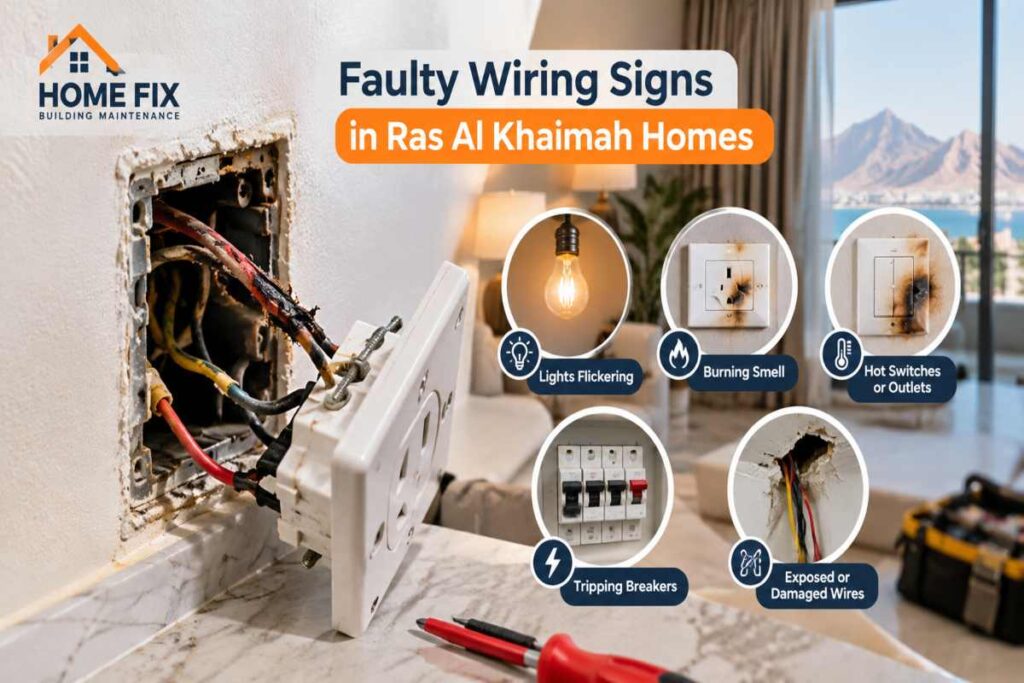
Faulty Wiring Signs may include burning smell near sockets, lights that flicker without reason, switch plates that feel warm to the touch and a circuit breaker that trips again and again with no obvious cause. In Ras Al Khaimah, where many villas and apartment blocks are ageing and summer heat pushes electrical systems to their limit, these warning signs show up more often than most homeowners expect.
This is not a rare problem. A survey by earthing and lightning protection specialist Duval Messian found that almost 70% of UAE residents have experienced signs of electrical faults such as burnt sockets and shocks from appliances and nearly half reported burnt sockets or unexplained tripping of the main circuit breaker, yet fewer than 30% of those affected had it checked by a certified professional, with many either ignoring the issue or attempting a DIY fix.
That gap between noticing a problem and actually fixing it is where the real risk lies. Faulty wiring rarely announces itself with a dramatic failure, it builds quietly through worn insulation, loose connections and overloaded circuits until it becomes a fire or shock hazard. Below are the 11 signs worth watching for in your home, what typically causes them and when it is time to bring in a licensed electrician rather than reach for a screwdriver yourself. If you’d rather skip straight to getting it looked at, Home Fix Building Maintenance Electrical Services team handles wiring inspections and repairs across Ras Al Khaimah.
What Is Faulty Wiring?
Faulty wiring is any electrical wiring in your home that has become damaged, degraded, incorrectly installed or overloaded to the point where it can no longer carry current safely. This covers a wide range of issues, from insulation that has cracked with age, to loose connections at outlets and switches, to circuits carrying more load than they were designed for. The common thread is risk: faulty wiring does not just cause flickering lights or a tripped breaker, it can cause overheating, sparking and house fires if left unaddressed.
In Ras Al Khaimah, this matters more than in milder climates. Many homes here are villas or low rise apartment blocks built years or decades ago, with wiring that was never designed for the electrical load of a modern household running multiple air conditioning units, water heaters and appliances at once. Add in RAK long, intense summers, when AC units run almost continuously and electrical systems sit under sustained thermal stress and wiring that was marginal to begin with gets pushed toward failure faster. Heat accelerates the breakdown of insulation, loosens connections through repeated expansion and contraction and raises the load on circuits already working near capacity.
This is also why faulty wiring is rarely a single, isolated fault. In most RAK homes it develops gradually across a property electrical system, one ageing circuit here, one overloaded socket there, which is why a proper inspection, rather than a single quick fix, is usually what actually resolves it.
Signs of Faulty Wiring You Should Never Ignore
Some signs of faulty wiring are given below:
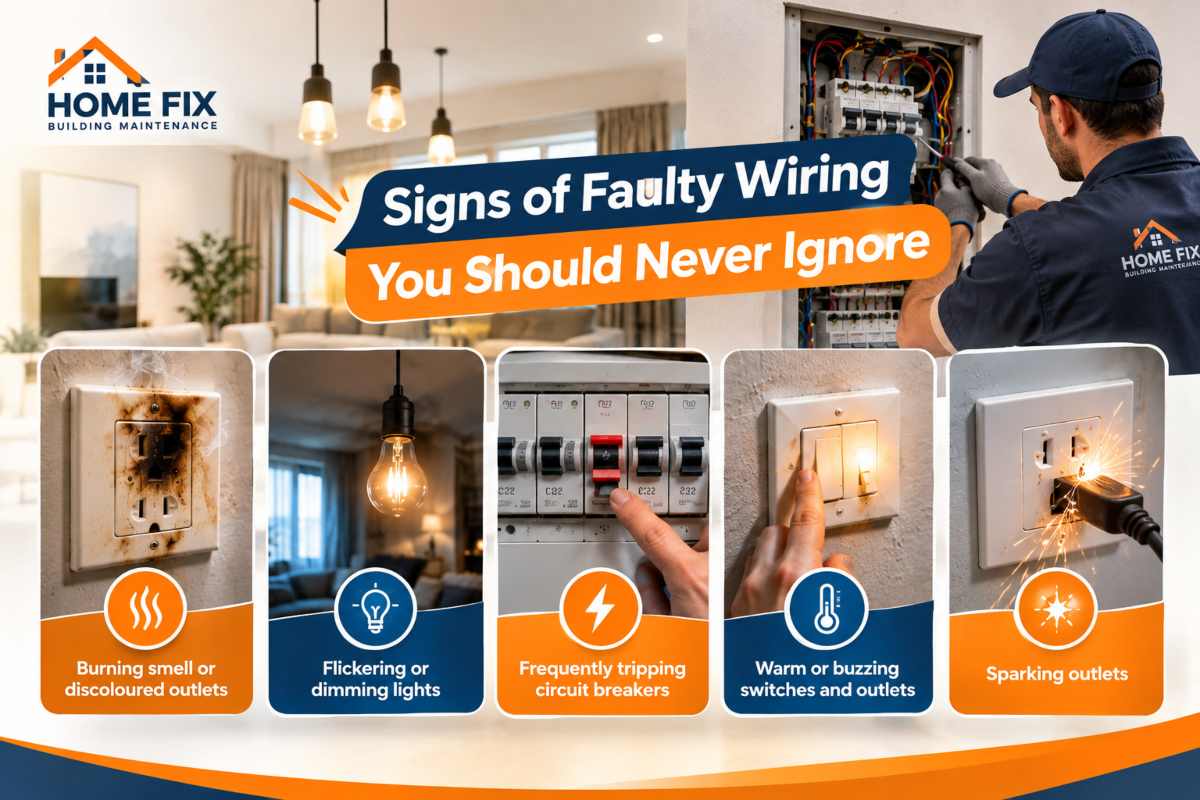
Burning smell or discoloured outlets
A burning or plastic like smell near an outlet, switch or your breaker panel is one of the most urgent signs of faulty wiring and it should never be ignored or “monitored.” That smell usually means insulation is overheating or has already started to melt from a loose connection or overloaded circuit. Discolouration, a socket faceplate turning brown, black or yellow around the edges, is the visible version of the same problem: heat has been building at that connection point for some time. If you notice either, switch off power to that circuit at the breaker and have it inspected before using it again.
Flickering or dimming lights
Lights that flicker, dim when an appliance switches on or vary in brightness on their own are a common early sign of faulty wiring, often caused by loose connections, an overloaded circuit or a failing connection at the switch or fixture itself. Occasional flickering during a power fluctuation is not unusual, but persistent or worsening flickering, especially in one specific area of the house, points to a wiring issue rather than a bulb problem. We have covered this in more depth in Why Do Lights Flicker, including which causes are harmless and which need an electrician.
Frequently tripping circuit breakers
A circuit breaker is designed to trip when it detects an unsafe load, so a breaker that trips once in a while under heavy use is normal, but one that trips repeatedly or trips with no clear cause, is signalling a real underlying fault. This is typically down to an overloaded circuit, a short circuit or deteriorating wiring insulation that is no longer containing current the way it should. Resetting the breaker without investigating why it tripped just delays the problem; our guide on Circuit Breaker Tripping walks through the most common causes and how to tell them apart.
Warm or buzzing switches and outlets
Switches or outlets that feel warm to the touch or make a faint buzzing or crackling sound, indicate that electricity is not flowing through them cleanly, usually because of a loose wire connection or a worn out component inside the fixture. Outlets and switches should never generate noticeable heat or noise during normal use. This sign is easy to miss because it is subtle, but it is often the stage right before sparking or a burning smell develops, which makes it worth acting on early rather than waiting for it to get worse.
Sparking outlets
Visible sparks when plugging in or unplugging a device are one of the clearest and most dangerous signs of faulty wiring and they call for an immediate electrical inspection rather than a wait and see approach. Sparking usually points to a loose or damaged connection, exposed wiring or moisture inside the outlet. It is also directly tied to fire risk, electrical faults are consistently named among the leading causes of residential fires by UAE Civil Defence, with worn out cables, cheap chargers and overloaded sockets flagged as common triggers. If an outlet sparks more than once, treat it as a fault that needs professional repair, not a one off.
What Causes Faulty Wiring in RAK Homes
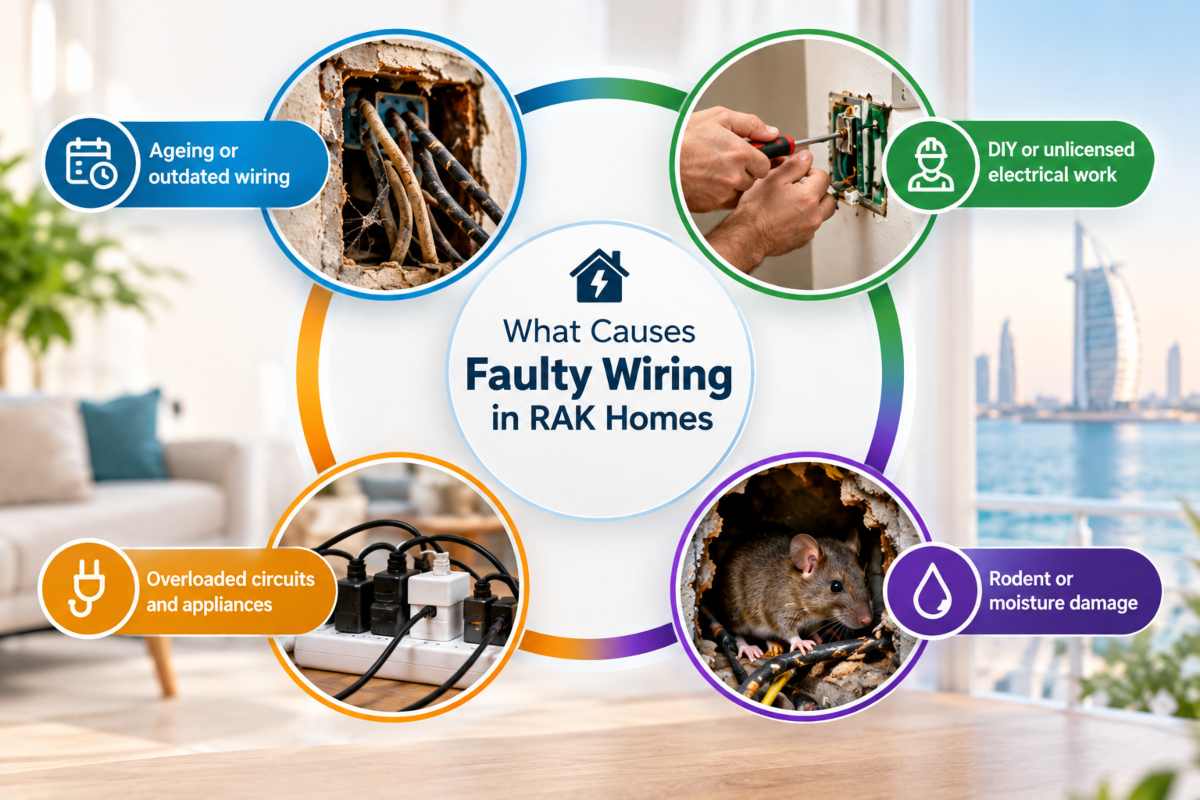
Faulty wiring in Ras Al Khaimah homes is most often caused by ageing electrical systems, unlicensed repair work, circuits carrying more load than they were built for and physical damage from pests or moisture. Each of these develops differently, but they all lead to the same outcome, connections and insulation that can no longer carry current safely.
Ageing or outdated wiring
Wiring has a working lifespan and in older RAK villas and apartment buildings, much of it is now well past the point where insulation stays fully intact. Over years of heat exposure, the rubber or PVC coating around wires becomes brittle and starts to crack, exposing the copper underneath and raising the risk of short circuits.
Older properties may also still use wiring standards or panel capacities that predate today’s household electrical loads, which means the system was never built to handle the number of devices, AC units and appliances a modern home now runs. If a property hasn’t had its wiring reviewed in over a decade, age alone is reason enough to have it checked, something worth raising if you are already planning updates through Home Fix Building Maintenance home renovation services.
DIY or unlicensed electrical work
A significant share of faulty wiring problems in RAK trace back to work that was not done by a licensed electrician, a homeowner adding an outlet themselves, a handyman rewiring a switch without proper testing or a previous occupant running an extension circuit that was never inspected. This kind of work often looks fine on the surface while missing basics like correct wire gauge, secure terminal connections or proper earthing, all of which surface as faults later. It is a widespread enough issue that a UAE wide electrical safety survey found fewer than 30% of residents who’d experienced signs of an electrical fault had it checked by a certified professional, with many either ignoring the problem or attempting to fix it themselves.
Overloaded circuits and appliances
Circuits are rated for a specific maximum load and running too many high draw appliances, air conditioners, water heaters, kitchen equipment, on the same circuit pushes wiring beyond what it is designed to carry. This is especially common in RAK during summer, when multiple AC units run continuously alongside everyday appliances, placing sustained strain on circuits that may already be older or undersized. Over time, this overloading generates heat at connection points and inside the wiring itself, which is exactly the mechanism behind many of the warning signs covered earlier, from tripping breakers to warm outlets.
Rodent or moisture damage
Wiring that runs through wall cavities, ceilings or outdoor facing walls is vulnerable to two very different but equally damaging threats, rodents that chew through insulation and moisture that seeps in through poor sealing or humidity. Rodent damage exposes bare wire and can create a short circuit or fire risk almost immediately, while moisture gradually corrodes connections and degrades insulation from the inside, often without any visible sign until a fault appears. Both are more likely in properties with unsealed entry points or ageing exterior walls, which makes periodic inspection, not just visible symptoms, the more reliable way to catch this type of damage early.
Faulty Wiring in Older vs Rental Properties
Faulty wiring shows up differently depending on whether you own an older property or live in a rental, mainly because the two situations differ in who controls the fix and how long problems tend to sit unaddressed. In an older home, faulty wiring is usually a matter of age catching up with the system, insulation wearing thin, panels reaching capacity and the homeowner has full control over when and how it gets repaired. In a rental, the wiring might be just as old or the fault might stem from work a previous tenant or landlord handyman carried out without proper licensing, but the tenant experiencing the symptoms often is not the one who can authorise a fix.
That gap matters because faulty wiring does not wait for a lease renewal. A tenant who notices flickering lights, a burning smell or a breaker that keeps tripping is dealing with the same fire and shock risk as a homeowner, even though reporting it and getting it resolved usually goes through a landlord or property manager first. Delays here are common, not because the fault is less serious, but because the reporting chain is longer and some landlords treat electrical complaints as low priority until something fails outright.
In both cases, the right response is the same, document the issue, get a licensed inspection rather than accepting a quick patch and do not wait for a more serious symptom to appear before acting. Home Fix Building Maintenance works with both property owners and tenants landlords across Ras Al Khaimah through its Residential and Commercial Services, so whether the property is owner occupied or rented, the wiring gets assessed against the same safety standard rather than a rushed, surface level fix.
How to Check for Faulty Wiring Yourself
You can safely check for faulty wiring yourself by looking, smelling and listening for the warning signs already covered, without opening any panels or touching live wiring directly. A basic self check involves walking through your home and inspecting outlet and switch plates for discolouration, warmth or a faint burning smell; noting whether any lights flicker or dim when appliances switch on; and paying attention to whether your circuit breaker trips more often than it used to. These checks rely entirely on your senses and take no special tools, which is exactly why they are the right starting point before calling an electrician.
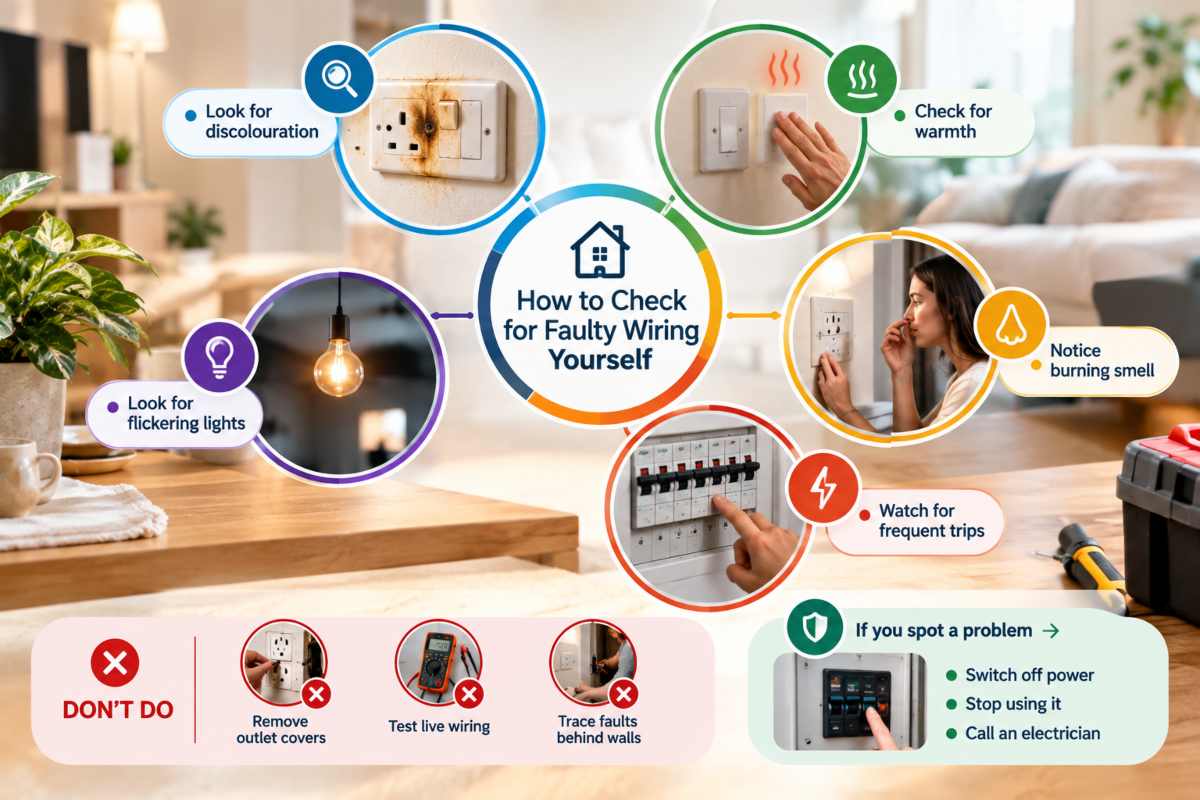
What you should not do is go further than that. Removing outlet covers, testing live wiring with a multimeter or attempting to trace a fault behind a wall are jobs for a licensed electrician, not a DIY project, faulty wiring is one of the few home maintenance issues where the wrong move can cause a shock or start a fire rather than just waste your time. If your self check turns up even one of the warning signs, the safest next step is to switch off power to that circuit at the breaker and stop using it until it is inspected, rather than trying to diagnose the cause yourself.
For a more structured version of this process, Home Fix Building Maintenance Electrical Safety Checklist covers the full set of checks worth running through your home, including several beyond wiring specifically, so you get a complete picture of your home electrical safety in one pass rather than checking wiring in isolation.
How to Find and Detect Hidden Wiring Faults
Hidden wiring faults, the ones inside walls, ceilings or behind fixtures, are found using specialised tools like circuit tracers, thermal imaging cameras and insulation resistance testers, which is why detecting them reliably requires a licensed electrician rather than a visual inspection. Surface level signs such as a warm wall or a flickering light in one room can point to a problem, but they do not tell you exactly where along the circuit the fault sits and guessing wrong means opening up the wrong section of wall for nothing.
A professional inspection typically starts with a thermal camera, which reveals hotspots along wiring runs and at connection points that are invisible to the naked eye but show up clearly as heat signatures. From there, an electrician uses a circuit tracer to map exactly which wiring path is affected and an insulation resistance tester to check whether the wire’s protective coating has degraded enough to be leaking current, a common cause of both nuisance tripping and slow, hidden heat buildup. This combination lets them pinpoint a fault to a specific section of wiring rather than treating the whole circuit as suspect.
The point at which you should stop self diagnosing and call a professional is simple, as soon as a wiring fault seems to originate somewhere you can not see, such as inside a wall, above a ceiling or behind a fixed panel. At that stage, further investigation without the right equipment risks either missing the fault entirely or disturbing wiring in a way that makes the problem worse. Getting it properly traced the first time also tends to be cheaper than repeated call outs for a fault that keeps resurfacing because it was never fully located.
Is Faulty Wiring Dangerous? Risks of Ignoring the Signs
Yes, faulty wiring is genuinely dangerous, left unaddressed, it can cause electric shock, damage to appliances and house fires that put both property and lives at risk, not just a minor inconvenience like a tripped breaker. The danger comes from how faulty wiring fails, not with an obvious warning, but through a slow buildup of heat at a weak connection or damaged section of insulation until it either ignites nearby material or causes a sudden short circuit.
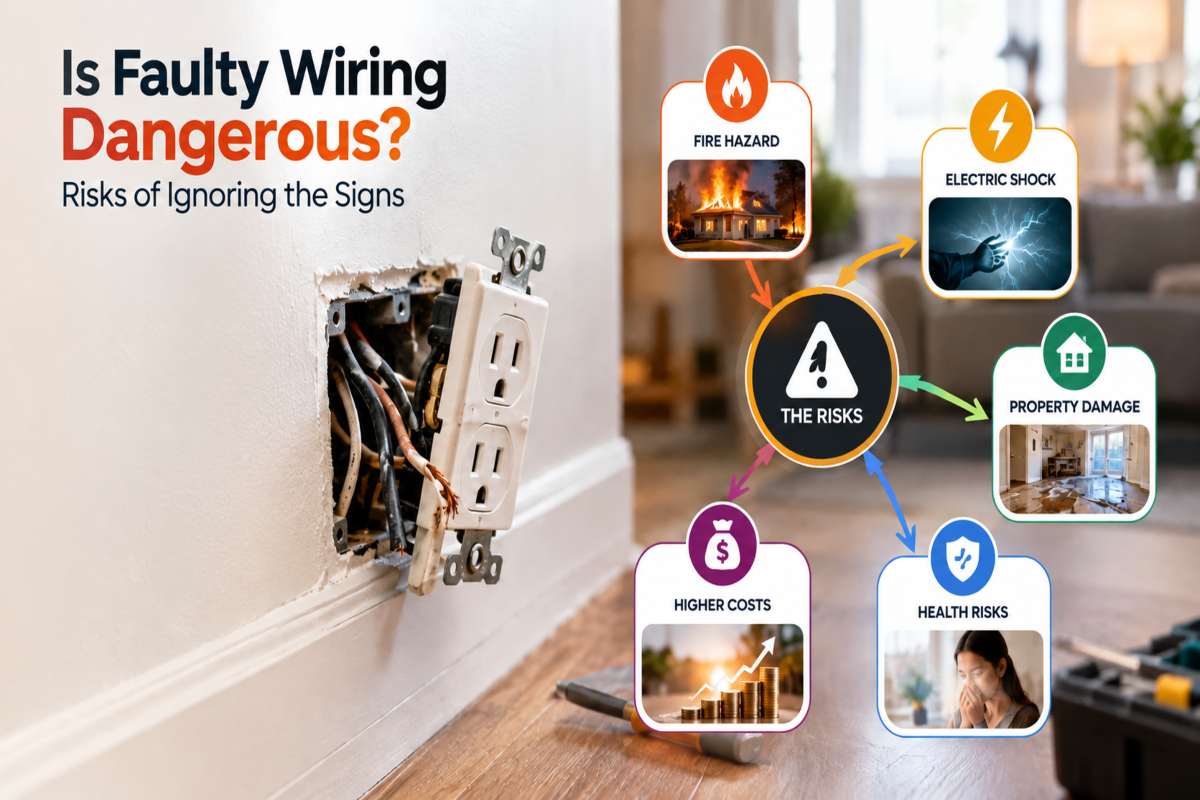
This is a recognised pattern across the UAE, not an isolated risk. Domestic fires make up a large share of all fire incidents in the country, in one recent emirate wide report, domestic fires accounted for around 70% of all blazes recorded and electrical faults are consistently identified by Civil Defence officials as one of the leading causes behind them, alongside overloaded sockets, worn out cables and appliances left running unattended. The outcome of these fires also depends heavily on early detection: homes without a working smoke detector have been found to be four times more susceptible to fire related deaths than homes that have one installed.
The practical risk for a homeowner is that faulty wiring rarely gives a clear deadline for action. A flickering light or a warm switch plate can persist for weeks without escalating, until the day it doesn’t. That unpredictability is exactly why every sign covered in this guide is worth acting on as soon as it appears, rather than waiting to see whether it gets worse before calling for an inspection.
Preventing Faulty Wiring Maintenance Tips for RAK Homeowners
You can prevent most faulty wiring problems in a RAK home through regular electrical inspections, avoiding circuit overloads and having any repair or addition done by a licensed electrician rather than left to chance. Prevention works because nearly every cause covered earlier, ageing insulation, loose connections, overloaded circuits, develops gradually and gives off early warning signs long before it becomes a hazard. Catching those signs early is simply a matter of looking regularly instead of waiting for a fault to announce itself.
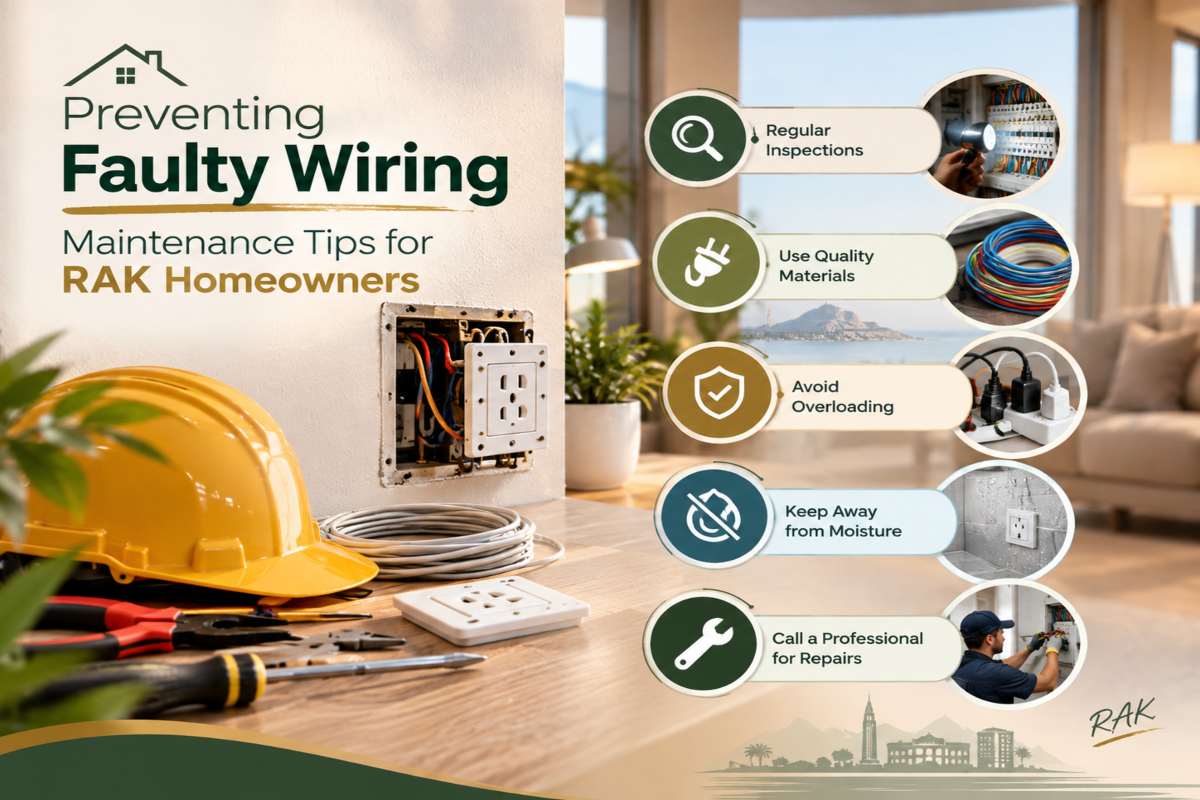
A few habits make the biggest difference. Avoid running multiple high draw appliances, especially air conditioners, on the same circuit during peak summer months, since RAK’s heat already pushes wiring closer to its limit. Have any new outlet, extension circuit or appliance connection installed by a licensed electrician rather than a general handyman, since unlicensed work is one of the most common sources of faults that surface months or years later. And treat even minor symptoms, a slightly warm switch, an occasional flicker, as worth a professional look rather than something to monitor indefinitely, since faulty wiring rarely resolves on its own.
The most reliable form of prevention, though, is a scheduled inspection rather than a reactive one. Waiting for a sign to appear means the fault has already reached a stage where it’s producing symptoms; a periodic check catches problems like ageing insulation or a loosening connection before they get that far. Home Fix Building Maintenance AMC Services build this kind of regular electrical check into an annual plan, so wiring across your home gets reviewed on a set schedule rather than only after something has already gone wrong.
Conclusion
Faulty wiring in a Ras Al Khaimah home rarely shows up as one dramatic failure, it shows up as a burning smell, a flickering light, a breaker that trips more than it used to or an outlet that’s slightly warmer than it should be. Any one of these signs, on its own, is reason enough to have your wiring checked rather than watched.
Given that faulty wiring is behind a significant share of residential fires in the UAE and that most homeowners who notice a fault still do not get it professionally inspected, the gap between spotting a sign and acting on it is where the real risk sits. Closing that gap does not require guesswork, it means recognising the signs covered in this guide, understanding what is causing them in your specific property and knowing when a self check is enough versus when it is time to call in a licensed electrician.
If you have noticed any of these signs in your own home or simply have not had your wiring looked at in a while, Home Fix Building Maintenance can carry out a proper inspection and handle the repair safely, so the problem gets fixed at the source rather than patched over.
Frequently Asked Questions (FAQs)
How do I know if I have faulty wiring?
Watch for a burning smell, discoloured or warm outlets, flickering lights and a circuit breaker that trips repeatedly. Any one of these is worth a professional inspection.
What does faulty wiring smell like?
It typically smells like hot or melting plastic, similar to an overheating appliance. This smell means insulation is heating up and needs immediate attention.
Is flickering light a sign of bad wiring?
Yes, persistent or worsening flickering, especially in one area of the home, usually points to a loose connection or overloaded circuit rather than a faulty bulb.
How much does faulty wiring repair cost in RAK?
Costs vary by fault severity and property size, typically ranging from around AED 150 for a single outlet or switch repair to AED 1,500+ for a full circuit rewiring. Home Fix Building Maintenance provides a fixed quote after inspection.
Can faulty wiring cause a fire?
Yes. Electrical faults are consistently named among the leading causes of residential fires in the UAE, making unaddressed wiring issues a genuine fire risk, not just an inconvenience.