House Electrical Wiring in Ras Al Khaimah
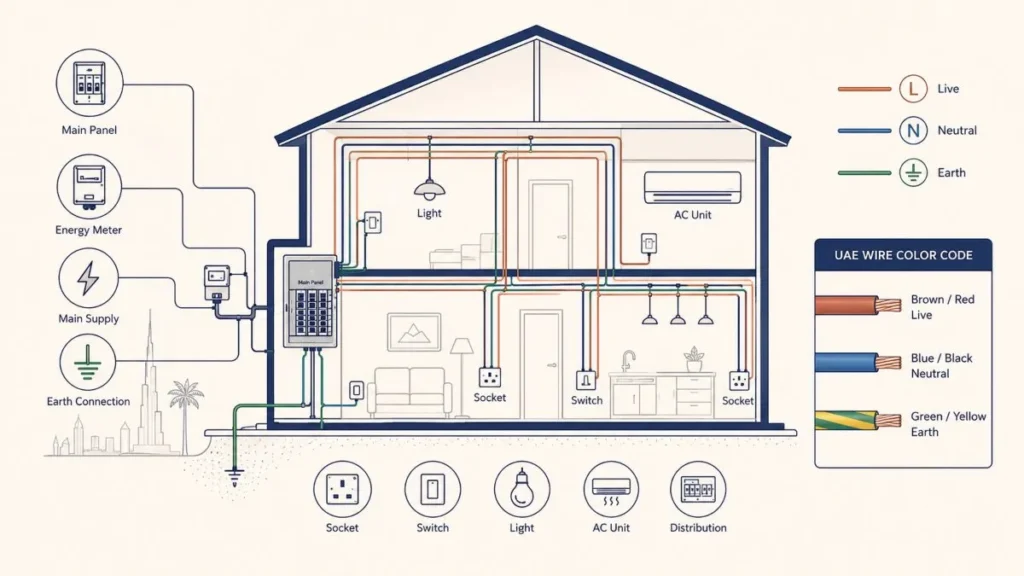
A home’s electrical wiring system is one of the most important yet least understood parts of any property. From choosing the right wire type during construction to recognizing when aging wiring needs to be replaced, understanding the basics helps homeowners make safer, more informed decisions. This guide covers everything you need to know about electrical wiring in Ras Al Khaimah homes, including wire types, standard color codes, sizing, common wiring diagrams, and typical costs. Whether you’re planning a new build, a renovation, or simply want to understand your existing setup, this guide will help you navigate it with confidence.
Understanding Home Electrical Wiring Basics
Every home relies on a network of wiring that safely distributes electricity from the main supply to outlets, switches, and appliances. While it’s easy to take this system for granted until something goes wrong, having a basic understanding of how it works helps homeowners spot issues early and communicate more effectively with electricians when repairs or upgrades are needed.
How a Home Electrical Wiring System Works
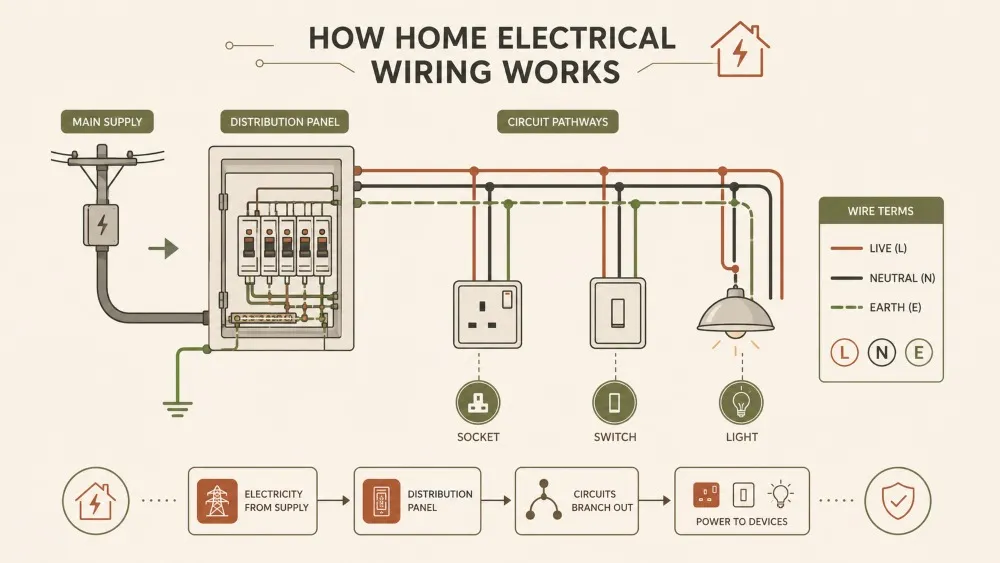
A home’s electrical system starts at the main supply, which feeds into the electrical panel the central point that distributes power to individual circuits throughout the property. From there, wiring runs through walls, ceilings, and floors to reach sockets, switches, and fixed appliances like air conditioning units. Each circuit is protected by a breaker that cuts power automatically if it detects an overload, preventing wires from overheating. Live, neutral, and earth wires work together within this system: the live wire carries power to the device, the neutral completes the circuit back to the source, and the earth wire provides a safe path for electricity in the event of a fault. Understanding this basic flow makes it easier to recognize when something in the system isn’t working as it should.
Common Wiring Terms Every Homeowner Should Know
A handful of terms come up repeatedly when discussing home wiring, and knowing them makes conversations with electricians far more straightforward. A circuit is the complete loop through which current travels, from the panel to a device and back again. Voltage is the force pushing electrical current through the wiring, while amperage measures the volume of current flowing through it, both factors that determine what wire size and gauge a circuit requires. A short circuit occurs when live and neutral wires make unintended contact, often causing a breaker to trip or, in worse cases, sparking a fire. Grounding, or earthing, is the safety connection that safely redirects fault current to ground. Finally, a conduit is the protective tubing or channel that houses wiring within walls or ceilings, shielding it from damage and moisture. Familiarity with these terms lays the groundwork for the more detailed topics covered later in this guide.
Types of Electrical Wiring Used in Homes
Not all wiring is installed the same way, and the type used in a home affects everything from safety to long-term maintenance. Understanding the difference between wiring methods and materials helps homeowners make informed decisions during construction, renovation, or repairs.
Concealed vs. Surface Wiring
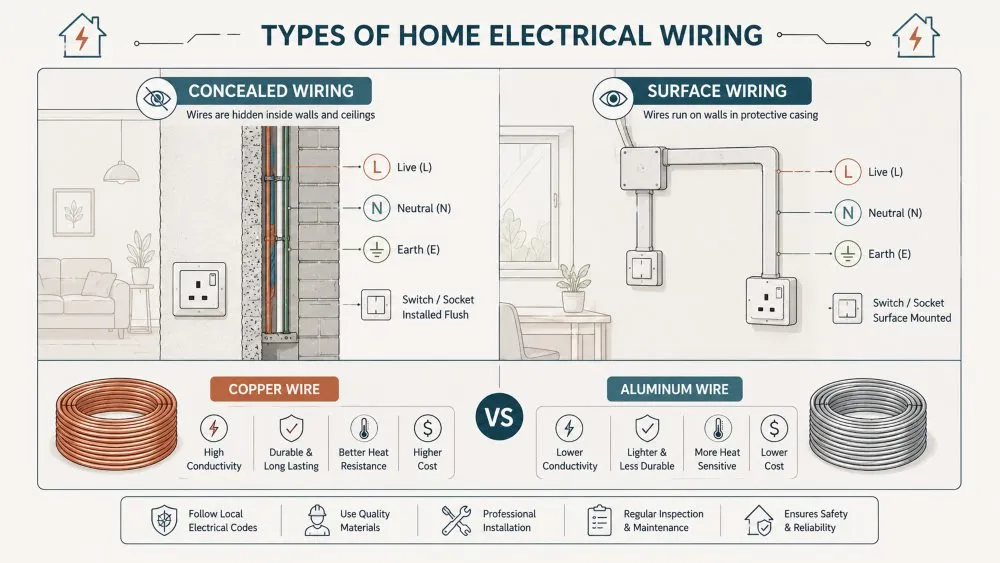
Concealed wiring runs inside walls, ceilings, and floors, hidden from view and protected within conduit pipes. This is the standard method in most modern Ras Al Khaimah homes, offering a cleaner look and better protection from physical damage and moisture. Surface wiring, by contrast, runs along walls or ceilings using visible casing or trunking, and is more common in older buildings, temporary setups, or situations where breaking into walls isn’t practical. While surface wiring is easier and cheaper to install or modify, it’s more exposed to wear, dust, and accidental damage, making concealed wiring the preferred choice for most permanent residential installations.
Copper vs. Aluminum Wiring
Copper is the most widely used material for home electrical wiring, valued for its excellent conductivity, durability, and corrosion resistance. Aluminum wiring is lighter and less expensive, making it common in larger-scale or industrial installations. Still, it’s more prone to oxidation and expands and contracts more with temperature changes, a concern in the UAE’s heat. For most residential wiring, especially in circuits carrying higher loads like air conditioning units, copper remains the safer and more reliable long-term choice, even at a higher upfront cost.
Electrical Wire Color Codes in the UAE
Wire color coding exists to keep electrical systems safe and consistent, allowing anyone working on a circuit to identify each wire’s function immediately. The UAE follows an internationally recognized standard, and understanding it is useful for any homeowner, even if actual wiring work is left to a professional.
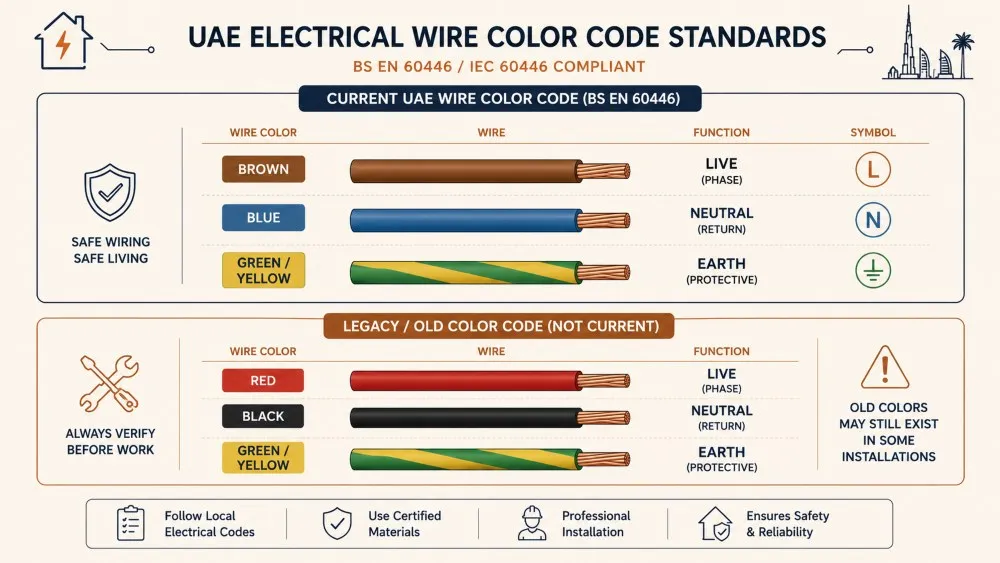
UAE Standard Wire Color Chart
| Wire Type | Color |
|---|---|
| Live (Line) | Brown |
| Neutral | Blue |
| Earth (Ground) | Green/Yellow Striped |
| Live (Older Systems) | Red |
| Neutral (Older Systems) | Black |
Newer UAE installations follow the brown/blue/green-yellow standard, while older properties may still use the red/black/green scheme. If you’re unsure which standard your home follows, it’s best to have an electrician confirm before doing any work near exposed wiring.
Understanding Live, Neutral, and Earth Wires
The live wire carries electrical current from the supply into a device or circuit and is always the most dangerous wire to touch. The neutral wire completes the circuit, carrying current back to the source after passing through the device. The earth wire doesn’t carry current under normal conditions; its role is purely protective, providing a safe path for electricity to flow into the ground if a fault occurs, reducing the risk of shock or fire. Recognizing these three wires and never assuming color coding without verification are among the most important basics of electrical safety.
How to Read a Home Electrical Wiring Diagram
Wiring diagrams can look intimidating at first, but they follow a consistent logic once you understand the basic symbols and layout. Being able to read one, even at a basic level, helps homeowners better understand their property and communicate clearly with electricians.
Basic House Wiring Diagram Explained
A typical house wiring diagram shows the path of electricity from the main supply through the panel and out to individual circuits. Standard symbols represent components such as outlets, switches, light fixtures, and breakers, with lines indicating their connections. Diagrams are usually organized by room or circuit, allowing you to trace exactly which breaker controls which part of the home. While diagrams vary in complexity, most residential ones follow a straightforward, linear logic from panel to endpoint.
Panel, Socket, and Switch Wiring Diagrams
Panel wiring diagrams show how each circuit breaker connects to specific areas of the home, which is especially useful for identifying which breaker to switch off before working on a particular room. Socket wiring diagrams illustrate how live, neutral, and earth wires connect within an outlet, while switch wiring diagrams show how a switch interrupts the live wire to control a light or appliance. Homeowners planning renovations or troubleshooting an issue often find it helpful to request a copy of these diagrams from their electrician for future reference.
Electrical Wire Sizes and Materials
Choosing the correct wire size and material isn’t just a technical detail; it directly affects safety, performance, and the lifespan of a home’s electrical system. Wires that are too small for their load can overheat, while the wrong materials can degrade quickly in the UAE’s climate.
Wire Gauge and Size Chart
Wire size is typically measured in square millimeters (mm²) in the UAE and broader Gulf region, with larger numbers indicating higher current capacity.
| Wire Size (mm²) | Typical Use |
|---|---|
| 1.0 – 1.5 | Lighting Circuits |
| 2.5 | Standard Power Sockets |
| 4.0 – 6.0 | Air Conditioning Units |
| 10.0+ | Main Distribution and Heavy Appliances |
Using an undersized wire for a given load is one of the most common causes of overheating and electrical fires, which is why sizing should always be confirmed by a qualified electrician rather than estimated.
Conduit and Insulation Materials Explained
Conduit pipes protect wiring from physical damage, moisture, and pests and are typically made of PVC or galvanized iron (GI) in residential construction in the UAE. PVC conduit is lightweight, corrosion-resistant, and cost-effective, making it the more common choice for concealed wiring. Insulation, usually a PVC coating around the wire itself, prevents accidental contact with live conductors and protects against moisture a particularly important factor given the UAE’s humidity. Together, quality conduit and insulation materials significantly extend the safe lifespan of a home’s wiring system.
Signs of Faulty or Damaged Wiring
Wiring problems often develop gradually, and catching the early signs can prevent a minor issue from turning into a costly or dangerous one.
Warning Signs to Watch For
Flickering lights, warm or discolored outlets, a persistent burning smell, and frequent circuit breaker trips are among the clearest signs of wiring trouble. Buzzing sounds from outlets or switches, sparks when plugging in devices, and outlets that no longer hold plugs securely also indicate that wiring may be failing. Any of these signs warrants a professional inspection rather than a wait-and-see approach.
Risks of Ignoring Old or Damaged Wiring
Ignoring faulty wiring puts a home at risk of electrical fires, one of the most common and preventable causes of property damage. Beyond fire risk, damaged wiring increases the risk of electric shock, can cause ongoing damage to appliances due to inconsistent power delivery, and often leads to more expensive repairs the longer it’s left unaddressed. In older Ras Al Khaimah properties especially, wiring that hasn’t been inspected in years should be treated as a priority rather than an afterthought.
Installing or Rewiring: What Homeowners Need to Know
Whether wiring a new property or upgrading an existing one, understanding the basics of the process helps homeowners set realistic expectations and avoid costly mistakes.
New Construction vs. Rewiring an Existing Home
Wiring a new construction property is generally more straightforward, since electricians can plan circuit layouts and conduit routes before walls are finished. Rewiring an existing home is more involved, often requiring access to walls, ceilings, or floors to replace outdated or damaged wiring, and it typically costs more due to the additional labor. Partial rewiring is also common, targeting only the circuits or rooms showing problems rather than replacing an entire system.
DIY Limits and When to Call a Licensed Electrician
Basic tasks like replacing a light switch cover or resetting a breaker are within reach for most homeowners. However, anything involving actual wiring extending circuits, replacing damaged wires, or working near the panel should always be handled by a licensed electrician. UAE regulations require certified professionals for most wiring work, and DIY attempts risk both safety hazards and non-compliance with building codes.
Cost of Electrical Wiring Services in Ras Al Khaimah
| Service | Estimated Cost (AED) |
|---|---|
| Basic Wiring Inspection | 150 – 300 |
| Partial Rewiring (Single Room / Circuit) | 500 – 1,500 |
| Full Home Rewiring (Apartment) | 3,000 – 7,000 |
| Full Home Rewiring (Villa) | 7,000 – 15,000+ |
New construction wiring installation Quoted per project scope
Prices vary based on property size, wiring complexity, and material choice. Contact Home Fix for an accurate quote.
Frequently Asked Questions (FAQs)
What is the standard wire color code in the UAE?
The UAE follows the international standard: brown for life, blue for neutral, and green/yellow striped for earth. Older properties may still use red for live and black for neutral.
How much does house rewiring cost in Ras Al Khaimah?
Rewiring costs vary by property size and scope, typically ranging from AED 500 for a single room to AED 15,000 or more for a full villa rewiring project.
How do I know if my home’s wiring is outdated or unsafe?
Warning signs include flickering lights, frequent breaker trips, warm or discolored outlets, burning smells, and buzzing sounds. Properties over 15-20 years old should also have wiring professionally inspected, even without obvious symptoms.
Can I install or repair wiring myself?
Minor tasks, such as switching covers, are safe for homeowners. Still, any work involving actual wiring, circuits, or the electrical panel should always be handled by a licensed electrician to meet safety standards and UAE regulations.