Circuit Breaker Tripping in Ras Al Khaimah | Full Fix Guide
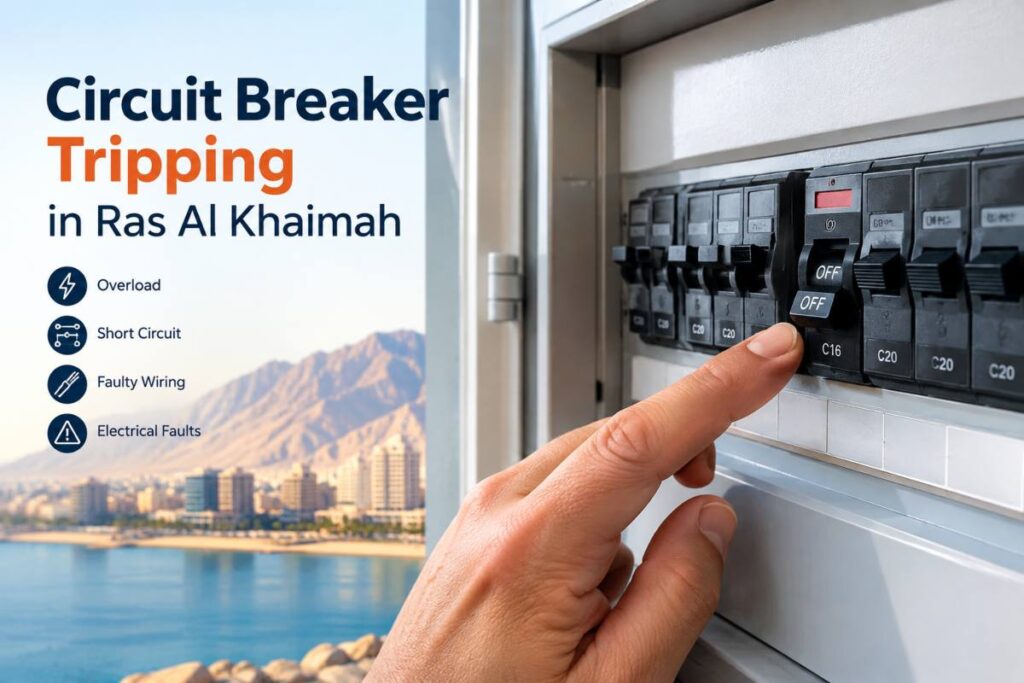
Circuit breaker tripping happens when it detects more current flowing through a wire than the circuit is rated to carry and it cuts the power automatically to stop the wire from overheating. In Ras Al Khaimah, this happens more often during the summer months, when air conditioners run for longer hours and put extra strain on ageing wiring and overloaded panels. A tripped breaker is not always serious, but repeated tripping is your electrical system’s way of warning you that something needs attention before it becomes a fire risk.
Faulty wiring is responsible for a large share of residential electrical fires worldwide and a breaker that keeps tripping is often the first visible sign of that risk. Understanding why your breaker trips and knowing which signs mean “reset it and move on” versus “call an electrician today,” can save you from a much costlier repair later.
This guide walks through the most common causes of breaker tripping in RAK homes, the warning signs that separate a normal trip from a dangerous one and the exact steps to take when your power goes out. If the problem turns out to be bigger than a simple reset, our electrical services team in Ras Al Khaimah can diagnose and fix it safely.
What Does It Mean When a Circuit Breaker Trips?
A tripped circuit breaker means the breaker has detected an unsafe electrical condition, usually too much current, a short or a ground fault and switched itself off to protect your wiring and appliances from damage. It is a built in safety response, not a malfunction on its own. The real question is always why it tripped, since the cause determines whether you need a simple reset or professional electrical work.
How a Circuit Breaker Works
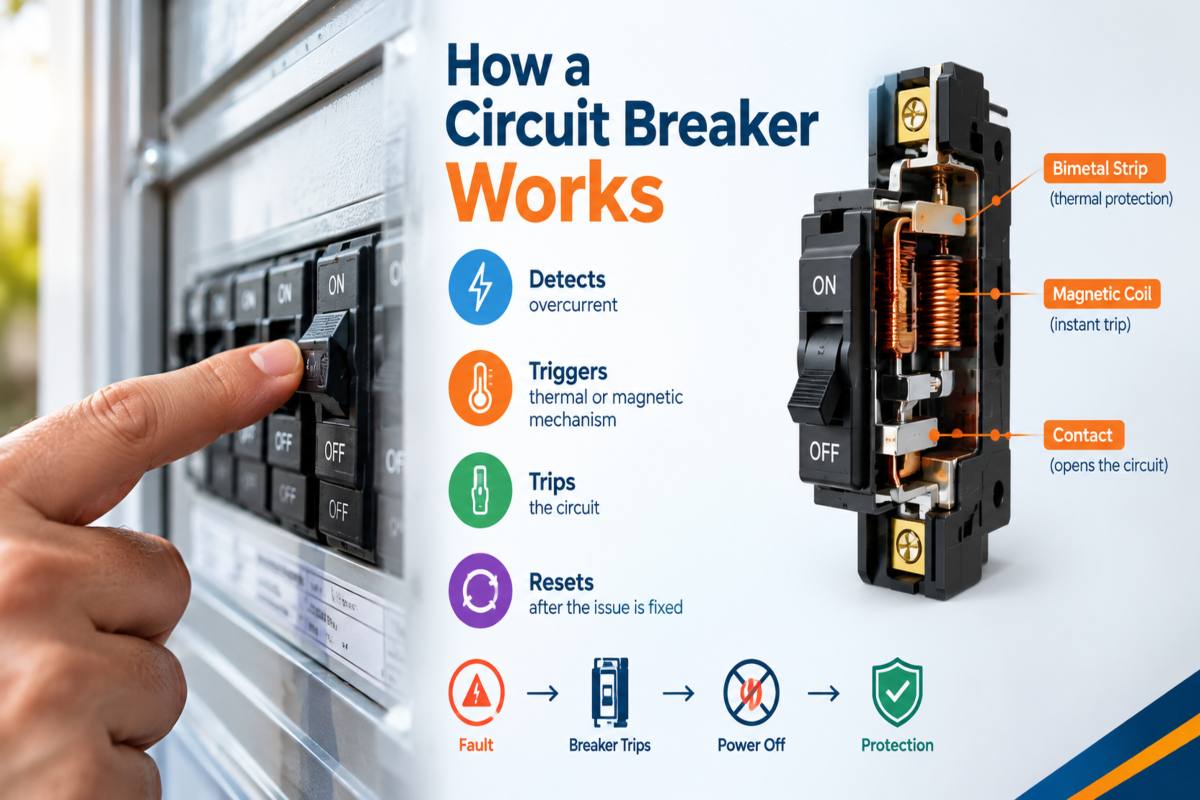
Every circuit breaker monitors the amount of current passing through it and compares that to a safe limit set for the wire size it protects. When current exceeds that limit, an internal switch, either a bimetallic strip that bends with heat or an electromagnet that reacts to current spikes, physically breaks the circuit within a fraction of a second. This stops the flow of electricity before wires overheat, insulation melts or a fire starts. Once the cause is cleared, the breaker can usually be reset and power restored immediately.
Circuit Breaker Trip vs Blown Fuse, What is the Difference?
A circuit breaker activates and is able to be reset. by flipping the switch back on, while a blown fuse burns out internally and must be physically replaced. Older properties in Ras Al Khaimah sometimes still use fuse boxes, but most modern homes and apartments run on circuit breaker panels because they are reusable, faster to restore and safer over the long term. If you are not sure which system your home has, checking the panel is the quickest way to tell, fuses have a visible glass or ceramic window, while breakers are switches.
Is Occasional Tripping Normal?
A single trip caused by plugging in too many high draw appliances at once, like an AC unit, kettle and washing machine on the same circuit, is generally normal and not a cause for concern. It becomes a problem when the same breaker trips repeatedly within days or weeks or when it trips with no clear overload cause, since this usually points to a wiring fault, a failing breaker or an appliance drawing more current than it should. In these cases, an electrician should inspect the panel and wiring rather than resetting the breaker on repeat, since a licensed electrical work inspection can catch a developing fault before it causes damage or a total power outage.
Why Is My Circuit Breaker Tripping? Common Causes
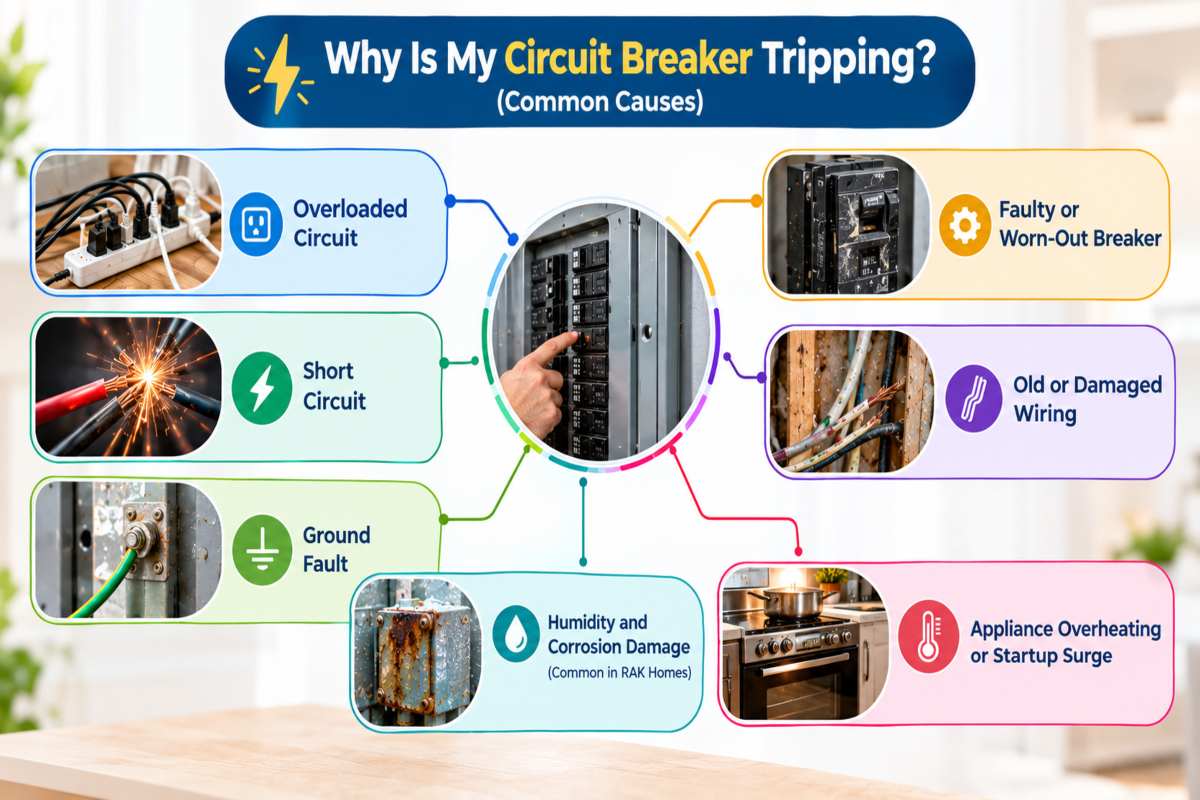
A circuit breaker trips because one specific fault is present on that circuit, too much load, a short, a ground fault, a worn component, damaged wiring, moisture damage or an appliance surge. Identifying which one applies to your home starts with checking the electrical box for signs of heat damage, corrosion or a breaker that won’t hold its reset position.
Overloaded Circuit
An overloaded circuit is the most common cause of tripping and happens when too many devices draw power from the same circuit at once, pulling more current than the wire is rated to handle. This is especially common in older RAK homes where a single circuit was designed for a handful of light fixtures but now also powers an AC unit, a fridge and several chargers. Spreading high draw appliances across different circuits, rather than one shared outlet strip, usually solves this without any repair needed.
Short Circuit
A short circuit happens when an energized wire comes into contact with another conductive material, touches a neutral wire, creating a sudden, uncontrolled surge of current that the breaker cuts off almost instantly. Unlike an overload trip, a short circuit trip is often immediate and forceful, sometimes accompanied by a burning smell or a visible spark near an outlet or switch. This is not something to reset repeatedly, a short circuit points to damaged insulation or a wiring fault that needs professional diagnosis.
Ground Fault
A ground fault happens when electrical current escapes its intended path and flows into a ground wire, metal casing or even water, often due to damaged wiring or a faulty appliance. Bathrooms, kitchens and outdoor sockets are the most common locations for ground faults because of their exposure to moisture. Ground fault circuit interrupters (GFCIs) are designed specifically to catch this fault type faster than a standard breaker, which is why GFCI outlets are recommended in wet areas.
Faulty or Worn Out Breaker
A breaker itself can wear out over time, especially after years of regular use and start tripping even under normal, non overloaded conditions. Signs of a failing breaker include a switch that feels loose, won’t stay in the “on” position or trips within seconds of being reset with nothing plugged in. Most residential breakers are built to last for decades, but heat exposure and frequent tripping cycles can shorten that lifespan considerably.
Old or Damaged Wiring
Aging or damaged wiring loses its insulation integrity over time, increasing the risk of shorts, ground faults and resistance related heat buildup that trips breakers unpredictably. Properties in Ras Al Khaimah built more than 15–20 years ago are more likely to have wiring that wasn’t designed for today appliance load, particularly multiple split AC units and larger kitchen appliances. A full wiring inspection is the only reliable way to confirm whether ageing wiring is the underlying cause.
Humidity and Corrosion Damage (Common in RAK Homes)
Ras Al Khaimah’s high humidity and coastal air accelerate corrosion inside electrical panels, connectors and breaker contacts, which can cause breakers to trip even without an obvious electrical fault. Corroded contacts create resistance, generate excess heat and eventually trigger the breaker’s safety mechanism as if there were an overload. This is one of the most overlooked causes in the region, since the panel can look fine from the outside while corrosion builds up internally.
Appliance Overheating or Startup Surge
Many appliances, particularly AC compressors, water heaters and motors, draw a brief surge of current well above their normal running load the moment they switch on. If a circuit is already close to its limit, this startup surge is often enough to push it over and trip the breaker, even though the appliance runs fine once started. Repeated tripping tied to one specific appliance turning on is a strong sign that either the appliance is faulty or the circuit needs rebalancing.
Circuit Breaker Buzzing, Humming or Blinking, What It Means
A buzzing, humming or blinking circuit breaker is warning you of a problem before it fully trips and it should never be ignored. These signals point to loose connections, arcing or internal breaker damage inside the electrical panel, issues that create heat and fire risk even when the power has not cut off yet.
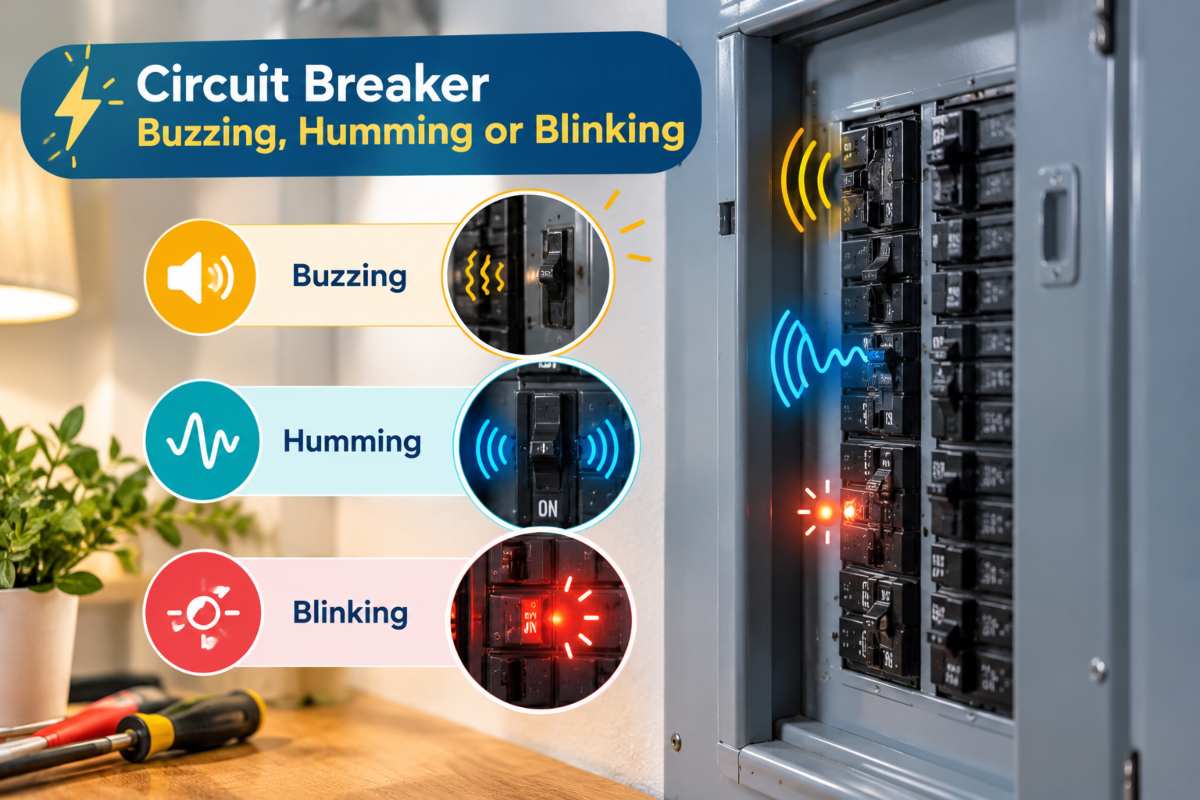
Breaker Buzzing or Humming Before It Trips
A breaker that buzzes or hums, especially just before it trips, is usually reacting to a loose wire connection or a failing internal component that is arcing slightly under load. Unlike the quiet click of a normal trip, this sound means electricity is jumping across a gap it should not be, generating heat that can damage the breaker or surrounding panel components over time. Any buzzing sound from a breaker or panel warrants a professional inspection, since it typically gets worse rather than resolving on its own.
Circuit Breaker Blinking Red (3, 5 or 6 Times), What the Signal Means
A breaker or smart panel that blinks red in a repeating pattern, commonly 3, 5 or 6 flashes, is using a built in fault code to indicate a specific problem, such as an overload, a ground fault or an internal breaker failure. The exact meaning varies by manufacturer, so the panel’s fault code chart or manual is the fastest way to confirm what the blink count refers to. These indicator lights exist precisely because some faults, like early stage arcing, do not always cause a full trip immediately.
Arc Faults vs Normal Overload Trips
An overload trip happens gradually as current builds past the safe limit, while an arc fault trip happens instantly when electricity jumps across a damaged or loose connection, creating a small, repeated spark. Arc faults are one of the primary contributors to electrical fires because the sparking can ignite nearby insulation or dust without ever drawing enough current to trigger a standard breaker. Homes with arc fault circuit interrupter (AFCI) breakers catch this fault type specifically, which is why upgrading older panels to include AFCI protection is one of the most effective fire prevention steps available.
Breaker Trips Immediately or Won’t Reset
A breaker that trips the instant you reset it or won’t reset at all, almost always means the fault causing the trip is still active on the circuit, not that the breaker itself is broken. Following basic electrical safety practices, such as unplugging everything on that circuit before attempting another reset, is the safest first step before deciding whether the problem needs a professional fix.
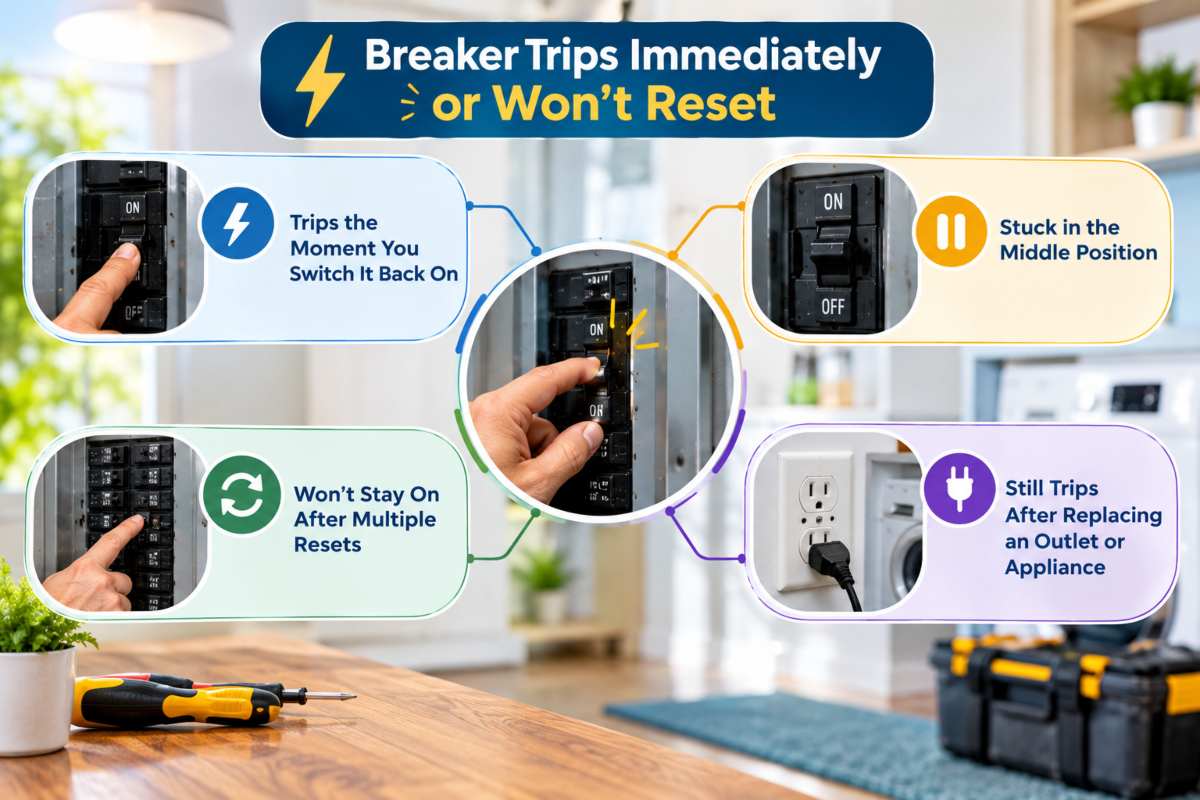
Breaker Trips the Moment You Switch It Back On
If a breaker trips within a second or two of being switched back on, with nothing plugged in and no appliances running, this usually points to a short circuit or ground fault somewhere in the wiring rather than an overload. An overload trip typically takes a few seconds to build up as current increases, while a short circuit or ground fault cuts power almost instantly because the fault is already present the moment power flows. Repeatedly forcing the breaker back on in this situation can damage the breaker further and should be avoided until the wiring is checked.
Breaker Stuck in the Middle Position
A breaker stuck between “on” and “off,” rather than sitting cleanly in either position, is signalling that it has tripped and needs to be fully switched off before it can be reset. Many people try to push a stuck breaker straight back to “on” without first flipping it firmly to “off,” which prevents the internal switch from resetting properly. If pushing it fully off and then back on doesn’t resolve the stuck position, the breaker mechanism itself may be worn out and need replacement.
Breaker Won’t Stay On After Multiple Resets
A breaker that keeps tripping again within seconds or minutes after every reset attempt indicates an ongoing fault, not a one time overload and should not be reset more than two or three times in a row. Continuing to force a reset on a breaker with an active fault increases the risk of overheating the breaker itself or missing a developing wiring problem. At this point, the safest move is to leave that circuit off and have an electrician trace the fault before restoring power.
Breaker Still Trips After Replacing an Outlet or Appliance
If a breaker keeps tripping even after you’ve swapped out the outlet or appliance you suspected was the cause, the fault is likely further upstream, in the wiring itself, a shared circuit or the breaker’s internal contacts. This is a common and frustrating scenario because it rules out the obvious fix without identifying the real one. In these cases, the issue typically requires tracing the circuit back to the panel to pinpoint exactly where the fault sits, rather than continuing to replace individual devices on the circuit.
AC Breaker Keeps Tripping in Ras Al Khaimah Homes
An AC breaker that keeps tripping is usually reacting to the extra current draw that comes with running air conditioning for extended hours in RAK’s heat, often combined with an ageing component inside the unit itself. Since AC units are the single biggest electrical load in most homes here, our AC troubleshooting services team sees this as one of the most frequent breaker related callouts during summer.
Why AC Units Trip Breakers More in Summer
AC units run far longer and more frequently during Ras Al Khaimah’s peak summer months, when outdoor temperatures regularly exceed 45°C, putting sustained strain on both the compressor and the circuit feeding it. This extended runtime means any weakness in the wiring, breaker or unit itself, which might go unnoticed in cooler months, gets pushed to its limit and trips the breaker. Homes with older AC units or panels not upgraded for modern cooling loads see this pattern the most.
Inverter vs Non Inverter AC Load Differences
Inverter AC units draw a steadier, more moderate current by adjusting compressor speed to match cooling demand, while non inverter units cycle on and off at full power, creating a repeated startup surge each time they kick in. This surge on non inverter systems is often the exact moment a marginal circuit trips, since the current spike briefly exceeds what a borderline breaker can handle. Homes running multiple non inverter split units on a shared circuit are especially prone to this kind of trip.
Failing AC Capacitor as a Trip Cause
A failing start or run capacitor forces the AC compressor to draw significantly more current than normal as it struggles to start or maintain speed, which is a common and often overlooked cause of AC breaker trips. Capacitors typically fail gradually, so the tripping may start as occasional and worsen over a few weeks before the unit stops starting altogether. Replacing a worn capacitor is usually a quick, low cost fix compared to the compressor damage that can result from ignoring it.
When AC Breaker Tripping Signals a Bigger Electrical Problem
If the AC breaker trips even after the capacitor, filters and unit itself have been checked and cleared, the cause is likely in the wiring, the breaker rating or the panel’s overall capacity rather than the AC unit. This is especially worth investigating in homes where multiple AC units were added over time without the electrical panel being upgraded to match the increased load. A full electrical assessment at this stage prevents the cycle of repeated resets and protects both the AC unit and the panel from long term damage.
Breaker Tripping in Specific Rooms
Where a breaker trips in your home is often as useful a clue as why it trips, since bathrooms, kitchens, garages and apartments each have different wiring demands and failure points. Identifying the room pattern narrows down the cause before an electrician even opens the panel.
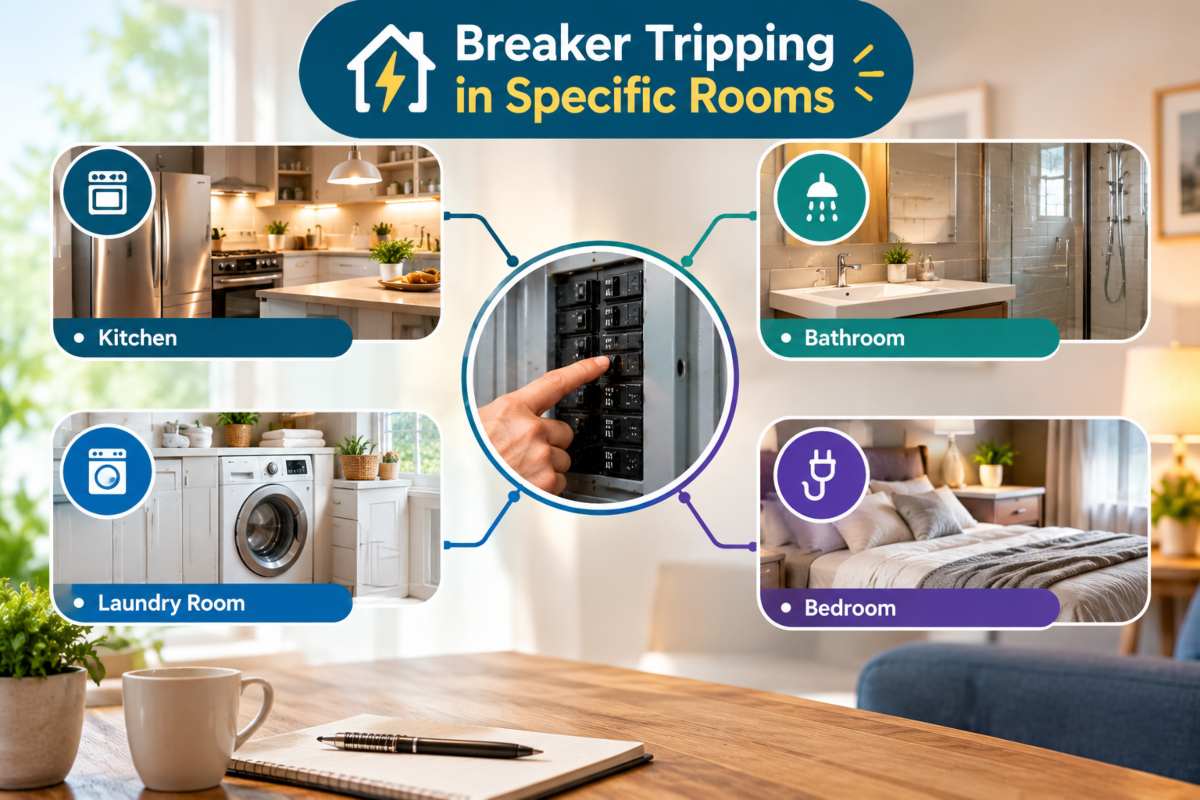
Bathroom Breaker Tripping
Bathroom breakers trip most often due to ground faults, since moisture from showers, sinks and condensation increases the risk of current leaking to ground through damaged insulation or a faulty outlet. This is precisely why bathroom circuits are required to run through GFCI protection, which reacts faster to moisture related faults than a standard breaker would. A bathroom breaker that trips repeatedly, especially after using a hairdryer or heater near water, should be checked for a failing GFCI outlet before anything else.
Kitchen Breaker Tripping
Kitchen breakers trip mainly from overload, since kettles, microwaves, ovens and fridges often share a single circuit that wasn’t designed to run several high draw appliances simultaneously. Running a kettle and microwave at the same time on an older kitchen circuit is one of the most common overload triggers in RAK homes. Splitting high draw kitchen appliances across separate circuits, where the panel allows it, usually resolves this without needing a repair.
Garage Breaker Tripping
Garage breakers commonly trip due to a combination of higher draw tools, extension cord overuse and exposure to dust or humidity that accelerates wear on outlets and wiring. Power tools in particular draw a startup surge similar to AC compressors, which can push an already loaded garage circuit past its limit. If garage tripping coincides with renovation work or new tool use, upgrading the circuit rather than relying on extension cords is the safer long term fix, something worth planning for if you’re already scheduling home renovation services that touch the electrical layout.
Apartment Circuit Breaker Tripping
Apartment breaker tripping is often tied to a smaller panel serving a full unit’s worth of appliances, meaning even normal daily use, like AC, laundry and kitchen appliances, can push a shared circuit past capacity. In older apartment buildings across Ras Al Khaimah, panels were sometimes sized for a lower baseline of appliance use than what’s common today. Where the building’s wiring allows it, rebalancing which appliances run on which circuit is usually the first fix to try before assuming a bigger fault is present.
Is a Tripping Breaker Dangerous?
A tripping breaker is not dangerous on its own, it is doing exactly what it is designed to do by cutting power before a fault causes real harm. The danger lies in ignoring repeated trips or forcing a reset without addressing the underlying cause, since that is when a manageable electrical fault can escalate into a fire risk or equipment damage.
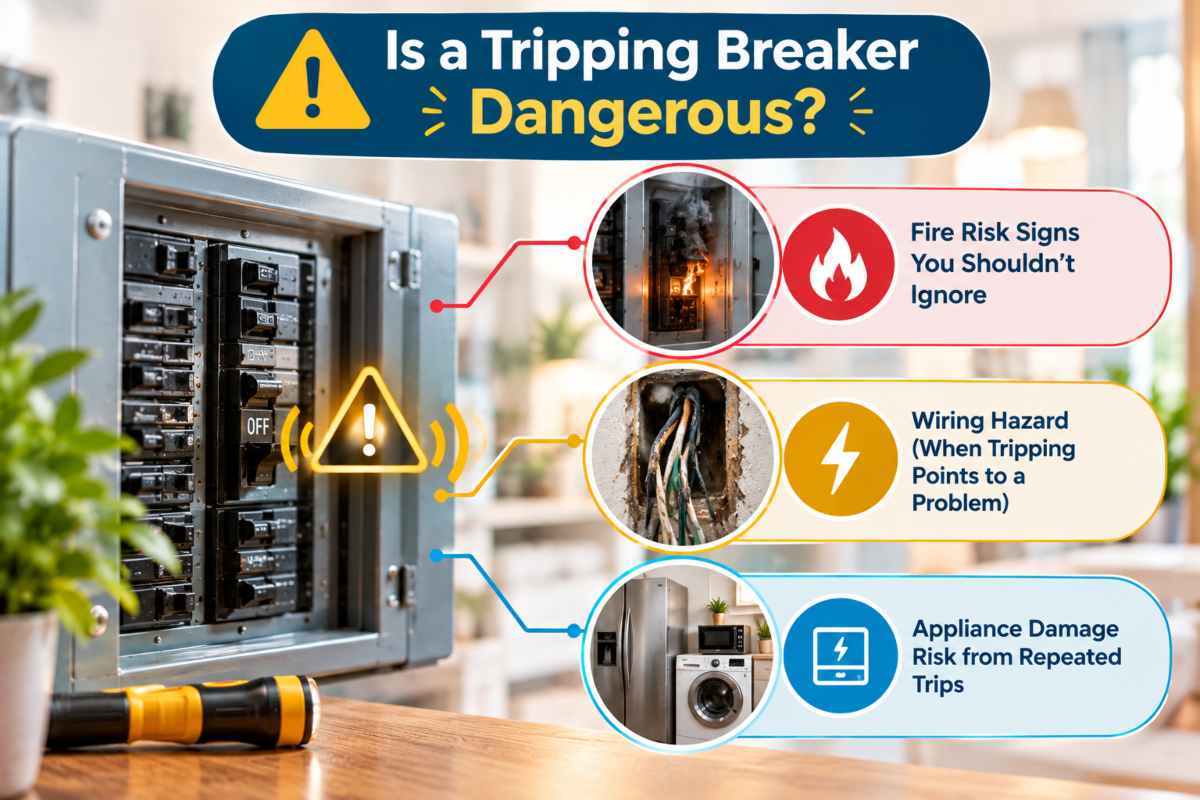
Fire Risk Signs You Should not Ignore
A breaker that trips alongside a burning smell, a warm or discoloured outlet, visible scorch marks or buzzing from the panel is signalling a fault serious enough to pose a genuine fire risk. Defective electrical wiring and machinery rank among the top contributors to residential fires and in most cases, warning signs like heat, smell or sound were present before the fire started. If you notice any of these signs, the safest step is to leave that circuit switched off and call an electrician immediately rather than resetting and continuing to use it.
When Tripping Points to a Wiring Hazard
Breaker trips that happen with no clear appliance cause, that worsen over a short period or that occur on multiple circuits at once usually point to a wiring hazard rather than a simple overload. This pattern is common in older RAK properties where insulation has degraded from heat and humidity over the years, increasing the risk of shorts and ground faults hidden inside the walls. Wiring hazards don’t resolve on their own and typically require tracing the circuit back through the panel to find and repair the damaged section.
Appliance Damage Risk from Repeated Trips
Every time a breaker trips due to a genuine fault, whatever caused the surge, whether an appliance, a compressor or a motor, is also being exposed to that same abnormal current, which shortens its lifespan over time. Appliances like AC units and refrigerators are particularly vulnerable, since repeated hard stops from tripping can stress compressors that are expensive to repair or replace. Addressing the root cause of a tripping breaker early doesn’t just protect your home, it protects the appliances plugged into it as well.
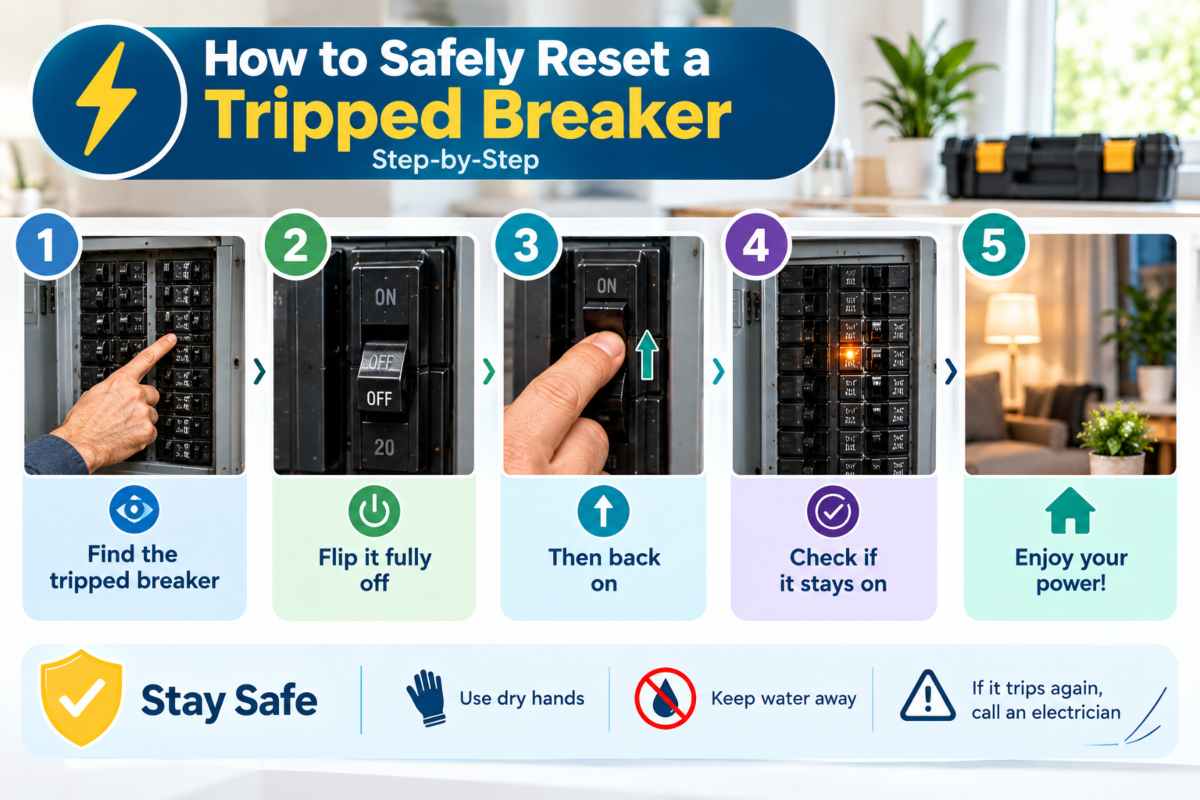
How to Safely Reset a Tripped Breaker Step by Step
Resetting a tripped breaker safely starts with switching off or unplugging whatever was running on that circuit before touching the panel, then flipping the breaker firmly off before turning it back on. This sequence matters because resetting a breaker while the original fault is still active can trip it again immediately or, in rare cases, cause further damage to the breaker itself.
Before You Touch the Panel
Before resetting anything, unplug or switch off all devices connected to the affected circuit and make sure your hands and the floor around the panel are dry, especially in humid conditions common across Ras Al Khaimah. Locate the tripped breaker by looking for the one sitting in the middle position or clearly switched to “off” among the others. If the panel itself feels warm, smells burnt or shows any scorch marks, skip the reset entirely and contact an electrician instead.
Step by Step Reset Process
- Switch off or unplug all appliances on the affected circuit.
- Locate the tripped breaker and push it fully to the “off” position first.
- Flip it back to “on” with a firm, single motion.
- Wait a few seconds to confirm it holds before plugging appliances back in one at a time.
- If it holds, reintroduce devices gradually to identify which one, if any, retrips the circuit.
What to Do If It Trips Again Immediately
If the breaker trips again as soon as you reset it or trips a second time within a few minutes, stop attempting further resets and leave that circuit switched off. This is a clear sign the fault is still present rather than resolved and continuing to force a reset increases the risk of damaging the breaker or missing a wiring issue that needs proper diagnosis. At this point, the safest and fastest path forward is a professional inspection. Our residential and commercial services team handles exactly this kind of persistent breaker fault across homes and businesses in Ras Al Khaimah.
When a Tripping Breaker Means You Need an Electrician
A tripping breaker needs a licensed electrician when it trips repeatedly with no clear appliance cause, resists resetting or shows warning signs like buzzing, burning smells or visible heat damage. At that point, the fault has moved beyond a simple overload and sits somewhere in the wiring or panel itself, an area that carries real risk if handled without the right tools and testing equipment.
Signs the Problem Is Beyond a DIY Fix
A breaker that trips within seconds of every reset, that trips on multiple circuits at once or that keeps tripping even after appliances have been unplugged and tested individually has moved past the point where troubleshooting at home will help. Similarly, any burning smell, scorch marks or a surface that has a warm sensation when touched signals a fault that needs professional testing rather than trial and error. Continuing to reset a breaker under these conditions doesn’t fix the underlying issue, it just delays finding it while the risk stays active.
What a Licensed Electrician Checks During a Breaker Inspection
A licensed electrician typically starts by testing the voltage and current draw on the affected circuit, then inspects the panel for loose connections, corrosion or heat damage before tracing the wiring for shorts or ground faults. They’ll also check whether the breaker itself is rated correctly for the load it’s carrying, since an undersized breaker on an upgraded circuit is a common and easily missed cause of recurring trips. This process usually identifies the exact fault within a single visit, allowing the repair, whether it’s a breaker replacement, a wiring fix or a panel upgrade, to be completed the same day in most cases.
Home Fix Circuit Breaker Repair and Panel Upgrade Pricing in Ras Al Khaimah
Circuit breaker repair costs in Ras Al Khaimah typically range from AED 150 for a straightforward diagnosis to AED 2,500 or more for a full panel upgrade, depending on the fault and the scope of work needed. The exact price depends on whether the issue is a single faulty breaker, damaged wiring or an outdated panel that needs replacing entirely.
Breaker Diagnosis Cost
A standard breaker diagnosis with Home Fix starts from AED 150–250, covering a full inspection of the affected circuit, the panel and any connected appliances to identify the exact cause of tripping. This charge is generally allocated for the repair cost if you proceed with the fix, so you’re not paying twice for the same visit.
| Service | Estimated Cost (AED) |
| Breaker diagnosis / inspection | 150–250 |
| Single breaker replacement | 200–450 |
| GFCI/AFCI breaker installation | 300–550 |
| Full panel upgrade | 1,500–2,500+ |
| Emergency callout (same-day) | 250–400 |
Prices vary based on panel brand, breaker amperage, wiring complexity and property type. Final pricing is confirmed after an on site or diagnostic assessment.
Single Breaker Replacement Cost
Replacing a single faulty breaker typically costs AED 200–450, including the part and labour and is usually completed within the same visit once the diagnosis confirms the breaker itself is the issue. Costs run higher for specialised breakers, such as GFCI or AFCI models, since these include additional fault detection circuitry beyond a standard breaker.
Full Panel Upgrade Cost
A full panel upgrade generally costs AED 1,500–2,500 or more, depending on the panel’s amperage rating, the number of circuits and whether additional wiring improvements are necessary to ensure the installation complies with the latest safety standards. This is usually recommended for older properties where the existing panel can’t safely support modern appliance loads, particularly homes that have added multiple AC units or renovated without upgrading the electrical capacity to match.
Emergency Callout Pricing
Emergency breaker repairs, including after hours and same day callouts, are priced from AED 250–400, covering urgent situations like a breaker that won’t reset, visible sparking or a total loss of power to part of the home. For homes and businesses that experience recurring electrical issues, an Annual Maintenance Contract with Home Fix covers routine panel inspections and priority callouts, which often catches breaker faults before they turn into emergencies.
Conclusion
A circuit breaker that trips occasionally is simply doing its job, but one that trips repeatedly, resists resetting or shows signs like buzzing or heat is telling you something in your home’s electrical system needs attention. In Ras Al Khaimah’s climate, where AC units run for months at a stretch and humidity accelerates wear inside panels, this kind of tripping tends to show up sooner than it would elsewhere, making early diagnosis the difference between a quick fix and a costly one.
The safest approach is straightforward: reset a breaker once or twice, but stop and call a professional if it trips again, won’t hold or comes with any warning sign of heat, smell or sound. Home Fix provides licensed electrical diagnosis and repair across Ras Al Khaimah, from single breaker replacements to full panel upgrades, so you can get your power back safely and know the underlying cause has actually been fixed.
Frequently Asked Questions (FAQs)
Why does my breaker trip when I turn on the AC?
AC compressors draw a brief power surge the moment they start and if the circuit is already close to its limit, that surge is enough to trip the breaker. This is more common with older non inverter units or circuits shared with other high draw appliances.
Is it normal for a breaker to trip occasionally?
Yes, a single trip caused by too many appliances running at once is normal and not a cause for concern. It becomes a problem only when the same breaker trips repeatedly without a clear overload cause.
Can a bad breaker damage my appliances?
A faulty breaker that doesn’t trip when it should can expose appliances to unsafe current levels, shortening their lifespan or causing damage. Repeated hard trips also stress motors and compressors over time.
How long does a circuit breaker last?
Most residential circuit breakers last 25–30 years under normal use, though frequent tripping or heat exposure can shorten this considerably. Panels in humid coastal areas like RAK may show wear sooner.
Can I replace a breaker myself?
Replacing a breaker involves working inside a live electrical panel, which carries serious safety risks without proper training and tools. This job should always be handled by a licensed electrician.