Electrical Safety Tips | Ras Al Khaimah Homes 2026
Electrical faults are among the leading causes of house fires and injuries in homes across Ras Al Khaimah. From ageing wiring in older villas to overloaded sockets in busy family homes, most hazards are preventable with the right precautions. This guide walks you through 10 essential electrical safety tips every Ras Al Khaimah household should know, covering everything from childproofing sockets to spotting the early warning signs of a faulty panel. Follow these steps to protect your family, your property, and your peace of mind.
Why Electrical Safety Matters for Ras Al Khaimah Homes
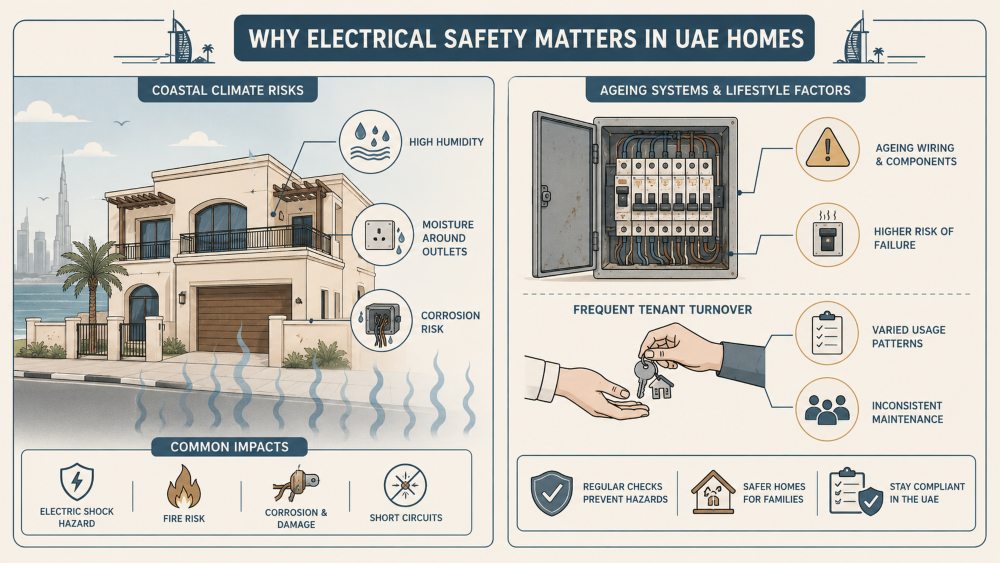
The UAE’s climate and housing landscape create unique electrical risks that homeowners often overlook. High humidity and coastal moisture accelerate corrosion in wiring, sockets, and connection points, especially in older villas and ground-floor apartments. Many properties also carry aging electrical infrastructure that wasn’t built for today’s load of air conditioners, kitchen appliances, and electronics putting extra strain on circuits never designed to handle it. Add to this the UAE’s high tenant turnover, where properties change hands frequently, and the fact that electrical issues from previous occupants often go unreported or unresolved. The result is a housing stock where hazards can quietly build up over time. Understanding these risk factors is the first step toward preventing them.
Common Causes of Home Electrical Hazards
Most home electrical hazards stem from a handful of recurring issues. Overloaded sockets and extension cords are among the most frequent culprits, especially in homes running multiple AC units and appliances off a single circuit. Damaged or frayed wiring, often hidden behind walls or furniture, can go unnoticed until it becomes a serious fire risk. Outdated electrical panels struggle to keep up with modern power demands, tripping frequently or failing to trip when they should. Moisture exposure in bathrooms, kitchens, and balconies accelerates corrosion on sockets and connections. Finally, DIY repairs by unqualified individuals are a common cause of hazards that a licensed electrician would have safely caught and corrected.
Warning Signs of a Faulty Electrical System
Faulty electrical systems rarely fail without warning; the signs are just easy to miss. Flickering or dimming lights, especially when an appliance switches on, often point to an overloaded circuit or loose wiring. A faint burning smell near outlets or the panel should never be ignored. Warm or discoloured switches and sockets indicate overheating beneath the surface. Frequent circuit breaker trips signal that your panel is struggling to manage the load. Buzzing or crackling sounds from outlets or panels are a clear sign that something needs immediate attention. If you notice any of these signs, it’s time to have a licensed electrician inspect your system before a minor issue becomes a major one.
Essential Electrical Safety Devices Every Home Should Have
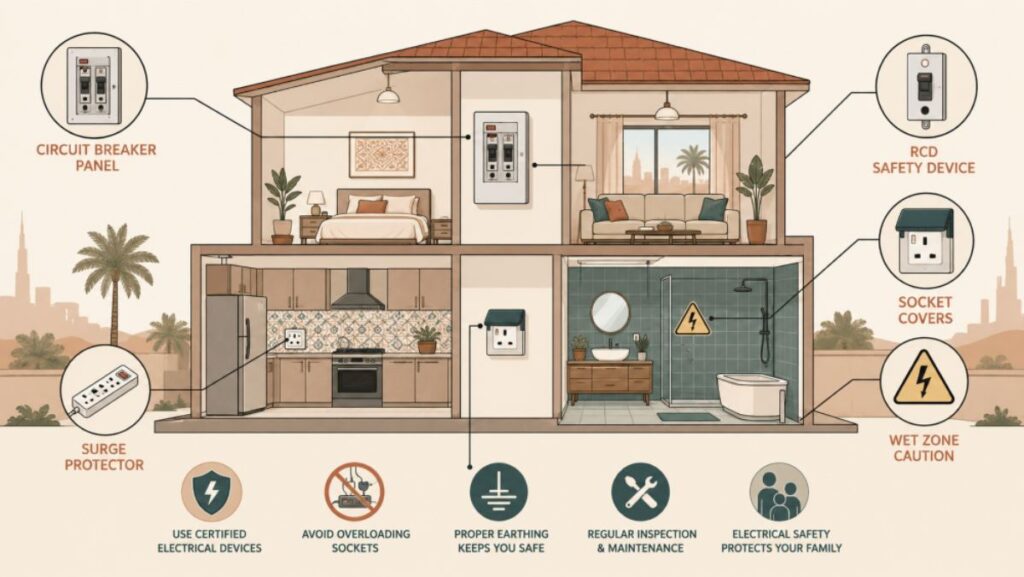
The right safety devices act as your home’s first line of defence against electrical hazards, catching faults before they turn into fires or shocks. Every Ras Al Khaimah household, regardless of property age or type, should be equipped with these three core protections.
Circuit Breakers and RCDs (Residual Current Devices)
Circuit breakers automatically cut power when they detect an overload or short circuit, preventing wires from overheating. RCDs take this protection a step further by monitoring the flow of electricity and instantly shutting off power if they detect current leaking to the ground, the kind of fault that causes electric shocks. Every home should have RCDs installed on circuits serving bathrooms, kitchens, and outdoor areas, where the risk of water contact is highest. If your property still relies on an older-style panel without RCD protection, upgrading is one of the most effective safety investments you can make.
Socket Covers and Childproofing Essentials
For homes with young children, socket covers are a simple but essential safeguard against accidental shocks from curious little hands. Tamper-resistant sockets, which use an internal shutter mechanism to block foreign objects, offer even stronger protection than basic plastic covers. Beyond sockets, cord organizers keep loose wiring out of reach, and outlet covers on unused sockets add another layer of protection throughout the home. These small additions make a significant difference in reducing the risk of injury during everyday household life.
Surge Protectors for AC and Appliances
The UAE’s heavy reliance on air conditioning means AC units and connected appliances are especially vulnerable to power surges, whether from grid fluctuations or lightning activity during storms. Surge protectors safeguard these devices by diverting excess voltage away from sensitive electronics, extending their lifespan and preventing costly damage. For high-value appliances like AC compressors, refrigerators, and home entertainment systems, a dedicated surge protector is a small cost compared to the price of premature replacement or repair.
Electrical Panel Safety: What Homeowners Need to Know
Your electrical panel is the control centre of your home’s entire power system, distributing electricity to every circuit and protecting against overloads. Yet it’s often the most neglected component, checked only when something goes visibly wrong. Understanding how to read the warning signs and knowing your own limits can prevent a small issue from becoming a serious hazard.
Signs Your Panel Needs Inspection
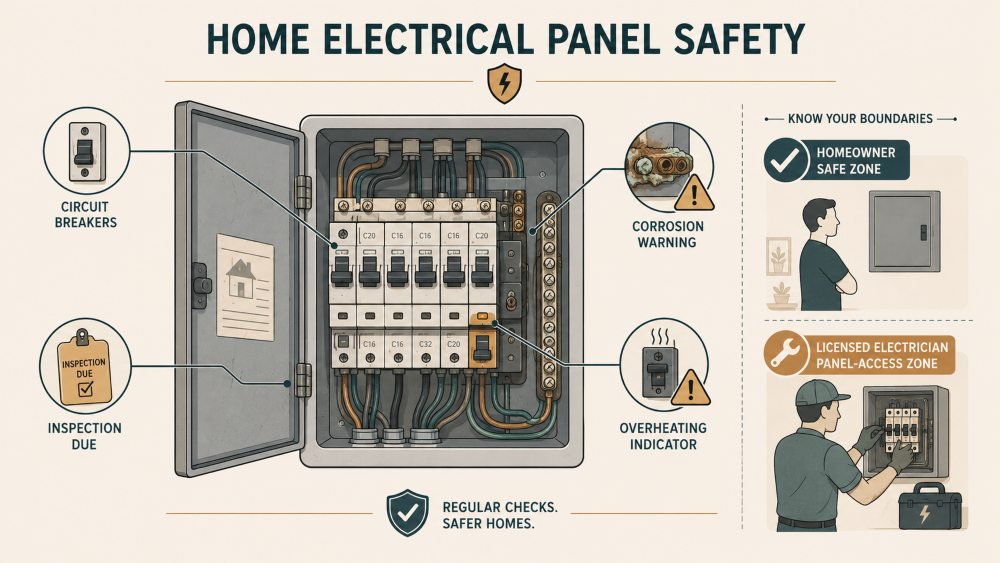
A handful of red flags indicate your panel needs professional attention. Breakers that trip repeatedly, even under normal household use, suggest the panel is struggling to handle your home’s electrical load. Rust, discoloration, or visible corrosion on the panel itself points to moisture damage that can compromise its safety. A burning smell or heat coming from the panel box is never normal and should be treated as an emergency. Buzzing sounds, flickering lights across multiple rooms, or an outdated fuse-based system (rather than modern circuit breakers) are all signs your panel may no longer meet the safety demands of a modern household. If your panel is more than 15-20 years old, a routine inspection is worth scheduling even without obvious symptoms.
DIY vs. When to Call a Licensed Electrician
Basic tasks like resetting a tripped breaker or replacing a socket cover are safe for most homeowners to handle. But anything involving the panel itself, rewiring, upgrading capacity, or diagnosing recurring trips should always be left to a licensed electrician. Working on a live panel carries serious risks of electric shock and fire, and UAE building regulations require certified professionals for most panel-related work. If you notice any of the warning signs above, or simply haven’t had your panel inspected in years, scheduling a professional electrical safety inspection is the safest and most reliable path forward.
Preventing Electric Shocks in Wet Areas
Bathrooms and kitchens are the two rooms in any Ras Al Khaimah home where water and electricity are most likely to meet, making them the highest-risk areas for electric shock. A few simple precautions in these spaces can dramatically reduce the danger, even in homes with older wiring or humid coastal conditions.
Safe Distance from Water Sources
Electrical outlets and switches should always be positioned well away from sinks, showers, and bathtubs to prevent accidental water contact. As a general rule, sockets in bathrooms should be kept outside splash zones, and any appliance used near water, such as hairdryers, shavers, or kitchen mixers, should never be handled with wet hands or while standing on a damp floor. Extension cords have no place in bathrooms and should be used with caution in kitchens, kept clear of sinks and countertops where spills are common. If an outlet is positioned too close to a water source in your home, it’s worth having an electrician assess whether it meets safe clearance standards.
Grounding and Earthing Basics
Proper earthing provides a safe path for electrical faults to ground rather than through a person, making it one of the most important protections in wet areas. Every bathroom and kitchen circuit should be connected to a properly earthed system and, ideally, protected by an RCD for an added layer of defence against shock. Signs of poor earthing include mild tingling sensations when touching appliances, flickering lights when devices are switched on, or persistent buzzing from sockets. These issues are easy to miss but serious to leave unresolved. If you’re unsure whether your bathroom or kitchen circuits are properly earthed, a qualified electrician can test the system and correct any gaps in protection.
Child and Family Electrical Safety at Home
Children are naturally curious about the world around them, and electrical outlets, cords, and switches often become objects of fascination long before kids understand the danger they pose. Creating a child-safe electrical environment doesn’t require major renovations; it just requires a combination of the right protective measures and early education.
Socket Covers and Cord Management
Every accessible socket in a home with young children should be fitted with a cover or, ideally, upgraded to a tamper-resistant outlet that automatically blocks foreign objects. Loose cords are just as much a hazard as exposed sockets, since children can chew on them, trip over them, or pull appliances down by tugging on a dangling wire. Cord organizers and cable clips keep wiring bundled and out of reach, while furniture can be arranged to block access to outlets in play areas. In rooms where kids spend the most time, it’s worth doing a walk-through at their eye level and height to spot hazards an adult might otherwise overlook.
Teaching Kids Basic Electrical Safety Rules
Childproofing the home is only half the equation; teaching kids to understand basic electrical safety helps protect them everywhere, not just at home. Simple, age-appropriate rules go a long way: never put fingers or objects into sockets, keep electronics away from water, and always tell an adult if a cord or appliance looks damaged. Older children can learn to recognize warning signs like sparks, unusual smells, or a switch that feels warm to the touch. Reinforcing these habits consistently helps them carry safe practices into any environment they encounter, not just the one you’ve childproofed for them.
One thing worth flagging: this page is currently targeting the UAE rather than RAK-specific (per your earlier instruction to broaden it from Ras Al Khaimah to the UAE). That’s a deliberate departure from your usual RAK-first positioning. If you’d rather keep this piece aligned with your standard local strategy, I can pull the H1, meta title, and geographic references back to Ras Al Khaimah. Just let me know.
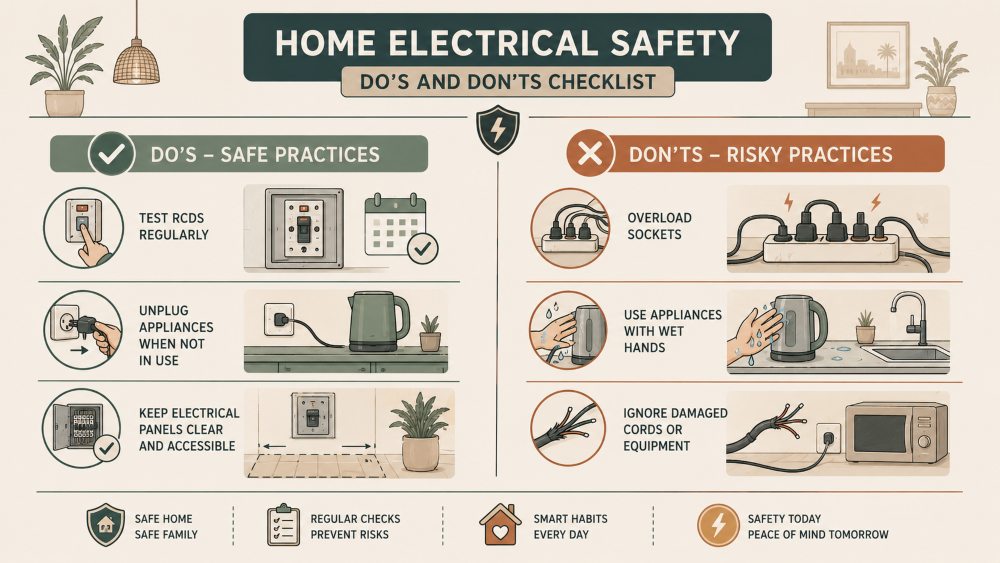
Do’s and Don’ts: A Quick-Reference Home Electrical Safety Checklist
Do:
- Test RCDs and circuit breakers every few months to confirm they’re working
- Unplug appliances before cleaning or servicing them
- Keep electrical panels accessible and free of clutter
- Schedule a professional electrical inspection at least once a year
- Replace worn or frayed cords as soon as you notice damage
Don’t:
- Overload sockets or extension cords with multiple high-power appliances
- Use electrical appliances with wet hands or near water sources
- Attempt DIY repairs on your panel or internal wiring
- Ignore warning signs like flickering lights, burning smells, or warm switches
- Run cords under carpets or rugs where damage can go unnoticed
When to Call a Professional Electrician
Some electrical issues are safe to handle yourself, but many aren’t worth the risk. If you’re dealing with repeated breaker trips, exposed or damaged wiring, a burning smell, or an outdated panel, it’s time to bring in a licensed professional rather than attempt to fix yourself. Home Fix’s certified electricians provide thorough inspections, panel upgrades, and repairs across Ras Al Khaimah, catching hazards before they become costly emergencies. If anything in this guide sounds familiar, book an electrical safety inspection with our team today.
Frequently Asked Questions (FAQs)
What are the most common electrical hazards at home?
The most common hazards include overloaded sockets, damaged or frayed wiring, outdated electrical panels, moisture exposure in bathrooms and kitchens, and DIY repairs carried out without proper training.
How often should home wiring be inspected?
Home wiring should be professionally inspected at least once every 1-2 years, or immediately if you notice warning signs like flickering lights, frequent breaker trips, or a burning smell near outlets.
Is it safe to fix electrical faults myself?
Minor tasks, such as resetting a breaker or replacing a socket cover, are generally safe. Still, any fault involving wiring or the panel, or any persistent issues, should always be handled by a licensed electrician to avoid the risk of shock or fire.
What’s the average cost of an electrical safety inspection in Ras Al Khaimah?
| Service | Estimated Cost (AED) |
|---|---|
| Basic Home Electrical Inspection | 150 – 300 |
| Panel Inspection and Testing | 250 – 500 |
| Full Property Electrical Audit | 500 – 1,200 |
| RCD / Circuit Breaker Installation | 200 – 450 per unit |