
How to Protect Wood from Humidity in Ras Al Khaimah

To protect wood from humidity in Ras Al Khaimah, keep indoor air between 40% and 60% relative humidity, seal every surface of the wood with a suitable finish and fix moisture sources such as leaks and poor ventilation before they cause damage. Wood absorbs and releases water from the air, so when humidity stays above that range, it swells, warps, cracks and grows mould.
In RAK, this is a year round concern for homeowners. The coastal air is often humid in summer and the constant switch between hot outdoor air and cool air conditioning can leave moisture on cold surfaces. Doors start to stick, wardrobes lose their shape and white spots appear on furniture, usually before most people notice the cause.
This guide explains why humidity harms wood, how to spot early damage and what you can do to prevent it. It also covers when professional carpentry works are the safer choice.
Why Humidity Damages Wood in Ras Al Khaimah Homes
Humidity damages wood because wood constantly takes in and gives off water vapour and in RAK’s coastal climate it spends much of the year holding more moisture than it was built for. The result is swelling, warping, cracking and mould. Three things drive it here how wood behaves as a material, the humid coastal air and the moisture created inside the home by air conditioning.
How wood absorbs and releases moisture
Wood is hygroscopic, which means it trades water with the surrounding air until the two are in balance. When the air is damp, the fibres take on moisture and expand. When the air is dry, they release it and shrink. Because wood moves more across the grain than along it, the change is uneven and that is what bends boards, loosens joints and splits panels. Furniture and joinery generally stay stable when indoor relative humidity sits between about 40% and 60%. Once it stays above roughly 60%, swelling and mould become far more likely.
RAK coastal climate and summer humidity
Ras Al Khaimah sits on the Gulf coast and the sea air carries a lot of moisture, especially through the long summer. Homes near the water, such as those on Al Marjan Island or around Mina Al Arab, tend to feel this most, though inland areas are not immune. Wood that is bare, thinly finished or sealed on only one side takes up this moisture faster. Wooden doors, wardrobes, kitchen cabinets and balcony furniture are usually the first to show it. A door that begins to stick in the frame is often the earliest warning.
Why AC on and off cycles and condensation add stress
Air conditioning removes some humidity, but uneven use can make wood life harder. When a room is cooled hard and then left to warm up, the air and the wood swing between dry and damp conditions and the wood keeps swelling and shrinking with them. Warm, humid air can also meet a cold surface, such as a chilled wall or window frame and condense into water on or behind nearby wood. That hidden moisture is a common cause of mould, white spots and soft, weakened timber. If damage has already spread across several rooms, it may be worth looking at broader home renovation services rather than patching one item at a time.
Signs Humidity Is Already Damaging Your Wood
The clearest signs of humidity damage in wood are doors and drawers that stick, boards that bend or cup, cracks along the grain and white spots, mould or a musty smell. Spotting these early matters, because most of them can be corrected while the wood is still sound. Left alone, the same moisture can lead to rot.

Swelling, sticking doors and drawers
A door that rubs the frame, a drawer that no longer slides freely or a cabinet that will not close flush usually means the wood has absorbed moisture and expanded. The problem often appears in summer and eases when the air dries, which is why many homeowners ignore it. If it keeps coming back, check the edges of the door or drawer. Unsealed edges and the top and bottom of a door soak up the most water. Forcing a swollen door shut can damage the hinges and frame, so it is better to find the cause first.
Warping and cupping
Warping happens when one side of a board takes on more moisture than the other, so the wood bends out of shape. Cupping is the most common form, the edges of a board curl up so the surface looks like a shallow dish. You may see gaps along a wardrobe door, a tabletop that rocks or a wooden door that no longer sits flat in its frame. Mild bending can sometimes settle once the humidity is brought under control, but a door that has set into a curve usually needs more work. For that situation, see our guide on how to fix a warped wooden door.
Cracking and splitting
Cracks appear when wood swells and shrinks again and again and the fibres cannot keep up. Fine lines in the finish are an early sign, while splits along the grain, loose joints and open seams mean the movement has already stressed the structure. Humidity is often blamed for swelling alone, but cracking is just as much a humidity symptom, because it follows the drying phase after wood has been damp. Pay particular attention to tabletops, panel doors and the corners of cabinet frames, where the stress builds up first.
White spots, mould and a musty smell
White or cloudy patches on a polished surface often point to moisture trapped in or under the finish. Black, green or grey spots, fuzzy growth and a damp, musty smell are signs of mould. Mould and decay fungi need damp conditions and wood with a moisture content above about 20% is generally considered at risk of decay. A smell with no visible spots can still mean moisture is hiding behind a wardrobe, under a cabinet or inside a wall cavity. If mould returns after cleaning, the water source has not been fixed yet.
What Is the Ideal Humidity Level for Wood Furniture?
The ideal indoor humidity for wood furniture is between 40% and 60% relative humidity, ideally held as steady as possible. Within that range, wood stays stable and is much less likely to swell, shrink, crack or grow mould.
The safe 40 60% range
Relative humidity measures how much water vapour the air holds compared with the most it could hold at that temperature. For wood furniture, the 40 60% band is the commonly recommended comfort zone. Above about 60%, wood absorbs moisture and starts to swell and mould becomes a real risk. Below about 40%, the wood dries out and can shrink, crack or loosen at the joints. In a humid coastal city like Ras Al Khaimah, the upper limit is usually the one to watch, especially in summer and in rooms with little ventilation.
How to measure it with a hygrometer
A hygrometer is a small, inexpensive device that shows the humidity in a room and it is the only reliable way to know your actual level. Digital models are easy to read and often show temperature as well. Place it in the room where your wood furniture stands, away from direct sunlight, air conditioning vents, windows and kitchen or bathroom steam, as these can give a false reading. Check it at different times of day for a week or two, since humidity often changes between morning, afternoon and night. A single reading tells you little, but a pattern shows you whether the room needs help.
Why steady humidity matters more than a perfect number
Wood copes better with a stable environment than with a perfect one, because the damage comes mainly from repeated change. When humidity rises and falls sharply, the wood keeps swelling and shrinking and that constant movement is what loosens joints, splits panels and breaks finishes. A room that stays around 55% most of the time is safer than one that jumps between 35% and 70%. In practice, this means avoiding sudden swings, running the AC at a steady setting, ventilating damp rooms and not switching cooling fully off for long periods.
How to Protect Wood from Humidity Step by Step
To protect wood from humidity, keep the room’s relative humidity between 40% and 60%, give the wood space away from damp walls and sun, seal every face of it with a suitable finish and only apply that finish once the wood is fully dry. Done in this order, each step supports the next and together they stop most swelling, warping and mould before it starts.
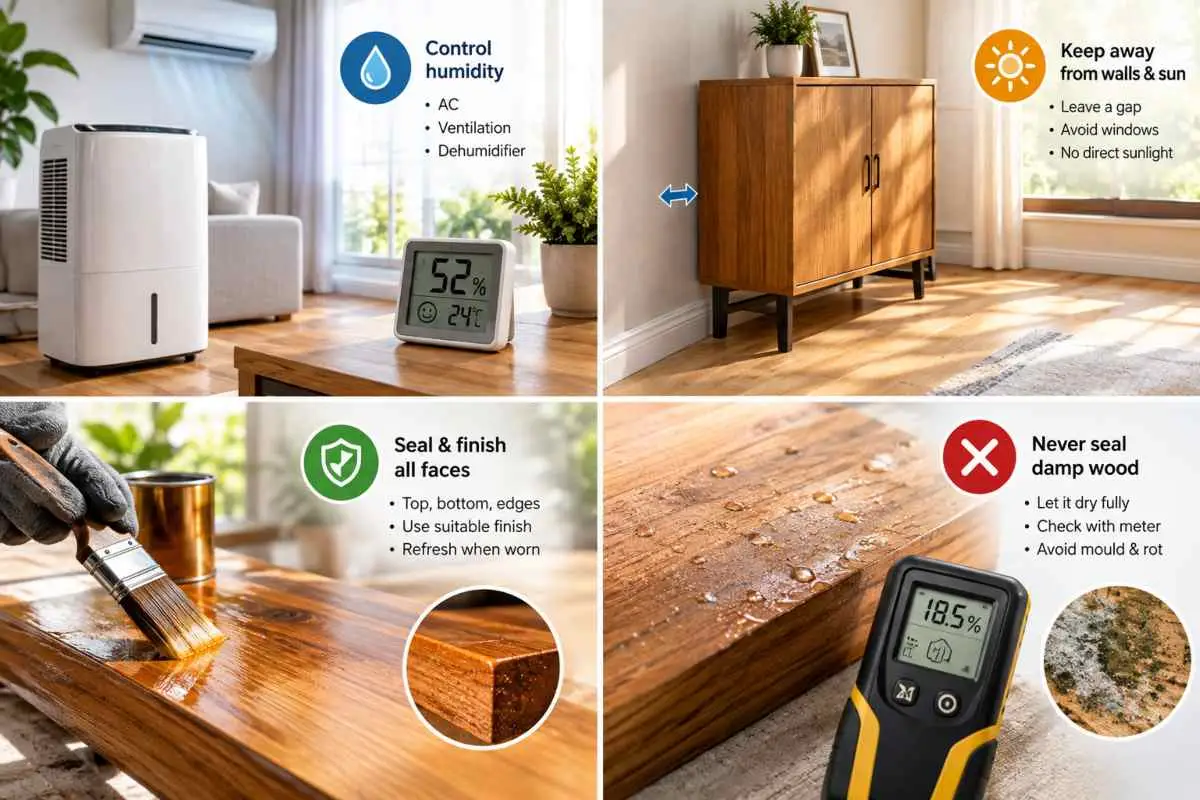
Control indoor humidity (AC, ventilation and dehumidifying)
The most effective step is to control the air itself, because every other protection works better in a stable room. Run your air conditioning at a steady, moderate setting rather than switching it fully on and off, since air conditioners remove moisture as they cool. Use extractor fans in bathrooms and kitchens and open windows briefly during drier parts of the day only if the outside air is less humid than the air inside. In rooms that stay damp, such as a storeroom or a ground floor space, a dehumidifier can pull the level down. Place a hygrometer in the room to check that humidity stays below about 60%.
Keep wood away from walls, windows and direct sunlight
Wood needs a little breathing space, because the areas around it are where moisture collects. Leave a small gap between wardrobes, cabinets and furniture and the wall behind them, so air can move and condensation does not sit against the back panel. Avoid placing wood against cold external walls or directly under window frames where water can form on the glass. Direct sunlight causes the opposite problem, drying and fading the surface unevenly, which makes cracking more likely. A spot with steady light and good airflow is usually the safest.
Seal and finish all faces of the wood, including edges
A finish slows the rate at which wood takes in and releases moisture, but only if it covers the whole piece. Apply varnish, sealer or oil to every face, including the edges, the top and bottom of doors and the back of panels. Unsealed edges and end grain absorb water fastest and a door sealed on the front but not the bottom will still swell.
Choose a finish suited to the room, such as a more water resistant coating in a bathroom or kitchen and plan to refresh it when it begins to look worn or dull. Indoor wood is generally considered stable when its own moisture content sits at roughly 6% to 12%, which is the condition a finish is meant to help it keep.
Never seal damp wood (it traps moisture inside)
Applying a sealer, wax or oil over damp wood locks the water in, so it cannot evaporate. That trapped moisture can lead to mould under the finish, cloudy patches, peeling and eventually rot. Before you finish any piece, let it dry fully in a well ventilated room and if it feels cool or moist to the touch, wait. A moisture meter is the most reliable check. Damp wood that has been sealed can also hide deeper problems, including insect activity, so if you notice soft spots, fine dust or crumbling, read about termite damage wood repair before you refinish.
Waterproofing Wood Treatments and Finishes That Work
The best way to waterproof wood is to apply a sealer, varnish or oil that suits the room, in several thin coats, on all faces of the wood. No finish makes wood completely waterproof, so the realistic goal is strong water resistance that slows moisture absorption and gives you time to wipe up spills and condensation.
Sealers, varnishes and oils how they differ
These three finishes protect wood in different ways. A sealer soaks into the surface and blocks pores, which reduces how much water the wood can take in and it is often used as a base coat. Varnish, including polyurethane, forms a hard film on top of the wood, giving the strongest barrier against splashes and the easiest surface to wipe clean, though it can crack or peel if the wood moves a lot. Oil, such as tung or Danish oil, soaks into the fibres and leaves a natural, low sheen look. It is simple to touch up, but it protects less against standing water. In general, film finishes suit surfaces that get wet and oils suit pieces where appearance and easy repair matter more.
Waterproof wood treatment for indoor use
For indoor furniture, doors and joinery, a water based or oil based polyurethane varnish is a practical choice, because it resists moisture, stains and everyday wear. Prepare the wood by sanding smooth and removing dust, then apply thin coats and let each one dry fully before the next. Two to three coats is a common standard for interior surfaces and thin layers cure better than one thick layer. Always test on a hidden area first, since some finishes darken the wood or change its colour. Remember that finishing only slows moisture movement, so it works best alongside steady indoor humidity.
Wood sealer for high humidity rooms
Bathrooms, kitchens, laundry areas and rooms near the coast need a tougher protective system. Use a sealer or varnish labelled for damp or wet areas and pay special attention to the places water reaches first, such as the bottom edge of doors, the edges of cabinet panels and joints around sinks. Add an extra coat on these zones. Ventilation still matters, because a finish cannot protect wood from constant steam and an extractor fan or open window after showers or cooking will help the coating last. If the wood is already swollen or stained, deal with that first rather than sealing over it.
How often to re apply
Reapply a finish when it starts to look worn, not by the calendar alone. Signs include dull patches, fine cracks, peeling, water that no longer beads on the surface or darkening where moisture has got in. Oils usually need refreshing most often, particularly in damp rooms, while varnished surfaces last longer but must be lightly sanded and recoated before they fail completely. As a rough guide, check high humidity areas every year and other indoor pieces every few years. Catching wear early is much easier than stripping and refinishing damaged wood.
How to Stop Wood from Swelling and Warping
To stop wood from swelling and warping, first lower the humidity around it so the moisture can leave naturally, then correct the shape gently and seal it once it is dry. Acting early matters, because wood that has only swollen often recovers, while wood that has set into a bend or begun to rot cannot.
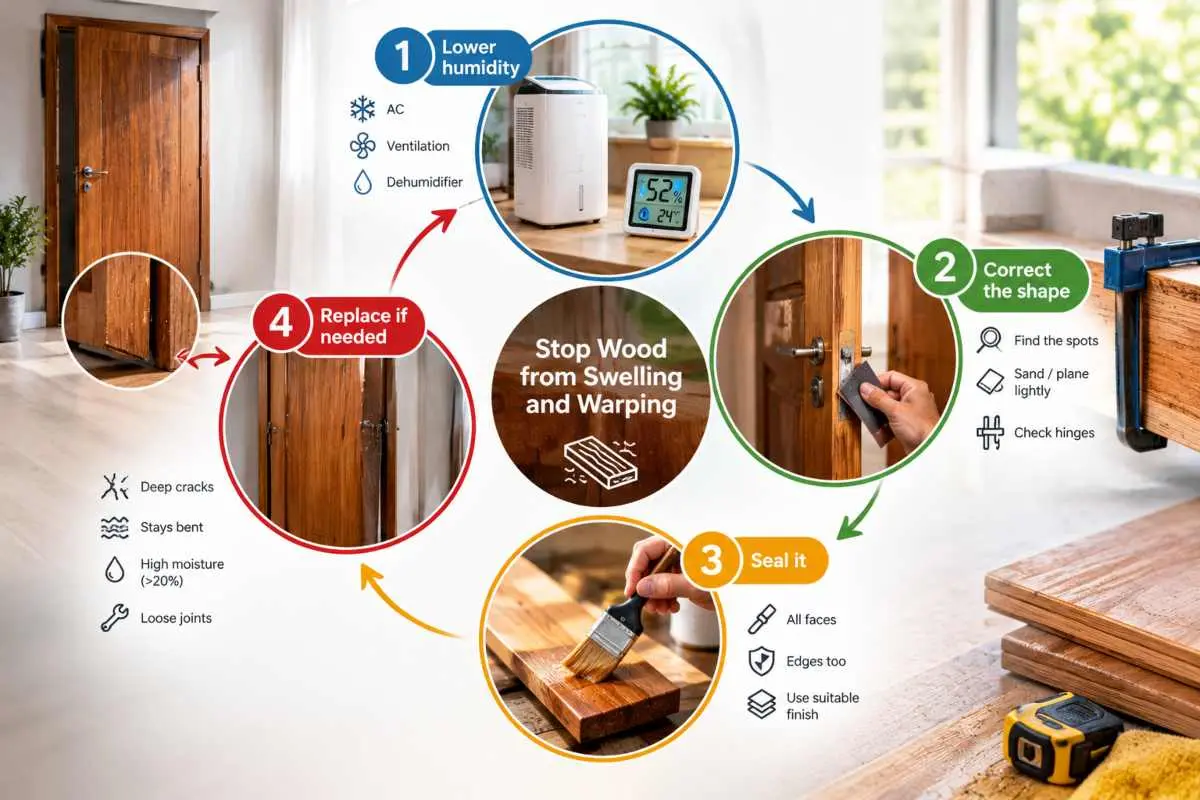
Fixing a swollen wooden door that sticks
A swollen door needs time to dry before you cut anything. Bring the room humidity down with steady air conditioning or a dehumidifier and see whether the door eases over several days. If it still rubs, find exactly where it sticks by looking for shiny or scuffed patches on the edge or by sliding a thin sheet of paper around the frame. Sand or plane only those spots, taking off a little at a time.
Removing too much while the wood is swollen can leave a visible gap once it dries and shrinks back. Then seal the bare edges, including the top and bottom, so the door stops absorbing moisture. If the door still catches after the wood has dried, the cause may be loose or sagging hinges rather than swelling, so check door hinge repair before removing more wood.
Flattening and correcting early warping
Mild warping can often be corrected if the wood is still sound. Move the piece to a dry, well ventilated room away from direct sun and let it stabilise. For a slightly bowed board or panel, gentle, even pressure on the curved side with clamps and flat battens can bring it back over time and it should be done gradually rather than forced. Keep in mind that wood moves more across its width than along its length, so even a small change in moisture can bend a wide panel. Once the piece is flat and dry, seal every face evenly, because a finish applied to one side only encourages the wood to curve again.
When swelling means replacement
Replacement is the sensible choice when the damage will not reverse. Signs include a door or panel that stays bent after drying, deep cracks through the grain, soft or crumbling areas and joints that have come apart. Wood that stays above roughly 20% moisture content is generally at risk of decay, so a piece that feels spongy or smells damp is unlikely to be saved by sanding. Replacing early is usually cheaper and safer than repeated repairs, especially for load bearing frames or doors that no longer close securely. If you are unsure whether a piece can be saved, a carpenter can check the moisture level and the structure before you decide.
How to Remove Mould and White Spots from Wood
To remove mould from wood, wipe the surface with a gentle soap solution or diluted white vinegar, dry it fully and fix the damp source so it does not return. White spots are usually moisture trapped in the finish and they often fade with gentle drying and buffing. Mould needs moisture to grow, which is why drying the wood quickly matters as much as cleaning it.
Safe cleaning steps for furniture
Start by moving the piece outdoors or into a well ventilated room and wear gloves and a dust mask so you do not breathe in spores. Brush or vacuum off loose growth with a soft brush first, ideally using a vacuum with a filter. Then wipe the surface with a cloth dampened in warm water and a little mild soap or in a solution of white vinegar and water.
Work gently, because soaking wood adds the moisture you are trying to remove. Avoid bleach, which can discolour wood and leave extra water behind. Dry the piece straight away with a clean cloth and leave it in a breezy, dry spot. Mould can begin growing on damp surfaces within about 24 to 48 hours, so drying quickly is part of the cleaning. Throw away the clothes afterwards or wash them hot.
Removing white spots and water marks
White spots and cloudy rings usually sit in the finish rather than the wood itself, caused by moisture or heat trapped in the coating. For fresh marks, rub gently along the grain with a soft, dry cloth and a little furniture wax can help blend the area. A hairdryer on a low setting, held at a distance and moved constantly, can draw out light moisture, but stop if the surface becomes hot. For stubborn rings, fine steel wool (grade 0000) rubbed lightly with the grain and followed by wax can smooth the mark. If the spot is dark or has gone into the wood itself, the finish has been breached and the area will need sanding and re finishing. Test any procedure on a hidden spot first.
Preventing mould from coming back
Mould returns when the conditions that created it remain, so the fix is to remove the moisture. Keep indoor humidity under about 60%, leave a small gap between furniture and walls so air can circulate and wipe away condensation as soon as you see it. Check hidden areas such as the back of wardrobes and the insides of cabinets, where damp air tends to sit unnoticed.
If mould keeps appearing on the same piece after cleaning, look for a leak or a cold, damp wall behind it. Persistent growth inside units under a sink often points to a plumbing or sealing issue and in that case kitchen cabinet repair may be needed, see kitchen cabinet repair for guidance.
Protecting Wood in Different Parts of Your Home
Each part of the home puts a different kind of moisture stress on wood, so the best protection is matched to the location. Doors need sealed edges, bathrooms need ventilation and tougher finishes, wardrobes and cabinets need airflow and outdoor wood needs a weather resistant coating and shelter.

Wooden doors
Doors are among the first pieces of wood to show how humidity can damage your home, because they have large surfaces and edges that are easy to miss. Seal every face, especially the top and bottom edges, which absorb water fastest and are rarely finished. Keep a small, even gap between the door and the frame so it has room to expand slightly in humid weather. External doors and those near bathrooms or the kitchen need the most care, since they face the biggest swings in moisture. If a door begins to stick, treat the cause early rather than planning it down repeatedly.
Bathrooms and high humidity rooms
Bathrooms are the hardest rooms for wood, because a hot shower can push the air well above the 60% humidity mark in a few minutes. Use a finish rated for damp areas and add an extra coat on the edges of doors, vanity units and any joints near water. Run the extractor fan during showers and for a while afterwards or open a window if the air outside is drier. Wipe off standing water from wooden surfaces and keep wooden items away from the shower splash zone. If you want wood in a very wet area, choose pieces that have been sealed on all sides before installation.
Wardrobes and kitchen cabinets (short tips only)
Wardrobes and cabinets trap still air, which is where damp and mould settle. Leave a small gap between the unit and the wall and open doors from time to time so air can move through. Do not overfill shelves, since packed units hold moisture. Inside kitchen cabinets, check under sinks and near the dishwasher for leaks or swollen panels. For repairs to swollen, sagging or water damaged units, see kitchen cabinet repair.
Outdoor wooden furniture and balconies
Outdoor wood has to cope with sun, humidity and occasional rain, so it needs a weather resistant finish such as an exterior varnish, oil or stain with UV protection. Reapply it when the surface looks dull or water stops beading and check the feet and joints, where moisture collects. Raise furniture slightly off the floor with pads, so water does not sit underneath. Cover pieces or move them to shelter during damp spells and make sure there is airflow beneath any cover, since a tight, wet cover can trap moisture against the wood.
Wood Rot Prevention Early Warning and Long Term Care
To prevent wood rot, find and fix the source of moisture first, then keep the wood dry and well ventilated. Rot is caused by fungi that only grow in damp wood, so once the water supply is removed, the decay stops spreading. The earlier you act, the more of the original wood you can keep.
Moisture sources to fix first (leaks, condensation and poor ventilation)
Rot almost always starts with a moisture source that has been ignored, so look for the cause before you treat the wood. Leaking pipes, dripping taps, roof or balcony leaks and a failed seal around a sink or shower are the most common culprits and they often hide behind cabinets and inside walls. Condensation is a quieter source, warm, humid air meets a cold surface such as a window frame or an external wall and the water settles on nearby wood. Poor ventilation allows damp air to stay in place, especially in storerooms, behind wardrobes and under sinks. Decay fungi need wood moisture content above about 20%, so keeping the wood below that level is the aim.
Early warning signs include a damp or musty smell, darkened or soft patches, paint that bubbles or peels and wood that gives way when pressed with a screwdriver tip. Check hidden spots every few months, particularly in bathrooms, kitchens and balcony doors. Once the leak or damp source is repaired and the wood has dried fully, sound wood can usually be sealed and kept. Soft or crumbling sections should be cut out and replaced, because decay does not reverse.
Brief note on moisture linked pests such as termites
Damp wood is more attractive to pests and termites and other wood boring insects often move into timber that is already weakened by moisture. Warning signs include thin mud tubes along walls or frames, tiny holes in the surface, fine dust or frass beneath the wood and a hollow sound when you tap it. Pest damage and rot can look alike and they sometimes occur together, so it is worth treating both causes. Fixing the moisture helps, but it does not remove an active infestation, which needs professional treatment. If you see these signs, do not just refinish the surface. For help with a wider property check, see our residential and commercial services.
Seasonal Wood Care Checklist for RAK
The best way to protect wood through the year in Ras Al Khaimah is to prepare before summer, monitor humidity during the humid months and run a full inspection once a year. Wood damage builds slowly, so a simple seasonal routine catches problems while they are still cheap and easy to fix.
Before summer (heat and humidity peak)
The weeks before summer are the best time to get wood ready. Check every finish on doors, furniture, cabinets and balcony pieces and recoat anything that looks dull, worn or cracked, since a worn finish lets moisture in. Seal bare edges, especially the top and bottom of doors, which are easy to miss. Service your air conditioning units so they can hold a steady temperature and pull moisture from the air and make sure extractor fans in kitchens and bathrooms are working. Place a hygrometer in rooms with a lot of wood, so you have a baseline before humidity rises. Finally, pull furniture a few centimetres away from external walls to leave room for airflow.
During humid months
Once humidity peaks, the job shifts from preparing to monitoring. Check the hygrometer regularly and aim to keep rooms under about 60% relative humidity, which is the point where wood starts to swell and mould becomes more likely. Keep the air conditioning running at a steady setting instead of switching it fully on and off, because repeated swings make wood expand and contract. Wipe condensation from windows, sills and nearby wood as soon as you see it and run extractor fans after and during showers and cooking. Every few weeks, look inside wardrobes and under sinks for a musty smell, dark spots or sticking doors, which are the earliest signs that moisture has built up.
Annual inspection routine
Once a year, preferably after the humid season, go room by room and look closely at all wood in the home. Test doors and drawers for sticking, check for gaps, warping or cracks in panels and press suspicious soft spots with a screwdriver tip. Inspect the areas that stay hidden, including the back of wardrobes, the inside of kitchen cabinets, balcony doors and any wood near plumbing.
Note anything that has changed since last year and repair small issues straight away, whether that is resealing an edge, tightening a hinge or fixing a minor leak. If you prefer not to track this yourself, a scheduled plan such as AMC services can cover regular inspections and upkeep for you.
When to Call a Professional Carpenter in Ras Al Khaimah
Call a professional carpenter in Ras Al Khaimah when humidity damage affects the structure of the wood, keeps coming back after you have fixed the cause or involves a door, frame or cabinet you rely on every day. Surface problems such as a dull finish or a light white mark are usually fine to handle yourself, but structural damage needs a trained eye, because a poor repair can hide a bigger problem.
Damage you should not DIY
Some problems are better left to a professional. These include doors that stay warped after the wood has dried, frames that have pulled away from the wall and cabinets or wardrobes that sag, split or have come apart at the joints. Soft, crumbling or spongy wood is another clear signal, since decay fungi need wood moisture content above about 20% and wood that has reached that point may be too weak to repair with sanding or filler. The same applies to damp patches that keep returning, damage spreading across several rooms and any sign of insect activity, such as fine dust, small holes or mud tubes. In these cases, DIY work often treats the symptom while the cause stays in place.
What a professional assessment and repair involves
A good assessment starts with finding why the wood is damaged, not just what it looks like. A carpenter will check the moisture level with a meter, look at the finish and the joints and inspect nearby sources such as leaks, condensation and poor airflow. From there, the repair is matched to the damage. Sound wood may only need drying, planing, resealing or hinge adjustment.
Weakened sections can be cut out and replaced and badly affected doors, panels or units may need to be rebuilt or replaced altogether. A professional will also seal all faces and edges after the work, so the repaired area resists moisture better than before. You should come away knowing what caused the problem, what was done and what to change to stop it happening again.
Areas covered in RAK (Al Marjan Island, Mina Al Arab, Al Hamra and Al Riffa)
Humidity affects wood across Ras Al Khaimah, from waterfront apartments to inland family homes, so carpentry help is useful in every neighbourhood. Home Fix covers Al Marjan Island, Mina Al Arab, Al Hamra and Al Riffa, along with other residential areas around the emirate. Homes close to the sea tend to see moisture problems sooner, but villas and apartments further inland are still affected by summer humidity and air conditioning condensation. If you are unsure whether your problem needs a professional, describe what you can see and where it is and a carpenter can usually tell you whether it is a quick fix or a bigger job.
Conclusion
Protecting wood from humidity in Ras Al Khaimah comes down to three habits, keep indoor humidity between 40% and 60%, seal every surface of the wood and fix leaks and condensation before they cause damage. Together they stop most swelling, warping, cracking and mould and the damage rarely arrives all at once, so checking your wood each season and repairing small problems early is far easier and cheaper than replacing doors, wardrobes or cabinets later. Moisture often comes from the home itself, so a leaking pipe or a poorly sealed sink can undo careful finishing and damp wood near a tap, drain or shower means the plumbing needs attention before the carpentry does. For leaks, structural wood damage or a full property check, Home Fix Building Maintenance can find the cause and handle the repair across RAK.
Frequently Asked Questions (FAQs)
What humidity level damages wood?
Wood is at risk when indoor relative humidity stays above about 60%, because it absorbs moisture and starts to swell and mould becomes more likely. Levels below about 40% can dry it out and cause cracking, so aim for 40 60%.
Does humidity damage wooden furniture?
Yes. Humid air makes wooden furniture swell, warp, loosen at the joints and develop mould or white marks in the finish. In coastal areas like Ras Al Khaimah, the damage tends to build up through summer.
How do I stop my wooden door from swelling?
Lower the room humidity first so the door can dry, then sand or plane only the spots that rub. Seal all edges, especially the top and bottom, to stop it absorbing moisture again.
Can wood be waterproofed permanently?
No finish keeps wood waterproof forever. A good sealer or varnish makes it highly water resistant, but coatings wear over time and need to be checked and recoated.
How often should I reseal wood in humid weather?
Reseal when the finish looks dull, cracked or peeling or when water stops beading on the surface. As a rough guide, check high humidity areas every year and other indoor pieces every few years.
Is mould on wood dangerous and how do I remove it?
Mould can irritate the airways and may worsen allergies or asthma, so wear gloves and a mask when cleaning it. Wipe the area with mild soapy water or diluted white vinegar, dry it fully and fix the damp source so it does not return.