
Home Maintenance in Ras Al Khaimah | What Should You Check

Most homes in Ras Al Khaimah need a quick check every month, a proper service twice a year and a full inspection once a year. That rhythm stops small faults from growing and it matters more here than in milder climates. Summer daytime temperatures in Ras Al Khaimah regularly pass 40°C and homes near the coast also deal with damp air and salt. Together, these wear out AC units, pipes, wiring, sealants and paintwork sooner. A slow drip under a sink, a clogged AC filter or a hairline crack around a window frame looks harmless in January. By August, it can mean a failed unit, a damp wall or a stained ceiling.
This guide explains what home maintenance covers, what to check and when and how the work differs for apartments, villas and older homes. It also shows where routine care ends and bigger work begins. If an inspection finds damage that calls for home renovation services, that is a separate job with its own planning. Everything here is written for homeowners and tenants in Ras Al Khaimah, so the timing and advice fit local conditions.
What is home maintenance in Ras Al Khaimah? Home maintenance is routine checking, cleaning and servicing that stops small faults from becoming costly repairs. In Ras Al Khaimah, heat, humidity and salt air wear down AC units, pipes, wiring and finishes faster, so regular care matters even more for homes here.
What Is Home Maintenance?
Home maintenance is the ongoing work of inspecting, cleaning and servicing a property so that its systems and finishes keep working as they should. It sits between daily housekeeping and major repair. In Ras Al Khaimah, where heat, humidity and salt air speed up wear, it is the routine that keeps a home comfortable, safe and free of avoidable bills.
Preventive, routine and corrective maintenance
Maintenance falls into three types, preventive, routine and corrective. Preventive maintenance is planned work done before anything fails, such as servicing an AC unit before summer or resealing a bathroom. Routine maintenance covers the regular small tasks, like cleaning filters, checking for leaks and testing smoke alarms. Corrective maintenance deals with a fault that has already been found, such as replacing a worn tap washer or fixing a loose door hinge.
Most of the effort should go into the first two. A widely quoted rule of thumb suggests setting aside about 1% of a home’s value each year for upkeep. Treat that as a starting point rather than a rule, because older villas and coastal homes often need more.
What home maintenance covers
Home maintenance covers every system and surface that keeps a property livable. It spans six main areas:
- Structure walls, ceilings, roofs, drainage and waterproofing, where cracks, stains or damp are the early warning signs.
- AC and ventilation filters, coils, drains and airflow, which work hardest through the long summer.
- Plumbing taps, pipes, drains, water heaters and tanks, where small leaks are the usual first sign of trouble.
- Electrical sockets, switches, lighting and the consumer unit, which are checked for heat, looseness or tripping.
- Joinery doors, windows, cabinets and wardrobes, which swell, sag or stick as humidity changes.
- Surfaces paint, tiles, grout, sealants and flooring, where cracks, fading and lifting need early attention.
The work does not include cosmetic upgrades or structural changes. Those belong to renovation, not upkeep.
Home maintenance vs home repair
Home maintenance prevents problems, while home repair fixes them after they appear. Servicing a water heater every year is maintenance. Replacing it after it fails is repair. Good maintenance reduces the number of repairs a home needs, though it can’t eliminate them completely, because parts still wear out. For a closer look at what to do once something has broken, see our guide to home repairs.
Why Home Maintenance Matters in Ras Al Khaimah
Home maintenance matters in Ras Al Khaimah because the local climate wears homes down faster than milder places do. Long summers, damp coastal air, blowing dust and the odd heavy storm each attack a different part of a property. Regular checks catch that damage while it is still small.
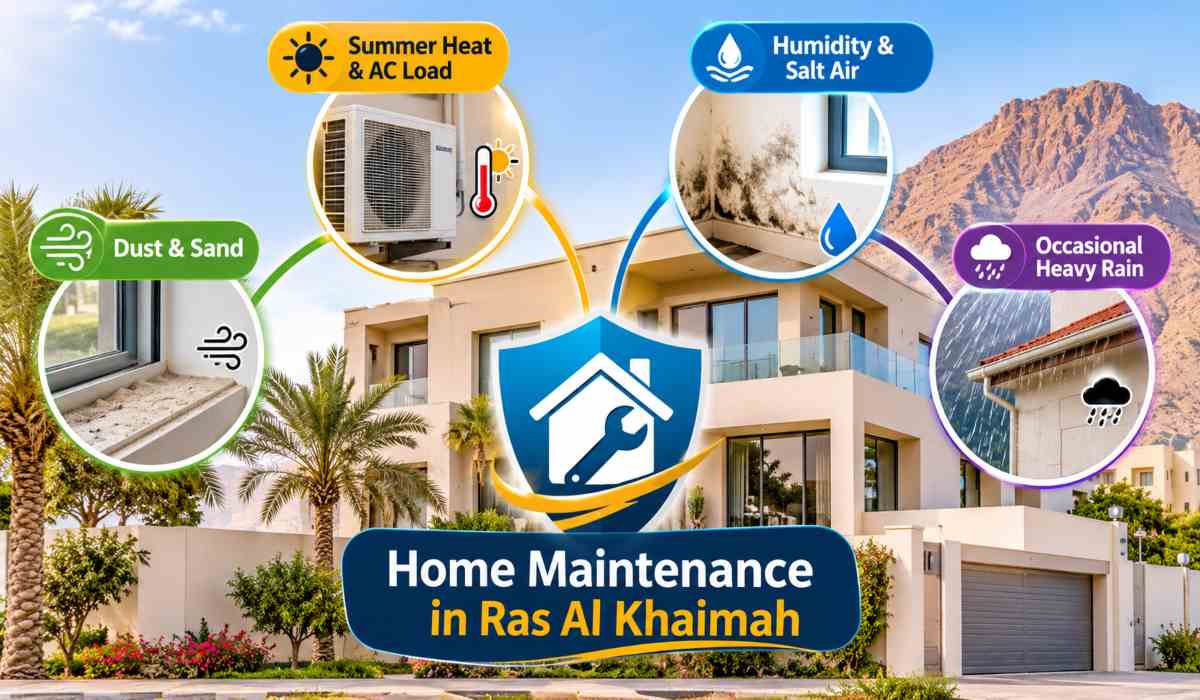
Summer heat and the load on AC and wiring
Summer heat forces AC units and electrical systems to work harder and for longer, which is why they are the first to show strain. An AC running most of the day has little rest. Dirty filters and blocked coils make it work even harder and can lead to weak cooling, ice on the unit or a full breakdown at the hottest point of the year.
A servicing routine before summer keeps airflow clear and the unit running within its limits. If you want a deeper look at AC care, our guide to AC maintenance covers it in detail. Wiring faces similar stress. Constant high demand can overheat loose connections, so warm sockets, flickering lights or a breaker that trips often should be checked early.
Humidity, damp and salt air near the coast (Al Marjan, Mina Al Arab, Al Hamra)
Homes near the sea, including those around Al Marjan Island, Mina Al Arab and Al Hamra, face humidity and salt air that corrode metal and encourage damp. Salt in the air settles on outdoor AC units, balcony railings, window frames and door fittings and slowly eats into them.
Humidity adds to the problem indoors. It can lift paint, darken grout, swell wooden doors and cabinets and feed mould in bathrooms, wardrobes and closed rooms. Wiping salt off exposed metal, airing rooms and fixing small leaks quickly all slow this down. Empty homes need extra attention, because closed windows and a switched off AC let damp build up unnoticed.
Dust and sand (filters, vents, windows and external surfaces)
Dust and sand clog the parts of a home that move air, making them the main reason filters, vents and window tracks need regular cleaning. Fine dust blows in on windy days and settles in AC filters, extractor fans and sliding door runners. Left alone, it reduces airflow, strains motors and stops windows from closing tightly. Outside, it scours paint and builds up on facades and balconies. A simple routine works well, clean filters often, vacuum vents and wipe window tracks. A wash down of external surfaces after a dusty spell also helps.
Occasional heavy rain (roofs, drainage and waterproofing)
Heavy rain is rare in Ras Al Khaimah, but it exposes weak roofs, blocked drains and poor waterproofing all at once. In April 2024, the UAE recorded its heaviest rainfall since records began in 1949, with some areas receiving more than 250 mm in a single day. Most homes are not designed for that volume of water and even smaller storms find the gaps.
The best defence is a check before the rainy months. Clear roof drains and gutters, look for cracks or lifted sealant and make sure water runs away from the building. Roofs and terraces are worth a closer look and our flooring and roof services page explains the work involved.
Benefits of Regular Home Maintenance
Regular home maintenance saves money, extends the life of equipment, keeps the household safer and protects what the property is worth. The savings come from catching small faults early, before heat, humidity and constant use turn them into failures. Each benefit below works on its own, but they add up over the years you own or rent a home.

Fewer emergency repairs
Regular maintenance cuts emergency repairs because most breakdowns start as small, visible warning signs. A faint drip, a warm socket or a slow drain is easy to fix when found early. Left alone, the same fault tends to fail at the worst moment, such as an AC stopping during a summer heatwave or a pipe leaking overnight.
Planned work is also easier on your budget and your schedule. You choose the day, compare options and fix only what needs fixing, rather than paying for urgent work in a hurry. Some owners prefer to spread this effort across the year with an annual maintenance contract, but a simple checklist achieves the same aim.
Longer life for AC, water heaters and fittings
Regular servicing helps AC units, water heaters and fittings last longer because it reduces the strain on moving parts. Clean filters and coils let an AC cool without overworking its compressor. The US Department of Energy says that replacing a dirty, clogged filter with a clean one can lower an AC’s energy use by 5 to 15 per cent, which also eases wear on the unit.
Water heaters benefit from periodic checks of the thermostat, valves and any mineral build up inside the tank. Taps, shower fittings and door hardware last longer when they are cleaned, tightened and kept free of corrosion. In Ras Al Khaimah’s humid, salty air, that care is what slows the rust and scale that shorten their working life.
Safer wiring, gas and water systems
Routine checks keep the systems that carry power, gas and water in safe working order. Loose wiring, damaged sockets and overloaded circuits can overheat, so warm plugs, burning smells or breakers that trip repeatedly should always be looked at. Gas hoses, regulators and connections should be inspected for wear and tested for leaks and any gas concern is a job for a qualified technician, not for DIY.
Water systems matter for safety too. Hidden leaks feed damp and mould and a faulty water heater valve can be a hazard. Testing smoke alarms and checking that everyone in the home knows where the main switch and water shut off are takes only a few minutes each time.
Protecting property value and rental condition
A well maintained home keeps its value and stays easier to sell, rent and hand back. Buyers and agents notice damp patches, tired paintwork and ageing fixtures quickly and each one weakens a price or a rental offer. Steady upkeep also avoids the large catch up bill that comes when years of neglect surface all at once.
For tenants, good records and a tidy, working home make the end of a tenancy simpler. For landlords, they support smoother renewals and fewer disputes over condition. Keeping dated notes and photos of inspections and fixes helps in both cases.
Home Maintenance Checklist for Ras Al Khaimah Homes
A good home maintenance checklist for Ras Al Khaimah splits the work by frequency, quick checks every month, deeper checks every three to six months, a full inspection once a year and two seasonal rounds before and after summer. Spreading the tasks out keeps each session short and stops the heat, humidity and dust from building up unnoticed.
Monthly checks
Monthly checks are quick visual and cleaning tasks that take under an hour and catch the most common early faults. In summer, dust and constant use mean AC filters often need attention this often.
- Clean or rinse AC filters and check that condensate drains are flowing
- Look under sinks, around toilets and behind washing machines for drips or damp
- Test smoke alarms and the trip (RCD) button on the consumer unit
- Run taps and flush drains that are rarely used, such as in guest bathrooms
- Check window and door tracks for sand and wipe them clear
The smoke alarm test is worth the habit. The US National Fire Protection Association reports that homes with working smoke alarms have roughly half the risk of fatal fire deaths of homes without them.
Quarterly and six monthly checks
Quarterly and six monthly checks cover parts that wear more slowly but still need regular attention. Every three months, inspect silicone sealant in bathrooms and kitchens for gaps or black spots, tighten loose door and cabinet hinges and check taps and shower heads for scale. Clear balcony, terrace and roof drains of leaves, grit and debris.
Every six months, service the water heater and check its valve and thermostat. Inspect ceilings and wall bases for fresh stains and look at outdoor metalwork such as railings, gates and AC brackets for rust. Homes near the coast, including around Al Marjan Island, benefit from doing the outdoor check closer to every three months because of salt air.
Annual checks
Annual checks are the thorough inspection of the systems that are hard to judge by eye and they are best done once a year with a qualified person where needed. Have the AC units professionally serviced, including coils and refrigerant levels. Arrange professional electrical services of wiring, sockets and the consumer unit and have gas connections tested if the home uses gas.
Also inspect the roof or terrace waterproofing, repaint or touch up exterior surfaces that are flaking and review water tanks and pipework. Keep a dated record of what was done. It makes the next year’s checklist quicker and helps if you ever rent out or sell the home.
Pre summer and post summer checklist
Two seasonal rounds suit Ras Al Khaimah best, one just before the heat arrives and one after it eases. Pre summer, usually from March to April, the aim is to get the home ready to cope with months of heavy cooling. Post summer, usually from October to November, the aim is to find out what the heat and humidity did.
Before summer:
- Service the AC and clean all filters
- Check sealant and weatherstripping on windows and doors
- Test wiring for warm sockets or loose connections
- Clear drains and check water heater settings
After summer:
- Look for damp, peeling paint or mould in bathrooms and wardrobes
- Inspect outdoor AC units and metalwork for salt and corrosion
- Check ceilings, roofs and terraces for stains or cracks before the cooler, wetter months
- Wash dust and salt from windows, facades and balconies
Home Maintenance by Area of the Home
Home maintenance works best when you treat each area of the home on its own terms, because every system fails in its own way and gives its own warning signs. Knowing what to watch for in the AC, pipes, wiring, joinery, surfaces and outdoor spaces lets you act early and focus on what matters most in Ras Al Khaimah’s climate.

AC and ventilation
AC and ventilation maintenance is about keeping air moving freely, because airflow decides how well a system cools and how long it lasts. Weak cooling, unusual noises, water dripping from the indoor unit or a musty smell are the usual signs that something needs attention. Most of these trace back to dirty filters, blocked drains or dust clogged coils.
Ventilation matters as much as cooling. Bathroom and kitchen extractor fans should be clear of grease and dust and vents should never be covered by furniture. Poor airflow traps humidity indoors, which is a bigger problem in coastal homes. If a unit shows symptoms that cleaning does not fix, a guide to AC troubleshooting can help you judge what is wrong.
Plumbing, drains and water tanks
Plumbing maintenance centres on finding leaks and keeping water flowing, because small leaks waste water and cause damp long before they become obvious. The US Environmental Protection Agency estimates that leaks in an average household waste nearly 10,000 gallons of water a year, which is about 38,000 litres. A running toilet, a dripping tap or a damp patch under a sink is often the first clue.
Slow drains, gurgling pipes and low water pressure also deserve a look. Rooftop and underground water tanks should have secure lids and be cleaned on a regular schedule, since sediment can build up in warm climates. For a fuller view of routine pipework care, read our guide to plumbing maintenance.
Electrical and lighting
Electrical maintenance is mainly about spotting heat, looseness and overload, since these are the early signs of a fault. Sockets that feel warm, switches that crackle, lights that flicker and breakers that trip repeatedly all point to a problem that should be checked rather than ignored. Scorch marks or a burning smell mean you should stop using the circuit at once.
At home, you can look for loose or cracked faceplates, frayed cables and overloaded extension leads. Outdoor lights and sockets need extra care in humid, salty air, because moisture reaches the connections. Any work inside the consumer unit or on fixed wiring should be left to a qualified electrician.
Doors, windows, cabinets and joinery
Joinery maintenance means keeping wooden and fitted parts dry, aligned and well sealed, because humidity makes wood swell, shrink and sag. Doors that stick, cabinet doors that no longer close flush and window frames with gaps are common signs. Hinges, handles and runners also loosen with use and need regular tightening.
Check the seals around windows and sliding doors, since worn seals let in dust and cool air. Wipe cabinets in kitchens and bathrooms dry and keep wardrobes ventilated to slow mould. When swelling or warping goes beyond a small adjustment, a look at carpentry works can help you decide what the job needs.
Walls, ceilings, roofs and floors
The surfaces of a home show damage first, so walls, ceilings, roofs and floors are the best place to spot hidden problems. Stains, bubbling paint, hairline cracks and a powdery white deposit on walls often signal moisture. A ceiling stain that grows after humid weather or rain suggests a leak above.
Floors give their own clues. Lifting tiles, hollow sounds, loose grout and gaps along skirting boards can mean movement or water underneath. Small cracks and loose grout are simple to patch if caught early. Fresh staining, spreading damp or cracks that widen need a closer inspection.
Outdoor areas, boundary walls and gardens
Outdoor areas take the full force of sun, sand and salt, so they need regular attention to stay safe and tidy. Boundary walls should be checked for cracks, leaning and flaking paint. Gates, railings and outdoor fittings need protection from rust, especially close to the sea.
Gardens add their own tasks. Irrigation lines can leak or clog and roots can press against walls and paving. Keep drainage paths clear so water moves away from the building and trim plants away from walls and AC units. Paved areas and driveways should be swept and checked for sunken or cracked sections that collect water or create trip hazards.
Home Maintenance by Property Type
The right home maintenance routine depends on the type of property, because each one splits responsibility differently and ages in its own way. Apartments share systems with the building, villas put everything on the owner, older homes carry years of wear and empty homes face a quieter risk in the heat and humidity. Knowing which applies to you shows where to focus.
Apartments and towers (what the building handles vs what you handle)
In an apartment, the building manager usually looks after shared parts and you look after everything inside your front door. Shared parts typically include the structure, lifts, corridors, the roof, facade, central water tanks and any common cooling plant. Inside your unit, you handle the AC units, internal plumbing and fittings, wiring beyond the main board, joinery and finishes.
The exact split varies by building, so check your tenancy contract or ownership documents and ask the community or building management where the line falls. If a problem starts in a shared system, such as a leak coming through the ceiling from above, report it to management in writing. Keep your own checks focused on the sealant, AC drains and wet areas, which are the usual sources of damage inside a flat. For the building level side of upkeep, our guide to property maintenance explains how shared systems are looked after.
Villas and townhouses
In a villa or townhouse, you are responsible for the whole property, inside and out. That means the roof, drainage, water tanks, boundary walls, garden and external surfaces all sit on your checklist, alongside the AC, plumbing and wiring. The upside is full control over timing. The downside is that no one else will notice a blocked roof drain or a cracked wall for you.
Larger homes also have more AC units, more bathrooms and more outdoor fittings exposed to sun and sand, so small faults are easier to miss. A written annual schedule helps, with the roof, tanks and outdoor areas checked before the seasons change. If a survey shows the home needs more than upkeep, such as new layouts or major refurbishment, that is a villa renovation decision, not a maintenance one. Townhouses in a managed community may also have rules on external appearance, so confirm what you can change before starting work.
Older homes (for example in Khuzam)
Older homes need closer attention because their materials, pipework and wiring have had more years of heat and humidity to wear them down. In established neighbourhoods such as Khuzam, you are more likely to meet ageing plumbing, original wiring, worn waterproofing and tired joinery. These systems often work, but with less margin for error.
Start with an inspection of the three areas that cause the most damage when neglected, wiring and the consumer unit, pipework and water tanks and roof and wall waterproofing. Look for signs such as damp patches, old cracked sealant, brittle cables and corrosion. Replacing worn parts early is usually cheaper than waiting for them to fail. If the survey shows the whole home needs more than repair, a planned house renovation is the next step and maintenance then picks up again afterwards.
Holiday and vacant homes (heat and humidity when empty)
An empty home needs a routine of its own, because closed windows, a switched off AC and no airflow let heat and damp build up unseen. The US Environmental Protection Agency advises keeping indoor humidity below 60 per cent to prevent mould and ideally between 30 and 50 per cent. A shut up home in Ras Al Khaimah can drift well above that. If the home will sit empty for weeks, set the AC to run at a moderate setting, rather than switching it off, to keep humidity down.
Run taps and flush toilets to stop traps drying out and ask someone to visit regularly to check for leaks, pests and damp. Before you leave, empty the fridge, switch off non essential appliances at the socket and close the water supply to areas you do not need. Holiday apartments suit the same routine, with a little extra attention to balcony doors and sealant after storms. In a flat, a quick apartment renovation is often tempting during a long vacancy, but check first whether simple upkeep solves the issue.
DIY vs Professional Home Maintenance
DIY is safe for visible, low risk tasks such as cleaning, tightening and checking, while a professional technician should handle anything involving wiring, gas, pressurised systems or structure. A good rule is to do what you can see and reverse and to call a professional for what is hidden, regulated or dangerous. Used together, the two keep a home in good order without wasting money or taking risks.
Safe DIY tasks
Safe DIY tasks are the ones where a mistake is easy to spot and easy to undo. Cleaning or rinsing AC filters, wiping salt and dust from window tracks and clearing hair from shower drains all fit this description. So do replacing a worn tap washer, resealing a small gap with silicone, tightening loose hinges and handles and touching up small areas of paint.
Testing smoke alarms, changing their batteries and checking for drips under sinks also belong on the list. Before any task, switch off the power to the area or appliance, wear gloves and eye protection where needed and follow the manufacturer’s instructions. If a quick job turns out to be bigger than expected, stop and reassess rather than pushing on.
When to bring in a professional technician
A professional technician is the right choice when the work involves electricity, gas, refrigerant, structural parts or anything you cannot see inside. Examples include repeated breaker trips, warm or scorched sockets, any work in the consumer unit, gas smells or damaged gas hoses, AC gas leaks or compressor faults, persistent damp with no visible source and cracks that widen over time.
Professionals bring the tools, training and insurance to test and fix these safely. They can also spot linked problems that a quick look would miss, such as a leak that has already reached the wall or wiring. Manufacturers also often expect major servicing on appliances to be done by qualified people, so skipping this can affect a warranty. For leaks and pipework beyond a simple washer swap, plumbing support is the safer route.
One off jobs vs a planned maintenance plan
A one off job fixes a single task when you need it, while a planned maintenance plan schedules regular visits so that problems are caught before they appear. Neither is better in every case. They suit different homes and different habits.
One off work gives you full control over timing and spending, which suits newer homes in good condition or owners who keep their own checklist and only need help for specific jobs. The trade off is that nobody is looking unless you ask, so slow problems can go unnoticed. A planned arrangement, such as a yearly maintenance plan, builds the inspections into the calendar and spreads the cost. This often suits larger villas, older properties, landlords and owners who are away for long periods. Its drawback is paying for visits when little needs doing.
To decide, think about how much time you have, how old the home is and how confident you are spotting early warning signs. A simple mix works for many households, do the monthly checks yourself and book a professional for the annual AC, electrical and roof inspections.
What Affects Home Maintenance Costs?
Home maintenance costs depend mainly on four things, the size, age and condition of the property, how much work is needed and how often, whether the work is planned or urgent and how well you budget for it. Costs vary a lot from one home to the next, so understanding these drivers is more useful than chasing a single average figure.
Property size, age and condition
Larger and older homes cost more to maintain because they have more systems to look after and more wear to deal with. A five bedroom villa has more AC units, bathrooms, pipework, outdoor surfaces and roof area than a one bedroom flat and each of those needs regular attention. Age adds to the load, since original wiring, pipes, waterproofing and joinery have had longer to wear in Ras Al Khaimah’s heat and humidity.
Condition matters as much as age. A ten year old home that has been looked after often costs less to keep up than a younger one that has been ignored. Coastal location is another factor, because salt air speeds up corrosion on outdoor metalwork and AC units and may call for more frequent checks.
Scope and frequency
Costs rise with the amount of work you ask for and how often you ask for it. A simple filter clean is a small job, while a full inspection of the AC, wiring, plumbing and roof takes more time and expertise. Doing more checks per year spreads effort across the calendar, but each visit carries its own labour and call out charge.
Access and materials count too. Work on high roofs, hard to reach pipework or specialist fittings takes longer and can need extra equipment. Because of this, the sensible approach is to match the scope to the property. A newer apartment may need only the annual essentials, while an older villa benefits from a fuller schedule.
Planned vs emergency work
Planned work almost always costs less than emergency work, because you control the timing and can compare options. When something breaks suddenly, such as an AC failing in peak summer or a pipe leaking overnight, you often pay for urgency, out of hours attendance and whatever parts are available at once. The damage can also grow while you wait, which adds to the final bill.
The US General Services Administration’s facilities guidance and many maintenance studies point the same way, preventive work generally costs less than fixing failures. The exact saving varies, so treat it as a direction rather than a promise. The practical lesson is to fix small faults on your own timetable, before they force a decision on you.
How to plan an annual maintenance budget
A simple annual maintenance budget starts with a percentage of the home’s value and is then adjusted for age, size and condition. A commonly quoted guideline suggests setting aside around 1 to 4 per cent of the property’s value each year. Newer homes in good condition sit near the low end, while older villas and coastal properties often need more.
To turn that into a plan, follow four steps. First, list your main systems and their ages, especially the AC units and water heater. Second, mark the items that are likely to need replacing in the next few years. Third, add a small reserve for the unexpected, since some faults cannot be predicted. Fourth, ask for itemised quotes before you commit to larger jobs, so you can compare like for like. Review the budget once a year, after your annual inspection and adjust it to what you found.
Common Home Maintenance Mistakes
The most common home maintenance mistakes in Ras Al Khaimah are skipping AC servicing before summer, ignoring small leaks, leaving damp unchecked and delaying wiring checks. All four are easy to put off because the early signs look minor, but in this climate each one tends to grow into a bigger and more expensive problem. These are also common Building Maintenance Issues that benefit from early attention.

Skipping AC servicing before summer: An AC that is not serviced before the hot months has to work harder just as demand peaks. Dust clogged filters, dirty coils and blocked drains cut airflow and cooling and they raise the chance of a breakdown in the hottest weeks, when repairs are hardest to schedule. A pre summer service, ideally in March or April, is far easier than a mid July emergency.
Ignoring small leaks: A slow drop under a sink or a toilet that keeps running looks harmless, but it wastes water and often hides damage behind the wall or under the floor. The US Environmental Protection Agency estimates that household leaks waste nearly 10,000 gallons of water a year, about 38,000 litres. Fixing a worn washer or seal early costs very little compared with repairing stained ceilings, lifted tiles or swollen joinery later.
Leaving damp unchecked: Damp patches, peeling paint and a musty smell do not go away on their own. In humid coastal areas such as Al Marjan Island and Al Hamra, damp spreads quickly and feeds mould in bathrooms, wardrobes and closed rooms. The right first step is to find the source, whether that is a leak, poor ventilation or failing waterproofing, because repainting over damp only hides it for a few weeks.
Delaying wiring checks: Warm sockets, flickering lights and breakers that trip often are warnings, not quirks. Electrical Safety Foundation International reports that around 51,000 home fires in the United States each year involve electrical failures or malfunctions. Loose connections and overloaded circuits are common causes and the heat of a Ras Al Khaimah summer adds to the strain. Have any of these signs checked by a qualified electrician promptly, rather than waiting for the next scheduled inspection.
Conclusion
Home maintenance in Ras Al Khaimah comes down to steady, small habits, check monthly, service twice a year, inspect once a year and give the AC, plumbing and roof extra attention before and after summer. Heat, humidity, salt air and dust never stop working on a property, so acting early keeps minor faults minor. Start with the checklist, fit the routine to your type of property and keep a dated note of what you check and fix. That record makes next year’s round quicker and shows you where your home needs the most care. If you would like to see how a local team approaches upkeep, you can read more about Home Fix Building Maintenance, which looks after homes in Ras Al Khaimah.
Frequently Asked Questions (FAQs)
What does home maintenance include?
Home maintenance includes the regular checking, cleaning and servicing of a home’s main systems and surfaces. That covers the AC and ventilation, plumbing and water tanks, wiring and lighting, doors, windows and cabinets, walls, ceilings, roofs and floors and outdoor areas. It does not include upgrades or layout changes, which count as renovation.
How often should a home be maintained in Ras Al Khaimah?
Most homes in Ras Al Khaimah need quick checks every month, deeper checks every three to six months and a full inspection once a year. Add two seasonal rounds, one before summer and one after. Older villas and homes near the coast, where salt air and humidity wear materials faster, often benefit from checking more often.
What is the difference between home maintenance and home repair?
Home maintenance prevents problems and home repair fixes problems that have already happened. Servicing an AC every year is maintenance, while replacing a failed compressor is repair. Good maintenance reduces how often repairs are needed, but it cannot remove them completely, because parts still wear out over time.
Is home maintenance the tenant’s or the landlord’s job?
It depends on your tenancy contract and the rules of your building or community, so check both before assuming. As a general pattern, tenants handle everyday upkeep such as cleaning filters and minor fixes, while landlords handle major systems, structure and shared parts. Contracts differ, so confirm the split in writing and report any problem to the landlord or management promptly.
How can I tell my home needs maintenance?
Your home usually gives early warnings before something fails. Look for weak AC cooling, drips or slow drains, damp patches, peeling paint, musty smells, sticking doors, warm sockets, flickering lights and breakers that trip. Any one of these is a reason to investigate. Several together or a sign that keeps getting worse, point to a problem that needs attention soon.
Does humidity or salt air really damage a home?
Yes. Humidity and salt air speed up wear in homes, especially near the coast. Humidity lifts paint, swells wood and feeds mould, while salt corrodes outdoor metalwork, AC units and fittings. The US Environmental Protection Agency advises keeping indoor humidity below 60 per cent to prevent mould growth. Airing rooms, fixing leaks early and wiping salt from exposed metal all slow the damage.