
Annual Maintenance Contract Management RAK | What to Check
How do you check that an annual maintenance contract is worth it? An annual maintenance contract only pays off if you check what happens under it. Confirm that each visit took place, read the service report and time every response against the agreement. A short routine through the year, plus one review before renewal, shows whether the contract is worth keeping.
Many owners judge an annual maintenance contract on the day they sign it, then stop looking. That is where the value leaks away. The paperwork may promise several visits a year, a written report after each one and a quick response to faults, but nobody checks that it happens. In Ras Al Khaimah, where AC units run for much of the year, a missed spring visit can go unnoticed until the first hot week.
Annual maintenance contract management is the habit of checking those promises as the year goes on. It takes a few minutes after each visit, confirm the date, read the report, note how long the team took to respond and keep the paperwork in one place. The report matters most. ENERGY STAR guidance says an incorrect refrigerant charge can cut an AC system’s efficiency by up to 20 percent, so a report with no readings tells you very little.
This guide shows how to set up that routine, spot problems early and decide at renewal whether the contract earned its fee. It assumes you already hold a plan, whether through the yearly plans we offer at Home Fix or with another provider. If you are still choosing one, start with our guide to a home maintenance contract in Ras Al Khaimah.
AMC Jargon in Your Quote Decoded
Quotes and agreements use a few terms that sound alike but mean different things in practice. Knowing four of them (PPM, response time, call out charge and scope wording) lets you check what you are promised before the first visit happens. They appear in every quote for AMC services, whether the document says annual maintenance contract, annual maintenance agreement or yearly maintenance contract.

PPM (Planned Preventive Maintenance) and What a “Visit” Really Includes
PPM stands for planned preventive maintenance. It means scheduled visits to inspect, clean and adjust equipment before it fails, rather than repairs after a breakdown. A genuine visit has a technician attending on an agreed date, completing the checks listed for that visit and leaving a written record. It is not a quick look and a signature.
ENERGY STAR advises homeowners to have a contractor do a pre season check up every year, including a check of the refrigerant level. That is a good picture of the work one visit should contain. If your quote only says “four visits”, ask what is done at each one. Also ask whether a repair carried out during a visit counts as part of it or as a separate job.
Response Time vs Resolution Time
Response time is how long the company takes to reach you or start work after you report a fault. Resolution time is how long it takes to fix it. A promise of a four hour response means someone calls or arrives within four hours. It does not mean your AC is working again by then.
Some contracts state only a response time, so ask when the clock starts, at your call or when the company logs the request. Also ask whether urgent faults have a resolution target. Note the time you report each fault so you can compare it with the agreement later.
Call Out Charge, Consumables and Like for Like Replacement
A call out charge is a fee for sending a technician to a fault visit, separate from labour and parts. Consumables are small items that wear out through normal use, such as filters, bulbs and sealant. Like for like replacement means a failed part is swapped for one of the same type and specification, not an upgrade or a different model at a higher price.
These three lines can make a quote look complete when it is not, so check whether each one is included, charged or capped. If the original part is no longer sold, ask who decides which equivalent is acceptable and whether you approve it first.
Out of Scope and Pre Existing Condition in Plain Words
“Out of scope” means any work the contract does not list. It is not covered by your fee and needs a separate quote. “Pre existing condition” means a fault or damage that was already there before the contract began, which providers usually leave out.
Both are fair in principle, but they cause disputes when nobody recorded the starting condition. A dated note or photo of each unit at the start is the simplest protection, which is why the first month baseline later in this guide matters. When a technician calls something out of scope, ask which item on the scope list it falls outside and ask for the quote in writing before any work begins.
Does the Contract Pay for Itself? A Simple Break Even Test
An annual maintenance contract pays for itself when its yearly fee is lower than what you would otherwise spend on repairs, call outs and parts. The test takes three steps, total your last 12 months of bills, adjust for how old your equipment is and check whether your situation already makes a contract pointless.
Add Up Your Last 12 Months of Repair Bills
Start with every maintenance invoice, receipt and bank transfer from the past year, covering AC, plumbing, electrical and any carpentry. Record each repair, call out fee, replacement part and urgent or out of hours surcharge. Then strike out any job the contract would not have covered, such as parts on a labour only plan, so both sides of the comparison cover the same ground.
Compare the total with the contract fee, treating tax the same way on both. For example, suppose you paid AED 850 for an AC repair, AED 250 and AED 300 for plumbing and electrical call outs and AED 1,000 in parts, giving AED 2,400. Against a AED 1,800 fee, the contract would have saved AED 600. These figures are only an illustration, not a quote. One year can mislead, so use two if you have the records. A single large repair can make a contract look better than it is and a quiet year can make it look worse than it will be.
The Equipment Age Test (Under Warranty vs Five Years or Older)
Equipment age changes how far past bills predict future ones. For units still under warranty, the manufacturer pays for faults, so your repair total will be low. The contract is then worth roughly the price of the servicing visits it replaces. Read the warranty terms too. Some manufacturers expect regular servicing to keep cover valid and a contract is one way to prove it.
For equipment around five years old or more, treat last year’s bills as a floor, not a ceiling. Wear catches up with compressors, fan motors and capacitors over time and heavy use can bring that point forward. The US Department of Energy notes that yearly maintenance can help efficiency and prolong a unit’s life, which is why older units tend to make the break even case stronger. If your total is already close to the fee, the contract likely wins. Ask a technician for a condition note on each unit to adjust your estimate.
When an AMC Is Not Worth It (Short Tenancy, One New Unit, Building Already Covers It)
Three situations often make the test come out against a contract. The first is a short tenancy. If you move out within a few months, you pay a full year’s fee for a fraction of the benefit, unless the contract can be transferred or ended early without loss.
The second is a single new unit under warranty. Your repair total is near zero, so the fee is mostly paying for servicing, which you can compare directly with the price of a standalone service visit. The third is a building that already covers the systems you would insure. In a managed tower, the management company often looks after a shared plant, so list which items remain yours before you count the fee against anything. If a contract overlaps with what the building provides, you pay twice for the same cover.
AMC vs Insurance and Building Management Who Pays for What
An annual maintenance contract pays for scheduled servicing and agreed repairs to the systems inside your own unit. Insurance responds to sudden, accidental loss, building management looks after shared parts of the property and your tenancy contract decides who pays between landlord and tenant. Most disputes start when someone assumes one of these covers a job that actually belongs to another.

What Home or Contents Insurance Covers That an AMC Does Not
Home and contents insurance protects you against sudden events, such as fire, theft or water damage from a burst pipe. An AMC does not pay for any of these losses. It covers the routine work that prevents faults, plus repairs listed in its scope.
The reverse is also true. Insurers generally exclude wear and tear, gradual deterioration and lack of servicing, so an AC that fails after years without upkeep is rarely an insurance claim. The AMC helps with that and its visit reports can also show you maintained the equipment. Read your policy wording for exclusions, because they differ between insurers and plans.
What Tower or Community Management Usually Handles vs Your Unit
In a managed tower or community, the management company usually looks after shared areas and shared plant, such as lifts, corridors, the building structure and communal water or cooling systems. Your responsibility usually starts at your door or meter and covers the AC unit, internal plumbing, wiring, fittings and finishes.
The line moves between buildings, so do not guess. Ask management for the owners’ handbook or a written breakdown of what the service charge covers. Then list the items that remain yours, because only those belong in an AMC scope. If a contract includes something management already handles, you pay twice for it.
Where Tenant, Landlord and AMC Responsibilities Meet in RAK
In a rental, the tenancy contract decides who pays for minor and major repairs. An AMC is a separate private agreement between whoever signs it and the provider and it does not change what the lease says. RAK Municipality requires tenancy contracts to be registered and attested, so the maintenance clause sits in a formal document you can check.
If a tenant wants to sign an AMC for the landlord’s equipment, get the landlord’s written consent first. If a landlord holds the contract, give the tenant the provider’s contact details, the visit schedule and the reporting steps and agree how access is arranged. Landlords with several units can see the work we handle on our residential and commercial maintenance page. Tenancy rules in RAK have been updated over time, so check the current position with RAK Municipality or a lawyer. This is general information, not legal advice.
Your First Month Set a Baseline
Set your baseline in the first month by recording every unit’s age and condition, photographing the key equipment and filing the signed scope with the visit calendar and your contact details. This record lets you judge every later visit and settle any argument about faults that existed before the contract started.
List Every Unit, Its Age and Its Condition
Start with a simple inventory of everything the contract covers. For each item, note its location, type, brand, model, serial number and approximate age. Include every AC unit, the water heater, any pumps or tanks and the distribution board. Add a short condition note, such as “cooling well”, “noisy fan” or “slow drain” and the date any warranty ends.
The model and serial number are usually on the unit’s nameplate. A technician can confirm age and condition at the first visit, so ask them to write it in the report. Check the count against your signed scope. If the contract lists four AC units and you have five, find out now, not at the first fault.
Photograph Key Equipment and Keep the Signed Scope
Take dated photos of each unit as a whole, its nameplate and any existing damage, such as rust, stains or cracks. Photograph the distribution board and the water heater too. These images are your proof of starting condition if a provider later calls a fault a pre existing condition.
Store the photos in one folder with the signed contract, the quotation and the scope of work. A shared cloud folder works well, because you can find it quickly and a landlord or tenant can see it too. Keep the original paperwork where you can reach it during an emergency, not buried in an old email.
Confirm the Visit Calendar and Who Your Contact Is
Ask the provider for the visit dates or at least the planned months, in writing. Add each one to your phone calendar with a reminder a few days before. Aim to have the first visit well before the hottest weeks, so a fault found early can be fixed before demand peaks.
Also confirm exactly who you contact for routine requests and for urgent faults. You need a named person, a phone number and the reporting method, whether that is a call, a message or email. In a managed building, check whether technicians need advance notice or an access permit and who arranges it.
Reading a Service Report What Good Looks Like
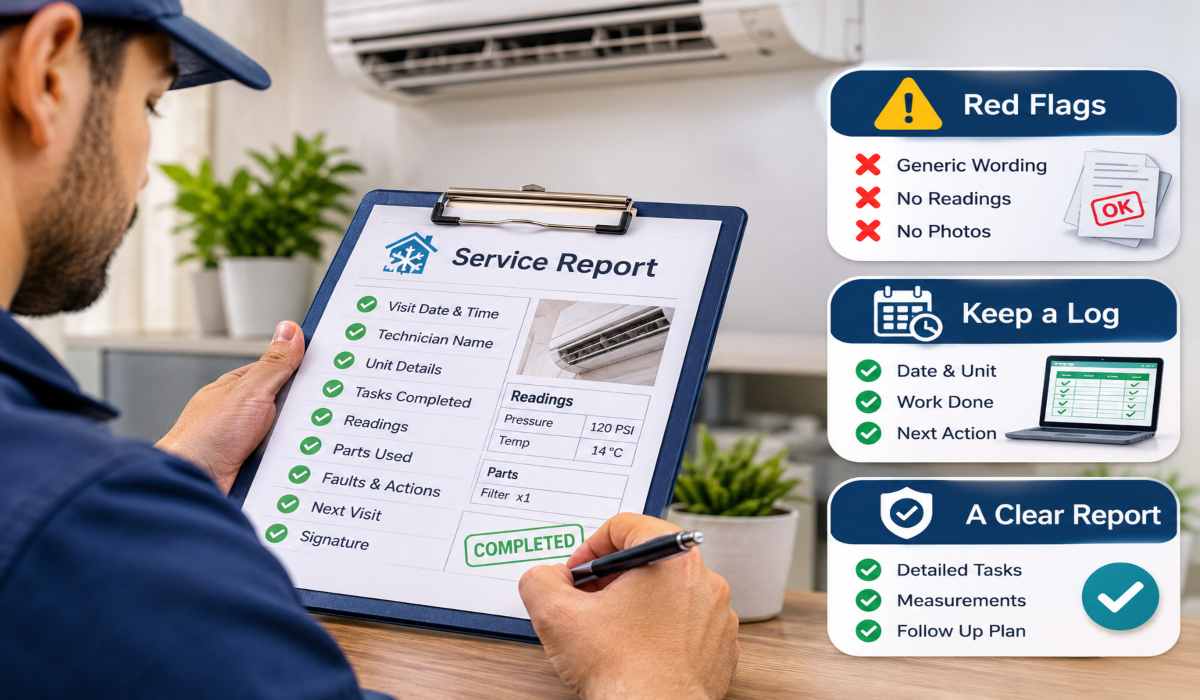
A good service report names each unit, lists the tasks done against the agreed scope, records readings and parts used, flags any fault with a recommended action and carries a date and signature. If you cannot tell from the page what was checked and what was found, the report is too vague to be useful.
The Minimum a Report Should Record
Start with the basics, the visit date and time, the technician’s name and your property address. Then check that every unit is named by location or tag, so it matches your baseline inventory. A line saying “AC serviced” is not enough when you have four units.
For each unit, the report should list the tasks completed, such as coils cleaned, drain cleared or breaker tested. It should also give the readings taken, for example refrigerant pressure, temperatures or water pressure, along with any parts replaced or consumables used. Any fault found needs a plain description, a rating of how urgent it is and the next step. If the fix falls outside the scope, the report should say so and point to a written quote. It should close with the next visit date and a signature from both sides.
Red Flags (Generic Wording, No Readings, No Photos)
Generic wording is the first warning sign. Phrases such as “all checked, OK” or “routine service done” tell you nothing, especially if the same text appears on every visit. Missing readings are the second sign. Without numbers, you cannot compare one visit with the next or show a trend.
Absent photos matter when a fault is found. A leak, a corroded contact or a damaged part should come with before and after images. Also watch for tasks in your scope that never appear in the report, units that are left out, faults noted with no follow up and extra charges that appear without an agreed quote. If you spot several of these, raise them in writing with the provider and keep a copy.
Keeping a Simple Maintenance Log
A maintenance log turns separate reports into a history you can use. A spreadsheet or notes file is enough. Give each visit one row with the date, the unit, the work done, the main finding, any cost and an open items column. Update it within a day of each visit, while the details are fresh.
Store the report and its photos beside the log entry. Mark open items until they are closed and add the date when each one is fixed. Over a year, the log shows which units cause repeat faults, which visits were missed and how fast the provider acted. That evidence is what you will need at renewal time, which later sections cover.
When a Visit Is Missed or the Response Is Late
When a visit is missed or a response is late, record the facts, put the complaint in writing and ask for a rescheduled date or a written explanation. A calm paper trail matters more than a heated phone call, because it shows exactly what the agreement promised and what actually happened. It also protects you if the problem is repeated at renewal time.
Record the Time of Your Request
Note the date and time as soon as you report a fault or notice a missed visit. Write down how you reported it (call, message or email), who you spoke to and any reference number you were given. A screenshot of a sent message works well, because it shows the time without any argument.
Then compare the timeline with the response time in your agreement. ENERGY STAR advises booking cooling checks before the busy season because contractors fill up in summer and winter. Late season delays can therefore happen, so a written record also shows the provider whether a delay is occasional or a pattern.
Escalating in Writing
Start with a short message to the named contact, setting out the date of the request, the promised response, what happened and the outcome you want. Ask for a firm new time or a written reason. Keep the tone factual, not angry, so the record is clear to anyone who reads it later.
If you get no reply within a reasonable time, send the same details to a manager or the company’s main email and keep copies. State that you will review the contract at renewal if the issue is not resolved. If the fault is urgent, such as an AC failing in the heat, say so plainly and ask for an interim fix. You can also book a one off diagnosis through AC troubleshooting while the contract issue is being sorted out and you should note the cost for the dispute.
Handling an Out of Scope Quote Without Being Rushed
A technician may say a fault is out of scope and offer a quote on the spot. You do not have to agree on the day. Ask which line of your scope the fault falls outside and ask for the quote in writing with parts, labour and any call out charge shown separately.
If the situation is safe, take time to compare it. Check the quote against the baseline photos and previous reports to see whether the fault was there at the start. Ask whether it could be a covered repair if described differently. For urgent safety problems, such as a gas smell or exposed wiring, make the area safe first, then deal with the paperwork. Sign nothing until the price, the work and the date are clear.
Planning Your Contract Year Around RAK Seasons
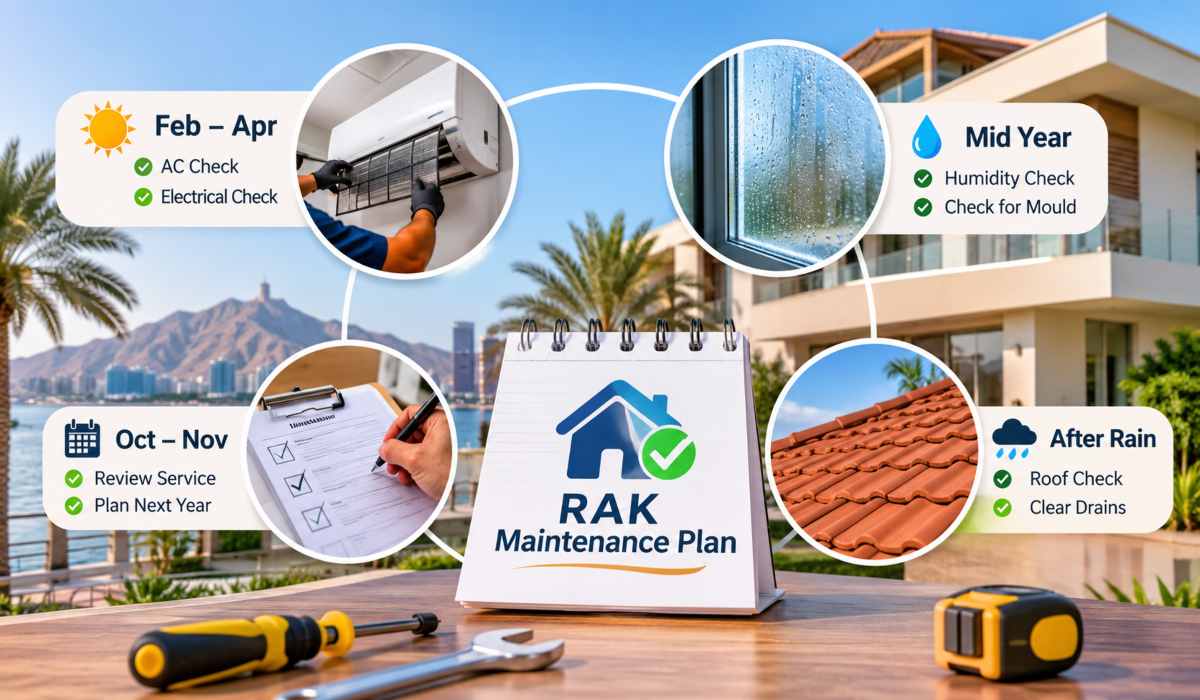
Plan your contract year around four checkpoints, an AC and electrical check before summer, humidity and coastal air checks around mid year, a roof and drain check after the winter rains and a review once summer ends. Timing visits against the seasons puts each check ahead of the stress that exposes a fault. If your contract has only two visits, use them for the pre summer check and the post summer review.
Pre Summer AC and Electrical Load Check
Book this visit for February to April, so any repair is finished before the cooling season is in full swing. The AC checks should cover coil and filter cleaning, drain lines, refrigerant readings and thermostat operation and the report should record the readings. Ask for servicing before the summer peak to be written into the visit calendar, not left as a verbal promise.
The electrical check matters just as much, because every AC unit, water heater and appliance runs at once in hot weather. Ask the electrician to test the breakers, check sockets and switches for warmth or discolouration and inspect distribution board inspections as part of the same visit. Fix any loose connection or circuit breaker tripping now, while it is a quick job.
Humidity and Coastal Air Checks
Schedule these around mid year and repeat them after the cooler months if your contract allows. Look at the places where moisture and salt do their work, outdoor AC casings and coil fins, balcony door hardware and railings, window tracks and bathroom sealant. Check for musty smells, mould spots and any peeling paint.
Timber needs its own look. Wardrobes, cabinet doors, hinges and skirting can swell or stick, so check that carpentry works are in your scope and ask the technician to inspect doors, hinges and cabinets, noting any warping in the report. Photograph anything you find, so you can compare it with the next visit.
After Rain Roof and Drain Checks
Rain in Ras Al Khaimah is rare and the emirate’s tourism site says it usually falls between December and March in short, light showers. That makes spring the best time to check what the rainy months did. Look at the roof surface, waterproofing, cracks and ceiling stains and ask for roof and waterproofing checks if the scope includes them.
Drains and gutters should be cleared and flushed, because blocked outlets cause the worst leaks. If you want an earlier check, ask for the roof and drains to be looked at in November, before the wetter months and again after any heavy downpour. Any repair the roof check finds can be handled through flooring and roof services.
Post Summer Review
Hold a review in October or November, once the heaviest cooling season is over. Gather your service reports, photos and maintenance log, then compare what the contract promised with what happened. Note missed or rescheduled visits, response times, repeat faults and any quotes for out of scope work.
Add a short list of what to change next year, such as moving a visit earlier or adding a unit to the scope. This review feeds the renewal decision covered in the next section, so doing it early leaves time to renegotiate before the contract ends.
Renewal Time Review, Renegotiate or Switch
Decide on renewal by scoring the past year against five questions, then renew, renegotiate or switch depending on the result. Start 60 to 90 days before the end date, so you have time to compare options and act before the notice deadline.
A Five Question Scorecard for the Past Year
Use your reports, photos and maintenance log to answer five questions with a plain yes or no. First, did every scheduled visit happen on time? Second, did each report name every unit, record readings and match the agreed scope? Third, did the provider respond to faults within the promised time? Fourth, did the contract come out ahead when you ran the break even test from earlier in this guide? Fifth, were any out of scope quotes fair and clearly explained?
Four or five yes answers point to renewing, often with small changes. Two or three suggest renegotiating the scope or the service levels. One or none is a strong reason to look at other providers. Write the answers down with dates, because they become your evidence in any conversation about terms.
Upgrading or Trimming the Scope
Your log shows where the scope should change. A unit with repeat faults may need an extra visit or a closer look at replacement. An item that was never touched or that your building management already handles, can come out. New equipment, such as an extra AC unit, should be added so it is not left uncovered.
Match the changes to age and use. Older units usually justify more attention, while newer units under warranty may need less. Ask the provider to update the written scope and unit list, not to rely on a verbal agreement and keep the revised version with the original paperwork.
Handling a Price Rise or an Auto Renewal Notice
When a renewal notice arrives, read it fully and find two things, the new price and the date by which you must reply. Ask for a written breakdown of what changed, such as scope, visit numbers, parts cover or rates. Compare it with last year’s agreement line by line, so you are judging like with like.
If the price has risen, ask whether trimming the scope or changing the plan removes the increase and request a revised quote in writing. If you want to cancel or change the plan, send a written notice before the stated deadline, even if you are still deciding. Do not let the date pass because the notice sat unread.
Switching Providers Without Losing Your Service Records
Your records belong in your own files, not only the provider’s system, so request copies of every report, photo, quote and invoice before the contract ends. Add them to your maintenance log and baseline folder. Also ask for any warranty or parts records the provider holds.
Give the new provider your unit inventory, last year’s reports and a list of known faults and ask them to survey and record the condition on the first visit. This stops existing problems from being labelled new. In Ras Al Khaimah, time changes to avoid a gap before the pre-summer check, so no unit goes unserviced during the build up to the hot season.
Conclusion
Annual maintenance contract management comes down to three habits, check every visit against the agreement, keep a clear record and review the year before you renew. A baseline taken in the first month, a report you actually read and a short log let you spot a missed visit or a vague report while there is still time to act. Fit the visits around RAK’s seasons, so the AC and electrical checks happen before the heat arrives. Then use a simple scorecard at renewal to decide whether to keep the contract, change it or switch. A contract only earns its fee when someone is checking it and with this routine that someone is you. If you want to talk through your property’s maintenance in Ras Al Khaimah, Home Fix Building Maintenance is happy to help.
Frequently Asked Questions (FAQs)
How do I know if my AMC is giving value?
Score it against your own records. Check whether every visit happened on time, each report named every unit with readings and faults were answered within the promised time. Then compare the fee with what you would have paid for repairs, as in the break even test above. Mostly yes answers and a fee below your repair total mean the contract is earning its place.
What if the company misses a visit?
Record the date, report the miss in writing and ask for a firm new date or a written explanation. Keep the message factual and copy a manager if there is no reply. Check whether your agreement states a remedy for missed visits, such as rescheduling within a set period. If misses repeat, note them in your log for the renewal review.
Can I add a new AC unit mid term?
Usually you can, but the provider must agree in writing. Ask whether the unit is covered from the date it is added, how the fee changes and whether it joins the existing visit schedule. Record its model, serial number, installation date and condition on the day. Check the warranty terms as well, because some manufacturers expect regular servicing from the start.
Should I let it auto renew?
Not by default. Review the year first using the scorecard, then decide. If the contract performed well and the terms still fit, renewing is fine. If it did not, send a written notice before the stated deadline. Find the notice date in your agreement now, since passing it can commit you to another full term on terms you have not checked.
Can I move my records to a new provider?
Yes. Your reports, photos, quotes and invoices are records of your property, so ask the current provider for copies before the contract ends and store them in your own folder. Give the new provider your unit inventory and last year’s reports and ask for a condition survey at the first visit so existing faults are not logged as new ones.