
Building Maintenance Issues | What Happens If Ignore Them

What are building maintenance issues? Building maintenance issues are the faults that grow when upkeep is delayed or skipped, such as leaks, damp, worn wiring and failing AC. Left alone, small defects become safety risks, structural damage and repair bills far higher than regular maintenance would cost.
A lack of maintenance turns small, cheap faults into serious building maintenance issues. A hairline crack lets water in, a blocked drain stains a ceiling and a tired AC unit works harder every week until it fails in the hottest part of the year. None of these starts as an emergency. They become one because nobody dealt with them in time.
In the UAE, this happens faster than many owners expect. Summer temperatures regularly pass 40°C, humidity stays high near the coast and air conditioning runs for months with no real break. In Ras Al Khaimah, salt in the sea air adds further wear to metal fittings, wiring and paintwork. Materials age sooner and a problem ignored for one season can become a full repair job by the next.
This guide explains what neglect does to a building, which problems show up first and how to spot them early. It also shows why regular upkeep costs far less than repairing damage after the fact.
What does lack of maintenance mean in a building?
Lack of maintenance means a building’s systems, structure and finishes are not being inspected, cleaned or repaired often enough to stay in good working order. It is not one single fault. It is a pattern of delayed or skipped upkeep that lets wear build up until something fails. Leaks, damp, tired wiring and weak AC performance are the usual results.
Poor, inadequate and neglected maintenance are they the same?
They describe the same problem at different levels. Poor maintenance means the work is done badly or inconsistently, such as a quick patch over a leak that never fixes the source. Inadequate maintenance means some care happens but not enough, for example an AC serviced once every two years in a climate that needs it yearly. Neglected maintenance is the most serious: little or no upkeep is being done and problems are left to develop. In practice, the three often overlap and each leads to the same outcome of faults that grow faster than they should.
Preventive vs reactive maintenance
Preventive maintenance fixes small problems on a schedule, before they cause damage. Reactive maintenance involves fixing issues only after they occur, addressing problems as they arise.The first costs less and causes fewer surprises, while the second often means emergency call-outs, longer disruption and wider damage. A widely cited US National Research Council guideline suggests setting aside roughly 2 to 4 per cent of a building’s replacement value each year for maintenance and repair. A building that gets far less than this tends to drift into reactive mode, where owners only act once a fault is impossible to ignore.
Why small defects get missed
Small defects get missed because they rarely cause pain straight away. A faint damp patch, a slightly noisy compressor or a hairline crack does not stop anyone using the property, so it slips down the to-do list. Many problems also sit out of sight, behind walls, above ceilings or on the roof. Owners and tenants often assume someone else is checking, which is how a minor fault stays unreported for months. Regular inspections solve this because they look for problems nobody has noticed yet.
Common building maintenance issues in UAE homes
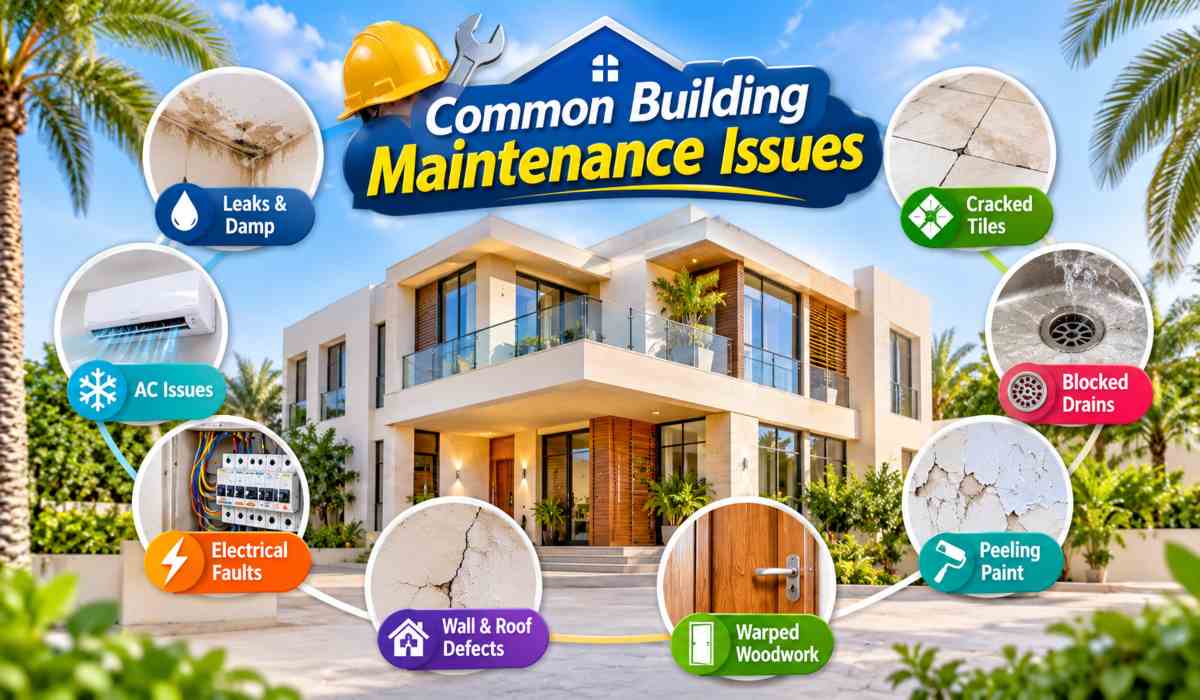
The most common building maintenance issues in UAE homes are water leaks and damp, AC wear, electrical overload, roof and wall defects, warped woodwork, cracked flooring, blocked drains and fading paint. Heat, humidity and months of constant AC use make each of these develop faster than they would in a cooler climate.
Water leaks, damp and mould
Water leaks and damp are the most common maintenance issues in UAE homes. They usually start with a slow drip, a failing pipe joint or a sealed area that has quietly given up. Because water travels, the stain on a ceiling is often far from the real source. In humid coastal areas such as Ras Al Khaimah, damp air settles into walls and encourages mould, which causes musty smells, black patches and, over time, health complaints. Fixing the source early is cheap. Drying out and repairing a soaked wall is not.
AC and ventilation neglect
An AC unit that is not serviced loses efficiency long before it stops working. Dust blocks filters and coils, refrigerant levels drop and drainage lines clog, so the system uses more power to cool less. Air conditioning often accounts for around 70 per cent of electricity use in UAE buildings during summer, which is why a struggling unit shows up on bills first. Warning signs include weak airflow, ice on the unit, water leaking indoors and strange noises. When these appear, it is worth looking at AC repairs and installation services before a minor fault becomes a failed compressor in July.
Electrical wear and overloaded circuits
Electrical wear builds up silently. Older wiring, loose connections and sockets carrying too many devices create heat and that heat damages insulation over time. Overloaded circuits often announce themselves through breakers that trip repeatedly, lights that flicker, warm switch plates or a faint burning smell. These are safety warnings, not annoyances. Any recurring electrical fault should be checked by a qualified electrician and a proper inspection through electrical services can show whether the cause is a single faulty part or a wider wiring problem.
Roof, terrace and external wall problems
Roofs, terraces and outer walls take the full force of sun, wind-blown sand and occasional heavy rain. Cracked waterproofing, lifted membranes and blocked terrace drains let water into the structure, usually in the first rain after a long dry spell. External walls develop hairline cracks as materials expand in the day and contract at night. Left alone, these cracks widen and let in moisture. Regular checks and timely flooring and roof services keep small gaps from turning into interior damage.
Warped doors, windows and woodwork
Wood reacts to humidity and heat by swelling, shrinking and twisting. In homes that swing between strong AC and warm, damp air, this causes doors that stick, windows that no longer close properly and cabinets that sag or split. The first sign is often a door that rubs the frame. Sometimes the cause is simply a worn hinge and a quick door hinge repair solves it. When the wood itself has bent, guidance on how to fix a warped wooden door explains what can be saved and a carpenter handling proper carpentry works can repair or replace what cannot.
Cracked tiles, flooring and grout
Cracked tiles and crumbling grout usually point to movement, moisture or poor installation underneath. A single hairline crack may be cosmetic, but a hollow sound when you tap a tile suggests the bond has failed. Open grout lines also let water seep beneath the surface, which loosens neighbouring tiles and can feed damp below. Replacing one tile early is far easier than lifting a whole section later.
Blocked drains and failing seals
Drains block slowly, with grease, hair, sand and debris building up long before water stops draining. Slow draining, gurgling sounds and recurring odours are the early signs. Seals fail in the same quiet way. Worn silicone around baths, showers, sinks and windows lets water into places nobody can see. These are the jobs that regular inspections catch easily, which is where a planned annual maintenance contract earns its place.
Peeling paint and facade damage
Peeling paint is rarely just a cosmetic problem. It often means moisture is pushing outwards from inside the wall or that strong sun has broken down the coating. Bubbles, flaking and chalky patches on outer walls show the facade is losing its protection against heat and humidity. Repainting without fixing the cause only hides the issue for a season. Dealing with the moisture first, then repainting, gives a finish that lasts.
Consequences of neglecting building maintenance
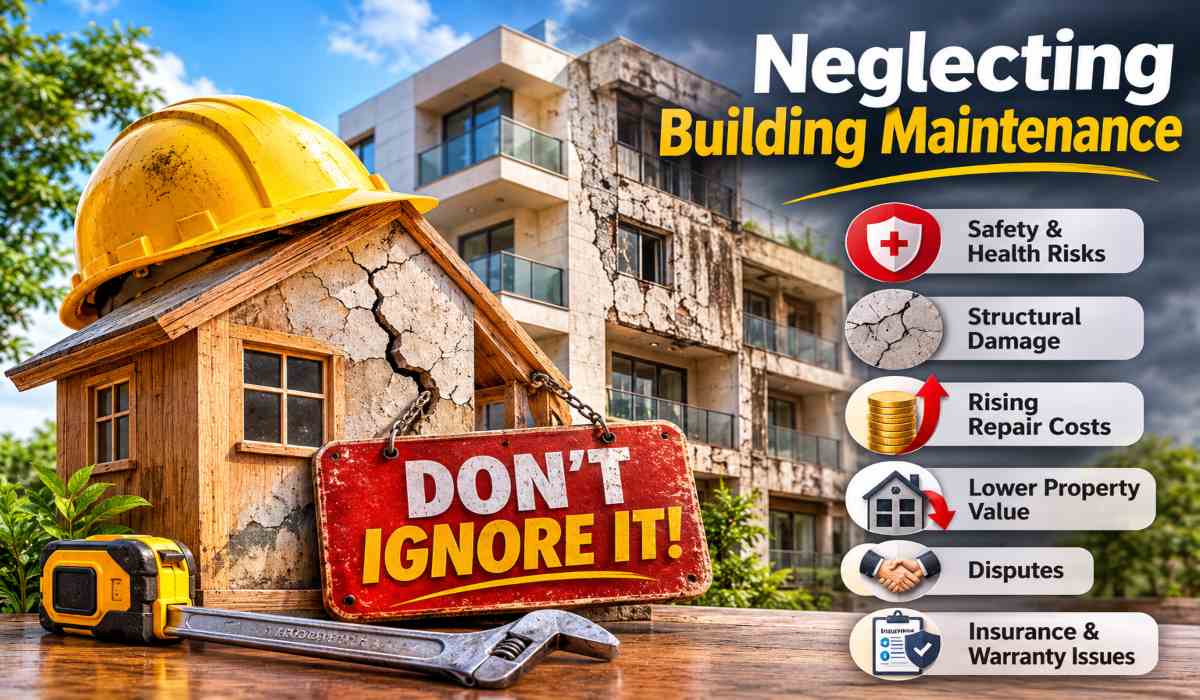
Neglecting building maintenance leads to health and safety risks, structural damage, higher repair bills, lower property value and disputes between owners and tenants. It can also weaken insurance and warranty protection. These effects build on each other, which is why a small fault left alone tends to cost far more later than it would have cost to fix at the start.
Safety and health risks
The first consequence people usually face is a risk to the people living in the property. Worn wiring can overheat, loose fittings can fall and leaking water can make floors slippery or weaken ceilings. Damp is the quietest danger. The World Health Organization has found that people living in damp, mouldy homes have roughly 30 to 50 per cent higher odds of respiratory symptoms such as coughing and wheezing. Children, older residents and anyone with asthma are the most exposed. A building that looks fine on the surface can still have an air quality problem hiding behind the walls.
Structural damage
Structural damage is what happens when moisture, movement and time are allowed to work on a building unchecked. Water that reaches concrete can corrode the steel reinforcement inside it, which expands as it rusts and cracks the surrounding material. Wood frames and fittings soften and rot and external walls lose their protection against heat and humidity. In coastal areas such as Ras Al Khaimah, salt in the air speeds up this corrosion. The result is repair work that moves from surface fixes to major structural repair and sometimes parts of the building can no longer be used safely.
Rising repair costs
Repair costs rise because damage spreads, not because prices change. A leaking joint that costs little to fix can soak insulation, plasterboard, flooring and electrics if left for months, turning a single repair into several. Emergency call-outs usually cost more than planned visits and urgent work leaves little time to compare options. Facilities managers often describe deferred maintenance as a debt that grows with interest. Each year of delay makes the eventual bill larger, while a steady upkeep routine keeps costs small, predictable and easy to budget for.
Lower property value and rental appeal
A poorly maintained property loses value even when the damage is only cosmetic. Buyers and tenants notice stains, peeling paint, stiff doors and weak AC within minutes of a viewing and they read these as signs of deeper problems. Buyers use visible defects to negotiate the price down and tenants may choose a better-kept alternative or ask for a lower rent. Over several years, a neglected home can sit empty longer and earn less than a similar one that has been looked after.
Disputes between owners, landlords and tenants
Neglected upkeep is a common cause of disagreements. Tenants report a fault, the landlord delays and the problem grows until both sides argue over who is responsible and who should pay. Shared areas and older buildings make this worse, because it is not always clear who owns the issue. Clear records help, such as dated photos, written reports and a simple log of repair requests. Responsibilities in the UAE depend on the tenancy contract and local rules, so check your agreement and the relevant authority’s guidance before deciding who covers what.
Insurance and warranty problems
Neglect can leave an owner without the cover they expect. Numerous property insurance policies do not cover damages resulting from gradual wear, long-term leaks or failure to maintain the building, which means a claim may be reduced or refused if the insurer decides the problem could have been prevented. Equipment warranties can work the same way. Manufacturers often require regular servicing and missing it can void the cover. Keeping service records and receipts is the simplest protection, because it shows that the property was cared for.
How small neglect turns into long-term damage
Small neglect turns into long-term damage because most building faults feed themselves. A tiny crack lets in water, the water weakens the material around it and the weakened material opens a bigger gap for more water. Each stage is more expensive to repair than the one before, which is why early action costs so little by comparison.
A simple escalation timeline
The pattern is easiest to see with a single example, a hairline crack in an external wall or terrace. In the first weeks, the crack is cosmetic. It lets in only a trace of moisture, usually during rain or when washing the surface and nothing visible changes inside.
Over the next few months, that moisture soaks into the plaster or screed and begins to travel. A faint stain appears on an interior wall or ceiling, paint starts to bubble and a damp smell may develop. This is the leak stage and the original crack is now harder to trace because the water has moved away from its entry point.
After a year or more, the damage reaches what sits behind the finish. Timber fittings begin to rot, plaster crumbles and in concrete buildings the steel reinforcement starts to rust. Rusting steel expands, which cracks the surrounding concrete and lets in even more water. At this point the job is no longer a sealant repair. It is structural work, often involving breaking out damaged material, treating or replacing the steel and rebuilding the surface.
Facilities managers often describe this cost jump using the “rule of five”. It suggests that every pound or dirham of maintenance put off can grow to several times that amount in repairs later. The exact multiple varies by building, but the direction is consistent and it explains why a cheap fix at stage one becomes a major project at stage three.
Minor structural upkeep that should never wait
Some small jobs protect the structure itself, so they are poor candidates for delay. Sealing cracks in external walls, terraces and roofs keeps water out of the materials that hold the building up. Clearing drains and gutters stops water from pooling against walls and foundations. Repairing damaged waterproofing, replacing failed sealant around windows and treating early signs of rust all fall into the same group.
These tasks are cheap and quick when done early and often take a single visit. They also share a common purpose, which is keeping moisture away from structural materials. A useful habit is to inspect these areas twice a year, ideally before the hottest months and after any heavy rain. If a crack is wider than a hairline, keeps growing or appears alongside stains or uneven floors, have a qualified professional look at it, because it may point to movement rather than surface wear.
Why buildings fail without preventive maintenance
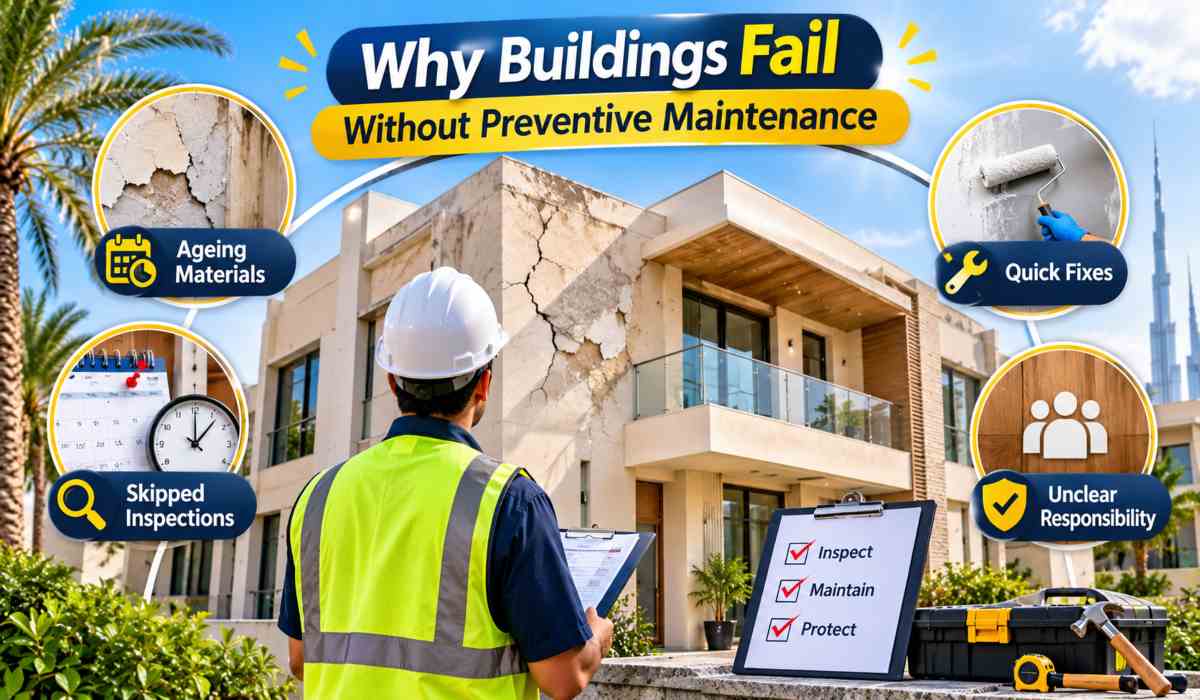
Buildings fail without preventive maintenance because wear is constant, while attention is occasional. Materials age, inspections get skipped, repairs are patched rather than fixed and nobody is clearly responsible for catching the problem. Failure is rarely sudden. It is usually the end of a long chain of small, avoidable gaps.
Ageing materials and wear
Every material in a building has a limited working life. Sealants dry and crack, paint loses its protective film, rubber gaskets harden and metal fittings corrode. In the UAE, heat speeds this up. Exposed roof surfaces can reach temperatures above 70°C in summer and that daily swing between hot afternoons and cooler nights makes materials expand and contract until they weaken. Coastal areas such as Ras Al Khaimah add salt in the air, which attacks metal and wiring. Without scheduled checks and replacements, parts that were sound at handover quietly reach the end of their life.
Skipped inspections and delayed budgets
Inspections catch problems while they are still cheap, so skipping them means faults grow unseen. The most common reason is money. Maintenance rarely feels urgent when everything appears to work, so budgets are cut or pushed to next year and the work becomes a larger bill later. A planned survey changes this because it turns vague worry into a clear list of what needs attention and when. For older properties or ones that have gone years without a proper check, a professional building renovation and inspection assessment is a sensible starting point for setting a realistic maintenance plan and budget.
Quick fixes that hide the real fault
A quick fix treats the symptom and leaves the cause running. Painting over a damp stain, topping up AC refrigerant without finding the leak or resetting a tripping breaker all make a problem disappear for a while. The fault carries on behind the surface, often getting worse and by the time it returns it has done more damage. A proper repair starts by asking why the problem happened, not just how to hide it. If the same issue comes back within a few months, the first repair did not reach the real cause.
Unclear responsibility
Buildings also fail when nobody is sure whose job it is to act. Owners assume tenants will report faults, tenants assume landlords are watching and shared areas fall between building management and individual owners. Reports get delayed and each delay lets the problem grow. The fix is simple but needs to be deliberate: write down who inspects what, how often and who approves repairs. Clear ownership turns maintenance from a favour someone might do into a routine that actually happens.
How Ras Al Khaimah climate speeds up wear
Ras Al Khaimah’s climate speeds up wear through three things: salty, humid coastal air, long summers of heat and constant AC use and short bursts of heavy rain mixed with sand and dust. These conditions are typical of much of the UAE, but the coast makes some of them stronger. Buildings here need upkeep earlier and more often than the same materials would in a milder climate.
Coastal humidity and salt air
Humidity and salt are the biggest sources of hidden wear along the RAK coast. On summer nights, relative humidity near the sea often climbs above 80 per cent and the air carries fine salt that settles on every exposed surface. Salt attracts moisture, so metal rusts sooner, wiring and fittings corrode and paint blisters from behind. Properties close to the water, such as those on Al Marjan Island, around Mina Al Arab and in Al Hamra, see this most on balcony rails, window frames, outdoor lights and AC condensers.
Timber also reacts strongly to damp air, swelling in humid weeks and shrinking in dry, air-conditioned ones, which is how doors stick and joints open. Guidance on how to protect wood from humidity covers sealing and care in more detail. A simple habit helps in every case: rinse exposed metal and glass with fresh water regularly to wash off salt before it does damage.
Summer heat and constant AC load
Summer heat wears buildings through the sun on the outside and the AC working on the inside. Roofs, terraces and external walls expand in the afternoon heat and contract overnight and that repeated movement slowly cracks sealants, membranes and paint. Indoors, AC units run for much of the year, so their filters, coils, fans and compressors age faster than equipment in cooler places. A unit that is rarely serviced works harder to hold the same temperature, which raises power use and shortens its life. Checking and cleaning cooling equipment before the hottest months begin is one of the simplest ways to avoid a mid-summer breakdown.
Heavy rain days and sand or dust
Rain in the UAE is rare, which is exactly why it exposes weak spots. A long dry spell cracks waterproofing and fills drains with sand and debris, so when a heavy downpour arrives, water finds every gap at once. Blocked terrace drains pool water, old seals leak and roof edges that looked fine all year suddenly let moisture in. Wind-blown dust adds to the problem by clogging AC filters, scratching glass and settling in drainage channels. Clearing drains and gutters before the wetter months and checking the roof and sealants afterwards, keeps these short events from becoming lasting damage.
Signs of poor home maintenance to spot early
The earliest signs of poor home maintenance are visible marks such as stains, cracks, peeling paint and rust, unusual smells or sounds and utility bills that rise without a clear reason. Each one points to a fault that is already underway. Spotting them early usually means a simple repair rather than a major one.

What you can see
Visible changes are the easiest signs to catch, because they show up on surfaces you look at every day. Brown or yellow stains on a ceiling or wall usually mean water is getting in. Bubbling or peeling paint suggests moisture is pushing out from behind the wall. Cracks deserve a closer look: a hairline crack is often surface wear, but one that widens, runs diagonally or appears above doors and windows can point to movement. Rust on railings, window frames or AC brackets shows that protective coatings have failed and black or green patches in corners and bathrooms are early mould. A quick walk around the property every month, with a phone camera to compare photos, makes these changes easy to notice.
What you can smell or hear
Smells and sounds often reveal problems that are hidden behind walls, above ceilings or inside equipment. A musty, earthy odour usually means damp or mould, even when nothing is visible yet. A burning or hot-plastic smell near sockets, switches or the distribution board should be treated as urgent, because it can mean overheating wiring. Gurgling drains suggest a partial blockage and a steady drip or hissing sound in a quiet room can mean a leaking pipe. In AC units, rattling, buzzing or squealing often signals a loose part, a failing fan motor or a struggling compressor. Sounds that were not there last month are worth reporting, since equipment rarely repairs itself.
What your bills show
Utility bills act as an early warning system, because hidden faults often waste water or power long before anything visibly breaks. A water bill that climbs without any change in how many people live in the home can point to a leak and the US The Environmental Protection Agency predicts that a typical household loses nearly 10,000 gallons of water a year to leaks. A rising electricity bill in a similar pattern can mean an AC unit working harder than it should, dirty filters, low refrigerant or ageing equipment drawing more power. Comparing each month with the same month last year, rather than the previous month, removes the effect of the seasons and makes real changes easier to see. A sudden jump with no obvious cause is a good reason to book an inspection.
How to prevent maintenance problems
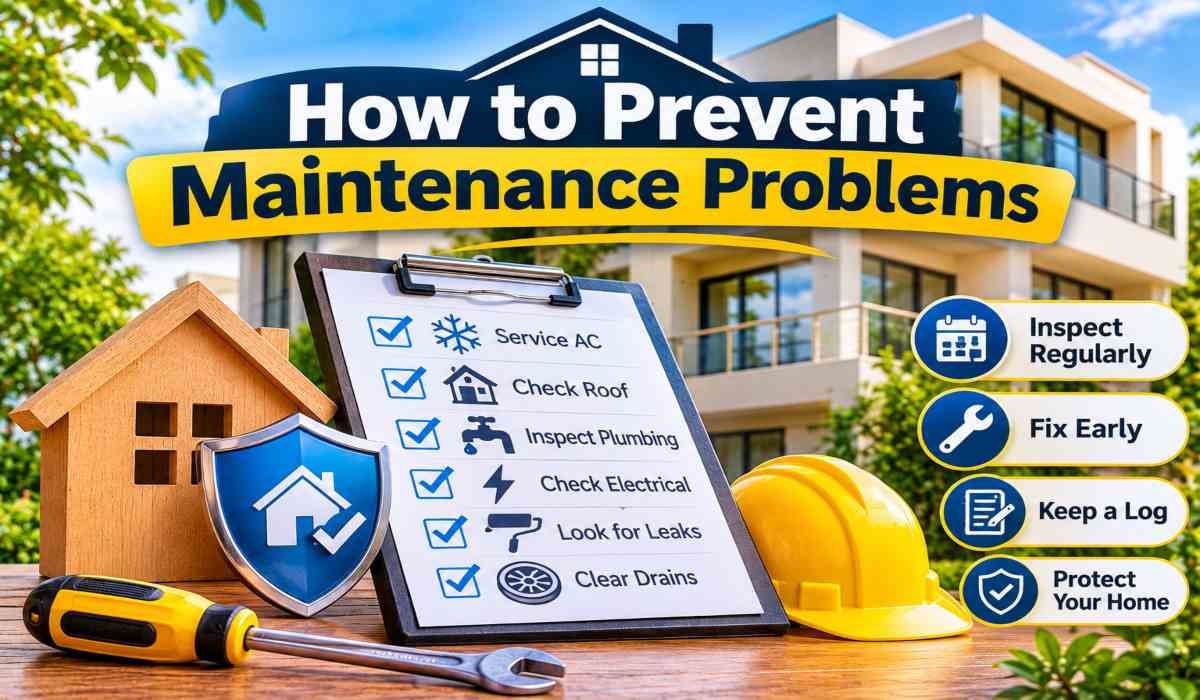
The best way to prevent maintenance problems is to inspect regularly, fix small faults early and keep a record of what was done. In the UAE, that means two main checkpoints each year, one before summer and one after heavy rain, with simple checks in between. A routine matters more than an expensive plan, because most problems grow only when nobody is looking.
A seasonal checklist for UAE homes
Before summer, the priority is anything that has to cope with months of heat and constant AC use. Service the AC units, clean or replace filters and check that condensate drain lines run freely. The US Department of Energy says swapping a dirty, Replacing a clogged filter with a clean one can be beneficial. Also look over roof and terrace surfaces for cracks, check external sealants around windows and doors and test that fans and ventilation work properly. Finally, check exposed wiring, sockets and the distribution board for warmth, marks or loose fittings.
After heavy rain, the focus shifts to water. Walk through the property looking for new stains on ceilings and walls and check the roof edges, terrace drains and gutters for blockages or standing water. Look at window seals and the base of external walls for damp and run taps and drains to confirm they are clear of sand and debris. A short check within a few days of rain catches leaks while they are still small and easy to trace.
What to inspect yourself vs what needs a professional
Some checks are simple and safe for any homeowner. Looking for stains, cracks, peeling paint and rust, cleaning AC filters, clearing visible debris from drains, testing smoke alarms and checking whether doors and windows close properly all fall into this group. These take little time and need no special tools.
Other jobs need a qualified person. Anything involving wiring, the distribution board or repeated breaker trips should be left to a licensed electrician. Gas, refrigerant, roof waterproofing, structural cracks and hidden leaks also call for professional tools and training. A useful rule is to handle what you can see and clean and call for help with anything that is hidden, high up, electrical or growing.
Keeping a simple maintenance log
A maintenance log is a short written record of what was checked, what was repaired and when. A notebook, a spreadsheet or a notes app all work. For each entry, note the date, the area or item, what was done, who did it and the cost. Adding a photo makes changes easier to compare later.
The log shows when a service is due, makes repeat problems obvious and helps when a tenant, landlord or buyer asks about the property’s history. It can also support insurance or warranty claims, since it shows the property was looked after. Five minutes of notes after each check is enough, so long as it becomes a habit.
Cost effective building maintenance where to spend and where to save
Cost-effective building maintenance means spending a little regularly on the jobs that protect the structure and key systems and saving on cosmetic work that can wait. The aim is not to spend less in total each month, but to avoid the large, unplanned bills that come from letting small faults run. In the UAE, the biggest returns come from keeping water out, keeping AC and electrics healthy and catching problems early.
Why prevention costs less than repair
Prevention costs less because it deals with a fault before it spreads to the materials around it. A worn sealant or a dripping joint is a small job. Left for a season, the same fault can soak plaster, rot timber fittings and corrode wiring, so the eventual repair covers several trades instead of one. Emergency call-outs add to this, since urgent work leaves little time to compare options and often costs more than a planned visit. Even a simple fix pays back quickly: the US Environmental Protection Agency says that repairing easily corrected household water leaks can save about 10 per cent on a water bill. The same logic applies to cooling, wiring and waterproofing, where a small early cost prevents a much larger one later.
Which jobs are worth doing every year
A few jobs deserve a place in every year’s plan, because they protect the most expensive parts of the property. Servicing AC units before summer keeps them efficient and avoids mid-season breakdowns. Checking roof and terrace waterproofing, external sealants and drains protects the structure from water, especially before the wetter months. An electrical safety check, including sockets and the distribution board, catches overheating and loose connections before they become hazards. Clearing drains and gutters, rinsing salt from exposed metal in coastal areas and inspecting window and bathroom seals complete the list. These tasks are usually quick and inexpensive and together they cover the faults that most often turn into major repairs.
Cosmetic jobs, such as repainting a faded but sound wall, are lower priority. They can wait, as long as the paint is not hiding moisture. Peeling paint should be treated as a warning sign first and a decorating job second.
When a yearly maintenance plan makes sense
A yearly maintenance plan makes sense when the property has several systems to look after, when you want costs to be predictable or when you are not always on hand to arrange visits. Owners of larger villas, landlords with several units and people who travel often tend to benefit most, because scheduled visits replace guesswork and forgotten tasks. A plan is less useful for a small, newer property where a simple checklist and a maintenance log may be enough. Whichever route you choose, check what is actually covered, how often visits happen and how emergency faults are handled, so the plan fits the property and not just the budget. Understanding how annual maintenance contracts work makes that comparison easier.
Who is responsible for maintenance in the UAE?
Responsibility for maintenance in the UAE is usually split. Owners and landlords are generally responsible for the structure and major systems, tenants for day-to-day care and minor repairs and building management for shared areas. The tenancy contract and local rules decide the exact split and they can differ between emirates, so the written agreement is always the first place to check.
Owners, landlords and tenants
A landlord is generally expected to keep the property in a state suitable for its intended purpose. That normally covers the structure, the roof, major plumbing and electrical systems and the main AC equipment where it belongs to the building. A tenant is generally responsible for looking after the home during the tenancy. That means keeping it clean, using fittings with reasonable care, replacing small consumables such as bulbs and reporting faults promptly rather than waiting for them to worsen.
The grey areas are where most disagreements start. AC servicing, drain blockages and wear on fittings are common examples and who pays often depends on what the contract says. A good agreement names these items clearly, including who arranges AC servicing and what counts as a minor repair. If a contract is silent, ask for the answer in writing before a fault appears, not after. Reporting an issue in writing, with dated photos, also protects both sides, because it shows when the problem was first known.
If you own the property and live in it, all of this falls to you, so the same priorities apply: keep the structure watertight, keep the systems serviced and act on small faults early.
Building management and shared areas
In apartments, towers and gated communities, shared areas usually belong to the building management or the owners’ association, not to any single resident. This typically includes lobbies, corridors, lifts, roofs, external walls, car parks, pools and the central plant. Costs are normally covered by service charges paid by the owners and management arranges inspections and repairs on the group’s behalf.
The boundary between shared and private areas matters. A leak inside a unit may be the owner’s responsibility if it comes from the unit’s own pipework, but it may belong to management if the source is a shared riser or the roof above. Balconies, windows and external walls are another frequent point of confusion, so check the building’s rules or ask management how each item is classed. When a problem crosses the boundary, report it to management in writing as soon as it is noticed, since early notice keeps small faults from turning into disputes over who should have acted.
Maintenance needs by property type
Maintenance needs depend on the type of property. Villas carry more exterior and landscaping work, apartments depend more on shared systems and building management, older buildings need more frequent checks than newer ones and small commercial units have their own routine. The principles stay the same everywhere: keep water out, keep systems serviced and act on small faults early.
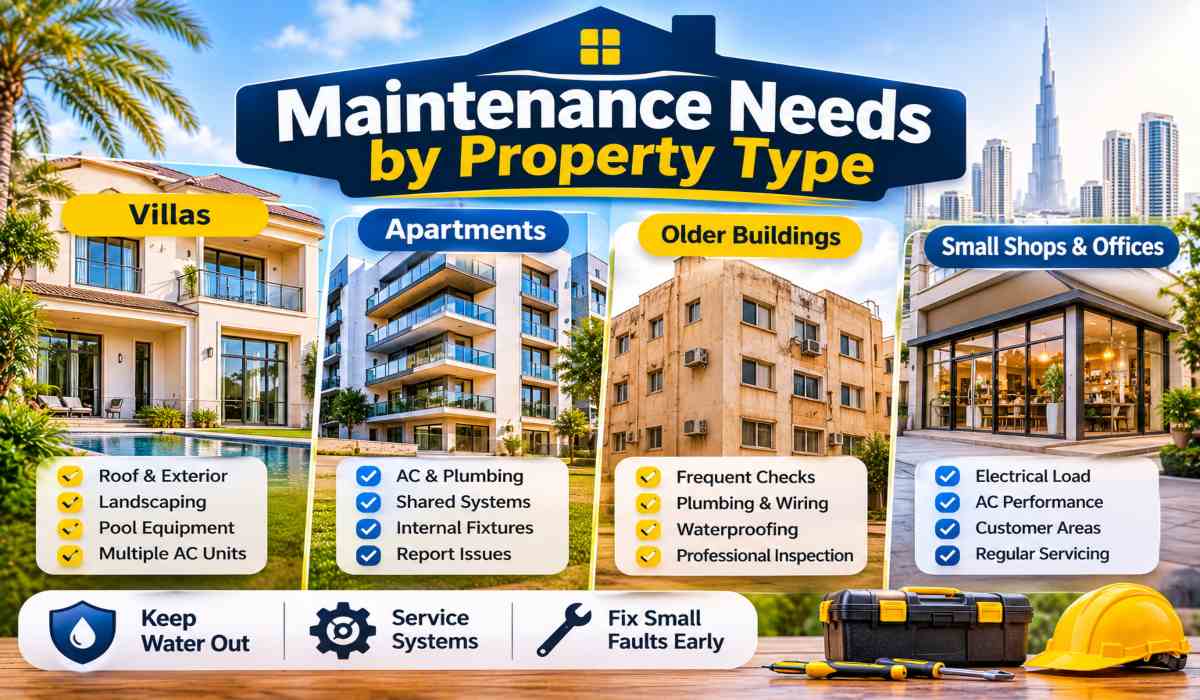
Villas vs apartments
A villa gives the owner full control and full responsibility. Roofs, terraces, boundary walls, external paint, gardens, pool equipment and often a private water tank all need regular attention. In the UAE climate, the roof and external walls take the heaviest punishment from sun, sand and occasional heavy rain, so they deserve a check at least once a year. Villas also tend to have several AC units, which means more filters, more drain lines and more servicing to track.
Apartments shift much of that exterior burden to the building management. The owner or tenant mainly looks after what is inside the unit: the AC, plumbing under sinks, electrical fittings, seals in bathrooms and kitchens and doors and windows. The risk in an apartment is that a fault travels. A leak can reach the unit below and a neglected balcony drain can affect others. Apartment residents should report shared-area problems to management in writing and keep their own internal checks regular.
Older vs newer buildings
Newer buildings usually have fewer faults in the first years, which makes it easy to assume they need little attention. They still need routine servicing and warranty terms often depend on it, so skipping the schedule can cost more than it saves. Early defects such as small leaks, poor sealing or minor settling cracks are also easiest to fix and claim for while the building is young.
Older buildings need more frequent and deeper checks. Wiring and plumbing may be nearing the end of their working life, waterproofing may have worn through and materials that were common at the time of construction may now be outdated. A full professional inspection every few years helps older owners decide what to repair, replace or monitor. Properties that have gone a long time without a proper check are the ones most likely to hide serious faults behind walls and ceilings.
Small shops and offices
Small shops and offices follow the same basic routine as homes, but with more emphasis on electrical load, AC performance and customer-facing areas such as floors and signage. Equipment runs for longer hours, so servicing may need to be more frequent. If you manage both residential and commercial space, understanding how home and commercial upkeep differ makes it easier to plan each property’s routine.
Conclusion
Building maintenance issues become costly when small faults are left alone. A hairline crack, a slow leak or a tired AC unit costs little to fix early, but each month of delay lets the damage spread into materials, systems and safety. In the UAE’s heat and humidity, that spread happens faster than most owners expect.
The pattern from this guide is simple. Look for the early signs, which are stains, smells, strange sounds and bills that rise without reason. Inspect twice a year, before summer and after heavy rain. Keep a short log of what was checked and fixed and be clear about who is responsible for each part of the property. Spend first on the jobs that keep water out and keep AC and wiring healthy and let purely cosmetic work wait.
You don’t need a perfect plan to start. A single walk-through this month, with notes and photos, is already more than most neglected properties ever get. If you find something you can’t judge yourself or you’d like a professional to look at the property, Home Fix Building Maintenance can inspect and advise on what needs attention.
Frequently Asked Questions (FAQs)
What is the lack of maintenance in a building?
Lack of maintenance means a building is not being inspected, cleaned or repaired often enough to stay in good working order. Small faults are left to grow, which leads to leaks, damp, worn systems and eventual damage.
What are the consequences of neglecting home maintenance?
Neglect leads to health and safety risks, structural damage, higher repair bills and a lower property value. It can also cause disputes with tenants or landlords and weaken insurance or warranty cover. The World Health Organization links damp, mouldy homes to roughly 30 to 50 per cent higher odds of respiratory symptoms.
What problems can occur if maintenance is not carried out?
Common problems include water leaks, mould, failing AC units, overloaded wiring, cracked tiles, blocked drains and peeling paint. Left alone, these can spread into rot, rusting reinforcement and costly structural repairs.
What are the signs of poor building maintenance?
Look for ceiling or wall stains, bubbling paint, widening cracks, rust, musty smells and unusual noises from AC units or pipes. Utility bills that rise without a clear reason are another early warning sign.
What are the most common building maintenance issues in the UAE?
The most common issues are water leaks and damp, AC wear, electrical overload, roof and wall defects, warped doors and woodwork, cracked flooring, blocked drains and fading paint. Heat, humidity and months of AC use make these develop faster than in cooler climates.
How can I keep maintenance costs down?
Fix small faults early, service AC units before summer and keep drains, roofs and seals in good order. A simple maintenance log and a yearly check help you plan costs and avoid expensive emergency repairs.
How often should a home be inspected?
Inspect at least twice a year, once before summer and once after heavy rain. Older properties or ones that have gone years without a check, benefit from a full professional inspection every few years.