
Marble Flooring Guide: Types, Cost, Installation & Maintenance (2026)
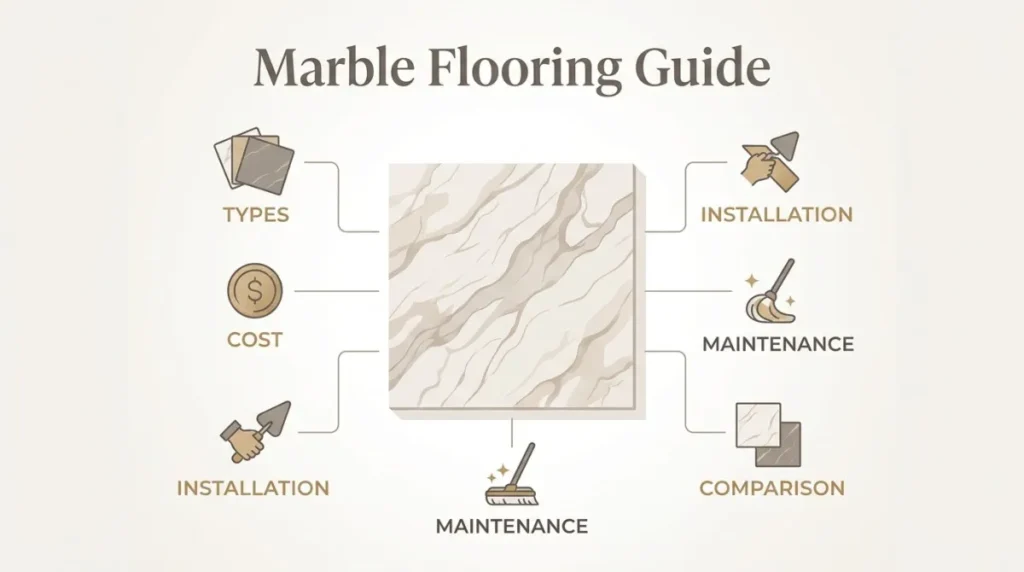
Marble flooring has been a symbol of elegance and luxury for centuries, and it remains one of the most sought-after choices for homeowners across the UAE today. From the timeless veining of Carrara and Calacatta marble to the rich depth of dark and Italian varieties, marble flooring transforms any space into a refined, high-end environment while adding lasting value to a property. But choosing the right marble floor involves more than just picking a color; it means understanding the different types available, weighing installation and cost factors, knowing how it compares to alternatives like granite and vitrified tiles, and learning how to properly maintain and polish it to keep that signature shine for years to come. This covers everything you need to know about marble flooring, from selection and installation to long-term care so that you can make a confident decision for your home and if you’re in Ras Al Khaimah, the team at Home Fix Building Maintenance is on hand to help with supply, installation, polishing, and restoration every step of the way.
What Is Marble Flooring? (Overview & Why Homeowners Choose It)
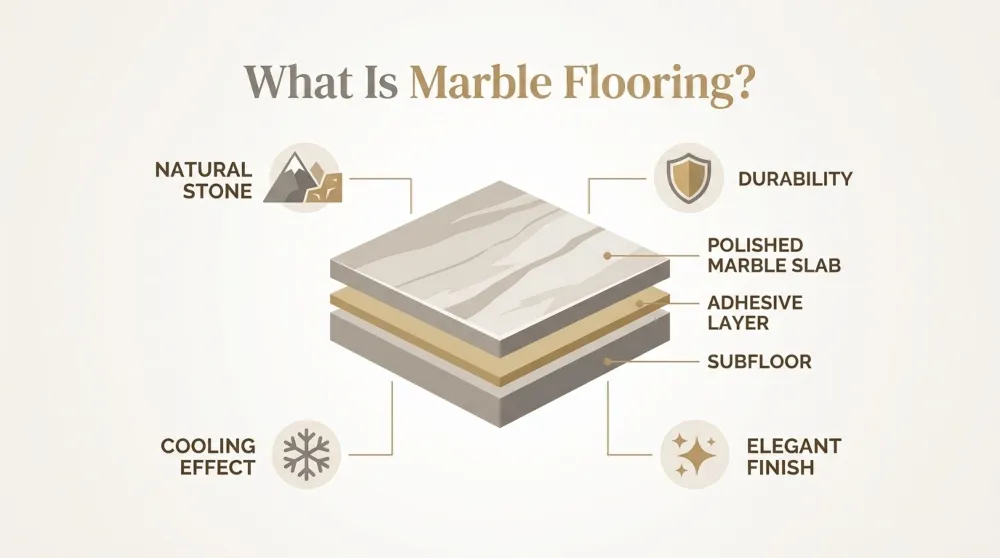
Marble flooring is a type of natural stone flooring made by cutting and polishing marble, a metamorphic rock formed from limestone under heat and pressure over thousands of years. This natural process gives every slab its own unique veining, color depth, and pattern, which is why no two marble floors ever look exactly alike. Beyond its visual appeal, marble is prized for its durability, ability to stay cool underfoot in warm climates, and the way it reflects light to make rooms feel brighter and more spacious.
Homeowners choose marble flooring for a combination of aesthetic and practical reasons. It instantly elevates the perceived value of a home, works well with both classic and contemporary interior styles, and when properly sealed and maintained can last for decades without losing its appeal. In a region like the UAE, where indoor temperatures matter, marble’s natural coolness also makes it a popular choice for homes looking to balance style with comfort.
Marble vs Other Natural Stone Floors
While granite, travertine, and limestone are also popular natural stone options, marble stands apart for its smooth finish and distinctive veined patterns. Granite tends to have a more uniform, speckled appearance and is harder, making it more resistant to scratches but less prized for its aesthetic softness. Travertine has a more porous, matte, earthy look and is often used for a rustic or Mediterranean feel. Marble strikes a balance between elegance and versatility; it can be polished to a high-gloss finish or honed for a softer, matte look, giving homeowners more design flexibility than most other natural stones.
Where Marble Flooring Works Best in a Home
Marble flooring performs best in areas where its visual impact and cooling properties can be fully appreciated; living rooms, entryways, hallways, and formal dining areas are classic choices, as the open flow of these spaces highlights the stone’s natural patterns. It’s also widely used in bathrooms and kitchens for its clean, upscale look, though these wetter areas require proper sealing to prevent staining and moisture damage. Bedrooms benefit from marble’s cooling effect, especially in warmer climates. Areas with heavy foot traffic or a higher risk of acidic spills, such as busy kitchens, may need extra care or a honed finish to reduce visible wear over time.
Types & Colors of Marble Flooring
Marble flooring comes in a wide spectrum of colors, patterns, and origins, each bringing its own character to a space. Choosing the right type depends on the look you’re going for, your budget, and how the floor will be used from soft, light tones that open up a room to bold, dark shades that create a dramatic statement.
White & Grey Marble (Carrara, Calacatta, Statuario)
White and grey marble remain the most popular choices for flooring, prized for their timeless, clean aesthetic that suits almost any interior style. Carrara marble, quarried in Italy, is known for its soft grey veining set against a white or blue-grey background, making it a versatile and relatively affordable option. Calacatta marble offers a brighter white base with bolder, more dramatic gold or grey veining, giving it a more luxurious and statement-making appearance. Statuario marble sits at the premium end of the spectrum, featuring a striking white background with strong, sculptural veining; it’s often the marble of choice for high-end residential and commercial projects. All three types share the advantage of making spaces feel brighter, larger, and more elegant.
Italian Marble vs Indian Marble (Makrana, Jaisalmer)
Italian marble, sourced from regions like Carrara and Tuscany, is widely regarded as the global benchmark for quality, known for its fine grain, consistent veining, and superior polish. It typically comes at a higher price point due to import costs and its premium reputation. Indian marble offers a more budget-friendly alternative without sacrificing natural beauty Makrana marble, famously used in the Taj Mahal, is known for its durability and pure white tone, while Jaisalmer marble brings a distinctive golden-yellow hue that works well for those wanting a warmer, earthier look. The choice between Italian and Indian marble often comes down to budget, desired color palette, and the specific texture or veining pattern a homeowner is after.
Black, Green, Onyx & Colored Marble Options
For homeowners looking to move beyond traditional white and grey tones, marble flooring also comes in a range of bolder colors. Black marble creates a dramatic, high-contrast look often used as an accent or in modern, minimalist interiors. Green marble adds a rich, natural depth and pairs well with both classic and contemporary design schemes. Onyx marble, though technically a distinct stone, is often grouped with colored marble options for its translucent, richly banded appearance and is typically reserved for feature areas due to its premium cost. Other colored varieties including brown, red, pink, and blue marble allow for more personalized, statement-driven flooring choices.
Honed, Matte & Glossy Finishes
The finish applied to marble flooring significantly affects both its appearance and practicality. A glossy finish is achieved through high-level polishing, giving the floor a reflective, mirror-like surface that enhances the stone’s natural veining and makes spaces feel brighter though it can show scratches and footprints more easily. A honed finish involves less polishing, resulting in a smooth but matte surface that offers a softer, more contemporary look while also being more slip-resistant and forgiving of daily wear. Matte finishes are especially popular in high-traffic areas or homes with children and pets, as they require less frequent maintenance to maintain their appearance compared to high-gloss surfaces.
Marble Flooring Cost Guide
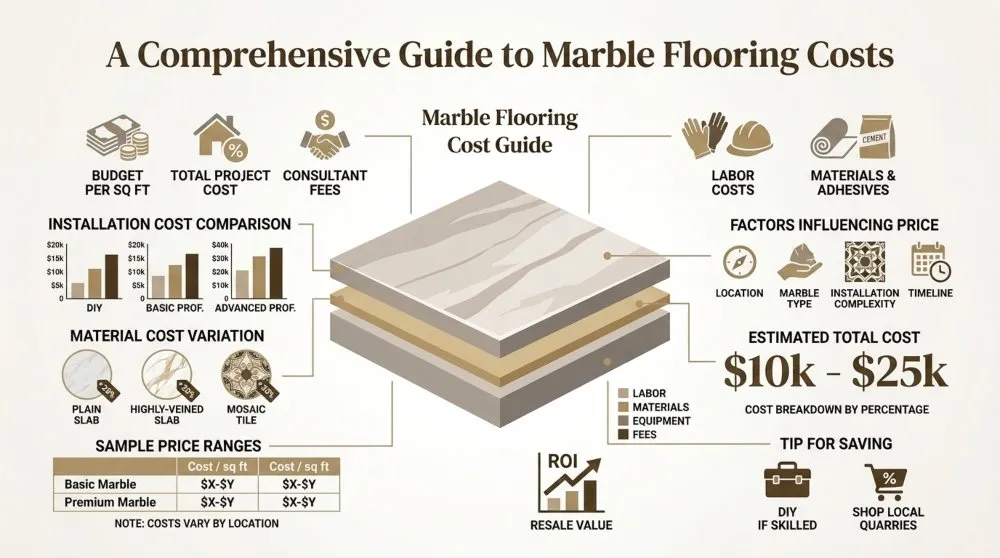
Marble flooring costs can vary significantly depending on the type of marble, its origin, finish, and the complexity of installation. Understanding these cost drivers helps homeowners budget realistically and avoid surprises once a project is underway.
Cost Per Square Foot (Budget vs Luxury Marble)
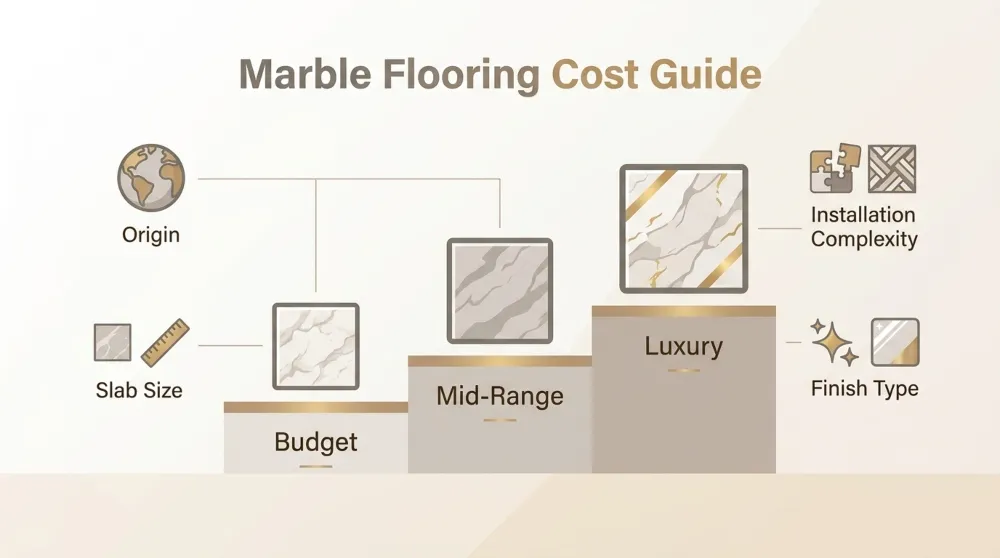
Marble flooring is generally priced in tiers based on origin and rarity. Budget-friendly options, such as standard Indian marble varieties, offer an accessible entry point for homeowners who want the look of natural stone without the premium price tag. Mid-range options typically include more refined Indian marble or entry-level Italian varieties, balancing quality and cost. At the luxury end, premium Italian marble like Calacatta or Statuario commands significantly higher prices due to its rarity, veining quality, and import costs. Slab size, thickness, and finish (polished versus honed) also influence the final per-square-foot price, so it’s worth getting a detailed quote based on your specific space and marble selection.
What Affects Marble Flooring Price
Several factors influence the overall cost of a marble flooring project beyond the raw material price. The origin of the marble plays a major role: imported Italian marble costs more than locally sourced or Indian alternatives due to shipping and import duties. Slab thickness and size matter too, as larger, thicker slabs with fewer joints are more expensive but offer a more seamless, high-end finish. The complexity of the installation including intricate patterns, medallions, or inlay work adds labor costs, as does the condition of the subfloor, which may require leveling or preparation before installation. Finally, finish type (glossy polish versus honed matte) and any additional sealing or protective treatments will factor into the total project cost.
Marble vs Granite vs Vitrified Tiles Cost Comparison
When comparing flooring materials, marble generally sits at a higher price point than vitrified tiles. Still, it can be comparable to or more affordable than premium granite, depending on the varieties chosen. Vitrified tiles are typically the most budget-friendly option, offering a marble-like appearance at a fraction of the cost. However, they lack the natural veining and authenticity of real stone. Granite tends to be more durable and scratch-resistant than marble, which can justify its cost for high-traffic commercial spaces. Still, marble often wins out for residential projects where aesthetic appeal and luxury feel are the priority. Ultimately, the right choice depends on balancing budget, durability needs, and the visual impact you want to achieve. Our team at Home Fix can help you weigh these options based on your specific space and goals.
Marble Flooring by Room
Marble flooring isn’t a one-size-fits-all choice; the ideal type, finish, and maintenance approach can vary depending on which room it’s being installed in. Understanding how marble performs in different spaces helps homeowners choose the right option for both style and everyday practicality.
Living Room & Bedroom
Living rooms and bedrooms are among the best spaces for marble flooring, as they typically see moderate foot traffic and benefit most from the stone’s visual impact. In living rooms, a glossy, polished finish works well to create an open, elegant feel, especially in larger spaces where light can bounce off the surface and make the room feel more spacious. Bedrooms benefit from marble’s natural cooling properties, making it a comfortable choice in warmer climates like the UAE. Since these are lower-traffic, lower-moisture areas, homeowners have more flexibility to choose lighter colors, intricate patterns, or premium finishes without worrying as much about wear or staining.
Kitchen Marble Flooring
Kitchens present a more demanding environment for marble flooring, with higher foot traffic and greater exposure to spills, acidic substances like citrus juice or vinegar, and dropped items. While marble’s upscale look makes it a popular kitchen choice, it requires proper sealing to protect against staining and etching from acidic spills, along with more frequent maintenance to keep it looking its best. A honed rather than glossy finish is often recommended for kitchens, as it better hides minor scratches and is less slippery when wet, an important safety consideration in a space where spills are common.
Bathroom & Shower Marble Flooring
Bathrooms and showers are popular spots for marble flooring thanks to its clean, spa-like aesthetic, but they also come with the highest exposure to moisture. Proper sealing is essential in these areas to prevent water absorption, staining, and long-term damage to the stone. A honed or textured finish is generally preferred over high-gloss for bathroom and shower floors, as it provides better slip resistance when wet, an important safety factor. With the right sealing and regular maintenance, marble can hold up well in bathrooms, but homeowners should be prepared for more frequent resealing compared to drier areas of the home.
How Marble Flooring Is Installed
Proper installation is one of the most critical factors in how a marble floor performs and looks over its lifetime. Even the highest-quality marble slab can develop uneven surfaces, cracking, or lippage if installed incorrectly, which is why professional installation and careful planning matter as much as the material itself.
Installation Process & Method Statement
A professional marble installation follows a structured method statement to ensure a level, durable, and visually seamless result. The process typically begins with subfloor preparation, cleaning, leveling, and checking for moisture issues, since an uneven or damp subfloor can compromise the entire installation. Next, marble slabs or tiles are laid out and dry-fitted to plan the pattern, book-matching, and joint alignment before any adhesive is applied. Tiles are then set using a suitable adhesive or mortar bed, with spacers used to maintain consistent joint widths. Once laid, the floor is left to cure before grouting, followed by a final grinding and polishing pass to achieve a smooth, even surface. Sealing is typically the last step, protecting the marble from stains and moisture from day one.
Marble Skirting, Trim & Threshold Details
Beyond the main flooring area, details like skirting, trim, and thresholds play an important role in both the finished look and long-term durability of a marble floor. Marble skirting installed along the base of walls protects wall surfaces from scuffs and creates a clean, cohesive transition between floor and wall, often cut from the same slab as the flooring for a matched appearance. Thresholds are used at doorways and transitions between rooms or flooring types, providing a smooth, safe edge and preventing chipping at vulnerable joint points. Trim pieces, such as bullnose or beveled edges, are commonly used on stairs, countertops, or exposed edges to create a polished, finished look while reducing the risk of sharp or chipped corners.
Waterjet Marble Medallions & Inlay Patterns
For homeowners wanting to make a design statement, waterjet-cut marble medallions and inlay patterns offer a way to introduce intricate, custom detailing into a floor. Waterjet cutting technology allows different colors and types of marble to be precisely cut and fitted together, creating detailed medallions, borders, or geometric patterns that would be difficult or impossible to achieve with traditional cutting methods. These features are often used as focal points in entryways, foyers, or under dining tables, adding a bespoke, high-end touch to the overall flooring design. While medallions and inlay work add to the cost and installation time, they can dramatically elevate the visual impact of a marble floor and serve as a distinctive design signature for a home.
Marble vs Granite vs Tiles: Which Is Best?
Choosing between marble, granite, and tiles ultimately comes down to balancing aesthetics, durability, maintenance effort, and budget. Each material has distinct strengths, and understanding these differences helps homeowners choose what fits their lifestyle and design goals.
Durability, Maintenance & Cost Comparison
Granite is the most durable of the three, highly resistant to scratches, heat, and everyday wear, making it a strong choice for busy households or high-traffic areas though this durability typically comes at a comparable or higher cost than marble. Marble, while elegant and relatively durable, is softer and more porous, making it more prone to scratching, etching from acidic substances, and staining if not properly sealed and maintained; it generally requires more regular care, including resealing and polishing, to keep its finish looking fresh. Vitrified tiles are the most low-maintenance and budget-friendly option, resistant to stains and moisture with minimal upkeep required. Still, they lack the natural variation and premium feel of real stone. In terms of cost, tiles are typically the most affordable, marble sits in the mid-to-premium range depending on the variety, and granite can range from mid-range to premium based on rarity and finish.
Which Flooring Suits Which Room
The best flooring choice often depends on the specific room and how it’s used. Marble is ideally suited to living rooms, bedrooms, and formal entryways, where its aesthetic impact and cooling properties can shine without heavy exposure to spills or high traffic. Granite’s superior scratch and heat resistance make it a practical choice for kitchens and high-traffic commercial spaces. However, it’s also used residentially for those wanting a similarly upscale look with less maintenance than marble. Vitrified tiles work well in bathrooms, kitchens, and utility areas where moisture resistance and low maintenance are priorities, and they’re also a practical option for larger homes or budget-conscious projects where covering more square footage affordably matters. Many homeowners choose to mix materials by room for example, marble in living spaces and tiles in bathrooms to balance style, durability, and cost across the home.
Marble Floor Care & Maintenance
Marble flooring rewards regular, gentle care with decades of lasting beauty, but it’s also more sensitive than harder materials like granite or tile. Knowing the right cleaning products, protective treatments, and preventive habits is essential to keeping a marble floor looking its best for years to come.
Best Cleaning Products & Mops for Marble
Marble requires pH-neutral cleaning products specifically formulated for natural stone regular household cleaners, especially those containing vinegar, ammonia, or bleach, can etch and dull the surface over time. A soft microfiber mop is generally the best tool for daily cleaning, as it won’t scratch the surface the way abrasive pads or stiff-bristled mops can. For everyday maintenance, warm water combined with a stone-safe cleaner is usually sufficient, and floors should be dried after mopping to prevent water spots or streaking. It’s also worth sweeping or dust-mopping regularly to remove grit and debris that can scratch the surface if ground in underfoot.
Sealing, Waxing & Coating Marble Floors
Sealing is one of the most important maintenance steps for marble flooring, as it helps protect the porous stone from absorbing spills and staining. Most marble floors should be resealed periodically typically every six months to a year, depending on foot traffic and the specific sealant used with high-moisture areas like kitchens and bathrooms often needing more frequent attention. Waxing can add an extra layer of shine and protection between polishing sessions, though it should be applied sparingly and buffed properly to avoid a hazy or uneven finish. Protective coatings are another option for homeowners wanting added durability, particularly in high-traffic areas, helping to guard against scratches and etching while maintaining the marble’s natural appearance.
Preventing Stains & Scratches
Prevention is the most effective way to keep marble floors looking pristine over the long term. Wiping up spills immediately, especially acidic substances like wine, citrus juice, or vinegar helps prevent etching and staining before it sets in. Placing mats or rugs at entryways reduces the amount of grit and dirt tracked onto the floor, which is one of the leading causes of surface scratches. Furniture pads under chair and table legs prevent scuffing when items are moved, and avoiding dragging heavy furniture across the floor altogether is the safest approach. For homes with pets, keeping nails trimmed can also help minimize the risk of surface scratches over time.
Marble Floor Polishing & Restoration
Even with diligent care, marble floors will eventually show signs of wear dulling, minor scratches, or a loss of shine over time. Polishing and restoration bring the surface back to life, and understanding the process helps homeowners decide when to tackle maintenance themselves and when to call in professionals.
Marble Floor Polishing Process & Cost
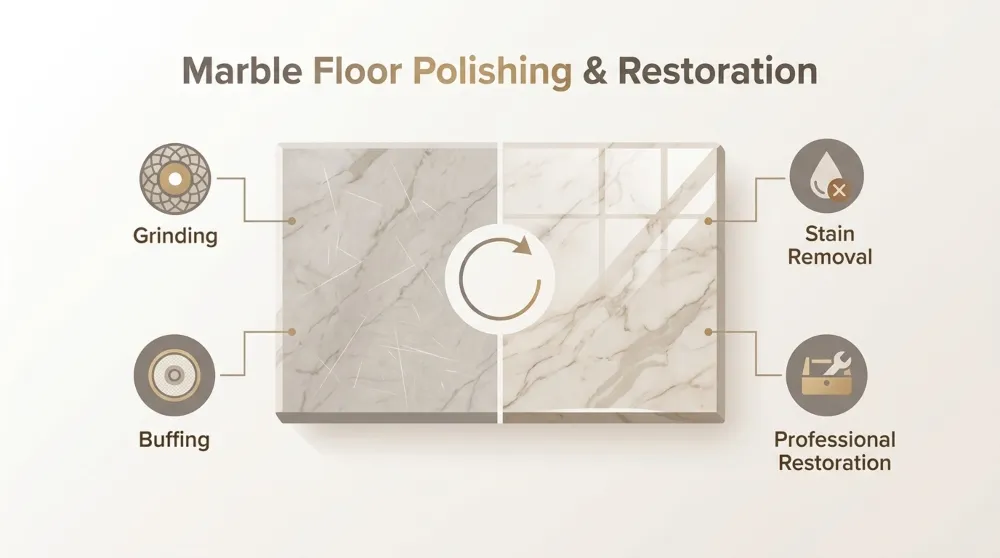
Professional marble polishing typically involves several stages: an initial deep clean to remove surface grime, followed by honing to smooth out minor scratches and imperfections, and finally applying a polishing compound and buffing to restore the stone’s natural shine. The cost of professional polishing depends on the size of the area, the condition of the existing floor, and the level of restoration needed; floors with significant etching or scratching require more intensive work than those simply due for routine maintenance. While it’s an added expense, professional polishing extends the life of a marble floor and is generally far more cost-effective than replacement.
DIY Polishing vs Professional Restoration
For light maintenance, homeowners can use marble-specific polishing products to maintain shine between professional treatments, following product instructions carefully to avoid damaging the stone. However, DIY polishing has real limitations without the right tools and experience, it’s easy to leave streaks, uneven sheen, or even worsen existing damage. Professional restoration uses specialized equipment, including diamond-grit polishing pads and buffing machines, to achieve a consistently smooth, even finish that’s difficult to replicate at home. For floors with deep scratches, significant etching, or years of accumulated wear, professional restoration is almost always the better investment, both for the quality of the result and to avoid costly mistakes.
Removing Stains, Acid Marks & Scratches
Different types of marble damage require different treatment approaches. Surface stains, such as those from food or beverages, can often be treated with a poultice, a paste designed to draw the stain out of the porous stone. Acid etching, caused by substances like citrus juice or vinegar, actually dissolves a thin layer of the marble’s surface and typically requires honing or light polishing to remove, since it can’t simply be cleaned away. Scratches range from superficial marks that respond well to buffing to deeper gouges that may need professional grinding to resolve fully. Identifying the type of damage correctly is important, as using the wrong treatment method can sometimes make the problem worse rather than better.
Grinding, Buffing & Bringing Back the Shine
For marble floors with significant wear, uneven surfaces, or serious damage, grinding is often the first step in a full restoration. This process uses progressively finer diamond abrasives to remove the damaged top layer and reveal fresh, undamaged stone beneath. Once the surface is level and smooth, buffing follows to bring back the marble’s natural luster, using polishing compounds and high-speed buffing pads to achieve a reflective, like-new finish. This combination of grinding and buffing is typically reserved for older floors or those with substantial damage, as it’s a more intensive process than routine polishing but it can dramatically transform a worn, dull marble floor back into a showpiece.
Get a Marble Flooring Quote from Home Fix
Whether you’re planning a brand-new marble flooring installation, looking to restore the shine of an existing floor, or simply weighing your options between marble, granite, and tiles, having the right team behind the project makes all the difference. Home Fix Building Maintenance brings years of hands-on experience delivering marble flooring solutions across Ras Al Khaimah, combining quality materials with skilled craftsmanship to ensure a result that’s built to last.
Free Site Visit & Estimate
Every marble flooring project starts with a clear understanding of your space, goals, and budget. Home Fix offers a free site visit where our team assesses your existing flooring or subfloor condition, discusses your preferred marble type, color, and finish, and provides a detailed, no-obligation estimate. This hands-on approach ensures there are no surprises once work begins. You’ll know exactly what to expect in terms of cost, timeline, and materials before committing to the project.
Supply, Installation, Polishing & Restoration Services
Home Fix provides end-to-end marble flooring services, so you don’t need to coordinate multiple contractors for a single project. Our services include sourcing and supplying quality marble from trusted suppliers, professional installation following proper method statements for a level, seamless finish, and skirting, trim, and threshold detailing to complete the look. For existing marble floors, we also offer polishing and restoration services to bring dull, scratched, or worn surfaces back to life. Whatever stage your marble flooring project is at a new installation or restoring an existing floor our team is ready to help. Contact Home Fix Building Maintenance today for your free site visit and quote.
Frequently Asked Questions (FAQs)
Is marble flooring good for UAE homes/climate?
Yes, marble flooring is well-suited to the UAE’s climate. One of its biggest advantages is its natural ability to stay cool underfoot, even during the region’s hot summer months, making it a comfortable choice for homes without relying entirely on air conditioning to keep floors feeling pleasant. Marble is also a stable material that handles temperature fluctuations well when properly installed and sealed. The main consideration for UAE homeowners is ensuring proper sealing and regular maintenance, as dust and grit common in the region can cause surface scratching if floors aren’t cleaned and cared for consistently.
How long does marble flooring last?
With proper installation, sealing, and regular maintenance, marble flooring can last for decades in many cases, 25 years or more, and often significantly longer in lower-traffic areas. Marble’s longevity is one of its biggest selling points as a flooring material, and floors that show wear over time can typically be restored through polishing and grinding rather than requiring full replacement. The actual lifespan depends heavily on factors like foot traffic, how well the floor is sealed and maintained, and how quickly spills or damage are addressed.
How often should marble floors be polished?
Most marble floors benefit from professional polishing every one to two years, though this can vary based on foot traffic, the finish type, and how well the floor is maintained day to day. High-traffic areas like entryways and living rooms may need more frequent attention, while lower-traffic spaces like bedrooms can often go longer between polishing sessions. Sealing should generally be done more frequently than full polishing typically every six months to a year to maintain the floor’s protective barrier against stains and moisture.
Is marble flooring slippery/safe?
Marble flooring can be slippery, particularly when wet or in a high-gloss polished finish, which is an important safety consideration for areas like bathrooms and kitchens. A honed or matte finish significantly reduces slip risk compared to a glossy polish, making it a safer choice for wet-prone areas or households with young children or elderly residents. Using bath mats in bathrooms, wiping up spills promptly, and choosing an appropriate finish for each room are all effective ways to minimize slip hazards while still enjoying the aesthetic benefits of marble flooring.