
AC Gas Guide Ras Al Khaimah | Types and Refill Cost
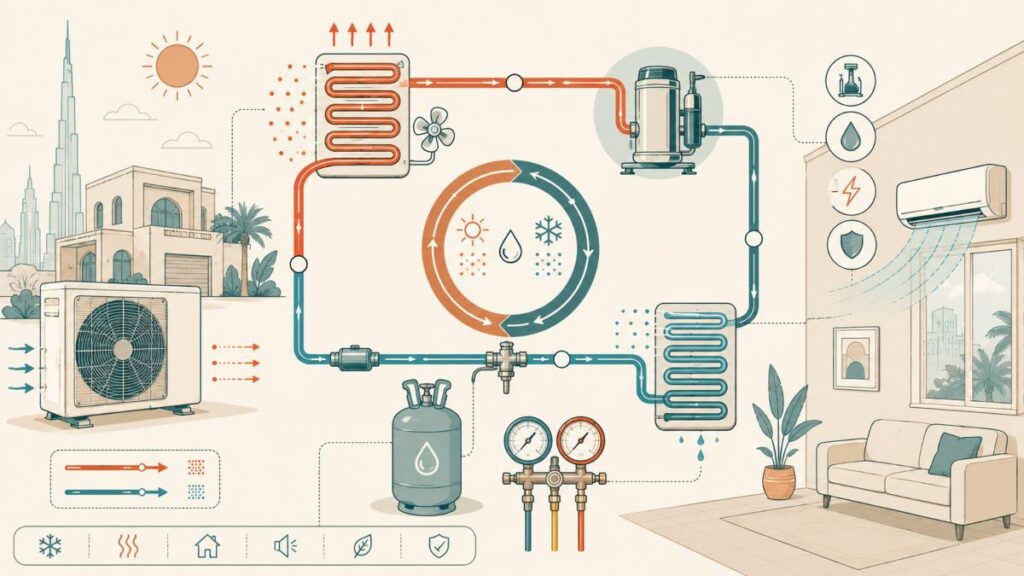
Most homeowners never think about AC gas until their unit suddenly stops cooling properly. Yet refrigerant, commonly just called AC gas, is the single component responsible for actually pulling heat out of your room. Without the right type and amount, even a perfectly clean, well-maintained AC will struggle to cool a Ras Al Khaimah home during the summer heat.
This guide covers everything you need to know: the different types of AC gas used in split and window units, how to read pressure charts so you understand what’s normal for your system, the warning signs of a gas leak (including that telltale smell), how the refilling process actually works, and what it costs in AED across Ras Al Khaimah.
Whether your AC is blowing warm air, smells faintly of gas, or you’re simply trying to understand what type of refrigerant your unit runs on before booking a service, you’ll find the answer here.
What Is AC Gas (Refrigerant) and Which Type Does Your Unit Use?
AC gas, more accurately called refrigerant, is the substance that circulates through your air conditioner’s coils, absorbing heat from indoor air and releasing it outside. It doesn’t get consumed or burned during normal operation; it simply cycles between liquid and gas states as it moves through the AC compressor, condenser, and evaporator coil.
Common AC Gas Types — R22, R410A, R32, R134a Explained
R22 (HCFC-22) was the standard refrigerant in older split and window AC units for decades. It’s effective at cooling but is being phased out globally due to its ozone-depleting properties.
R410A (HFC) is the most common refrigerant in modern split AC units across the UAE. It doesn’t deplete the ozone layer and operates at higher pressure than R22, requiring components specifically designed for it, meaning you can’t simply swap R22 for R410A in an older unit.
R32 is a newer refrigerant gaining popularity in recent AC models, including many Daikin and Mitsubishi units. It offers better energy efficiency and a lower environmental impact than R410A, though it requires specific handling due to mild flammability.
R134a is mainly used in car AC systems and small refrigeration units rather than home split or window ACs, though it occasionally appears in older portable AC units.
How to Identify Which Gas Your Split or Window AC Uses
The easiest way to check is the data label, usually found on the outdoor condenser unit or inside the service panel of a window AC. This label lists the refrigerant type, typically printed as “R22,” “R410A,” or “R32,” along with the charge amount in kilograms.
If the label is faded or missing, the AC’s manufacturing year offers a clue: units made before approximately 2015 in the UAE commonly used R22, while most units sold since then use R410A or R32. When in doubt, a technician can confirm the exact type during an inspection rather than guessing, since charging the wrong gas into a system can cause serious damage.
Old vs New Refrigerants — Why R22 Is Being Phased Out
R22 is being phased out under international environmental agreements due to its ozone-depleting potential. Production and import restrictions have made R22 increasingly expensive and harder to source in the UAE, making refilling or repairing an older R22 system costlier than before.
This is one of the key reasons many Ras Al Khaimah homeowners are choosing to replace aging R22 units rather than continue repairing them, since newer R410A and R32 systems tend to be more efficient and less expensive to maintain in the long term.
AC Gas Pressure Charts (Normal Operating Ranges)
Refrigerant pressure isn’t a fixed number; it changes with outdoor temperature. These charts give a general reference, but the exact figures will vary slightly depending on the specific unit and manufacturer specifications, which is why a technician always checks pressure against the AC’s data plate rather than a generic chart alone.
R22 Pressure Chart by Outdoor Temperature
Outdoor Temp (°C) Low Side (PSI) High Side (PSI)
| Outdoor Temperature (°C) | Low Side Pressure (PSI) | High Side Pressure (PSI) |
|---|---|---|
| 27°C | 65–70 | 195–210 |
| 32°C | 68–75 | 215–230 |
| 38°C | 72–80 | 235–255 |
| 43°C | 75–85 | 255–280 |
| 48°C | 78–90 | 275–300 |
R410A Pressure Chart by Outdoor Temperature
Outdoor Temp (°C) Low Side (PSI) High Side (PSI)
| Outdoor Temperature (°C) | Low Side Pressure (PSI) | High Side Pressure (PSI) |
|---|---|---|
| 27°C | 115–125 | 340–360 |
| 32°C | 120–135 | 365–390 |
| 38°C | 130–145 | 400–430 |
| 43°C | 140–155 | 440–470 |
| 48°C | 150–165 | 480–520 |
R410A runs at notably higher pressures than R22 across the board, which is why the two systems use different gauges, hoses, and fittings, and why one refrigerant can’t simply replace the other in an existing unit.
How to Read Your AC Gas Gauge and Manifold
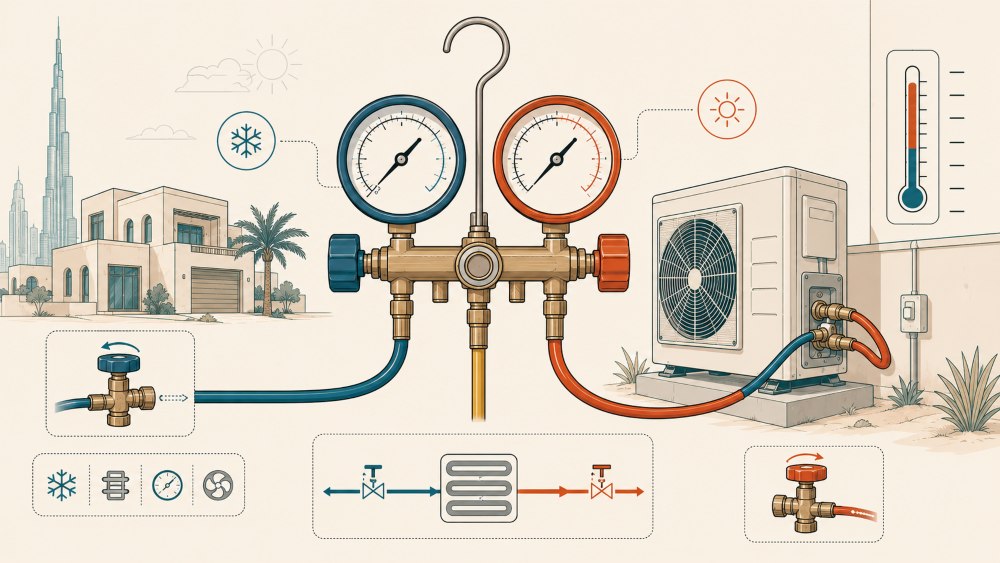
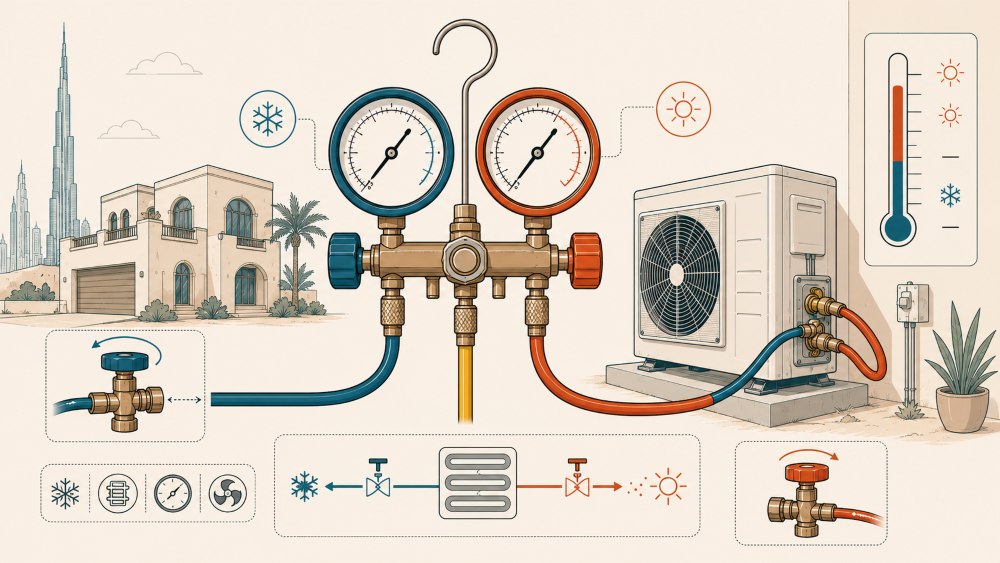
A manifold gauge set has two dials: the blue (low side) gauge reads suction pressure, and the red (high side) gauge reads discharge pressure. Readings significantly below the expected range for the current outdoor temperature usually indicate low refrigerant or a leak. Readings significantly above the range can indicate overcharging, airflow restriction, or a faulty condenser fan.
Reading these gauges accurately requires connecting them to the system’s service ports safely, something that involves handling pressurized refrigerant lines. This is a task best left to a trained technician, both for accuracy and because mishandling refrigerant lines can release gas or cause injury.
Signs of an AC Gas Leak
A gas leak rarely announces itself clearly. It usually shows up as a gradual decline in cooling performance rather than a sudden failure, which is why many homeowners don’t realize what’s actually wrong until the problem has worsened.
Common AC Gas Leak Symptoms (Weak Cooling, Ice Buildup, Hissing)
The most common sign is cooling that gets weaker over days or weeks rather than failing all at once. As refrigerant drops, the evaporator coil often develops ice buildup because the reduced gas flow causes it to run colder than it should. Some AC leaking, particularly at a fitting or valve, produce a faint hissing sound near the indoor or outdoor unit. Higher-than-usual electricity bills are another indirect clue, since the compressor works harder and longer trying to compensate for reduced cooling capacity.
Why Does My AC Smell Like Gas? (And When to Worry)
Refrigerant itself is typically odorless or has a very faint sweet smell. Hence, a strong “gas” smell from your AC is more likely something else, often a burning electrical smell from a faulty component, mold or mildew from a dirty coil, or in rare cases, a leaking component releasing oil mixed with refrigerant. A strong, persistent chemical or burning odor warrants switching off the unit and calling a technician promptly rather than continuing to run it.
Is AC Gas Leak Dangerous to Health?
Most refrigerants used in modern UAE AC units, R410A and R32, are non-toxic in small, well-ventilated exposure but can displace oxygen at high concentrations in an enclosed space, causing dizziness or breathing difficulty. R32 is also mildly flammable, which is why proper handling during repairs matters. In a typical home setting, leaks are rarely an immediate health emergency. However, they should still be repaired promptly rather than ignored, both for safety and to prevent further system damage.
How to Check AC Gas Level at Home (Basic Signs vs Professional Testing)
At home, watch for the symptoms above: reduced cooling, ice on the indoor coil or pipes, hissing sounds, or rising electricity bills. These are reliable indicators that something is wrong, but they can’t tell you the exact refrigerant level or pinpoint the leak’s location.
Professional testing uses pressure gauges connected to the system’s service ports, along with electronic leak detectors that sense refrigerant in the air. This combination tells a technician not just whether gas is low, but exactly where it’s escaping, so the repair fixes the actual leak rather than just topping up gas that will leak out again.
How AC Gas Refilling and Charging Works
Refilling AC gas isn’t simply adding more. It’s a precise process that requires removing any remaining refrigerant, checking for leaks, and charging the system with an exact amount, since overcharging is just as harmful to performance as undercharging.
Step-by-Step: How Gas Is Charged in a Split AC
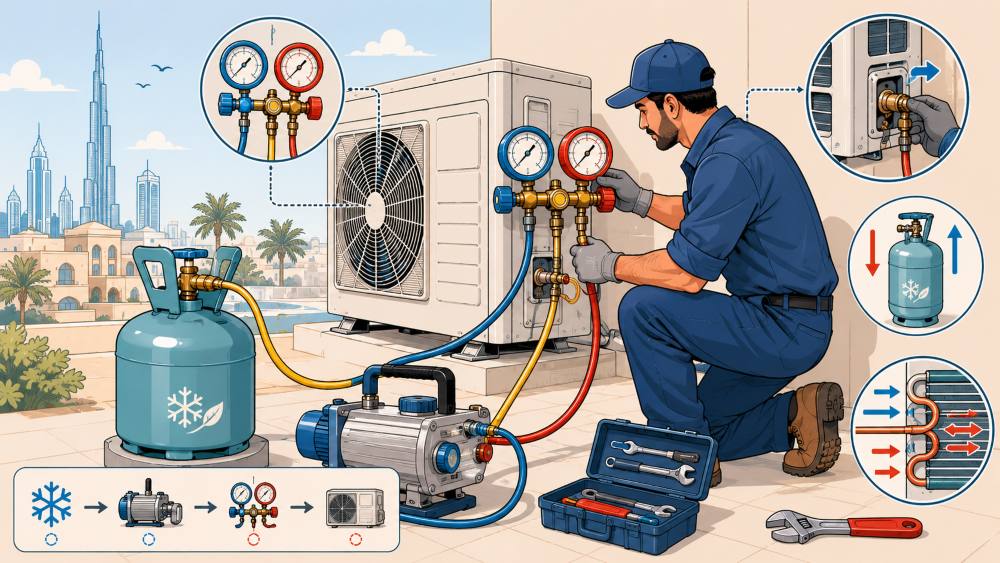
A technician first connects a manifold gauge set to the system’s service ports to check current pressure. If a leak is suspected, the system is tested and the leak repaired before any new gas is added, since refilling a leaking system only delays the same problem.
Once the system is sealed and confirmed leak-free, it’s typically evacuated using a vacuum pump to remove air and moisture, which can otherwise damage the compressor or reduce efficiency. The correct refrigerant is then charged into the system in small increments, with the technician monitoring pressure and temperature readings against the unit’s specifications until the system reaches its proper charge level.
How Much Gas Does a 1 Ton AC Need?
A 1-ton split AC typically requires 0.8 to 1 kg of refrigerant, though the exact amount depends on the unit’s brand, pipe length, and refrigerant type. Larger units scale up accordingly; for example, a 1.5-ton unit generally needs roughly 1 to 1.3 kg, and a 2-ton unit around 1.3 to 1.8 kg.
These figures are general guidelines. The unit’s data plate or service manual lists the manufacturer’s exact specified charge, which a technician will reference rather than relying solely on tonnage.
Window AC vs Split AC Gas Filling — What’s Different
Window units are typically sealed, compact systems with shorter refrigerant lines, which means they hold less gas overall and are often less labor-intensive to recharge. Split units have longer copper pipes connecting the indoor and outdoor components, creating more potential leak points along the line and requiring more careful pressure testing across a greater length of piping.
In both cases, the core principle is the same: leak-test first, evacuate the system, then charge to the exact specified amount. Split systems generally take longer to service properly due to their more complex piping layout.
AC Gas Pipes and Insulation
The copper pipes that carry refrigerant between the indoor and outdoor units play a direct role in how efficiently your AC cools and how vulnerable the system is to leaks over time.
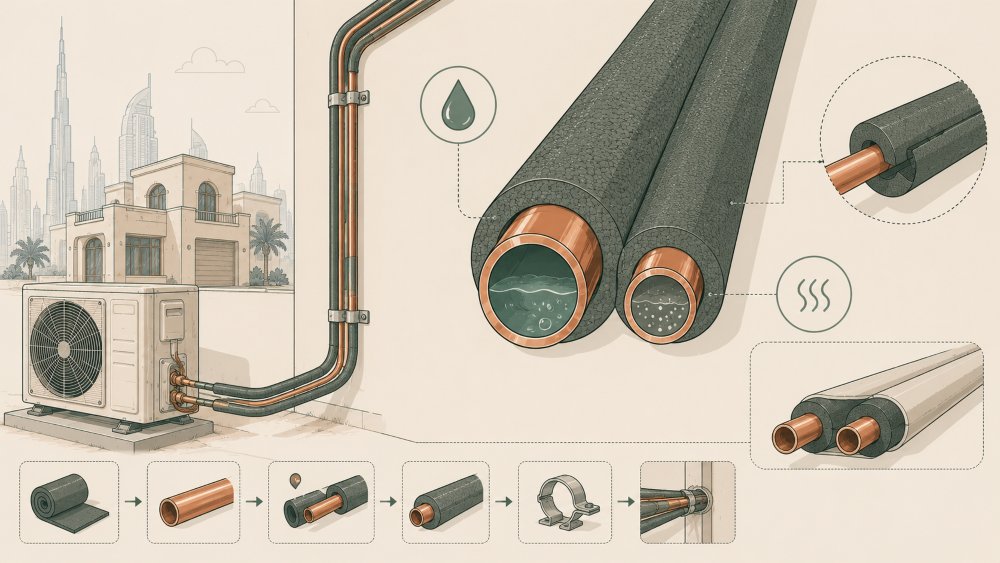
Standard AC Gas Pipe Sizes by Tonnage
AC Tonnage Liquid Line (inch) Suction Line (inch)
| AC Tonnage | Liquid Line (inch) | Suction Line (inch) |
|---|---|---|
| 1.0 Ton | 1/4″ | 3/8″ |
| 1.5 Ton | 1/4″ | 1/2″ |
| 2.0 Ton | 3/8″ | 1/2″ |
| 3.0 Ton | 3/8″ | 5/8″ |
| 4.0 Ton | 3/8″ | 3/4″ |
The liquid line carries refrigerant in its liquid state toward the indoor unit, while the larger suction line carries it back to the outdoor compressor as a low-pressure gas. Using undersized piping restricts refrigerant flow and reduces cooling efficiency, while oversized piping can cause oil return issues that affect compressor lubrication over time.
Why Pipe Insulation Matters for Gas Efficiency
The suction line, in particular, needs proper foam insulation to prevent it from absorbing heat from the surrounding air before the cold refrigerant reaches the compressor. Without adequate insulation, the system loses cooling efficiency, the compressor works harder than necessary, and condensation can form on the pipe, leading to water dripping or mold growth along the line.
In RAK’s high humidity and intense heat, insulation also protects against pipe degradation over time, since extreme outdoor temperatures combined with poor insulation accelerate wear on both the pipe and its fittings, indirectly increasing the risk of future leaks.
AC Gas Refilling Cost in Ras Al Khaimah (AED Pricing)
Refilling costs depend on more than just the gas itself; tonnage, refrigerant type, and whether a leak needs repairing all factor into the final price.
Average Refill Cost by Gas Type and AC Tonnage
| AC Tonnage | R22 Refill Cost (AED) | R410A Refill Cost (AED) |
|---|---|---|
| 1.0 Ton | 150 – 250 | 200 – 300 |
| 1.5 Ton | 200 – 300 | 250 – 380 |
| 2.0 Ton | 250 – 380 | 300 – 450 |
| 3.0 Ton | 350 – 500 | 400 – 600 |
R22 is generally priced lower per kg in older systems still using it, but availability and phase-out restrictions are gradually pushing R22 costs upward across the UAE. R32 systems often fall in a similar range to R410A, though pricing varies by supplier.
Leak Repair Cost vs Simple Top-Up Cost
A simple top-up, adding gas without addressing an underlying leak, typically costs less upfront but is a temporary fix; the gas will leak out again over time, sometimes within weeks. Leak repair costs more initially, generally AED 300–800 depending on the leak’s location and complexity, but it resolves the actual cause rather than masking it.
Home Fix always recommends leak detection and repair before any refill, since a top-up without fixing the leak is money spent on gas that won’t stay in the system.
What Affects Your Final AC Gas Refill Price
Several factors influence the final cost: the refrigerant type (R22 vs R410A vs R32), the AC’s tonnage and total refrigerant capacity, whether a leak needs locating and repairing before refilling, the accessibility of the outdoor unit (rooftop or hard-to-reach installations can add labor cost), and the brand or age of the system, since older units sometimes need additional diagnostic work.
Home Fix provides a clear, itemized quote after inspection, so you know exactly what you’re paying for before any work begins.
Frequently Asked Questions (FAQs)
How often should AC gas be refilled?
Under normal conditions, a properly sealed AC system shouldn’t need refilling at all, since refrigerant isn’t consumed during normal use. If you’re refilling gas every year or more often, it almost always means there’s an undetected leak that needs repair, not routine maintenance.
Can low AC gas damage the compressor?
Yes. Running a system with insufficient refrigerant forces the compressor to work harder and can cause it to overheat, since refrigerant also helps cool and lubricate compressor components. Prolonged operation with low gas is one of the more common causes of premature compressor failure.
Is it normal for AC gas to run low over time?
No. A correctly installed, leak-free system maintains its refrigerant charge indefinitely. If gas levels are dropping, there’s a leak somewhere in the system, whether at a fitting, valve, coil, or pipe joint, and it should be located and repaired rather than simply topped up repeatedly.
How long does an AC gas refill take?
A straightforward top-up on an accessible unit typically takes 30 to 60 minutes. If a leak needs to be located and repaired first, the full process, including leak detection, repair, evacuation, and recharging, can take 1 to 3 hours depending on the leak’s location and complexity.
Should I refill gas myself or call a technician?
Always call a technician. Handling pressurized refrigerant requires specialized tools, knowledge of safe handling procedures, and the ability to charge the exact amount specified for your system. Incorrect charging, whether too little or too much, can damage the compressor and is also a safety risk given the pressures involved.