
Granite Flooring RAK | Types, Cost and Installation Guide
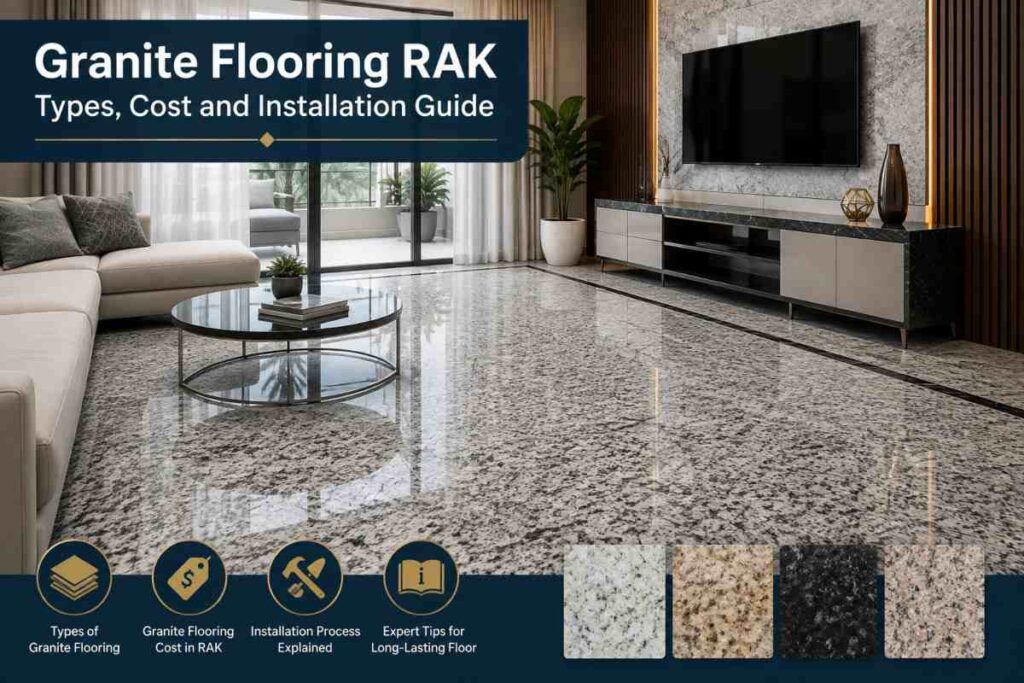
Granite flooring is a natural stone flooring option prized for its exceptional durability, heat resistance and long term value, making it one of the most reliable choices for homes and villas across Ras Al Khaimah. Quarried from solid igneous rock, granite ranks among the hardest natural stones used in construction, which is why it holds up for decades under heavy foot traffic, direct sunlight and the UAE demanding climate with minimal wear.
For homeowners in Ras Al Khaimah, granite flooring offers a rare combination, the elegance of natural stone paired with practical performance that suits both indoor living spaces and outdoor patios. It resists scratching, does not fade under prolonged sun exposure and requires far less babying than softer stones like marble, a genuine advantage in a region where temperature swings and sand exposure test flooring materials daily.
This guide covers everything you need to make an informed decision, the different types of granite flooring available, how it compares to marble, tile, porcelain and epoxy, realistic cost expectations per square foot in the UAE, the installation process from start to finish and the maintenance routine that keeps granite floors looking new for years. Whether you are flooring a single kitchen or planning granite throughout a full villa renovation, this page walks through every stage of the decision and if you are weighing granite alongside other upgrades, our home renovation services team can help you plan the full project from one place.
What Is Granite Flooring?
Granite flooring is a type of flooring made from slabs or tiles of natural granite stone, cut and polished for use on floors in kitchens, living areas, patios and villa interiors. As one of the hardest natural stones available, granite forms a floor surface that resists scratching, chipping and heat far better than most alternatives, which is why it remains a go to choice within our flooring and roof services for clients who want a floor that lasts.
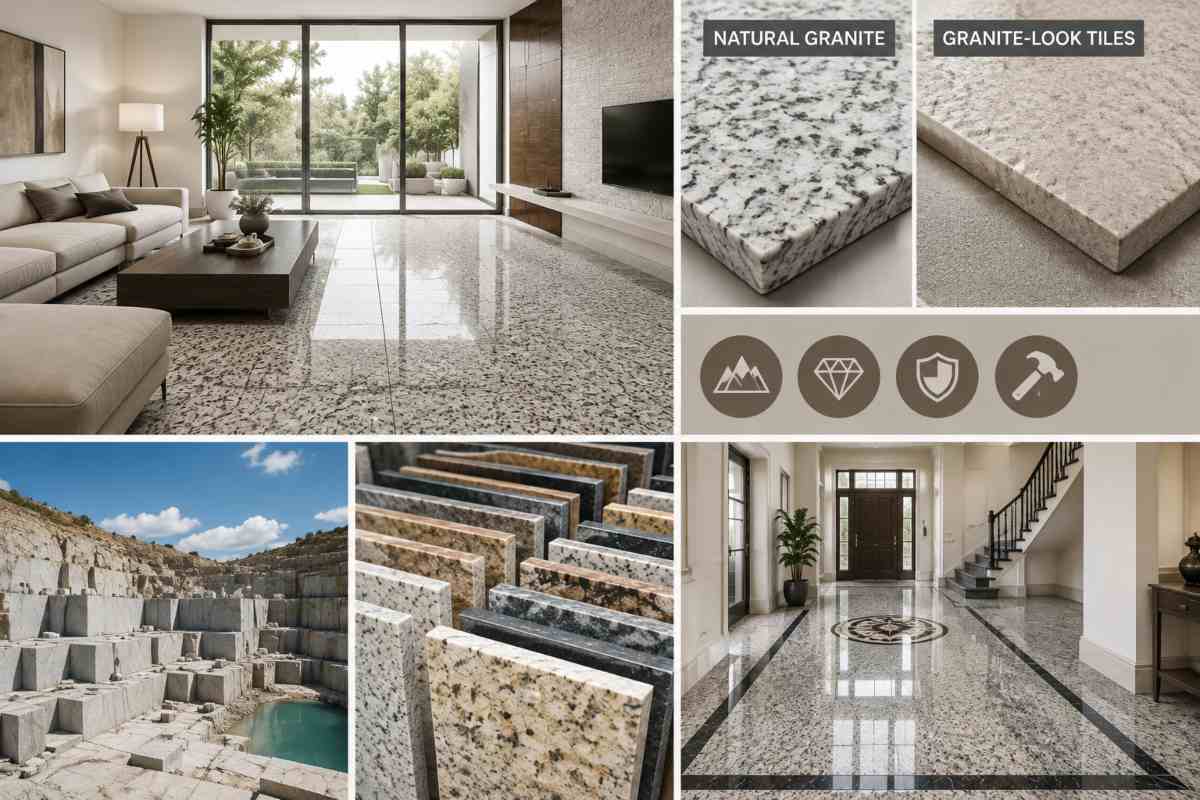
Natural Granite vs Engineered/Granite Look Tiles
Natural granite flooring is cut directly from quarried stone, so every slab carries unique veining, mineral flecks and color variation that no two pieces share exactly. Engineered or granite look tiles, by contrast, are manufactured products, often porcelain or composite, printed or pressed to mimic granite appearance at a lower cost and with more uniform, repeatable patterns. Natural granite generally outperforms these alternatives on hardness and longevity, while engineered tiles offer more predictable pricing and easier batch matching for large scale projects. The right choice depends on whether a homeowner prioritizes authentic natural character or consistent, budget friendly uniformity.
Where Granite Comes From and Why It is Prized for Floors
Granite is an igneous rock formed from slowly cooled magma deep beneath the earth surface, a process that gives it its signature crystalline structure and exceptional density. This geological origin is precisely what makes granite so well suited to flooring, the slow cooling process produces a stone that is significantly harder and less porous than sedimentary stones like limestone or travertine. Granite typically ranks between 6 and 7 on the Mohs hardness scale, placing it well above marble and most ceramic tiles in scratch and impact resistance. That density also makes granite naturally resistant to heat and less prone to staining, which is why it is been a preferred material for high traffic floors and countertops for centuries.
Benefits of Granite Flooring
Granite flooring offers homeowners a rare combination of durability, resistance to heat and moisture and long term property value, making it one of the strongest investments among natural stone flooring options in Ras Al Khaimah. Beyond its polished, upscale appearance, granite performs where it matters most, under daily wear, seasonal heat and years of use without losing its structural integrity.

Durability and Scratch Resistance
Granite flooring stands up to scratching, chipping and heavy foot traffic better than most flooring materials on the market. Ranking between 6 and 7 on the Mohs hardness scale, granite is significantly harder than marble, limestone or standard ceramic tile, which means dropped kitchen tools, pet claws and daily furniture movement rarely leave a mark. This hardness also makes granite floors resistant to cracking under heavy loads, a practical advantage in busy family homes and villas where floors see constant use.
Heat and Moisture Resistance
Granite dense, low porosity structure makes it naturally resistant to heat and moisture, two conditions that Ras Al Khaimah climate delivers in abundance. Unlike softer stones that can absorb spills or discolor under prolonged sun exposure, sealed granite flooring repels moisture and won’t warp, swell or fade when exposed to direct sunlight through windows or outdoor use on patios. This resistance also makes granite a practical choice near kitchen counters and cooking areas, where heat and occasional spills are unavoidable.
Longevity and Resale Value
Granite flooring routinely lasts several decades with proper care, often outliving the other finishes in a home and rarely needing replacement. That longevity translates directly into resale value, natural stone flooring is widely recognized by buyers and appraisers as a premium upgrade and granite in particular signals durability and quality that can support a higher asking price. For homeowners planning a long term investment rather than a quick refresh, granite flooring tends to pay for itself over the life of the property.
Pros and Cons of Granite Flooring
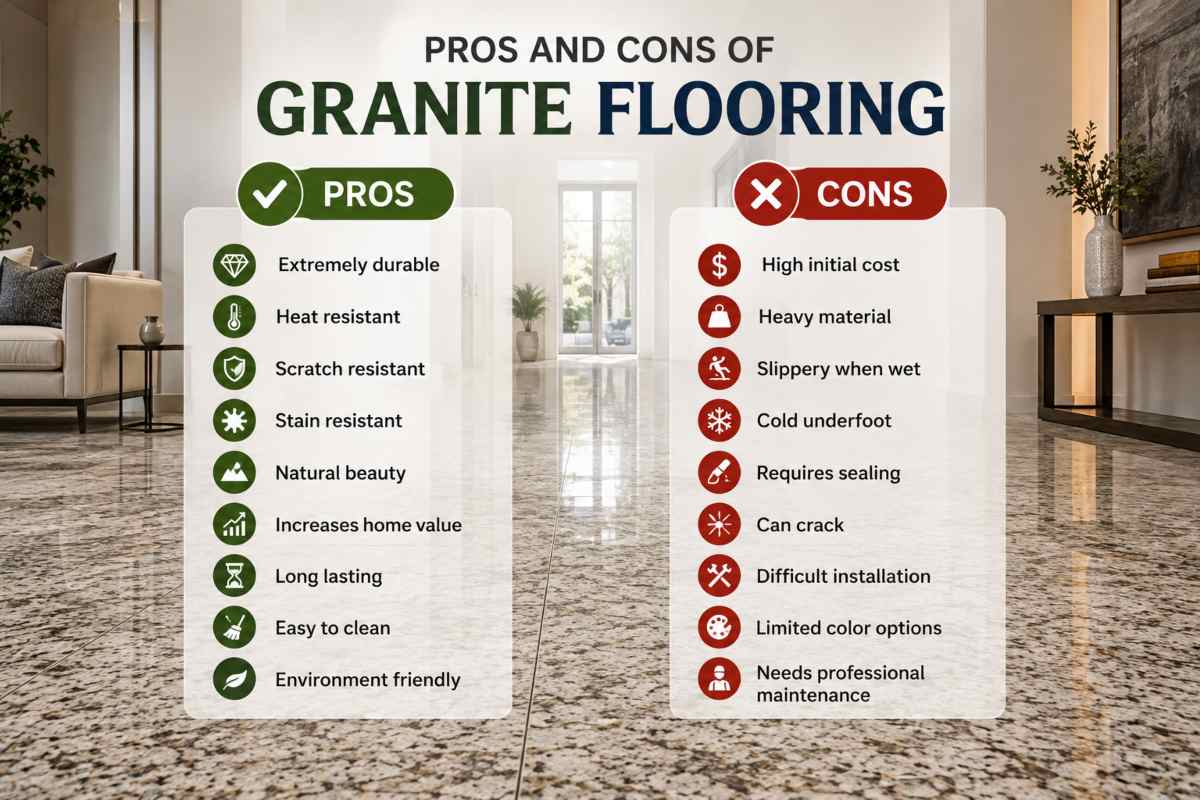
Granite flooring is an excellent choice for homeowners who want durability and long term value, but it is not the right fit for every room or every budget. Weighing the pros and cons of granite flooring against your specific space, climate needs and financial plan helps determine whether it is the right material before committing to installation.
When Granite Is the Right Choice
Granite flooring makes the most sense in high traffic areas, kitchens and outdoor spaces where durability and heat resistance matter more than upfront cost. It is particularly well suited to villas and larger homes in Ras Al Khaimah, where its resistance to sun exposure, scratching and moisture holds up well against the region climate over many years. Homeowners planning a long term stay in a property, rather than a short term renovation before resale, tend to get the most value from granite, since its higher initial investment pays off through decades of minimal wear and reduced replacement costs.
Drawbacks to Consider (Cost, Weight and Coldness Underfoot)
Granite flooring carries a higher upfront cost than ceramic tile, laminate or most engineered alternatives, largely due to the expense of quarrying, cutting and transporting natural stone slabs. It’s also considerably heavier than most flooring materials, which means installation requires a structurally sound subfloor and, in some cases, additional reinforcement, a factor worth confirming with a contractor before installation begins.
Granite also tends to feel cold underfoot, especially in air conditioned interiors, which some homeowners offset by pairing it with underfloor heating or area rugs in bedrooms and living spaces. None of these drawbacks disqualify granite as a flooring choice, but they are worth factoring into the decision alongside its durability benefits.
Types of Granite Flooring
Granite flooring comes in a range of colors and finishes, each suited to different design goals and levels of foot traffic. The main types, black granite, white granite and polished versus flamed/honed finishes, let homeowners match granite durability to the exact look and feel they want for a space.

Black Granite Flooring
Black granite flooring delivers a bold, contemporary look that pairs well with modern villa interiors and spaces featuring light colored walls, cabinetry or carpentry works for contrast. Its dark tone hides scuffs and dust more effectively than lighter stones, making it a practical choice for high traffic entryways, kitchens and living areas. Black granite also tends to show off polish and reflectivity more dramatically than lighter colors, giving rooms a sleek, upscale finish.
White Granite Flooring
White granite flooring brings a brighter, more spacious feel to interiors, reflecting natural light and making smaller rooms appear larger. It works particularly well in kitchens and bathrooms where a clean, airy aesthetic is the goal and it pairs easily with a wide range of cabinetry, countertop and wall finishes. Because lighter stone shows dirt and scuffs more readily than darker granite, white granite floors typically require slightly more frequent cleaning to maintain their bright appearance.
Polished Granite Flooring
Polished granite flooring features a high gloss, mirror like finish achieved by grinding and buffing the stone’s surface to a smooth sheen. This finish maximizes granite natural color and veining, making it a popular choice for formal living areas, entryways and spaces meant to make a strong visual impression. Polished surfaces are also easier to wipe clean than textured finishes, though they can become slippery when wet, which is worth considering for bathrooms or outdoor adjacent areas.
Flamed/Honed Granite Flooring
Flamed or honed granite flooring offers a matte, textured surface created by either exposing the stone to intense heat (flaming) or grinding it to a smooth, non reflective finish (honing). This finish provides significantly better slip resistance than polished granite, making it the preferred choice for outdoor patios, pool decks and areas prone to moisture. While it lacks the glossy shine of polished granite, flamed and honed finishes still showcase the stone’s natural color and texture, offering a more understated, contemporary look for both indoor and outdoor applications.
Best Uses for Granite Flooring
Granite flooring performs best in spaces that demand durability and heat resistance, making kitchens, outdoor patios and full villa interiors its strongest applications. Understanding where granite flooring delivers the most value helps homeowners decide which rooms are worth the investment and which might suit a different material.

Granite Flooring for Kitchens
Granite flooring is a natural fit for kitchens, where its heat resistance, moisture resistance and scratch durability hold up against daily cooking spills, dropped utensils and constant foot traffic. Its non porous, sealed surface also resists staining from oils and food, which matters in a room where cleanliness is a daily concern. For homeowners exploring house renovation ideas for their kitchen, granite flooring pairs naturally with granite or quartz countertops for a cohesive, high end look that ties the whole room together.
Granite Flooring for Outdoor and Patio Areas
Granite flooring, particularly in a flamed or honed finish, is well suited to outdoor patios and pool decks because it resists slipping when wet and withstands direct sun exposure without fading or warping. Its density also means it holds up against temperature swings between hot days and cooler evenings without cracking, a common concern with less durable outdoor flooring materials in the UAE climate. This makes granite a practical long term choice for outdoor living spaces, courtyards and poolside areas that see heavy seasonal use.
Granite Flooring for Villas in RAK
Villas in Ras Al Khaimah benefit from granite flooring’s ability to perform consistently across large, varied spaces, from formal living rooms to outdoor courtyards, without switching materials room to room. Granite long lifespan, often several decades with proper care, makes it especially cost effective for larger properties where replacing flooring across multiple rooms would otherwise be a significant recurring expense. Its resale value also tends to matter more in villa sized properties, where premium natural stone flooring is a recognized selling point for future buyers.
Granite Flooring vs Other Materials
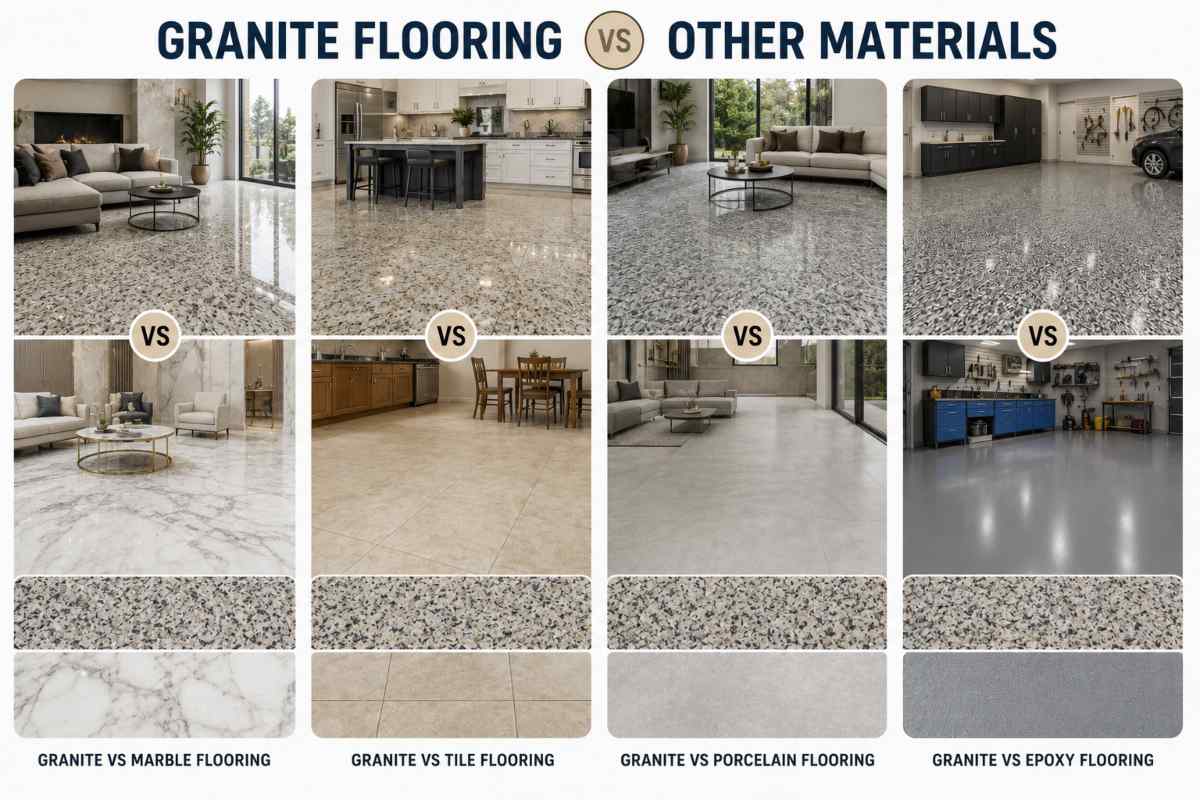
Choosing granite flooring often comes down to comparing it directly against the other flooring materials homeowners are considering, since each option trades off differently on durability, cost and appearance. Here is how granite stacks up against marble, tile, porcelain and epoxy.
Granite vs Marble Flooring
Granite outperforms marble flooring on hardness and scratch resistance, ranking 6 to 7 on the Mohs scale compared to marble softer 3 to 5, which makes granite the more practical choice for high traffic areas and busy households. Marble, however, offers a more luxurious, veined aesthetic that many homeowners prefer for formal spaces and it tends to feel cooler and smoother underfoot. The trade off is largely aesthetic versus practical, granite wins on durability and low maintenance, while marble wins on classic, high end visual appeal.
Granite vs Tile Flooring
Granite flooring is a natural stone product, while standard tile flooring is typically manufactured from ceramic or porcelain, giving granite an edge in authenticity, durability and long term value despite a higher upfront cost. Tile is generally more affordable and available in a far wider range of colors and patterns, making it easier to match specific design schemes. For homeowners prioritizing decades long performance over initial price, granite is the stronger investment, for those working within a tighter budget or wanting more design flexibility, tile remains a practical alternative.
Granite vs Porcelain Flooring
Porcelain flooring, including granite look porcelain tiles, offers a more budget friendly and uniform alternative to natural granite, with easier batch matching and typically simpler installation. Natural granite, however, provides genuine mineral variation and a level of hardness that manufactured porcelain can approach but rarely exceeds. Homeowners who want authentic natural stone character and maximum durability tend to choose granite, while those prioritizing cost control and consistent patterning often lean toward porcelain.
Granite vs Epoxy Flooring
Epoxy flooring is a resin based coating applied directly over existing surfaces, making it a faster and more affordable option than granite, particularly for garages, workshops and commercial spaces. Granite, by contrast, is a natural stone material that offers superior long term durability, heat resistance and resale value, but requires a more involved installation process and higher upfront investment. Epoxy suits homeowners who need a quick, cost effective and seamless surface, while granite is better suited to those investing in a home long term structural and aesthetic value.
Granite Flooring Cost in the UAE
Granite flooring in the UAE typically costs more upfront than ceramic tile or laminate, but pricing varies significantly based on granite grade, slab origin and installation complexity. Understanding what drives that cost helps homeowners budget accurately before committing to a granite flooring project.
Price Per Square Foot Breakdown
Granite flooring costs in the UAE generally range from moderate to premium pricing per square foot, depending on whether the stone is a standard commercial grade or a rarer, higher grade slab with distinctive veining or color. Imported granite varieties, particularly those sourced from India, Brazil or Italy, tend to sit at the higher end of the price range due to shipping and processing costs, while more commonly available granite types offer a more budget friendly entry point. As with most types of flooring and floor covering, price scales with material quality, slab thickness and finish, polished granite typically costs more than honed or flamed finishes due to the additional processing involved.
What Affects Installation Cost
Installation cost for granite flooring depends on several factors beyond the material itself, including subfloor preparation, the size and layout of the space and whether the project involves cutting slabs to fit custom dimensions or intricate layouts. Granite weight often requires additional structural checks or subfloor reinforcement, which can add to labor costs compared to lighter flooring materials.
Labor rates also shift based on room accessibility, ground floor installations are typically more straightforward and affordable than upper floor villa installations, where transporting heavy granite slabs requires more time and care. Getting a site specific quote is the most reliable way to determine actual costs, since square footage estimates alone rarely capture the full picture.
Granite vs Alternatives Cost Comparison
Granite flooring generally sits at the higher end of the cost spectrum compared to ceramic tile, porcelain and epoxy, though it remains more budget friendly than premium marble in many cases. Weighing granite’s upfront cost against these alternatives helps put its long term value into perspective.
Ceramic and porcelain tile typically cost less per square foot than natural granite, both in material and installation, since manufactured tiles are lighter, easier to cut and require less specialized labor to install. Epoxy flooring is generally the most affordable option upfront, as it is applied directly over an existing surface without the need for slab sourcing or heavy duty subfloor work. Marble, by comparison, often costs a similar amount to granite or more, depending on the grade and origin of the stone, since both are natural materials subject to similar quarrying and transport costs.
The key difference is what that cost buys over time, granite higher initial price is offset by a lifespan that often runs several decades longer than tile or epoxy, meaning homeowners avoid the recurring replacement costs that come with cheaper materials. For a budget conscious, short term fix, tile or epoxy may be the more sensible choice, for a long term investment that also adds resale value, granite higher upfront cost tends to pay for itself over the life of the property.
Granite Flooring Installation Process
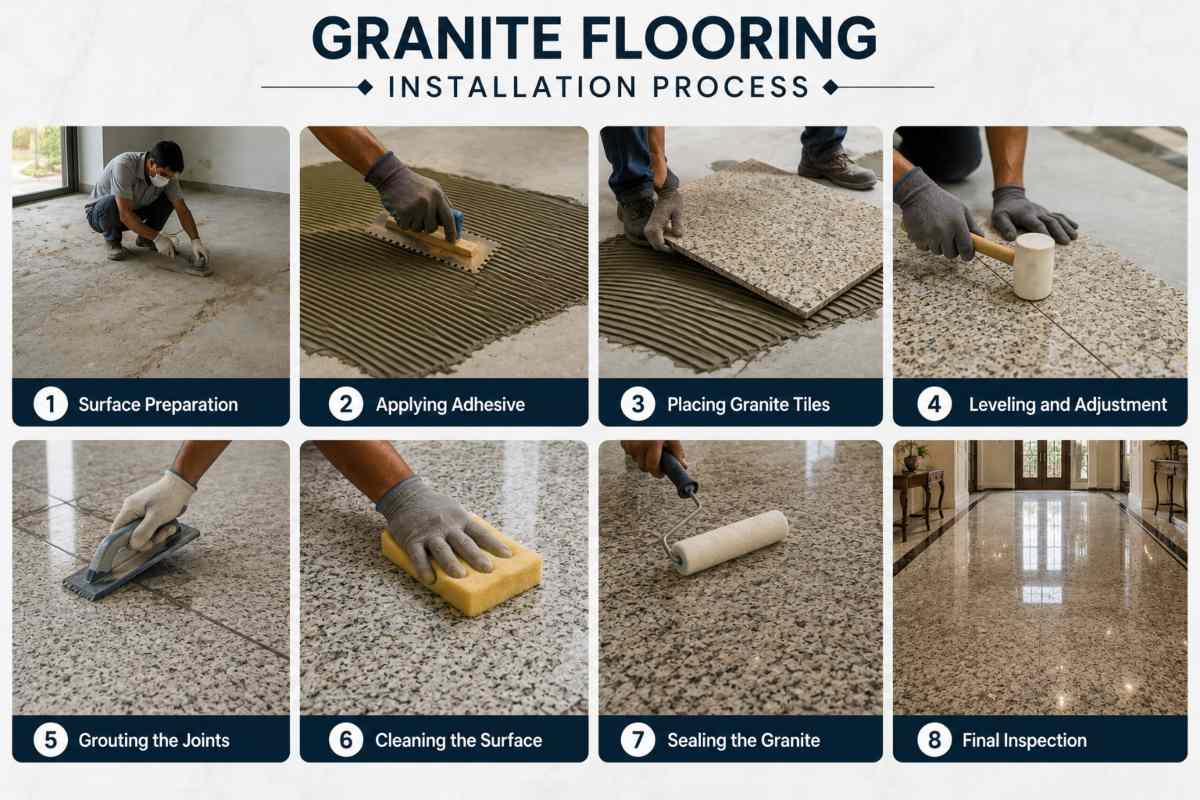
Installing granite flooring is a multi stage process that starts with subfloor preparation and ends with sealing and getting each stage right is what determines how well the floor performs over its decades long lifespan. Because granite is heavy and unforgiving of an uneven base, the installation process demands more precision than lighter flooring materials.
Site Preparation and Subfloor Requirements
A successful granite flooring installation begins with confirming the subfloor can support the stone’s substantial weight, since granite is significantly heavier than tile, laminate or engineered flooring. The existing surface must be level, structurally sound and free of cracks or moisture issues before granite slabs are laid, as any unevenness beneath the stone can lead to cracking or shifting over time. In older properties or upper floor installations, this stage often includes structural assessment and reinforcement, making professional evaluation essential before work begins.
Step by Step Installation Overview
Granite flooring installation typically follows a consistent sequence, subfloor leveling and cleaning, dry laying the granite tiles or slabs to plan the pattern and cuts, applying a bonding adhesive or mortar bed, setting the granite in place and allowing it to cure before grouting the joints. Once cured, the final step involves sealing the granite surface to protect it from staining and moisture penetration, a step that is essential for maintaining the stone durability over the long term. The entire process, from preparation to a fully cured and sealed floor, generally takes several days to a week or more depending on the size of the space and complexity of the layout.
Choosing a Granite Flooring Contractor in RAK
Selecting an experienced granite flooring contractor in Ras Al Khaimah matters more than it does with simpler flooring materials, since improper handling during cutting, setting or sealing can compromise both the look and longevity of the finished floor. A qualified contractor will assess subfloor readiness, source appropriate granite grades for the intended use and follow proper sealing procedures to prevent long term staining or moisture damage. Home Fix residential and commercial services team handles the full installation process end to end, from initial site assessment through final sealing, giving homeowners a single point of contact for the entire project.
Granite Flooring Maintenance
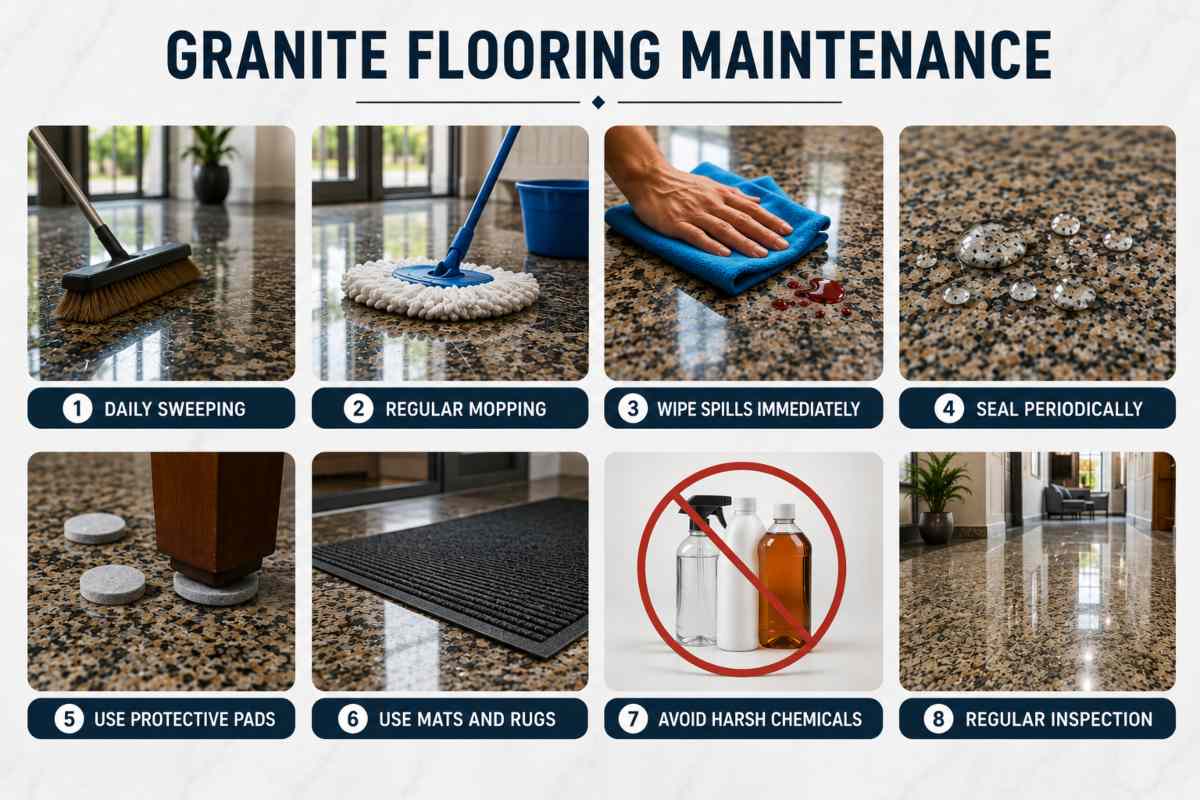
Granite flooring requires relatively simple maintenance compared to other natural stones, but consistent cleaning and periodic sealing are what keep it looking polished and performing well for decades. A little routine care goes a long way toward protecting the investment, whether in a standalone villa or as part of a broader apartment renovation project.
How to Clean Granite Floors
Cleaning granite floors day to day is straightforward, regular sweeping or dry mopping removes grit and dust that could otherwise scratch the surface over time, while a damp mop with a pH neutral stone cleaner handles spills and general grime. Harsh acidic or abrasive cleaners should be avoided, since they can gradually wear down the sealant and dull the stone’s natural shine. For spills involving oil, wine or other staining agents, wiping them up promptly prevents them from penetrating the sealed surface and causing discoloration.
Sealing and Long Term Care
Sealing is the single most important long term maintenance step for granite flooring, as it fills the stone’s microscopic pores and creates a protective barrier against moisture and staining. Most granite floors need resealing every one to three years, depending on foot traffic and the specific sealant used and a simple water droplet test, where water beads on the surface rather than absorbing, can indicate when reseal is due. Beyond sealing, periodic professional polishing helps maintain granite original sheen, particularly in high traffic areas where daily wear can gradually dull a polished finish.
Common Mistakes to Avoid
The most common mistake with granite flooring is neglecting to reseal on schedule, which leaves the stone vulnerable to staining and moisture damage well before it would otherwise show signs of wear. Using generic, non stone cleaning products is another frequent error, as many household cleaners contain acids or abrasives that slowly strip the sealant. Homeowners also sometimes skip prompt spill cleanup, assuming granite durability makes it immune to staining, when in reality unsealed or under sealed spots remain susceptible to permanent discoloration if liquids are left to sit.
Why Choose Home Fix for Granite Flooring in Ras Al Khaimah
Home Fix brings local expertise, a trusted supplier network and end to end project management to every granite flooring installation in Ras Al Khaimah, making the process straightforward for homeowners from the first consultation to the final seal. Choosing the right team matters as much as choosing the right stone, since installation quality is what ultimately determines how granite flooring performs over its decades long lifespan.
Local Expertise and Supplier Network
Home Fix works directly with established granite suppliers, giving clients access to a range of granite grades, colors and finishes without the guesswork of sourcing stone independently. That local presence in Ras Al Khaimah also means the team understands how the region climate, from intense summer heat to occasional sandstorms, affects material selection and sealing requirements, something a generic national supplier may not account for. This combination of sourcing relationships and regional knowledge helps ensure homeowners get granite that’s suited to their specific space rather than a one size fits all recommendation.
Get a Free Granite Flooring Quote
Every granite flooring project starts with a site assessment and a free, no obligation quote, giving homeowners a clear picture of cost, timeline and material options before committing to any work. This upfront transparency helps avoid the guesswork that often comes with square footage only estimates, since factors like subfloor condition and slab availability can meaningfully affect final pricing. Homeowners in Ras Al Khaimah considering granite flooring can request a quote directly through Home Fix to get a project specific breakdown before making a decision.
Conclusion
Granite flooring remains one of the most durable, long lasting flooring investments available to homeowners in Ras Al Khaimah, offering decades of performance in exchange for a higher upfront cost than tile, epoxy or engineered alternatives. From choosing the right type and finish to understanding installation requirements and ongoing maintenance, the decisions made early on determine how well a granite floor holds up over its lifetime.
Whether you are flooring a single kitchen, upgrading a villa throughout or weighing granite against marble, porcelain or epoxy, getting a site specific assessment is the best next step toward an accurate cost and timeline. Home Fix offers free consultations and quotes for granite flooring projects across Ras Al Khaimah, helping homeowners move from research to a finished floor with confidence.
Frequently Asked Questions (FAQs)
Is granite flooring good for homes?
Yes, granite flooring is an excellent choice for homes thanks to its exceptional hardness, heat resistance and decades long lifespan. It performs especially well in kitchens, high traffic areas and villas across Ras Al Khaimah, where durability matters most.
How much does granite flooring cost in the UAE?
Granite flooring costs vary based on stone grade origin and finish, generally sitting higher than ceramic tile but often comparable to marble. A site specific quote is the most accurate way to determine actual project costs.
Is granite flooring better than marble?
Granite outperforms marble on hardness and scratch resistance, ranking 6 to 7 on the Mohs scale versus marble 3 to 5. Marble, however, offers a softer, more classically luxurious veined appearance many homeowners prefer.
How do I clean and maintain granite floors?
Regular sweeping and damp mopping with a pH neutral stone cleaner keeps granite floors clean day to day. Resealing every one to three years protects against staining and moisture damage over the long term.