
AC Leaking Water Ras Al Khaimah | Causes, Fixes and Cost
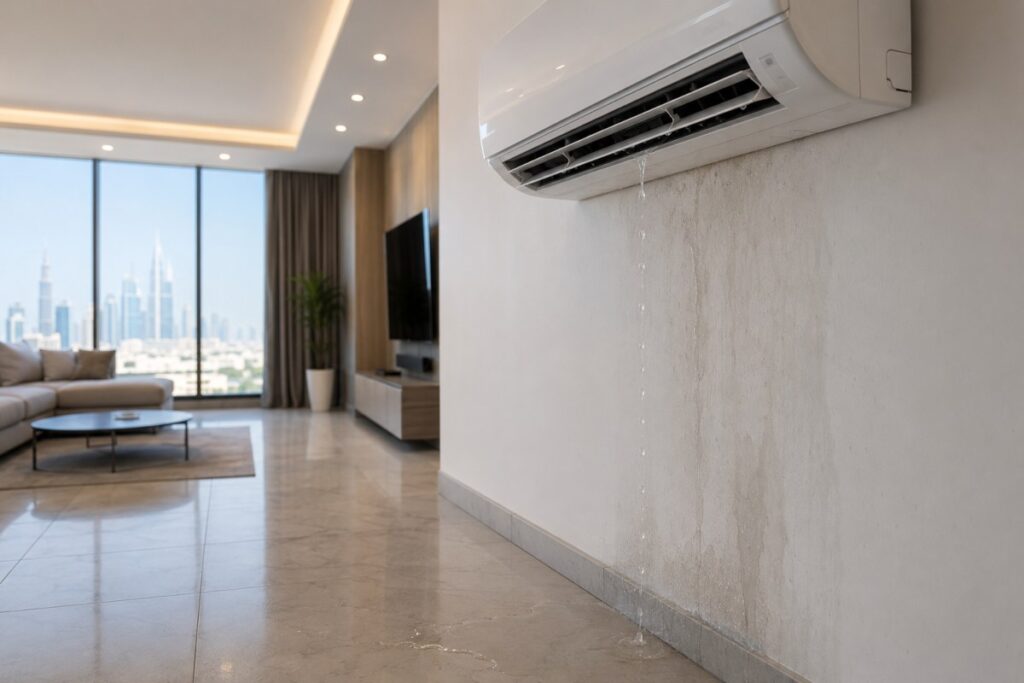
An AC leaks water when its condensate drainage system fails to remove moisture properly. The most common causes are a clogged drain line, a frozen evaporator coil, a cracked drain pan, or low refrigerant. In the UAE, where AC units run up to 20 hours a day and outdoor temperatures exceed 45°C, drainage systems produce 5 to 20 litres of condensate daily during peak summer, making leaks far more common here than anywhere else.
This covers every cause, fix, cost in AED, mold risk, tenant rights, and prevention steps relevant to homes and apartments in the UAE.
Is Water Dripping from Your AC Normal?
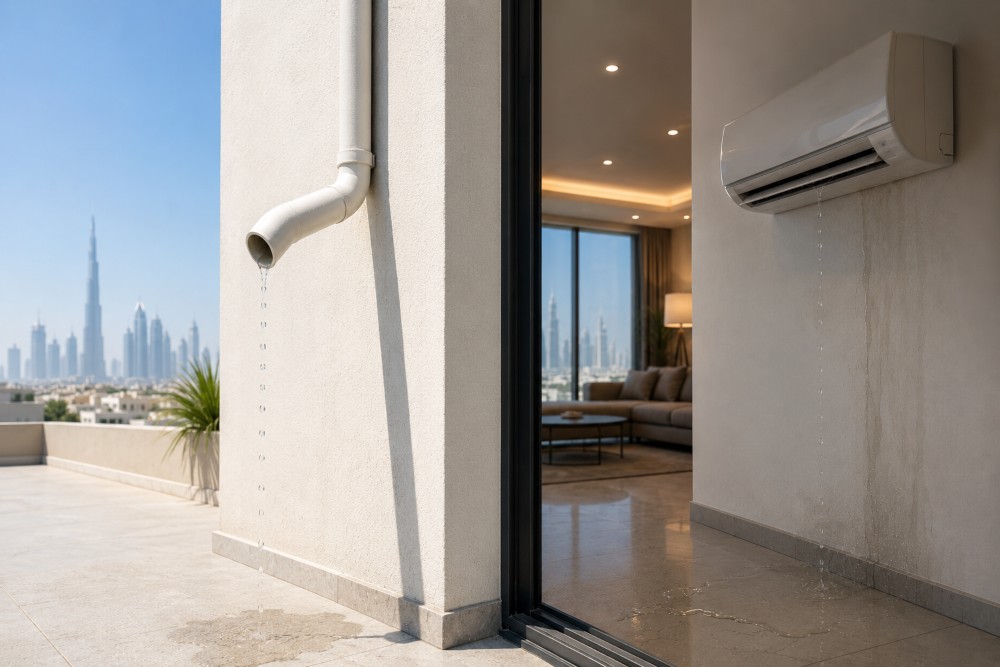
Water dripping from the AC outdoor unit or the external drain outlet is normal condensation. No action is needed.
Water dripping from the indoor unit, appearing on walls, or pooling on the floor under the AC is not normal. It signals a fault in the drainage system and needs same-day attention in the UAE’s humidity.
Here is the difference at a glance:
| Situation | Normal or Fault | Action |
|---|---|---|
| Drip from the outdoor unit casing | Normal | None needed |
| Trickle from the drainpipe on the external wall | Normal | None needed |
| Water pooling under the indoor unit | Fault | Turn off unit and inspect immediately |
| Wet patch on the wall beside the indoor unit | Fault | Call a technician |
| Water stain or drip from the ceiling | Fault — Urgent | Arrange a same-day service call |
| Musty smell near the AC without visible water | Early fault warning | Service needed |
Why Is My AC Leaking Water? 7 Causes in UAE Buildings
Water dripping from an AC has one root cause: the condensate drainage system is overwhelmed or broken. Here are the seven specific reasons this happens in homes and apartments in the UAE.
1. Clogged Condensate Drain Line
A clogged condensate drain line is the most common cause of AC water leaks in the UAE. As the AC cools the air, moisture condenses on the evaporator coil and drips into a drain pan. That water flows out through a narrow drain pipe. When dust, sand particles, algae, or mold block that pipe, water backs up into the unit and overflows into the room.
In Ras Al Khaimah, fine desert sand mixes with condensate in drain lines, forming a thick sludge far more quickly than in temperate climates. Without regular servicing, drain lines can become blocked over the course of a full cooling season.
Signs of a blocked drain line:
- Water is pooling directly under the indoor unit
- Musty or damp smell near the AC
- AC switching off automatically (overflow float sensor triggered)
- No water dripping from the outdoor drain pipe outlet during operation
Fix: A technician clears the blockage using a wet/dry vacuum or professional hydro-flush. For minor organic buildup, diluted white vinegar flushed through the drain access clears it. Sand and debris blockages need professional equipment cost in the UAE: AED 75-250.
2. Dirty or Blocked Air Filter
A clogged air filter restricts airflow across the evaporator coil. When airflow drops, the coil temperature falls too low, ice forms on its surface, and when that ice melts, it releases more water than the drain pan can handle causing the air conditioner to drip inside the room.
In UAE conditions, air filters collect dust and sand 3 to 4 times faster than in Europe or North America. A filter that lasts three months elsewhere blocks within four to six weeks during the UAE summer.
Fix: Pull out the filter and rinse it under running water. Dry it fully before refitting. In the UAE summer, clean filters every 3 to 4 weeks. This is the one maintenance task every homeowner can do without a technician.
3. Dirty Evaporator Coil
Even with a clean filter, the evaporator coil accumulates a thin layer of dust over time. This dust layer acts as insulation; it prevents the coil from efficiently absorbing heat, causes the surface temperature to drop too low, and leads to ice formation. When the ice melts, excess water drips and overflows the drain pan.
Dirty coils also breed mold and bacteria inside the unit, creating the musty smell that many UAE residents notice before they see any visible water leak.
Fix: Coil cleaning requires a technician using coil cleaner spray and a controlled flush. This is done as part of a standard AC service. It cannot be done adequately without opening the indoor unit casing.
4. Frozen Evaporator Coil
When the evaporator coil freezes completely, a large volume of meltwater is released rapidly when the AC shuts off or cycles far more than the drain system can handle. This causes sudden, significant water dripping from the AC unit.
Frozen coils are caused by:
- Dirty air filters or dirty coils (restricted airflow)
- Low refrigerant levels
- Running the AC continuously at temperatures below 18°C
- Blocked or closed supply registers
Fix: Turn the AC off immediately and allow the coil to thaw fully typically 2 to 4 hours. Clean the filter. If the coil refreezes after restarting, low refrigerant is the cause, and a technician is required.
5. Cracked or Damaged Drain Pan
The drain pan sits under the evaporator coil and catches all condensate before it flows to the drain line. In UAE buildings, constant temperature cycling between outdoor temperatures of 45°C and indoor air-conditioned temperatures of 22°C repeatedly causes plastic drain pans to expand and contract. Over time, this creates hairline cracks or warping that allows water to escape directly.
Units over five years old in UAE conditions are at elevated risk of drain pan failure.
Fix: A cracked drain pan cannot be reliably repaired. Replacement is the only correct solution cost in the UAE: AED 200-600, depending on unit size and model.
6. Low Refrigerant Levels
Low refrigerant drops the pressure inside the evaporator coil below its correct operating range. The coil temperature falls too low, moisture on its surface freezes, and when the AC cycles off, that ice melts rapidly and overwhelms the drain system.
A leak in the refrigerant lines always causes low refrigerant; it does not deplete naturally.
Signs of low refrigerant:
- Hissing or bubbling sounds from the indoor unit
- Warm air is blowing despite the AC running
- Ice on the copper pipes or the indoor unit
- Rising electricity bills with reduced cooling output
Fix: A qualified technician locates and seals the refrigerant leak, then recharges the system. Topping up without fixing the leak is only a short-term solution. Cost in UAE: AED 100 to AED 330 for leak detection plus AED 150 to AED 400 per kilogram of refrigerant.
7. UAE Summer Heat Why Leaks Peak Between May and September
This is the cause every competitor misses, and it is the most relevant one for Ras Al Khaimah homeowners. During peak summer in Ras Al Khaimah, outdoor temperatures consistently exceed 45°C. The temperature difference between scorching outdoor air and cooled indoor spaces forces the AC to remove a far greater volume of moisture from the air than units in cooler climates ever encounter.
A UAE residential AC unit produces 5 to 20 litres of condensate per day during peak summer. A drainage system with a partial blockage that manages adequately in April becomes completely overwhelmed by June. This is why aircon dripping water complaints spike in UAE households every May and June not because the unit broke suddenly, but because the condensate load finally exceeded the drainage system’s compromised capacity.
The lesson: schedule a full AC service in April every year, before peak condensate production begins.
AC Leaking Water by Unit Type
Different AC units in UAE buildings leak for different reasons. Here is what to check based on the unit type in your home.
Unit Type, Most Common Leak Cause, First Check
Split unit (wall-mounted), blocked drain pipe, or dirty filter outdoor drain outlet: dripping or dry?
Cassette AC (ceiling-mounted): Failed condensate pump or blocked tray. Pump operation listen for motor sound.
Central AC duct, Sweating duct in ceiling void, Ceiling stain location vs duct layout
Window AC Incorrect installation tilt Unit slope must tilt slightly outward.
District cooling FCU Drip tray overflow or pump failure Building FM team shared responsibility
Split Unit AC Leaking Water
Split units are the most common type in villas and apartments in the UAE. The indoor unit is wall-mounted, and the drain pipe runs through the wall to the outside. The most reliable check: look at the drain pipe outlet on the external wall during operation. No water dripping from it means the pipe is blocked.
Cassette AC Leaking Water
Cassette units are ceiling-mounted and common in UAE living rooms and commercial spaces. They use a built-in condensate pump to lift water out of the drain tray. When the pump fails, water backs up in the tray and drips through the ceiling tiles. A leaking AC cassette in the ceiling almost always points to pump failure or a blocked drain tray not a pipe clog.
Central AC Duct Leaking Water
Cold air ducts running through warm ceiling voids sweat on their outer surface when insulation is inadequate. This condensation drips and appears as ceiling water stains or patches directly below ceiling duct runs often mistaken for a roof leak or a neighbor’s plumbing issue above. This is a duct insulation problem not a drainage fault.
Window AC Leaking Water Inside
Window units must slope slightly backward so condensate drains outside. If the unit was installed level or tilted inward, water collects inside and drips into the room. Check the tilt and adjust the mounting bracket outward at the base.
District Cooling FCU Leaking Water
Many Dubai apartments and towers use district cooling systems. In these buildings, the fan coil unit (FCU) circulates chilled water rather than refrigerant. FCU leaks happen when the chilled water coil drip tray overflows, the condensate pump fails, or chilled water pipes sweat due to inadequate insulation. Contact your building facilities management team first in district-cooled buildings, maintenance responsibilities are split between the tenant and the building operator, and unauthorized repairs can void building agreements.
What Happens If You Ignore a Leaking AC?
Ignoring aircon leaks can cause damage that escalates rapidly especially in the UAE’s humidity.
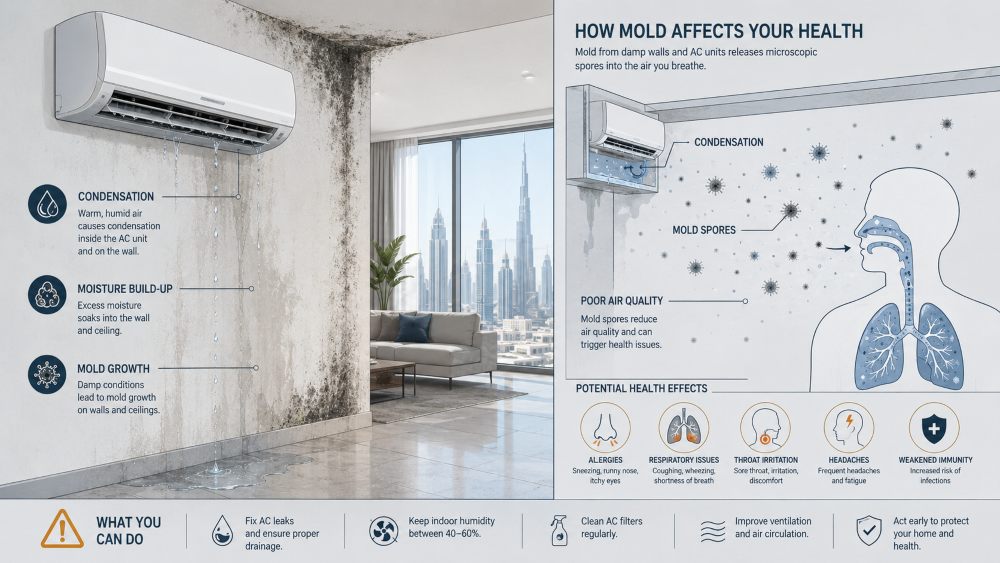
Within 24 to 48 hours, mold and mildew begin to form in wet wall cavities, ceiling boards, and carpet edges. UAE ambient humidity and warmth accelerate mold growth significantly faster than in dry climates.
Within one week: Water soaks into drywall, gypsum board, and ceiling tiles. Surfaces begin to sag, stain, and crack. Wet insulation loses its effectiveness permanently.
Within two to four weeks, visible structural damage to walls and ceilings appears. Mold spores become airborne, causing respiratory symptoms, allergies, and a persistent musty odor throughout the home.
Ongoing risk: Water reaching electrical wiring, junction boxes, or the AC unit’s own control board creates a serious electrical hazard and fire risk. Continued operation of a leaking unit forces the compressor to work harder, increasing electricity consumption and accelerating component wear, leading to early failure.
In UAE apartments with ceiling-mounted or high-wall units, water can drip onto tiles, wooden furniture, and electronics below before the homeowner notices anything. Same-day action is the correct response to any indoor AC water leak.
AC Leak and Mold: The Health Risk UAE Residents Face
AC leaks create ideal mold conditions moisture, warmth, and darkness inside wall cavities and ceiling voids.
Mold exposure in UAE homes causes:
- Persistent coughing and respiratory irritation
- Aggravated asthma and allergic rhinitis
- Skin rashes and eye irritation in sensitive individuals
- Fatigue and headaches from prolonged exposure in mold-contaminated rooms
Black mold (Stachybotrys) poses the greatest health risk and thrives in the permanently damp conditions created by an ignored AC leak inside UAE gypsum walls.
A musty smell near the AC is the first warning. Visible black or green patches on walls or ceilings near the unit confirm active mold growth.
If mold is visible after an AC leak, cleaning the AC alone is not enough. The affected wall section or ceiling board requires mold remediation by a specialist not just a wipe-down. Standard AC technicians do not carry out mold remediation. These are two separate jobs requiring two separate service providers.
Tenant Rights: Who Is Responsible for AC Leak Repairs in the UAE?
This is the section every competitor ignores and it is the most searched topic among Ras Al Khaimah tenants who discover their AC is leaking.
Under UAE Law No. 26 of 2007 (the Dubai Tenancy Law) and its amendments, landlords are required to maintain all essential building systems in a habitable condition. Air conditioning is classified as an essential service in the UAE, on par with plumbing and electrical systems.
Legal Timeframes for Landlord Response
Emergency repairs including an active AC leak that poses a risk of water damage or mold must be addressed within 24 to 48 hours of written notification. This is the standard upheld by the Dubai Rental Disputes Centre in precedent cases.
Non-emergency AC repairs faults that do not involve active water damage must be completed within 7 to 14 days of notification.
Once mold is confirmed due to an AC leak, the situation automatically escalates to emergency status under Dubai Municipality health regulations. The Landlord’s response obligation moves to 24 to 48 hours from that point.
What Tenants Must Do
- Report the fault in writing WhatsApp messages, email, or official notice. Verbal reports are not sufficient for legal purposes.
- Photograph the leak, the water damage, and any mold growth with timestamps.
- Keep a record of all communications with the Landlord or building management.
- If the Landlord does not respond within the legal timeframe, the tenant can escalate to the Dubai Rental Disputes Centre (RDC) or the relevant municipality authority in Abu Dhabi or Sharjah.
Tenant vs Landlord Responsibility
Damage to the tenant’s belongings caused by the Landlord’s delayed repair. The Landlord and tenant can claim
If in dispute, document everything in writing and file with the Dubai Rental Disputes Centre. Filing fees start from AED 500, and the process is available online at rdc.dubai.ae.
How to Fix a Leaking AC: Step-by-Step
Follow these steps in order when you notice water dripping from your AC.
Step 1: Turn off the AC immediately. Switch it off at the remote and at the wall isolator switch. This stops further condensate production and eliminates the risk of water reaching electrical components inside the unit.
Step 2 Clear the area. Move electronics, furniture, and valuables away from the drip. Place a dry towel or container under the unit to contain water while you assess.
Step 3 Check the air filter. Pull the filter out. If it is visibly grey with dust and sand, rinse it under running water, dry it completely, and refit. A clean filter resolves the frozen-coil issue in many cases.
Step 4 Check the outdoor drain outlet. Find where the drainpipe exits the external wall. During operation, a steady trickle from this outlet is normal. No drip means the pipe is blocked.
Step 5 Attempt a basic drain flush. Hold a wet/dry vacuum over the external drain pipe outlet to pull the blockage clear. Alternatively, carefully pour diluted white vinegar into the drain pan access point if your unit has one.
Step 6 Restart and observe for 30 minutes. If the leak continues after basic checks, turn the unit off again and call a licensed AC technician. At this point, the fault is beyond DIY likely a cracked drain pan, a failed pump, or a refrigerant issue requiring professional diagnosis.
Do not run a leaking AC continuously. Do not attempt to top up refrigerant. Do not open the indoor unit casing to access coils or electrical components without professional training.
AC Leak Repair Costs in Ras Al Khaimah
| Repair Type | Cost Range (AED) | DIY Possible |
|---|---|---|
| Condensate drain line clearing | AED 75 – AED 250 | Partly |
| Air filter cleaning | AED 30 – AED 80 | Yes |
| Evaporator coil cleaning | AED 100 – AED 300 | No |
| Drain pan replacement | AED 200 – AED 600 | No |
| Condensate pump replacement | AED 100 – AED 450 | No |
| Refrigerant leak detection | AED 100 – AED 330 | No |
| Refrigerant recharge (per kg) | AED 150 – AED 400 | No |
| Unit re-leveling and drain correction | AED 150 – AED 400 | No |
| Full preventive AC service | AED 150 – AED 350 | No |
| Mold remediation (wall/ceiling) | AED 500 – AED 3,000+ | No |
Emergency call-out surcharges in Ras Al Khaimah typically add AED 50 – AED 150 to standard rates.
Always request a written quote before approving any repair costing more than
AED 200.
For jobs above AED 500, obtaining at least
three quotes from licensed contractors is recommended.
Emergency call-out surcharges in Dubai typically add AED 50-150 to standard rates. Always request a written quote before approving any repair costing more than AED 200. Three quotes from licensed contractors are the minimum for jobs above AED 500.
How to Prevent AC Leaking Water in the UAE
Prevention in the UAE requires more frequent action than in cooler climates. Annual servicing is not sufficient here.
Every 3 to 4 weeks during summer (May to September):
- Clean the air filter, rinse, dry fully, refit.
- Check that the outdoor drain outlet is dripping normally during operation.
Every 3 months (year-round):
- Book a professional AC service that includes a drain line flush, coil inspection, and refrigerant pressure check.
- Three-monthly servicing is the UAE standard for preventing leaks, not the annual service recommended for temperate climates.
Every April (before peak summer):
- Full drain pan inspection
- Refrigerant pressure check
- Condensate pump test on cassette and ceiling units
- Drain line hydro-flush
- Duct insulation check on central AC systems
Daily habits that prevent leaks:
- Keep all supply registers fully open closing registers reduces airflow and promotes coil freeze
- Set the thermostat to 22°C to 24°C rather than pushing to 18°C continuously
- Act on any musty smell immediately it signals mold in the drain pan before a visible leak develops
- Never ignore a single drip indoors in the UAE, humidity, water damage, and mold begin within 24 to 48 hours
Apartment vs Villa: How Leak Risk Differs in UAE Properties
Apartments: Split AC and cassette units in UAE apartments drain through pipes that run inside walls and ceiling voids. When a drain line blocks or a pan cracks, water travels inside the wall structure before appearing as a visible stain. Damage is often more advanced than it looks by the time a resident notices it. Ceiling cassette leaks are particularly damaging in apartments, as water can spread rapidly across the ceiling boards. Residents in apartments below other units should also check whether a drip is coming from their own AC or from a neighbor’s leaking system above.
Villas: Ducted central AC systems in UAE villas hide leaks longer. Condensate problems in ducts running through attic or ceiling spaces cause water to accumulate in insulation and structural timbers before appearing as a ceiling stain inside the living space. By the time the stain appears, the damage is already extensive. Villa owners should include duct inspection in every annual service, not just indoor unit servicing.
Conclusion
An AC leak is not something to monitor for several days in the UAE. The combination of extreme summer humidity, 20-hour daily operation, and high condensate volumes means a minor drainage fault escalates to wall damage, mold, and electrical risk within 48 hours.
Turn the unit off. Check the filter and the outdoor drain outlet. If the leak continues, call a licensed AC technician the same day.
A professional service every three months costs AED 150-350 and eliminates the conditions on this list. That is a fraction of the cost of a drain pan replacement, mold remediation, or ceiling repair after an ignored leak has done its damage. Prevention is always the cheaper option in the UAE conditions.
Frequently Asked Questions (FAQs)
Why is my AC leaking water inside the house?
The most common causes are a blocked condensate drain line, a dirty filter or coil causing coil freeze, or a cracked drain pan. In the UAE summer, high condensate production overwhelms drainage systems that manage adequately in cooler months.
Is water dripping from the AC outside normal?
Yes. A small trickle from the outdoor unit or the external drain pipe outlet is normal condensation. Water dripping from the indoor unit indoors is not normal and needs same-day attention.
Why does my AC only leak water in summer?
UAE summer heat forces the AC to remove up to 20 litres of water per day from the air. A partial drain blockage that manages in winter becomes completely overwhelmed when condensate production peaks between June and August.
Can I run my AC while it is leaking water?
No. Running a leaking AC risks water damage to walls and ceilings, promotes rapid mold growth in the UAE’s high humidity, and creates electrical hazards if water reaches internal wiring or the control board.
How much does it cost to fix an AC water leak in Ras Al Khaimah?
Clearing a blocked drain line costs AED 75-250. A drain pan replacement runs AED 200 to AED 600. Refrigerant recharge costs AED 150-400 per kilogram, plus labor. A full preventive service covering all leak-related components costs AED 150-350.
Who is responsible for fixing an AC leak in a rented apartment in Ras Al Khaimah?
Under UAE Law No. 26 of 2007, the Landlord is responsible for maintaining essential services, including AC systems. Report the fault in writing immediately. Emergency leaks causing water damage must be addressed within 24 to 48 hours. Escalate to the Dubai Rental Disputes Centre if the Landlord fails to respond within the legal timeframe.
How often should I service my AC in the UAE to prevent leaks?
Every three months is the UAE standard. During peak summer, clean the air filters every 3 to 4 weeks. A full professional service in April before summer begins is the single most effective step to prevent leaks.
What causes air conditioning to drip water from the ceiling?
In cassette units, ceiling drips are caused by a failed condensate pump or an overflowing drain tray. In central AC buildings, ceiling drips often come from sweating ductwork or condensate overflow in ceiling voids. In apartments, a ceiling drip near an AC unit may come from a neighbor’s leaking unit above.
What is the musty smell from my AC?
Stagnant water in the drain pan or a partial blockage in the drain line can cause mold to grow rapidly in the UAE temperatures. The smell is active mold. A drain flush and coil clean eliminates it if caught early. If the smell persists after servicing, mold has spread into the ductwork or wall cavity and requires specialist mold remediation.