Home Repairs in Ras Al Khaimah | What Owners Often Get Wrong

In Ras Al Khaimah, fix first any home repair that puts safety at risk or lets water or electrical faults spread. That means leaks, damp patches, tripping circuits and anything that stops a door, window or lock from working properly. Faded paint, small scuffs and minor cosmetic wear can usually wait, because they rarely get worse quickly.
Order matters more here than in many other places. Summer temperatures regularly pass 40°C and humidity and salt air, especially near the coast, wear down sealants, fittings and finishes all year round. A small crack or slow drip can turn into a bigger problem in a single season.
This guide shows you how to tell basic repairs from major ones, how to rank problems by urgency and where a do it yourself fix stops being sensible. It also points out when a repair has grown into something larger, such as replacing worn finishes across several rooms. At that point it becomes home renovation work rather than a repair job.
What counts as a home repair (and how it differs from maintenance)
A home repair is any job that fixes something already broken, damaged or failing, while maintenance is routine care that stops those problems from starting. If a part of your home has stopped working or is visibly deteriorating, you are dealing with a repair. If everything works and you are looking after it, that is maintenance. In Ras Al Khaimah, heat, humidity and salt air speed up wear, so the line between the two can disappear quickly when care is skipped.
Repair vs maintenance in plain terms
Maintenance is done before anything goes wrong and repair is done after. Cleaning a drain, checking a sealant line or testing a smoke alarm is maintenance. Clearing a blocked drain that is already overflowing, resealing a joint that is already leaking or replacing a dead alarm is repair.
The difference matters because the two are handled differently. Maintenance follows your own schedule and is usually cheaper and less disruptive. Repair follows the problem, so it arrives at an inconvenient time and often costs more. A leaking pipe joint left alone is a good example, what could have been a quick tightening during a routine check becomes water damage to a wall or floor.
Not every repair is the result of missed maintenance. Fittings wear out, materials age and faults appear in new homes as well as old ones. But in this climate, a lot of avoidable repairs come from small problems left unchecked through a few hot, humid seasons.
Basic repairs vs major home repairs
A basic repair is a small, contained fix that does not threaten safety or structure, while a major repair affects safety, the building itself or its essential systems. The simplest test is to ask whether the problem could get worse quickly or harm someone, if left alone. If the answer is yes, treat it as major.
Basic repairs include a dripping tap, a loose cabinet hinge, a door that sticks, cracked sealant around a sink or a small patch of flaking paint. These are usually limited to one spot and the damage stays local.
Major home repairs include persistent damp that returns after cleaning, cracks that are widening, roof or waterproofing failures, a circuit that keeps tripping and pipes leaking inside walls or under floors. These can affect the structure, spread through the property or create a risk of fire, flooding or injury.
Some problems start basic and become major. A small damp patch beside a bathroom wall may look cosmetic, but if the moisture source is hidden, it can spread to the wall behind it. When you are unsure which side of the line a problem falls on, treat it as the more serious one until the cause is clear.
Why “house repair” and “homes fixing” mean the same thing
“House repair” and “homes fixing” describe the same activity as “home repair”, putting right something in a residential property that is damaged or not working. The words differ because people search the way they speak and different regions and age groups favour different phrasing.
For a homeowner or tenant, the practical meaning does not change. Whether you call it fixing a house, a house repair or a home repair, the question is the same, what is wrong, how serious is it and what needs doing first? The rest of this guide uses “home repair” throughout and everything in it applies equally to a villa, an apartment or an older property.
Why homes in Ras Al Khaimah need repairs sooner
Homes in Ras Al Khaimah need repairs sooner because heat, humidity, salt air and fine dust all wear on a building at the same time and each one speeds up the damage caused by the others. Summer air temperatures often pass 40°C and surfaces in direct sun get much hotter. Materials that last for years in milder places can start to fail here in just a few seasons.

Heat and UV on paint, sealants, roofs and fittings
Strong sun and constant heat break down the surfaces that protect a home. UV light fades and chalks exterior paint, then lets it crack and peel. Rubber and silicone sealants harden, shrink and pull away from joints, which opens a path for water. Plastic fittings and pipe covers on balconies and roofs turn brittle and snap.
Roofs take the worst of it. Daily swings between hot afternoons and cooler nights make roofing materials expand and contract and over time this opens hairline cracks and weakens waterproof layers. Repairs to a roof or an outdoor floor surface are best caught early and the flooring and roof services page covers that kind of work if the damage is already visible.
Humidity and salt air near the coast (Al Marjan, Mina Al Arab, Al Hamra)
Homes close to the sea face a different problem, moisture and salt carried in the air. Coastal humidity in the UAE can stay high for long stretches of summer and salt settles on windows, metal and masonry. Salt attracts water, so surfaces stay damp for longer and it speeds up corrosion on door hardware, window frames, railings and exposed electrical parts.
In areas such as Al Marjan Island, Mina Al Arab and Al Hamra, homeowners often notice rust spots, bubbling paint and musty smells sooner than they expect. Wood is especially vulnerable, because it swells and warps as it takes in moisture. If you have wooden doors, cabinets or skirting, the guide on protecting wood from humidity explains how that damage happens.
Dust and sand in AC units, windows and drainage
Fine sand and dust get into almost everything. Air conditioners are hit hardest, dust clogs filters and coats the coils, which makes the unit work harder, cool less and wear out sooner. A system that runs almost non stop through summer feels the effect faster still. When cooling drops or the unit starts to leak, it is usually a repair rather than a maintenance issue and the AC repairs and installation services page covers that side of it.
Dust also collects in window tracks, which stops them closing fully and lets in more sand and heat. In outdoor drains and gutters, it builds up into a blockage that can overflow when the rare heavy rain does arrive. These are small faults at first, but they spread when they are ignored.
Villas, apartments and older properties different weak points
The type of property changes where problems tend to appear. Villas have more exposed surface, so roofs, outer walls, driveways, gardens and external plumbing take most of the weather and the repair list tends to be longer. Apartments have less exposure but shared walls, balconies and ceilings, so leaks and damp often come from a neighbouring unit or a shared pipe rather than your own.
Older properties show the effect of age on top of the climate. Original sealants, wiring, pipework and waterproofing may be past their working life, so several faults can appear at once. When repairs across a villa start to pile up and cover many rooms or the exterior, it may be worth looking at the whole property rather than fixing items one by one and villa renovation is the page that explains that larger step.
Basic home repairs most owners can understand
Basic home repairs are small, contained faults, such as a dripping tap, a sticking door, cracked sealant or a flaking patch of paint, that you can recognise by sight and that do not threaten safety or structure. Spotting them early matters in Ras Al Khaimah, where heat and humidity make small faults grow faster. This section helps you recognise each one and judge whether it is still basic.
Leaks, dripping taps and slow drains
A dripping tap or a drain that empties slowly is a basic repair as long as the problem stays in one place and the water is not spreading. A steady drip usually points to a worn internal part and a slow drain usually points to a partial blockage building up over time.
Small leaks are easy to dismiss, but they add up. According to the US Environmental Protection Agency, a tap dripping once a second can waste around 3,000 gallons of water a year, which is over 11,000 litres. The cost is the water you pay for, plus the slow damage to the cupboard or wall around it.
Treat a leak as more than basic if you see damp that keeps returning, stains on a ceiling or wall, a musty smell or water coming from somewhere you cannot see. Those signs suggest the source is hidden and that moves it into major repair territory.
Loose fittings, hinges and door alignment
A loose handle, a sagging hinge or a door that sticks or will not latch is a basic repair because the fault is mechanical and local. These problems build up slowly through daily use and in this climate they are often helped along by wood and metal reacting to heat and moisture.
A door that has started to rub or drop usually means a hinge has loosened or the frame has shifted slightly. Left alone, the extra strain can loosen the screws further, damage the frame or stop the door locking properly. That last point is the one to watch, because a door or window that no longer locks is a security issue and should move up your list.
Cracked sealant and small wall or paint damage
Cracked, shrunken or peeling sealant around sinks, baths, showers and windows is a basic repair and it is one of the most common in warm, humid homes. Sealant’s job is to keep water out of joints, so once it splits, moisture can reach the wall or cabinet behind it without you noticing.
Small wall and paint damage works the same way. Hairline cracks in plaster, scuffs and a few flakes of paint are usually cosmetic. The warning signs are bubbling paint, a damp or powdery surface, dark patches or cracks that widen over time. These suggest moisture or movement behind the surface and they should be treated as more serious than a surface touch up.
Minor electrical faults to recognise (not fix)
Some electrical faults are minor in appearance but are never a do it yourself job. The aim here is only to recognise them and know when to stop. Signs worth taking seriously include a socket or switch that feels warm, a faint burning smell, buzzing or crackling sounds, scorch marks, loose or cracked plates and a plug that no longer stays firmly in its socket.
Even when the problem looks small, the risk is not, because faulty wiring can cause shock or fire. Switch off the affected circuit if it is safe to do so, stop using the socket or appliance and leave the repair to a qualified electrician. A fault that looks basic but involves electricity should be treated as urgent until it has been checked.
Major home repairs warning signs
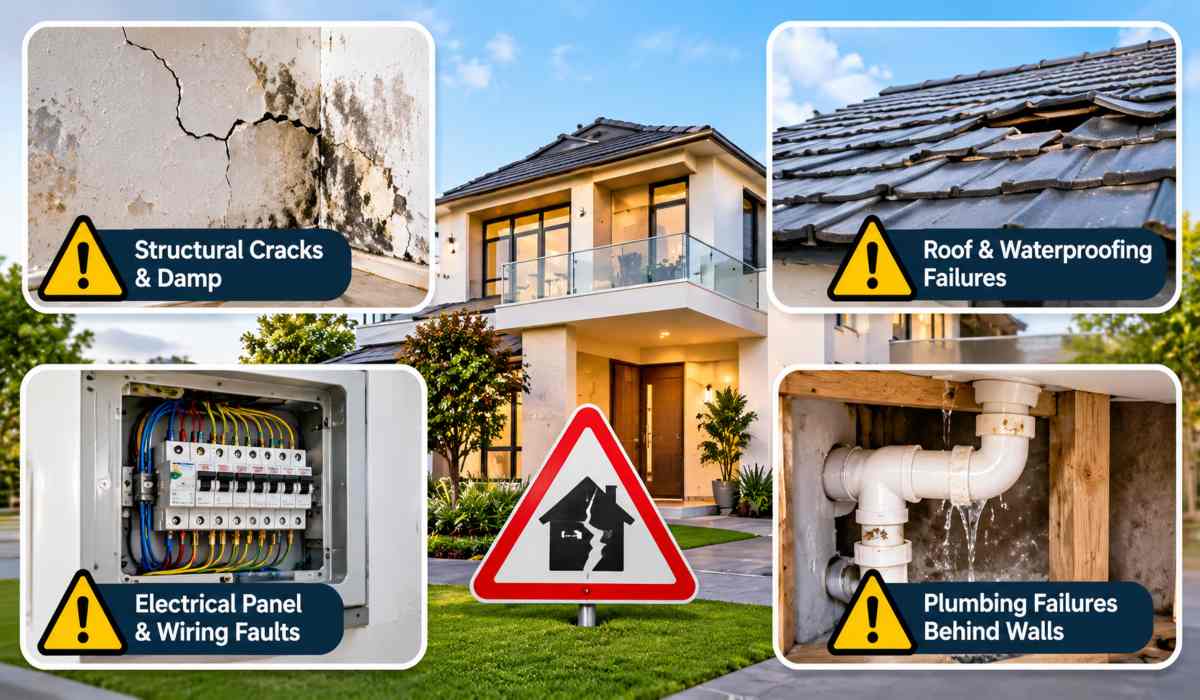
A major home repair is any fault that affects safety, the structure of the building or its essential systems and the warning signs are cracks that keep widening, damp that keeps returning, leaks you cannot trace and electrical faults involving heat, noise or burning smells. These problems rarely stay still. In Ras Al Khaimah, where heat and humidity speed up deterioration, a fault that looks manageable today can spread through a wall, ceiling or floor within a season.
Structural cracks and persistent damp
A crack is a warning sign when it is wider than a hairline, keeps growing, runs diagonally across a wall or appears alongside doors and windows that have started to jam. Hairline cracks in plaster are usually cosmetic, but a crack that changes over weeks or months suggests movement in the building itself and should be inspected by a professional.
Persistent damp is the other sign to take seriously. Damp that returns after you have cleaned and repainted means the moisture source is still active. Look for tide mark stains, bubbling or powdery paint, a musty smell, peeling wallpaper and swollen skirting or door frames. If the damp keeps damaging wooden items, a carpentry repair may be needed once the moisture source is found. A damp patch below an indoor AC unit often points to a blocked condensate line, which is a job for AC repair and installation services specialists rather than a repaint.
Roof and waterproofing failures
Roof and waterproofing failures show up as ceiling stains, bubbling or peeling paint near the top of walls, damp patches after rain or after washing down a terrace and visible cracks, lifting or pooling water on a flat roof. In this climate, roofs are exposed to intense sun and sharp temperature swings, so waterproof layers can crack long before the surface looks worn.
Because water travels, the stain you see inside is often not directly below the leak. It can follow a beam or run along a slab before it appears. Treat any recurring ceiling stain as a major repair and for roof and terrace problems, the flooring and roof services page covers the type of work involved.
Electrical panel and wiring faults
Electrical faults become major when they involve heat, noise, smell or visible damage, a distribution board that feels warm, buzzing or crackling from a panel, scorch marks, a burning smell, discoloured or melted plastic or wiring that is exposed, damaged or visibly aged. These point to a risk of shock or fire, not just inconvenience.
The distribution board is the centre of the system, so a fault there can affect the entire home. If you notice any of these signs, stop using the affected circuit, switch it off if it is safe to do so and call a qualified electrician. You can read more about the board itself in the guide to the electrical panel. Do not open it or attempt a repair yourself.
Plumbing failures behind walls or under floors
Hidden plumbing failures are among the most damaging home problems because they run unseen. Warning signs include a water meter that keeps moving when every tap is off, unexplained rises in your water bill, damp or discoloured patches on a wall, lifting or warped flooring, the sound of running water when nothing is in use and a persistent musty smell.
Small hidden leaks also waste a great deal of water. According to the US Environmental Protection Agency, the average household loses nearly 10,000 gallons (about 38,000 litres) of water a year to leaks. A pipe leaking inside a wall or beneath a floor can also soften plaster, loosen tiles and encourage mould before anything shows on the surface. Tracing and repairing these faults needs specialist detection, so the plumbing services page is the right next step if you suspect one.
How to rank repairs urgent soon or can wait
Rank repairs by risk. Anything that threatens safety or involves water or electricity, is urgent. Problems that grow with heat and humidity should be fixed soon and purely cosmetic issues can wait. A useful test is to ask what happens if you leave the problem for a month, if the answer is injury, flooding or spreading damage, it goes to the top of the list.
Safety and water or electrical risks first
Anything that could hurt someone or damage the property quickly comes first. That includes electrical faults with heat, burning smells or scorch marks, a door or window that no longer locks, loose balcony railings and any leak that is spreading or that you cannot trace. These do not improve with time and a delay can turn a manageable repair into an emergency.
Water deserves special attention because it travels and causes damage out of sight. The US Environmental Protection Agency estimates that about 10 per cent of homes have leaks wasting 90 gallons (roughly 340 litres) or more a day. A leak that large soon reaches walls, ceilings and floors, so any unexplained damp, stain or rising water bill should be treated as urgent until the source is found.
If the problem touches your whole building rather than just your own home, such as a shared pipe, a common roof or a communal electrical issue, it may fall under the wider category of building maintenance issues and it is worth reporting to your landlord or building management at the same time.
Problems that get worse with heat or humidity
The second tier is repairs that are not dangerous today but will deteriorate faster in this climate. These belong in the “soon” group, meaning weeks rather than months, because the cost of waiting is higher here than in a milder place.
Cracked or shrinking sealant is a good example. Left through a humid spell, it lets moisture into walls and cabinets. Peeling exterior paint exposes the plaster beneath to sun and damp and hairline cracks in outdoor surfaces widen with each hot day and cool night. A struggling air conditioner is another one, because a unit that is already underperforming works harder through summer, which wears it out sooner.
A simple rule helps. If a fault leaves a surface unprotected from sun, water or salt, it should be repaired before the next hot or humid season, not after.
Cosmetic issues that can wait
Cosmetic issues affect appearance without affecting safety, structure or function and they can safely sit at the bottom of the list. Typical examples are light scuffs on walls, faded interior paint, small chips in tile or worktop edges, minor marks on skirting and surface scratches on wood or flooring.
Before you put something in this group, check that it is genuinely only cosmetic. A stain that is spreading, paint that is bubbling or a mark that returns after cleaning is probably a sign of moisture, not wear and it belongs higher up. If the issue stays the same size for several weeks and nothing else changes around it, it is safe to leave until you have time or budget.
DIY or professional where to draw the line
Do it yourself when a job is small, cosmetic and carries no risk from water, electricity, height or structure. Call a licensed technician when it involves wiring, gas, hidden pipework, the roof or anything structural. In Ras Al Khaimah, who pays for a repair also depends on your tenancy agreement, so it is worth knowing before you pick up a tool or call anyone.
Safe jobs for owners
Safe jobs are those where a mistake costs you very little and can’t hurt anyone. Tightening a loose handle or cabinet screw, replacing a worn tap washer, cleaning drain covers and AC filters, touching up small paint chips, re caulking a bathroom joint and replacing a lightbulb with the power off all fit this group. The test is whether you can stop at any point, leave things as they were and nothing is damaged.
Keep a sensible limit even on easy jobs. If the fix does not work the first time or you find something unexpected behind it, such as damp, corrosion or discoloured wiring, stop. A simple repair that reveals a bigger problem has become a professional job.
Jobs that need a licensed technician
Some work belongs with a licensed professional regardless of how confident you feel. Anything that involves fixed wiring, the distribution board, gas supply, hidden or pressurised pipework, roof access, structural cracks or the cooling circuit of an air conditioner should be left to someone qualified. Mistakes in these areas can cause electric shock, fire, flooding, falls or a failed system and they can also create problems that are expensive to trace later.
A professional also brings a diagnosis, not just a fix. A technician can find the cause of damp, a tripping circuit or a weak cooling system, so you are not repeating the same repair every season. In a hot climate, where faults develop faster, that matters more than the call out itself.
Tenant vs landlord responsibilities in RAK (check the tenancy agreement and local rules)
As a general rule, the landlord looks after repairs needed to keep the property in good condition and usable, while the tenant is responsible for damage caused by their own use or changes they make. The details depend on your written agreement and it is the first thing to check. Ras Al Khaimah’s standard lease terms say the lessor is obliged to carry out the maintenance needed to preserve the property and let the tenant use it as intended and the tenant must not prevent that work.
In practice, this usually means that structural faults, major plumbing, roof leaks and a failing air conditioner supplied with the property fall to the landlord and minor upkeep, such as bulbs, filters and keeping drains clear, is often left to the tenant. Damage you cause is generally yours to put right.
Before you pay for any repair, read the maintenance clause in your contract, tell the landlord or agent in writing and keep photos and receipts. If you disagree about who is responsible, confirm the current rules with the Ras Al Khaimah Municipality or a local legal adviser, as the sources I found describe the applicable tenancy rules differently.
What drives the cost of home repairs
The cost of a home repair is driven mainly by four things, how hard the problem is to reach, which materials are needed, how far the damage has spread and how quickly it must be fixed. A small fault in an easy spot costs far less than the same fault hidden behind a wall and almost any repair costs more once it has become an emergency.
Access, materials, extent of damage, urgency
Access affects how long a job takes and what has to be moved or opened up to complete it. A tap in a kitchen is quick to reach, but a pipe inside a wall may need the surface opened and then repaired afterwards. Roofs, high exterior walls and tight ceiling voids add time, equipment and safety measures, which all add to the final figure.
Materials matter because the same repair can be done with basic or premium parts. Standard fittings, sealants and paints are cheaper than specialist, imported or matched finishes. In Ras Al Khaimah, heat, humidity and salt air can also justify choosing more durable, weather resistant materials, which may cost more up front but last longer than a cheaper option that fails within a season or two.
The extent of damage is usually the biggest factor and it is the one owners have the most control over. A leak caught early may only need a part replaced. The same leak left for months can mean repairing plaster, flooring, paint and joinery as well, so the bill grows with every area the water reaches. The same applies to cracks, damp and electrical faults, which tend to cost more the longer they run.
Urgency adds a premium. A repair planned for a convenient time can be priced, compared and scheduled. An emergency call out outside normal hours or a fault that leaves a property without water, power or cooling, leaves little room to compare options. Fixing problems in the “soon” category before they become urgent is one of the simplest ways to keep costs down.
Scale also plays a part. A repair in a single apartment is not the same as work across a large villa or a mixed use property and the type of property affects planning, access and the amount of work involved. If you are managing repairs across several units or a commercial property, the residential and commercial services page explains how that kind of work is handled.
A useful habit is to ask any professional you consult what is driving the figure, access, materials, how much is damaged or timing. A clear answer lets you judge whether the estimate is reasonable and see where you could save, for example by repairing sooner or agreeing a convenient time.
A simple home repair inspection routine
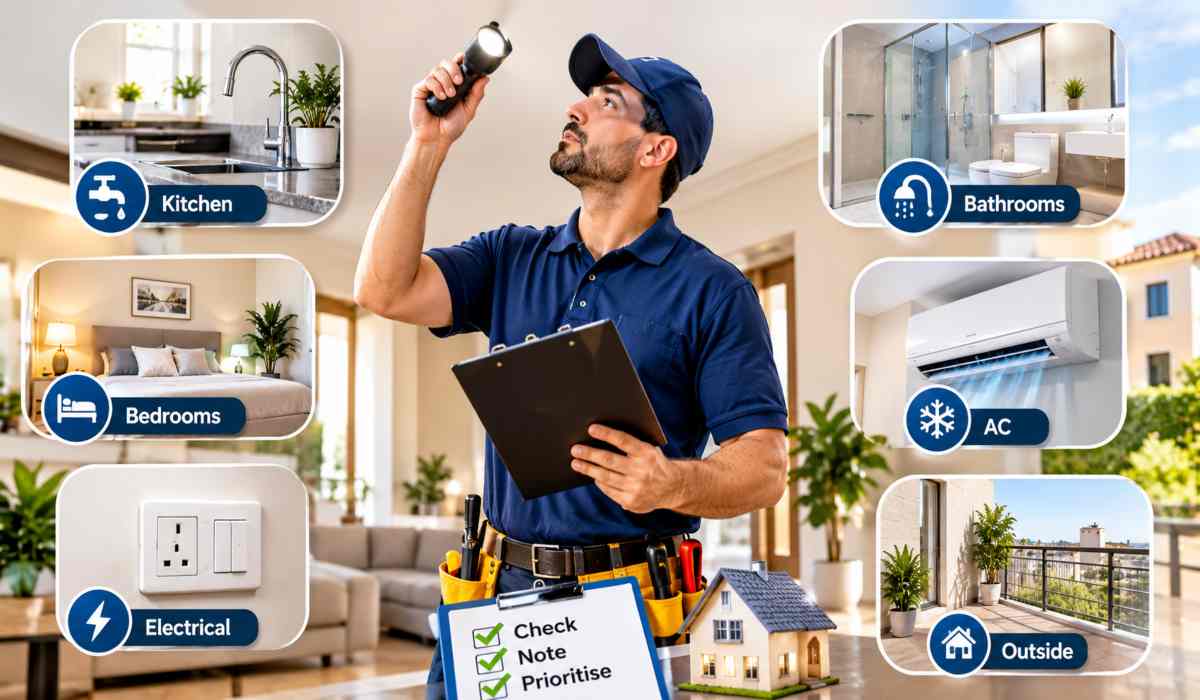
A simple home repair inspection is a short walk through each room, twice a year, looking for water, cracks, heat damage and anything that no longer works properly. It needs no tools beyond a torch and it takes about an hour. The aim is to spot small faults while they are still basic repairs, before heat and humidity in Ras Al Khaimah turn them into major ones.
Room by room check
Kitchen, Open the cabinet under the sink and look for damp, staining or a musty smell. Run the taps and check that the water drains quickly. Look at the sealant along the worktop and sink edges and check that cabinet doors close properly.
Bathrooms, Look for cracked or shrinking sealant around the bath, shower and basin, loose or hollow sounding tiles and dark patches on the ceiling. Flush the toilet and check for any water at the base. A fan that no longer moves air lets moisture build up, so confirm that it works.
Bedrooms and living areas, Check the ceiling and the tops of walls for stains, bubbling paint or fine cracks. Open and close every door and window to see that they move freely and lock securely. Look at skirting and wooden furniture for swelling or warping, which is an early sign of moisture.
Air conditioning, Check that each unit cools evenly, drains without dripping indoors and runs without unusual noise. Note any ice on the pipework or water collecting below the unit.
Electrical points, Look at sockets and switches for scorch marks, discolouration, loose plates or a warm surface. Do not open anything. If you notice any of these signs, stop using the point and have it checked by a qualified electrician.
Outside, balcony and roof access, Look at exterior paint, balcony railings, outdoor floor surfaces and drains for cracks, rust, loose fixings or blockages. Where it is safe to do so, check the roof or terrace for pooling water, lifting or splits in the waterproof layer.
Write down what you find, with a quick photo and sort each item into urgent, soon or can wait. That record also helps if you later need to raise an issue with your landlord or discuss work with a technician.
Seasonal checks before summer and after humid months
Do a fuller check twice a year. The first should come before summer, when heat is about to put the most strain on your home. The second should come after the humid months, when moisture damage is most likely to have shown itself.
Before summer, focus on the things that protect against heat and keep the home cool. Check that the air conditioning cools properly and drains freely, that sealants around windows and doors are intact, that exterior paint and roof or terrace surfaces have no cracks and that outdoor drains are clear of sand and dust.
After humid months, look for moisture damage that built up quietly. Check for new damp patches or musty smells, peeling or bubbling paint, swollen wooden doors and skirting, rust on metal fittings and hardware and mould in bathrooms, wardrobes and behind furniture. Items you find should go into your repair list, ranked by urgency.
If your checks keep turning up problems across several rooms or the same issues return, the cause may be bigger than a repair. At that point, it is worth looking at the wider scope of house renovation, rather than patching each fault as it appears.
Conclusion
The best way to handle home repairs in Ras Al Khaimah is to rank problems by risk. Fix anything that threatens safety or involves water or electricity first, deal with heat and humidity sensitive faults soon and leave purely cosmetic issues until later. Because the climate speeds up wear, a small fault left for a season can become a major repair, so acting early is almost always cheaper and less disruptive.
A simple routine does most of the work. Walk through your home twice a year, note what you find, sort each item into urgent, soon or can wait and keep a record. Handle small, low risk jobs yourself and leave wiring, hidden pipework, roofs and structural problems to a qualified technician. If you rent, check your tenancy agreement first so you know who is responsible.
If you would like a professional to look at a problem you have found, the team at Home Fix Building Maintenance looks after homes across Ras Al Khaimah. Either way, the habit that protects your home most is simple, look regularly, act early and fix things in the right order.
Frequently Asked Questions (FAQs)
What is a home repair?
A home repair is any job that fixes something in a house or apartment that is broken, damaged or no longer working properly. Examples include a leaking pipe, a cracked sealant joint, a door that will not close or a socket that has stopped working. Repairs respond to a problem that already exists and in Ras Al Khaimah, heat and humidity make small faults grow quickly if they are left alone.
What is the difference between home repairs and maintenance?
Maintenance is routine care done before anything fails, while a repair fixes something that has already gone wrong. Cleaning an AC filter, clearing a drain or checking a sealant line is maintenance. Replacing a failed seal, unblocking a drain that is already overflowing or repairing a leaking joint is repair. Regular maintenance reduces how often repairs are needed, but it cannot prevent every fault, because fittings wear out and materials age.
Which home repairs are urgent?
Urgent repairs are those that put safety at risk or let damage spread quickly. These include electrical faults involving heat, burning smells or scorch marks, leaks you cannot trace, damp that keeps returning, widening structural cracks, roof or terrace leaks and a door or window that no longer locks. Problems that worsen with heat or humidity, such as cracked sealant or a weak AC unit, should be dealt with soon, while light scuffs and faded paint can usually wait.
Can I fix a home repair myself?
You can fix small, low risk jobs yourself, such as tightening a loose handle, replacing a tap washer, cleaning filters or touching up small paint chips. Leave anything involving wiring, the distribution board, hidden or pressurised pipes, the roof, structural cracks or an air conditioner’s cooling system to a licensed technician. If a simple fix does not work or reveals damp, corrosion or damaged wiring, stop and get it checked.
Who pays for repairs if I rent in Ras Al Khaimah?
Your written tenancy agreement decides this. Generally, the landlord handles repairs needed to keep the property in usable condition, while the tenant pays for damage they cause. Read the maintenance clause, report the problem to your landlord in writing and keep photos and receipts. If you disagree, check with the Ras Al Khaimah Municipality or a legal adviser.