
Laminate Flooring in Ras Al Khaimah | Cost and Guide 2026
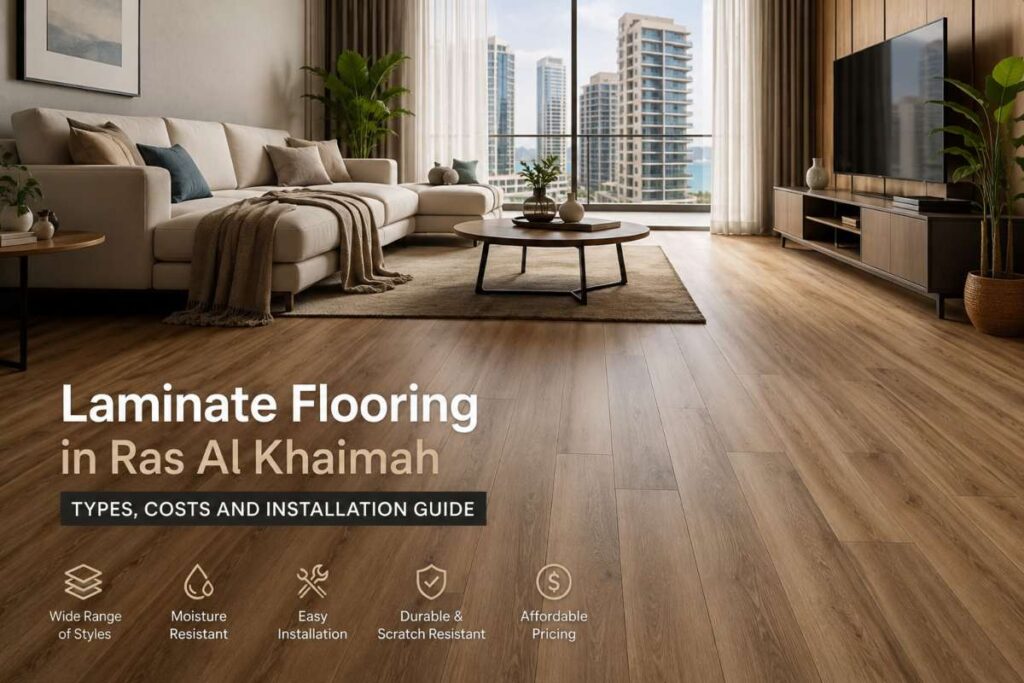
Laminate flooring in Ras Al Khaimah has become one of the most requested flooring upgrades among homeowners across Al Marjan Island, Mina Al Arab and Bab Al Bahr, thanks to its ability to mimic the look of hardwood or tile at a fraction of the cost and installation time. A high density fibreboard (HDF) core topped with a printed decorative layer and a protective wear layer allows laminate to replicate finishes from natural oak to polished grey stone, while standing up to the daily wear of busy households.
For RAK homeowners specifically, laminate flooring offers a practical middle ground, it installs in a fraction of the time tile or hardwood requires, typically costs less per square foot and, when a waterproof or water resistant grade is chosen, copes reasonably well with the humidity swings that come from constant AC cycling in a coastal desert climate. That said, not every laminate product performs equally well in RAK conditions and choosing the wrong grade can lead to swelling or lifting at the seams within a year or two.
This guide covers the main types of laminate flooring available in the UAE market, how the leading brands compare, what installation actually costs in AED and how to keep laminate floors looking new in RAK climate. If you are weighing laminate against other flooring upgrades as part of a wider home renovation, our home renovation services team can walk you through the full range of options and costs for your space.
What Is Laminate Flooring?
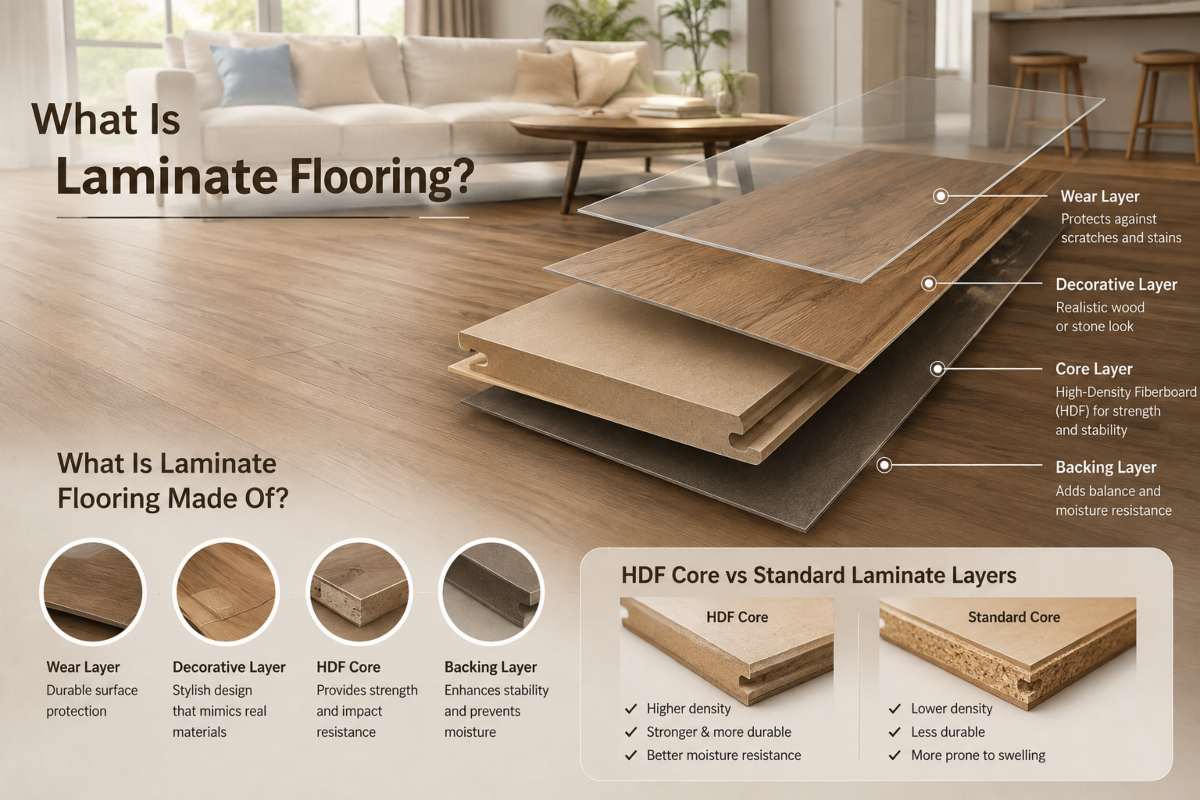
Laminate flooring is a multi layer synthetic floor covering that fuses a high density fibreboard core with a photographic decorative layer and a clear protective coating, designed to replicate the appearance of wood, stone or tile without the cost or maintenance demands of the real material. Unlike solid hardwood, laminate doesn’t require sanding, staining or sealing and it clicks together in a floating installation rather than being nailed or glued to the subfloor.
The format has grown popular in Ras Al Khaimah homes precisely because it separates aesthetics from structural demands, a villa can have the visual warmth of oak or the cool finish of grey stone tile without the weight, cost or climate sensitivity those materials usually carry. Industry estimates put laminate among the fastest growing flooring categories globally, with the global laminate flooring market valued in the billions of dollars and continued growth projected through the decade as manufacturing quality improves and water resistant grades become standard.
What Is Laminate Flooring Made Of?
Laminate flooring is built from four bonded layers, a bottom backing layer that resists moisture and stabilises the plank, a core layer usually made of HDF or melamine resin, a decorative layer that’s a high resolution photographic image of wood grain, stone or tile and a top wear layer of melamine or aluminium oxide that protects against scratches, fading and daily foot traffic. This layered construction is what allows laminate to look convincingly like natural materials while remaining significantly harder wearing on the surface than the materials it imitates.
HDF Core vs Standard Laminate Layers
The core layer is what separates budget laminate from premium laminate and it is the single most important factor for durability in a climate like RAK. High density fibreboard (HDF) cores are compressed at higher pressure and density than standard medium density fibreboard (MDF) cores, giving HDF laminate better resistance to moisture absorption, indentation and swelling at the plank edges, the most common failure point when laminate is installed in humid conditions or rooms with fluctuating temperatures.
For RAK homes, where AC cycling creates regular shifts in indoor humidity, an HDF core with a moisture resistant or waterproof rating is worth the price difference over standard MDF core products, particularly in kitchens, entryways and rooms with large windows. Laminate is one of several flooring options worth weighing against tile, hardwood and vinyl before committing to a full home or room by room upgrade, our flooring and roof services team can help you compare materials based on your budget and how each room is used.
Types of Laminate Flooring
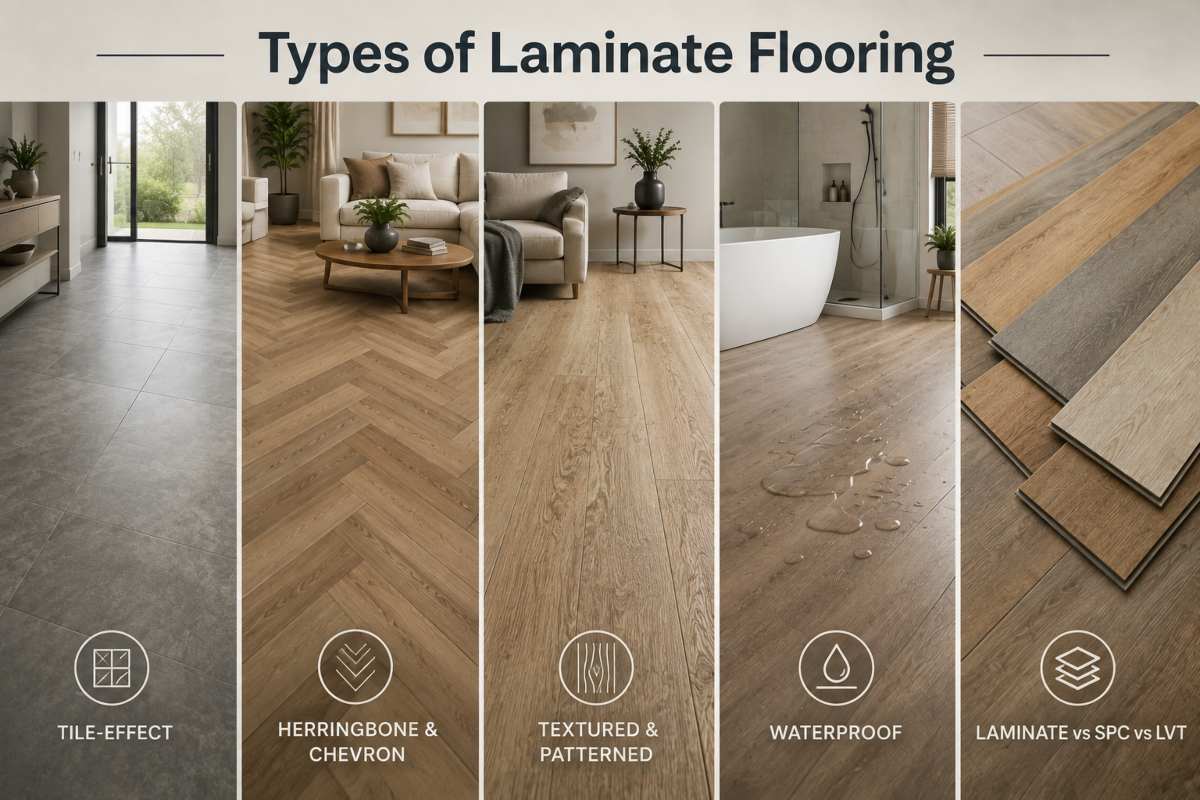
Laminate flooring comes in several distinct types, distinguished primarily by surface pattern and moisture performance, ranging from tile effect designs that mimic ceramic to fully waterproof cores built for wet prone rooms. Choosing the right type matters more in Ras Al Khaimah than in drier climates, since humidity and AC cycling put more pressure on lower grade laminate than it’s designed to handle.
Tile Effect Laminate Flooring
Tile effect laminate replicates the look of ceramic or porcelain tile, including grout lines and stone textures, while retaining the warmer underfoot feel and faster installation of a floating floor. It suits kitchens, hallways and entryways where homeowners want a tiled aesthetic without the cold surface or lengthy installation timeline that real tile requires, though it still needs a water resistant or waterproof rating to hold up in these higher moisture areas.
Herringbone and Chevron Laminate Flooring
Herringbone and chevron laminate apply the same angled block patterns found in parquet flooring to a laminate plank, giving homeowners a similar visual statement at a lower material and installation cost. Herringbone creates a staggered zigzag effect, while chevron pieces are cut at a matching angle for a continuous, more formal “V” line, both work well as a feature floor in living rooms or entryways. For homeowners who prefer the authenticity of real wood in these patterns rather than a printed laminate version, parquet flooring offers the genuine solid or engineered timber equivalent.
Textured and Patterned Laminate Flooring
Textured laminate uses an embossed surface, often embossed in register, where the texture aligns precisely with the printed wood grain, to replicate the tactile feel of real timber underfoot rather than a flat, glossy print. Patterned options extend this further with varied plank widths, wire brushed finishes or distressed textures designed to break up the repetitive look that cheaper laminate can have across a large floor area.
Waterproof Laminate Flooring
Waterproof laminate uses a modified core, typically a rigid, moisture resistant composite rather than standard HDF, combined with sealed edges that prevent water from penetrating the seams between planks. This makes it the strongest laminate option for RAK kitchens, bathrooms, adjacent hallways and any room affected by AC condensation and it’s generally worth the price premium over standard water resistant grades given how much moisture exposure UAE homes see from air conditioning alone.
Laminate vs SPC vs LVT, What is the Difference?
Laminate, SPC (stone plastic composite) and LVT (luxury vinyl tile) all replicate wood or stone visually but differ in core construction and water tolerance, laminate uses a wood fibre HDF core topped with a printed image, SPC uses a rigid limestone composite core that’s fully waterproof and LVT uses a flexible vinyl construction that is also waterproof but softer underfoot. For RAK homes specifically, SPC tends to outperform standard laminate in consistently humid rooms, while laminate remains the better choice where budget and a closer to wood look matter more than full waterproofing. Homeowners weighing laminate against solid timber flooring altogether can compare it directly with hardwood flooring options and costs.
Popular Laminate Colours and Finishes for RAK Homes
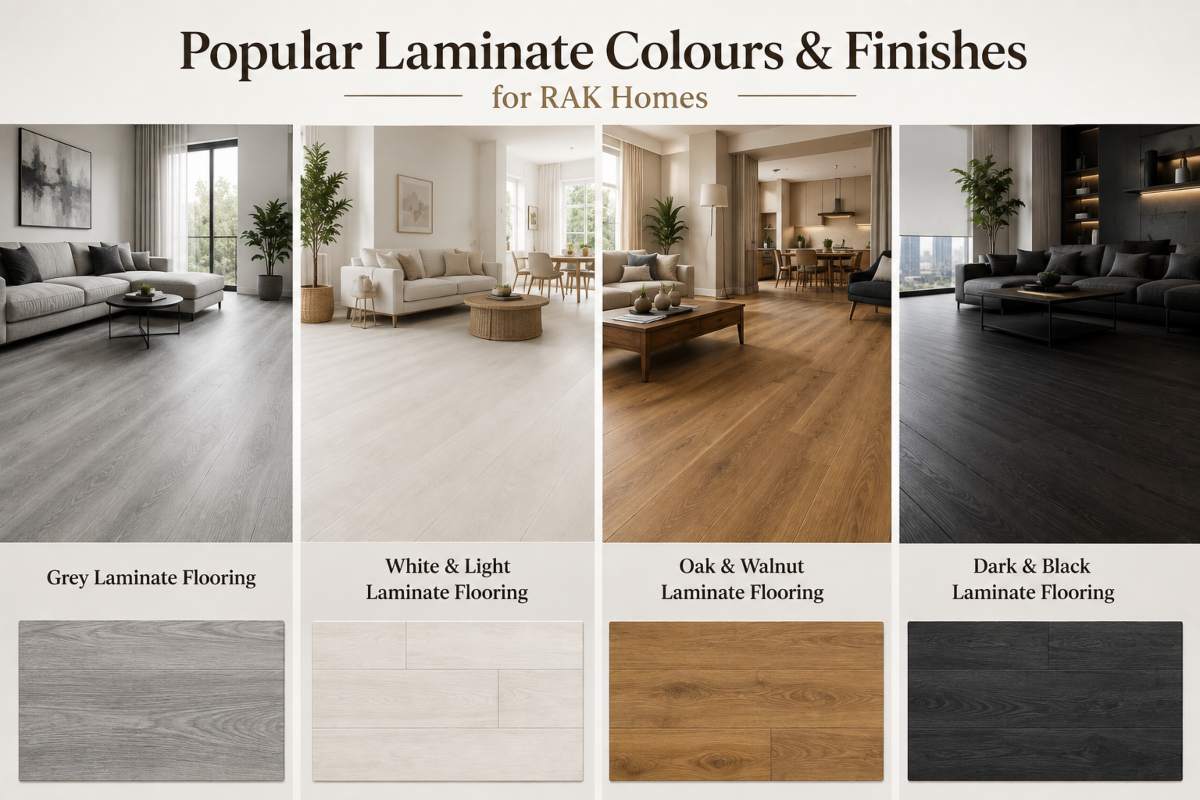
Laminate flooring colour has a bigger impact on how a room feels than most homeowners expect, since the same plank pattern can read as bright and spacious in a light finish or warm and formal in a dark one. In Ras Al Khaimah, colour choice also carries a practical dimension, lighter tones tend to reflect heat and show dust less in bright, sun exposed rooms, while darker finishes suit lower light spaces where warmth matters more than brightness.
Grey Laminate Flooring
Grey laminate flooring has become one of the most requested finishes in RAK homes over the past few years, prized for its ability to pair with almost any interior style, from minimalist and contemporary to Gulf modern design. It is typically produced by applying a muted grey tone over an oak or ash grain pattern and it works particularly well in villas and apartments with large windows, since the cool tone doesn’t compete with the abundance of natural light common in the region. Grey also hides everyday dust and light scuffing more effectively than either very light or very dark laminate, which makes it a practical pick for busy households.
White and Light Laminate Flooring
White and light laminate flooring makes rooms feel larger and brighter, a genuine advantage in RAK apartments and secondary bedrooms where floor space is limited and natural light needs to be maximised. These lighter finishes reflect more ambient light than darker laminate, reducing the need for supplemental lighting during the day and they pair easily with both warm wood furniture and cooler, modern décor. The main trade off is visibility of scuffs and stains, which shows more readily on light laminate than on mid tone or grey finishes, so it suits lower traffic rooms better than busy hallways or kitchens.
Oak and Walnut Laminate Flooring
Oak laminate remains the most widely installed finish overall, largely because its grain pattern is neutral enough to suit almost any design direction while still delivering genuine visual warmth that purely grey or white finishes lack. Walnut laminate, by contrast, replicates a deeper, richer brown tone with more pronounced grain contrast, giving living rooms and dining areas a more formal, elevated look. Both finishes work well throughout RAK homes, though walnut tends to show dust more than lighter oak tones, so it’s often reserved for statement rooms rather than full home coverage.
Dark and Black Laminate Flooring
Dark and black laminate flooring creates a bold, high contrast look that photographs well and suits larger, well lit rooms where the depth of colour adds drama rather than making the space feel closed in. It’s a popular choice for modern villa living rooms and home offices in RAK, particularly when paired with light coloured walls and furniture to balance the contrast. As with dark parquet, this finish shows dust, footprints and pet hair more readily than lighter laminate, so it generally performs better in formal or lower traffic areas than in kitchens or children’s playrooms.
Whichever finish you choose, laminate flooring pairs naturally with matching skirting, door thresholds and trim work, our carpentry services team can handle these finishing details alongside your flooring installation for a fully coordinated result.
Top Laminate Flooring Brands Available in the UAE
The laminate flooring brands most commonly available in the UAE market come from a handful of established European manufacturers, each offering a different balance of price, durability and finish quality. Choosing a recognised brand matters more in a climate like RAK, since manufacturing consistency directly affects how well the HDF core and wear layer hold up under humidity and AC driven temperature shifts.
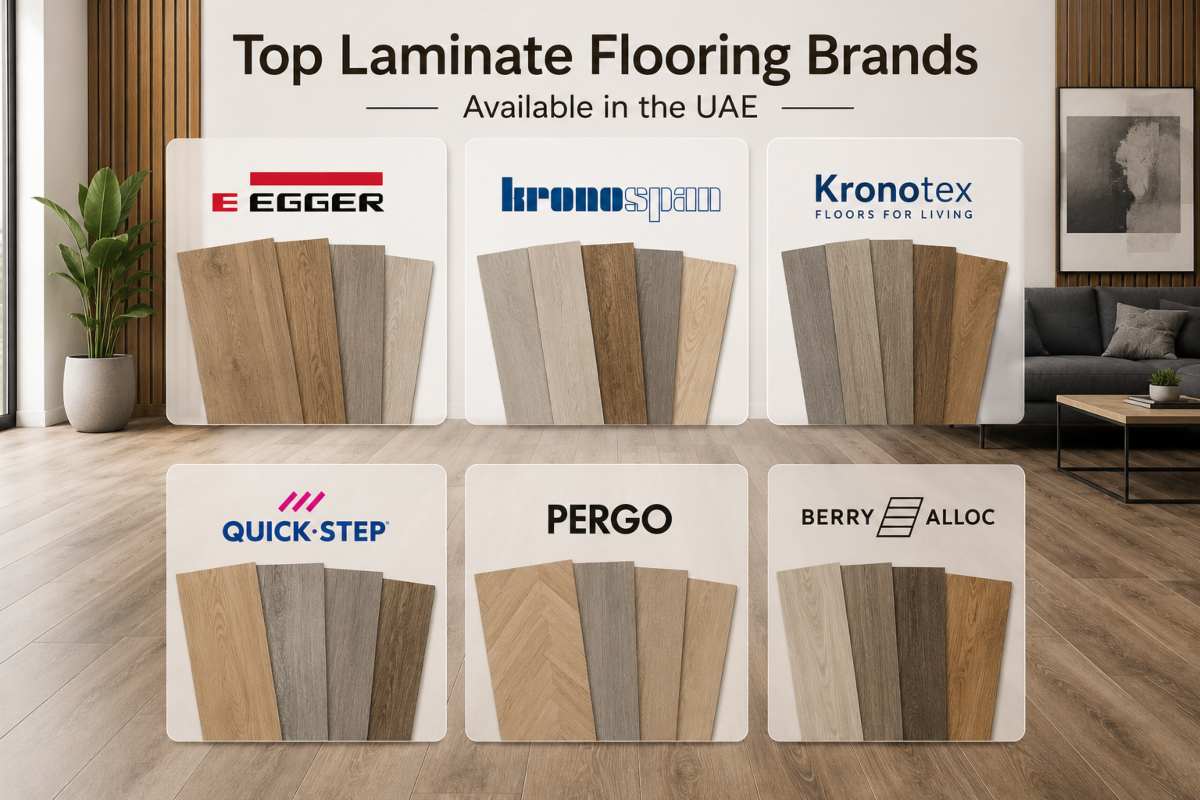
Egger, Kronospan and Kronotex
Egger, Kronospan and Kronotex are three of the largest laminate flooring manufacturers supplying the UAE market, all German or Austrian engineered and widely stocked by flooring suppliers across RAK and the wider Emirates. Egger laminate is generally positioned as a mid to premium option, known for its consistent HDF core density and realistic embossed textures, making it a reliable choice for villas and higher traffic living spaces.
Kronospan and Kronotex sit slightly more toward the value end without sacrificing core quality and both are frequently specified in apartment renovations and rental properties where cost efficiency matters alongside durability. All three brands offer water resistant grades suitable for RAK climate, though it’s worth confirming the specific moisture rating of the range being quoted, since not every product line from these manufacturers carries the same protection level.
Quick Step, Pergo and Berry Alloc
Quick Step, Pergo and Berry Alloc round out the brands most frequently requested by name in the UAE, each carrying strong recognition among homeowners who have researched laminate options before contacting a contractor. Quick Step is widely regarded for its click lock installation system and broad range of tile effect and wood effect finishes, while Pergo, one of the original inventors of laminate flooring, is known for long standing warranty coverage and consistent wear layer performance.
Berry Alloc, a Belgian manufacturer, is often selected for its waterproof laminate flooring ranges specifically, making it a common recommendation for RAK kitchens and high humidity rooms. Across all three brands, premium ranges typically come with 20 to 30 year residential warranties, a useful benchmark when comparing quotes that don’t specify warranty terms upfront.
Laminate Flooring Cost in Ras Al Khaimah
Laminate flooring in Ras Al Khaimah typically costs between AED 15 and AED 45 per square foot for materials alone, with total installed cost, including labour, underlayment and skirting, usually landing between AED 25 and AED 65 per square foot depending on the grade and brand chosen. Getting an accurate quote requires separating material cost from installation cost, since suppliers and contractors often bundle the two differently.
Cost Per Square Foot (Budget, Mid Range, Premium)
Budget laminate, typically standard MDF core products from value ranges of Kronospan or Kronotex, runs roughly AED 15 to AED 22 per square foot for materials and suits secondary bedrooms, rental units or lower traffic rooms where long term durability is less of a priority. Mid range laminate, generally HDF core products with water resistant ratings from brands like Egger or Quick Step, sits around AED 22 to AED 32 per square foot and represents the sweet spot for most RAK living rooms and family spaces.
Premium laminate, waterproof rated ranges from Berry Alloc or Pergo, along with herringbone and chevron pattern products, typically costs AED 32 to AED 45 per square foot for material alone, reflecting both the advanced core technology and the more complex manufacturing these patterns require. Installation labour generally adds AED 8 to AED 15 per square foot on top of material cost, varying with room complexity and subfloor condition.
What Affects Installation Cost?
Several factors move the final installed price beyond the per square foot material rate, subfloor condition is usually the biggest variable, since uneven or damaged subfloors need levelling before laminate can be laid, adding both time and material cost. Room shape and layout also matter, a simple rectangular room with minimal cutting costs less to install than a space with alcoves, stairs or multiple doorways, since intricate cuts and pattern alignment (particularly for herringbone or chevron laminate) take longer per square foot.
The choice of underlayment adds a further variable, with basic foam underlay costing less than soundproof or moisture barrier grades that RAK homes often need given ground floor humidity exposure. Finally, removal of existing flooring, tile, carpet or old laminate, adds labour cost that’s easy to overlook when comparing quotes that only price the new installation. For larger projects spanning multiple rooms or full properties, our residential and commercial services team can provide a consolidated quote that accounts for all of these variables upfront rather than per room estimates that add up unpredictably.
Is Laminate Flooring Suitable for RAK Climate?
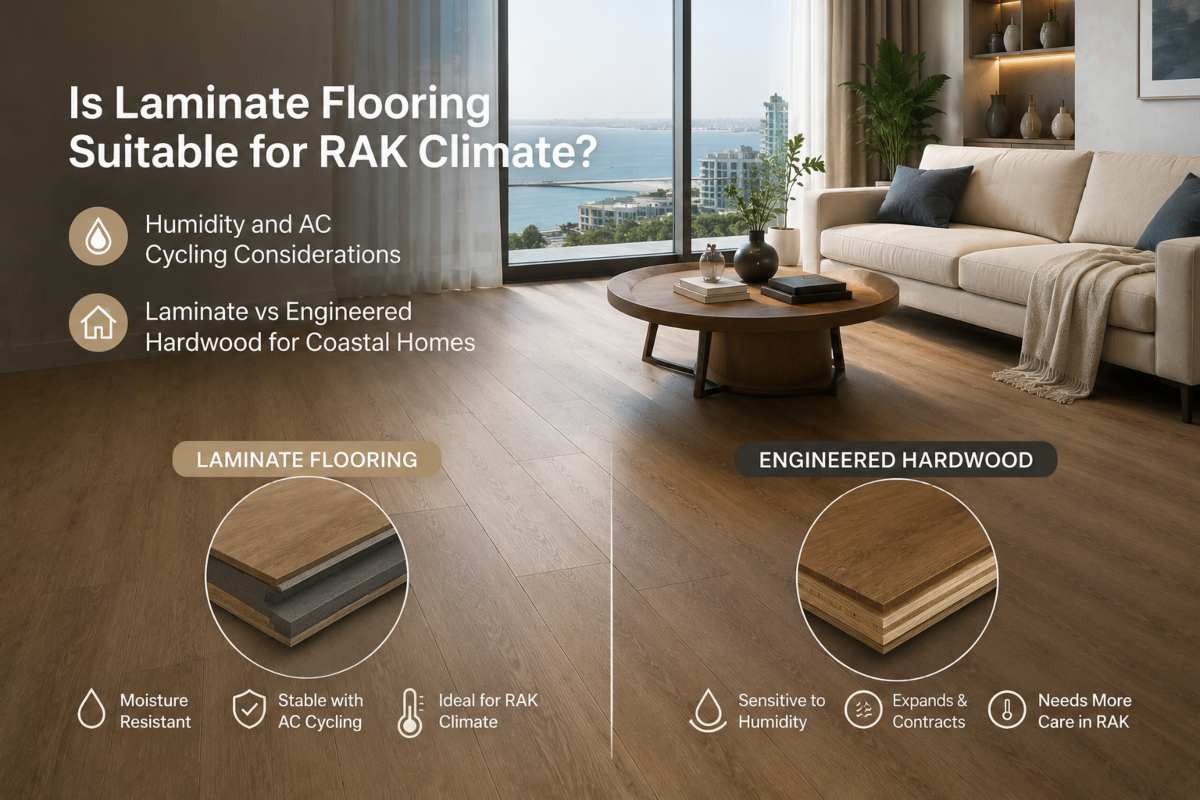
Yes, laminate flooring works in Ras Al Khaimah homes, but only when a moisture resistant or fully waterproof grade is chosen, standard laminate with a basic HDF core is genuinely at risk of swelling and edge damage under RAK’s humidity and AC cycling. The distinction between grades matters more here than in temperate climates, where standard laminate performs adequately without the added moisture protection.
Humidity and AC Cycling Considerations
RAK combination of high outdoor humidity and constant indoor air conditioning creates repeated cycles of moisture absorption and release in flooring materials and laminate HDF core is more vulnerable to this than solid or engineered timber because it can’t be resealed or refinished once moisture penetrates the seams. Industry guidance generally recommends keeping indoor relative humidity between 40% and 60% for any wood based flooring, a range that’s achievable in RAK homes with well maintained AC systems but easily exceeded during humid summer months if cooling is inconsistent.
Waterproof and water resistant laminate grades, typically identified by a rigid core and sealed plank edges, are built specifically to withstand these swings and choosing one of these grades over a standard laminate is the single biggest factor in how long a laminate floor lasts in a RAK home.
Laminate vs Engineered Hardwood for Coastal Homes
For RAK’s coastal humidity specifically, engineered hardwood generally outperforms even high grade laminate, since its real wood veneer can be sanded and refinished if moisture related surface damage occurs, while laminate printed wear layer cannot be restored once it’s compromised. Laminate remains the more budget friendly option upfront and performs well in secondary bedrooms, rental units or lower humidity rooms where long term refinishing isn’t a priority, but for living areas, kitchens and ground floor spaces most exposed to humidity swings, engineered hardwood typically delivers better long term value despite the higher initial cost.
How Laminate Flooring Is Installed
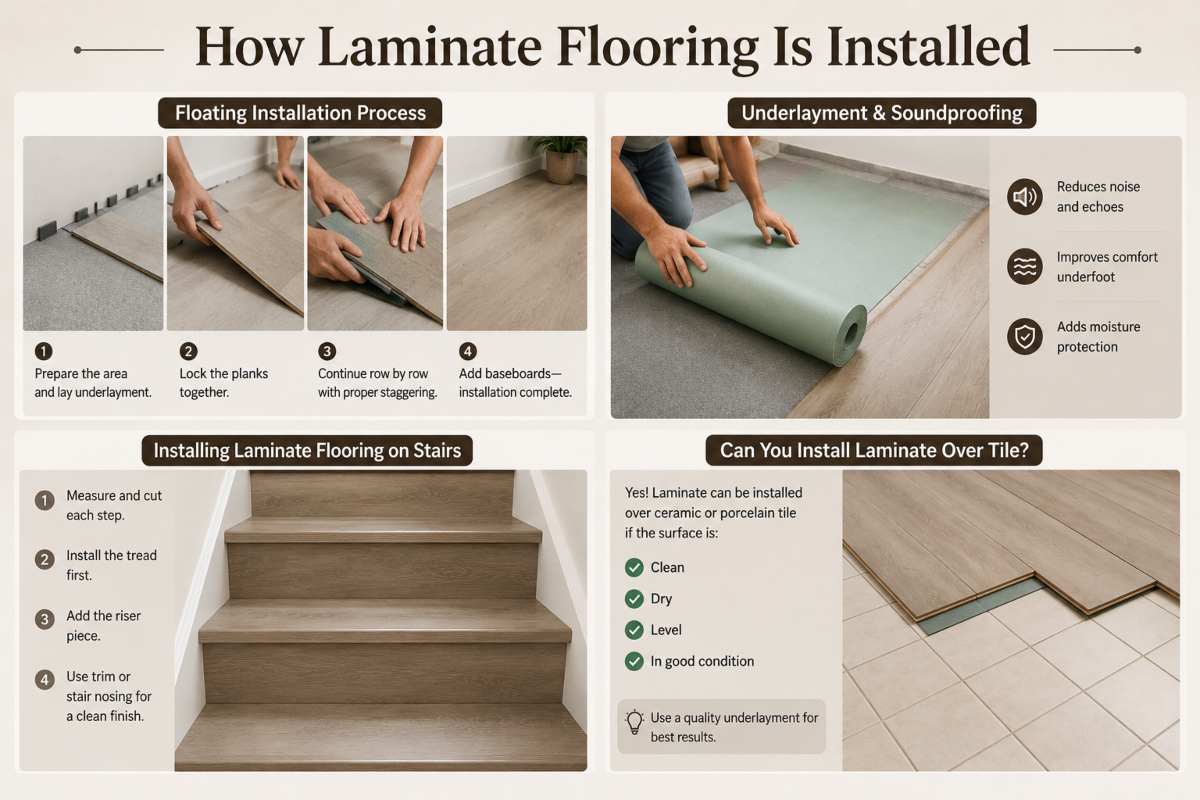
Laminate flooring is installed using a floating method, where interlocking planks click together over an underlayment layer without being nailed or glued to the subfloor, making it one of the fastest flooring types to install in a RAK home. A standard sized room typically takes a professional installer one to two days from subfloor prep to finished skirting, depending on room shape and the amount of cutting required.
Floating Installation Process
Floating installation starts with checking the subfloor for level and moisture, since any unevenness will telegraph through the laminate and cause the click lock joints to separate over time. Planks are then laid row by row, starting from one wall with an expansion gap left around the room’s perimeter, each plank clicking into the previous one along both the long and short edges without any adhesive touching the subfloor itself. Because the entire floor “floats” as a connected unit rather than being fixed in place, it can expand and contract slightly with temperature and humidity changes, a genuine advantage in RAK, where AC cycling causes regular minor shifts in indoor conditions.
Underlayment and Soundproofing
Underlayment sits between the subfloor and the laminate planks and it does more work than most homeowners expect, it smooths out minor subfloor imperfections, adds a moisture barrier against concrete slabs (standard in UAE construction) and reduces the hollow, echoing sound laminate can otherwise produce underfoot.
Basic foam underlayment covers the essentials for most rooms, while acoustic or soundproof rated underlayment is worth the upgrade for apartments, upper floors or any room where sound transfer between levels is a concern. In RAK specifically, underlayment with a built in moisture barrier is generally recommended over concrete subfloors regardless of room type, since ground level and coastal properties see more subfloor moisture than inland or upper floor installations.
Installing Laminate Flooring on Stairs
Laminate flooring on stairs requires a different approach than flat room installation, using stair nosing, a rounded profile piece fitted to the front edge of each tread, to protect the most heavily worn part of the stair and give the installation a finished look. Because stairs see concentrated foot traffic on a narrow surface, laminate here benefits from a higher durability wear layer than what’s needed in a bedroom or living room and precise cutting is essential to avoid gaps at the tread edges where planks are most likely to lift over time. This is one area of laminate installation where professional fitting genuinely pays off, since poorly fitted stair nosing is both a safety hazard and one of the most visible installation mistakes in a home.
Can You Install Laminate Over Tile?
Yes, laminate flooring can generally be installed directly over existing tile, provided the tile surface is level, structurally sound and free of significant cracks or missing pieces, since the floating installation method doesn’t require removing the original flooring underneath. This makes laminate a practical choice for RAK renovations where removing tile would add significant time and cost to a project, though a self leveling compound may be needed first if the tile has an uneven grout line pattern or damaged sections.
One trade off worth noting, installing over tile raises the finished floor height, which can affect door clearances and transitions to adjoining rooms, so it’s worth checking these details before committing to the approach. Homeowners comparing laminate over tile against replacing with a different premium flooring altogether can also review our marble flooring guide for a cost and durability comparison.
Laminate Flooring by Room
Laminate flooring performs differently depending on the room it’s installed in, with moisture exposure being the main factor that determines whether standard laminate is suitable or whether a waterproof grade is required. Matching the right laminate type to each room’s conditions is what separates a floor that lasts a decade from one that needs early repair.
Kitchen Laminate Flooring
Kitchens are one of the more demanding rooms for laminate flooring, given regular exposure to spills, dropped items and steam from cooking, all of which put pressure on the plank seams where water can seep in and cause swelling. A waterproof or high water resistance laminate grade is strongly recommended for RAK kitchens rather than a standard grade, since the combination of everyday spills and the region’s humidity gives standard laminate little margin for error. When the right grade is chosen and expansion gaps are properly maintained around cabinetry and appliances, laminate can hold up well in kitchens for years, offering a tile like or wood like look at a lower cost and faster installation time than either alternative.
Living Room Laminate Flooring
Living rooms are generally the easiest room for laminate flooring, since they see lower moisture exposure than kitchens or entryways while still benefiting from laminate durability against everyday foot traffic, furniture movement and pet activity. This is also where homeowners have the most freedom to choose laminate purely on aesthetics, wide plank oak finishes, herringbone patterns or dark statement tones all perform well in a living room setting without the added moisture considerations that limit choices elsewhere in the home. A mid range HDF core laminate with a water resistant rating is typically sufficient here, reserving the premium waterproof grades for rooms with genuine moisture exposure.
Outdoor and Balcony Suitability
Standard laminate flooring is not suitable for outdoor or balcony use, regardless of grade, since direct sun exposure, rain and RAK high outdoor humidity will cause even waterproof rated laminate to degrade faster than it’s designed to handle indoors. The printed wear layer that gives laminate its wood or stone appearance is not UV stabilized the way outdoor decking materials are, so prolonged sun exposure typically causes fading and surface deterioration within a relatively short period compared to indoor use.
For covered terraces, balconies or poolside areas in RAK, PVC or composite decking products designed specifically for outdoor conditions are the more practical choice, since they are built to withstand UV exposure and weather in a way standard or waterproof laminate simply isn’t engineered to do.
Laminate Flooring Maintenance and Cleaning
Laminate flooring stays in good condition with regular dry cleaning and minimal water exposure, since the printed wear layer that gives laminate its appearance can’t tolerate the same wet mopping or steam cleaning routines that tile or stone floors handle without issue. Getting the cleaning approach right matters more for laminate than for most other flooring types, because moisture damage here is not something that can be sanded out or repaired, affected planks typically need full replacement.
Best Mop for Laminate Floors
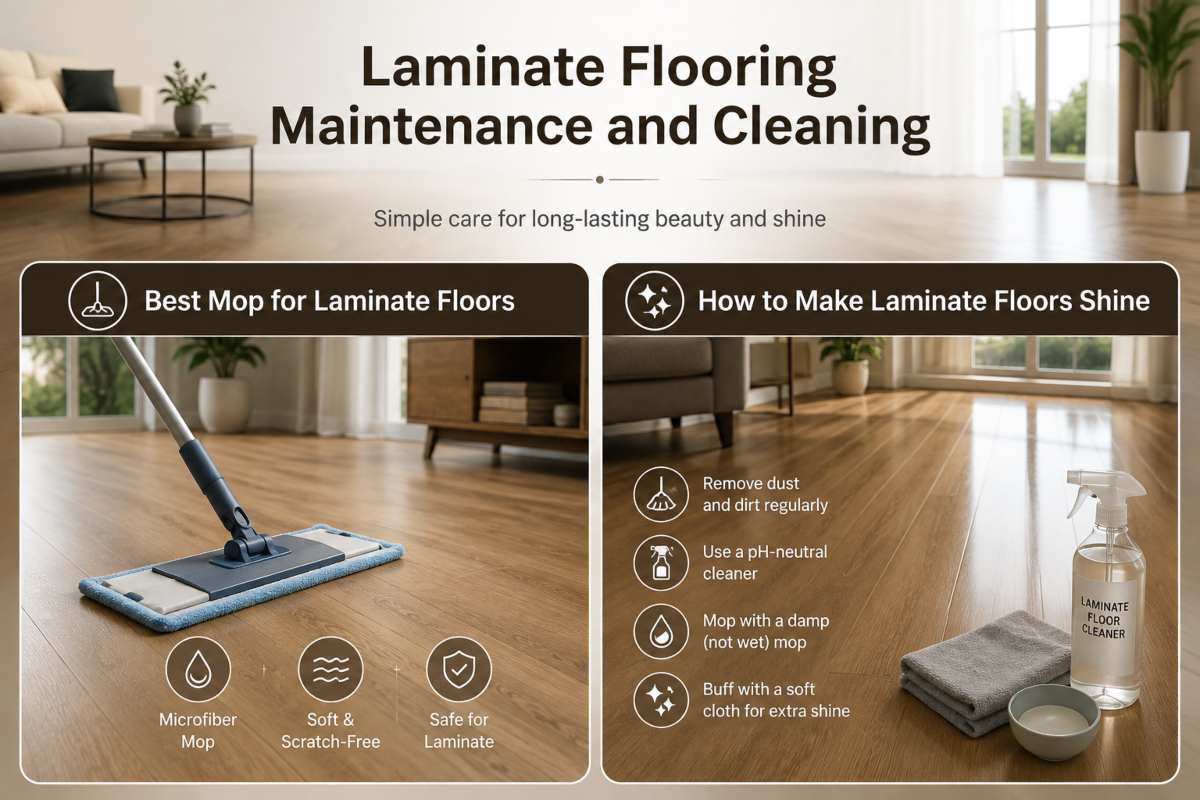
A dry or slightly damp microfiber mop is the safest choice for laminate flooring, lifting dust and grit without introducing the standing water that can seep into plank seams and cause swelling at the edges. Spray mops designed specifically for laminate, which release a fine, controlled mist rather than soaking the surface, work well for tackling light stains without over wetting the floor. Steam mops should be avoided entirely on laminate, since the combination of heat and moisture they release can penetrate the seams and cause warping in a way that is often irreversible, a particularly relevant caution in RAK, where floors are already managing humidity from AC cycling without added moisture from cleaning.
How to Make Laminate Floors Shine
Restoring shine to laminate flooring starts with a thorough dry clean to remove the surface dust and grit that dulls the wear layer finish over time, followed by a laminate specific polish or shine product applied sparingly and buffed with a soft cloth. It is worth using a product formulated specifically for laminate rather than generic wood floor polish, since a laminate synthetic wear layer responds differently to polishing compounds than real wood does and the wrong product can leave a hazy or streaky residue.
For everyday upkeep between deeper cleans, simply keeping the floor free of grit through regular dry mopping does more to preserve shine than any polish, since it is surface scratching from ground in dust, not lack of polish, that dulls laminate fastest in dusty, coastal environments like RAK.
Laminate Flooring Repair
Laminate floor repair depends heavily on the type and extent of damage, since laminate printed wear layer can not be sanded or refinished the way real wood can, most damage either responds to a targeted repair kit or requires full plank replacement. Knowing which category a given issue falls into saves homeowners from either overpaying for professional repair on a fixable scratch or attempting a DIY fix on damage that genuinely needs replacement.
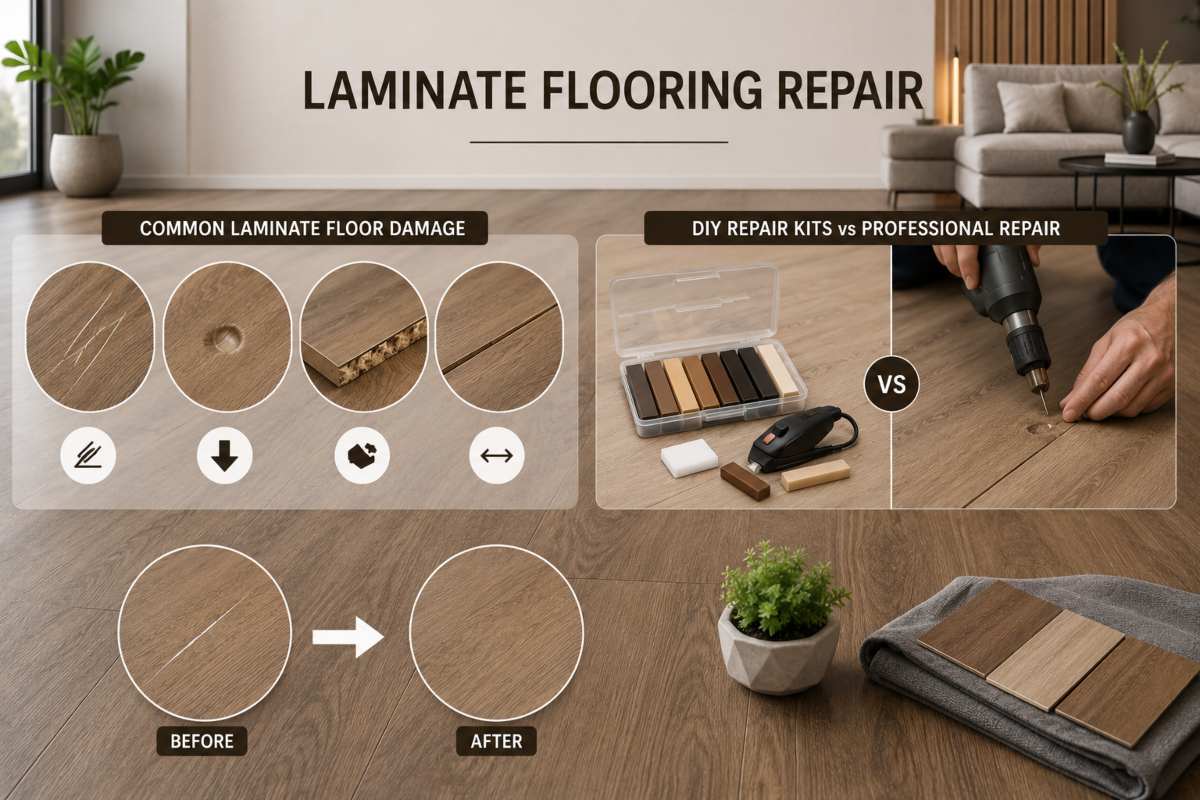
Common Laminate Floor Damage
Scratches and surface scuffs are the most frequent laminate floor damage, typically caused by grit tracked in from outside, furniture dragged without protective pads or pet claws and they are usually limited to the wear layer without affecting the plank structural integrity. Swelling and lifting at plank edges, by contrast, signal moisture has penetrated the seams, the most serious form of laminate damage, since a swollen plank can not be flattened back into shape and typically needs replacing.
Gaps between planks can develop when a floor was not installed with adequate expansion room, becoming more noticeable during RAK driest, most air conditioned months as the planks contract slightly. Chips and cracks, usually from a dropped heavy object, tend to be localised and are among the more straightforward repairs when they do not extend below the wear layer into the core.
DIY Repair Kits vs Professional Repair
Laminate repair kits, typically a coloured filler compound matched to the plank finish, work well for minor scratches, small chips and surface gouges, offering a cost effective fix that most homeowners can handle without calling in a contractor. These kits are less effective on deeper damage, colour matching for patterned or textured laminate or any repair involving multiple adjacent planks, where an imperfect DIY fix often ends up more visible than the original damage.
Professional repair becomes the better route for moisture related swelling, damage affecting several planks in the same area or any situation where the affected planks need to be lifted and replaced without disturbing the surrounding floating floor, a task that requires matching the interlocking system correctly to avoid new gaps forming. For homeowners who’d rather catch laminate wear before it becomes a repair job, our annual maintenance contracts include scheduled property checks that flag flooring issues early alongside AC, plumbing and electrical maintenance.
Laminate vs Tile vs Hardwood vs SPC/LVT
Laminate flooring sits in the middle of the flooring cost and durability spectrum, cheaper and faster to install than tile or hardwood flooring, but less water resistant than tile and less repairable long term than solid or engineered wood. The right choice for a RAK home usually comes down to which trade off matters most for a given room, budget, water exposure or long term refinishing potential.
| Factor | Laminate | Tile | Hardwood | SPC/LVT |
| Cost (installed, AED/sq ft) | 25–65 | 30–80 | 80–250 | 30–70 |
| Water resistance | Moderate (waterproof grades available) | Excellent | Poor to moderate (engineered better) | Excellent |
| Repairability | Limited usually plank replacement | High individual tiles replaceable | High can be sanded and refinished | Limited usually plank replacement |
| Lifespan | 10–20 years | 25+ years | 25–30+ years (with refinishing) | 15–20 years |
| Feel underfoot | Warm, slightly cushioned | Cold, hard | Warm, natural | Warm, cushioned |
| RAK climate suitability | Good (with water resistant/waterproof grade) | Excellent | Good (engineered only, with acclimatization) | Excellent |
| Best for | Living rooms, bedrooms, budget renovations | Kitchens, bathrooms, high moisture areas | Formal living spaces, long term investment | Kitchens, bathrooms, rental properties |
Laminate’s main advantage over hardwood is upfront cost and installation speed, a room can typically be floored in a single day versus the multi day process hardwood installation and acclimatization require. Its main disadvantage against tile and SPC/LVT is water tolerance, even waterproof rated laminate is more vulnerable to standing water and humidity than genuinely waterproof materials, which is why laminate performs best in RAK living rooms and bedrooms rather than kitchens or bathrooms.
Against hardwood specifically, the deciding factor is usually long term value, hardwood can be sanded and refinished multiple times over decades, while laminate’s printed wear layer means damaged planks get replaced rather than restored, a real cost difference for homeowners planning to stay in a property long term.
Areas We Serve in Ras Al Khaimah
Home Fix installs, repairs and maintains laminate flooring across all of Ras Al Khaimah major residential communities, including Al Marjan Island, Mina Al Arab, Bab Al Bahr, Al Hamra, Al Riffa and Al Jazeera Al Hamra. Each area brings a slightly different mix of property types and climate exposure, which affects everything from subfloor preparation to the laminate grade best suited to the home.
Al Marjan Island’s beachfront villas and apartments sit closest to the coast, where higher ambient humidity makes a waterproof or high water resistance laminate grade especially important for long term performance. Mina Al Arab waterfront community sees a similar mix of villas and townhouses, where properly sealed underlayment over concrete subfloors is standard practice regardless of which laminate grade is chosen.
Bab Al Bahr canal front homes and Al Hamra’s established villa and apartment developments both see strong demand for wide plank and tile effect laminate in living and dining areas, where homeowners want a premium look without hardwood or tile installation costs. Al Riffa, one of RAK larger residential zones, spans everything from standalone villas to compact apartments, each assessed individually for subfloor condition and the right underlayment before installation. Al Jazeera Al Hamra rounds out our coverage, with the same attention to climate appropriate laminate grades applied across the area residential mix.
Conclusion
Laminate flooring remains one of the most practical upgrades for Ras Al Khaimah homes, offering the look of hardwood, tile or stone at a fraction of the cost and installation time, provided the right grade is matched to the right room. The details in this guide, from HDF core quality to waterproof ratings and climate appropriate installation, are what separate a laminate floor that lasts a decade or more from one that swells and lifts within a year or two of RAK humidity and AC cycling.
Whether you are flooring a single bedroom, refreshing a full villa or weighing laminate against tile, hardwood or SPC as part of a larger renovation, working with a team that understands RAK specific climate demands makes the difference between a floor that looks good on day one and one that holds up for years. Home Fix brings that local expertise to every flooring project across Ras Al Khaimah, backed by carpentry, renovation and maintenance services that support the floor long after installation. Contact Home Fix at +971 52 511 2254 or info@homefix uae.com for a tailored laminate flooring quote.
Frequently Asked Questions (FAQs)
What is laminate flooring made of?
Laminate flooring is made from an HDF core topped with a printed decorative layer and a protective wear layer, designed to replicate wood, tile or stone. A moisture resistant backing layer completes the four layer construction.
Is laminate flooring suitable for Ras Al Khaimah climate?
Yes, but only water resistant or waterproof grades are recommended, since RAK’s humidity and AC cycling can cause standard laminate to swell at the seams. Choosing the right grade is the biggest factor in how long the floor lasts.
How much does laminate flooring cost in Ras Al Khaimah?
Installed cost typically ranges from AED 25 to AED 65 per square foot, depending on the grade and brand chosen. Budget laminate starts around AED 15/sq ft for materials alone, while premium waterproof grades reach AED 45/sq ft.
Can laminate flooring be installed over tile?
Yes, laminate can be installed directly over existing tile if the surface is level and structurally sound. A self leveling compound may be needed first if the tile has damage or an uneven grout pattern.
Is laminate flooring waterproof?
Not all laminate is waterproof, standard grades are only moisture resistant at best. Waterproof rated laminate uses a modified core and sealed edges, making it the safer choice for RAK kitchens and humid rooms.
How long does laminate flooring last?
Laminate flooring typically lasts 10 to 20 years depending on grade, foot traffic and moisture exposure. Unlike hardwood, it can not be refinished, so damaged planks are replaced rather than restored.
Is laminate flooring better than hardwood?
Laminate is more affordable and faster to install, but hardwood offers better long term value since it can be sanded and refinished multiple times. Laminate suits budget renovations, while hardwood suits long term investment properties.
Can I install laminate flooring in a RAK kitchen?
Yes, with a waterproof or high water resistance laminate grade specifically. Standard laminate is not recommended for kitchens given regular spill exposure and RAK ambient humidity.