Hardwood Flooring in Ras Al Khaimah | Types, Cost and Care
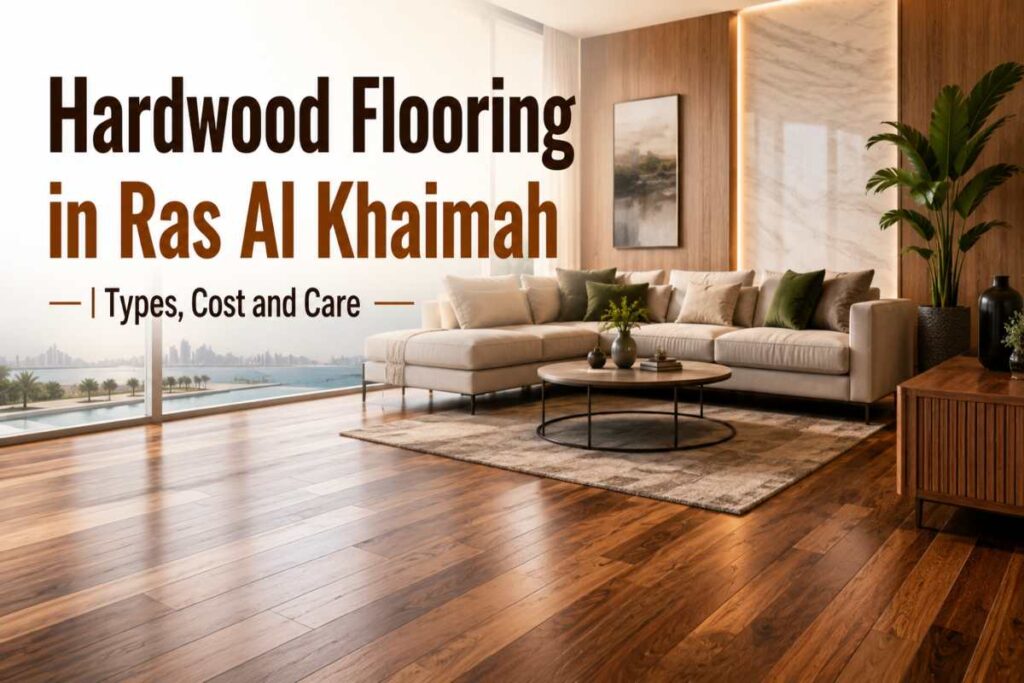
Hardwood flooring in Ras Al Khaimah works best when you choose species and finishes engineered to handle Gulf heat and humidity, solid hardwood needs careful climate control, while engineered hardwood offers better dimensional stability for RAK coastal villas and apartments. Both options bring warmth, durability, and resale value that tile and laminate struggle to match, which is why hardwood remains a popular upgrade across RAK growing villa communities, from Al Marjan Island to Mina Al Arab.
Engineered hardwood, in particular, is built to resist the expansion and contraction that solid wood undergoes when indoor humidity swings between AC cooled interiors and RAK outdoor heat, a factor that makes species and installation method just as important as appearance. Industry data shows engineered hardwood can be up to 20% more stable in fluctuating humidity than solid hardwood, making it the safer choice for most RAK homes.
This guide breaks down everything you need to know before installing hardwood flooring in Ras Al Khaimah: the types and species available, realistic AED pricing, installation methods suited to local conditions, common problems tied to the region climate, and how to keep floors looking new for years. If you are planning a broader renovation alongside your flooring upgrade, Home Fix home renovation services cover everything from flooring to full interior overhauls under one team.
What Is Hardwood Flooring?
Hardwood flooring is flooring made from solid wood planks or engineered wood layers, prized for its natural grain, durability, and long lifespan compared to laminate or vinyl alternatives. In Ras Al Khaimah, it is typically installed in living rooms, bedrooms, and villa interiors where homeowners want a warm, high end finish that can last decades with proper care. Unlike tile or laminate, genuine hardwood can be sanded and refinished multiple times, extending its usable life well beyond 25–30 years when installed and maintained correctly.
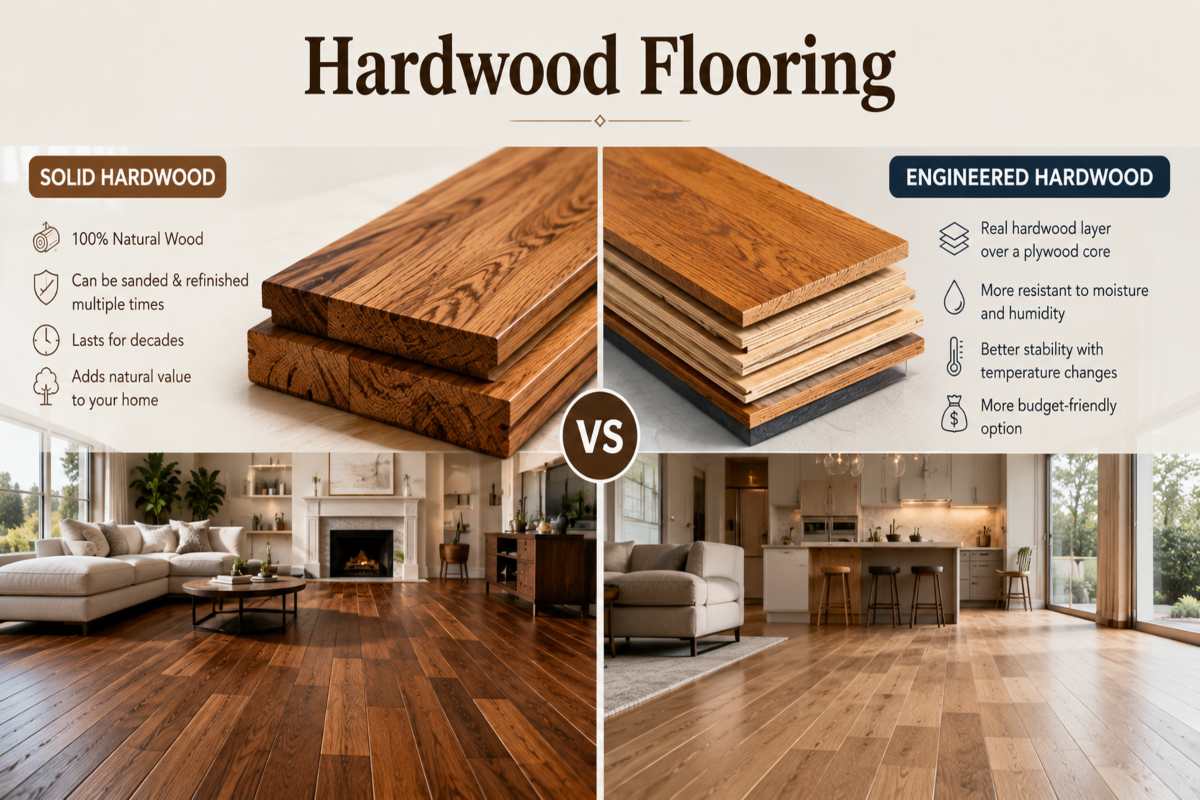
Solid Hardwood vs Engineered Hardwood
Solid hardwood is milled from a single piece of timber, usually 18–20mm thick, and can be sanded and refinished many times over its lifespan, but it reacts more to changes in humidity and temperature. Engineered hardwood, by contrast, is built from a real hardwood veneer bonded over layers of plywood or high density fiberboard, which gives it greater dimensional stability while still offering the same authentic wood surface. For most RAK homes, engineered hardwood is the more practical choice: it handles indoor climate swings better and is easier to install over concrete slabs, which are standard in UAE villas and apartments.
Is Hardwood Flooring Suitable for Ras Al Khaimah Climate?
Yes, hardwood flooring is suitable for Ras Al Khaimah homes, but the choice between solid and engineered matters more here than in temperate climates. RAK combination of high outdoor humidity and constant air conditioning indoors creates repeated cycles of expansion and contraction in wood flooring, which can lead to gapping, cupping, or warping if the wrong product or installation method is used.
Engineered hardwood, acclimatized properly before installation and paired with consistent indoor humidity levels (ideally 40–60%), performs reliably in RAK villas and apartments year round. Homeowners planning a full flooring upgrade alongside roofing or structural work can pair this with Home Fix flooring and roof services for a coordinated installation that accounts for RAK climate from the start.
Types of Hardwood Flooring by Species
Hardwood flooring comes in a range of wood species, each with distinct grain patterns, hardness levels, and price points that affect how well they perform in Ras Al Khaimah homes. Species selection matters as much as the solid versus engineered decision, since harder, denser woods resist dents, scratches, and moisture related movement better than softer varieties, an important factor given RAK climate and the wear from daily villa or apartment living.
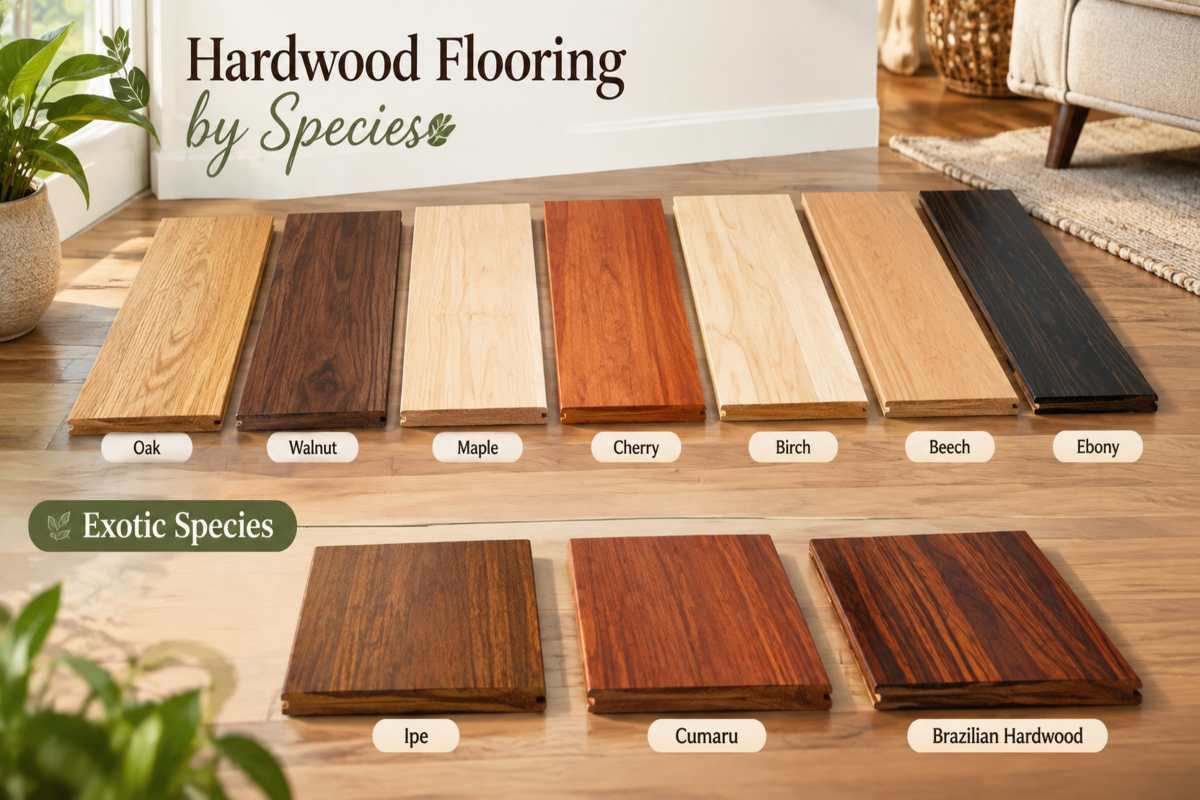
Oak, Walnut, Maple, Cherry, Birch, Beech and Ebony
Oak is the most widely used hardwood species in RAK homes thanks to its strength, prominent grain, and wide availability in both solid and engineered formats, with red oak and white oak covering most budget and design preferences. Walnut offers a richer, darker tone favored in upscale villa interiors, though it is softer than oak and shows dents more easily in high traffic areas. Maple brings a light, subtle grain that suits contemporary interiors and ranks among the hardest domestic species, making it a strong choice for busy households.
Cherry darkens naturally with sun exposure over time, which is worth factoring into rooms with large windows in RAK bright climate. Birch and beech are typically more affordable, lighter colored options suited to secondary rooms or budget conscious renovations, while ebony sits at the premium end, extremely dense and dark, used sparingly as an accent rather than throughout an entire home due to cost. Homeowners who prefer a patterned, geometric layout using these species often opt for parquet flooring, which arranges wood blocks or strips into decorative designs rather than standard plank rows.
Exotic Species Ipe, Cumaru and Brazilian Hardwood
Exotic hardwoods like Ipe, Cumaru, and Brazilian hardwood are among the densest wood flooring options available, with Ipe rated significantly harder than oak on the Janka hardness scale, making it highly resistant to scratches, dents, and moisture related warping. These species cost considerably more than domestic hardwoods and are typically reserved for feature areas, staircases, or premium villa projects where durability and a distinctive dark, rich appearance justify the investment. Their density also makes them naturally well suited to RAK humidity swings, since exotic hardwoods tend to hold their shape better than softer domestic species under repeated climate cycling.
Hardwood Floor Colors and Finishes
Hardwood floor color and finish shape how a space feels as much as the wood species itself, and getting this right matters more in Ras Al Khaimah homes where natural light and interior temperature both affect how a floor reads day to day. The finish also plays a functional role, determining how well the floor resists scuffs, moisture, and everyday wear in high traffic villa and apartment interiors.
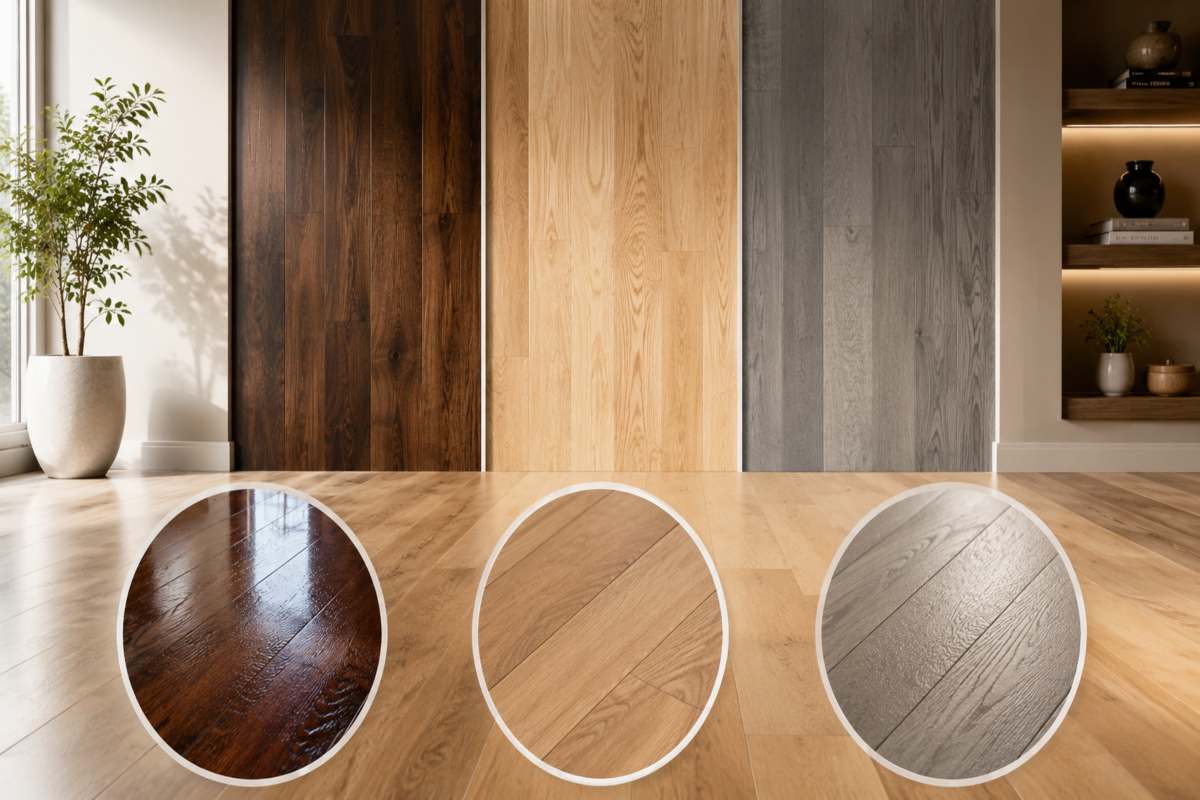
Dark vs Light vs Grey Hardwood Floors
Dark hardwood floors, walnut, dark stained oak, or ebony accents, create a rich, formal look and tend to hide scuffs well, but they show dust and pet hair more visibly and can make smaller rooms feel more enclosed. Light hardwood floors, including natural oak and maple tones, reflect more light and pair well with RAK bright, sun filled interiors, making rooms feel larger and airier while also concealing everyday dust better than darker tones.
Grey hardwood floors have become one of the most requested finishes in recent renovation projects, offering a neutral, contemporary base that works with a wide range of furniture styles and does not compete with the strong natural light typical of Gulf homes. Choosing between these often comes down to room size and lighting: darker floors suit larger, well lit spaces, while lighter and grey tones work better in smaller rooms or those with limited natural light.
Matte, Glossy and Brushed Finishes
Matte finishes have become the preferred choice in most modern RAK villas because they hide scratches, dust, and footprints far better than glossy alternatives, requiring less frequent cleaning to maintain a polished look. Glossy finishes offer a reflective, high end appearance and make rooms feel brighter, but they show every scuff, scratch, and dust particle clearly, demanding more maintenance in a household with children, pets, or heavy foot traffic.
Brushed finishes add a textured, slightly distressed surface that hides wear exceptionally well and gives floors a more natural, rustic character, a practical middle ground for busy households that still want visible wood grain. For RAK homes specifically, matte and brushed finishes generally hold up better over time than high gloss options, since they mask the fine surface scratches that accumulate faster in dusty, sandy coastal environments.
Hardwood Flooring Cost in Ras Al Khaimah
Hardwood flooring in Ras Al Khaimah typically costs between AED 80 and AED 250 per square foot installed, depending on species, whether it’s solid or engineered, and the complexity of the installation. Engineered hardwood generally costs less than solid hardwood of the same species, since it uses less premium timber per plank while still delivering the same visible wood surface.
Cost Per Square Foot in RAK Solid vs Engineered AED pricing
Engineered hardwood in RAK typically runs AED 80–150 per square foot installed for common species like oak, while solid hardwood in the same species starts higher, around AED 150–220 per square foot, due to the higher timber volume required. Exotic species such as Ipe or Brazilian hardwood can push costs to AED 200–350 per square foot given their density, import costs, and specialized handling. As a general rule, engineered hardwood delivers a cost saving of roughly 25–35% over solid hardwood in the same species without sacrificing the authentic wood appearance, a meaningful factor for RAK homeowners flooring larger villa spaces.
What Affects Installation Cost in RAK Villas and Apartments
Installation cost in RAK depends on several factors beyond the flooring material itself, the condition of the existing subfloor, whether old flooring needs removal, the total square footage, and the installation method (floating floors install faster and cheaper than glue down or nail down methods). Villas with multiple rooms or open plan living areas often secure better per square foot rates than smaller apartment installations, simply due to labor efficiency across a larger continuous space.
Acclimatization time, leaving the wood to adjust to indoor conditions before installation, also affects project timelines and, indirectly, labor costs, particularly important in RAK humidity. For homeowners tackling flooring as part of a wider space update, our guide on flat renovation ideas for small apartments covers how to budget flooring alongside other upgrades in compact UAE homes.
Hardwood Flooring Installation Process
Hardwood flooring installation involves three main methods, floating, glue down, and nail down, with the right choice depending on subfloor type, room size, and whether solid or engineered wood is being used. In Ras Al Khaimah, where most homes sit on concrete slabs rather than timber subfloors, the installation method also directly affects how well the floor handles the region humidity swings over time.
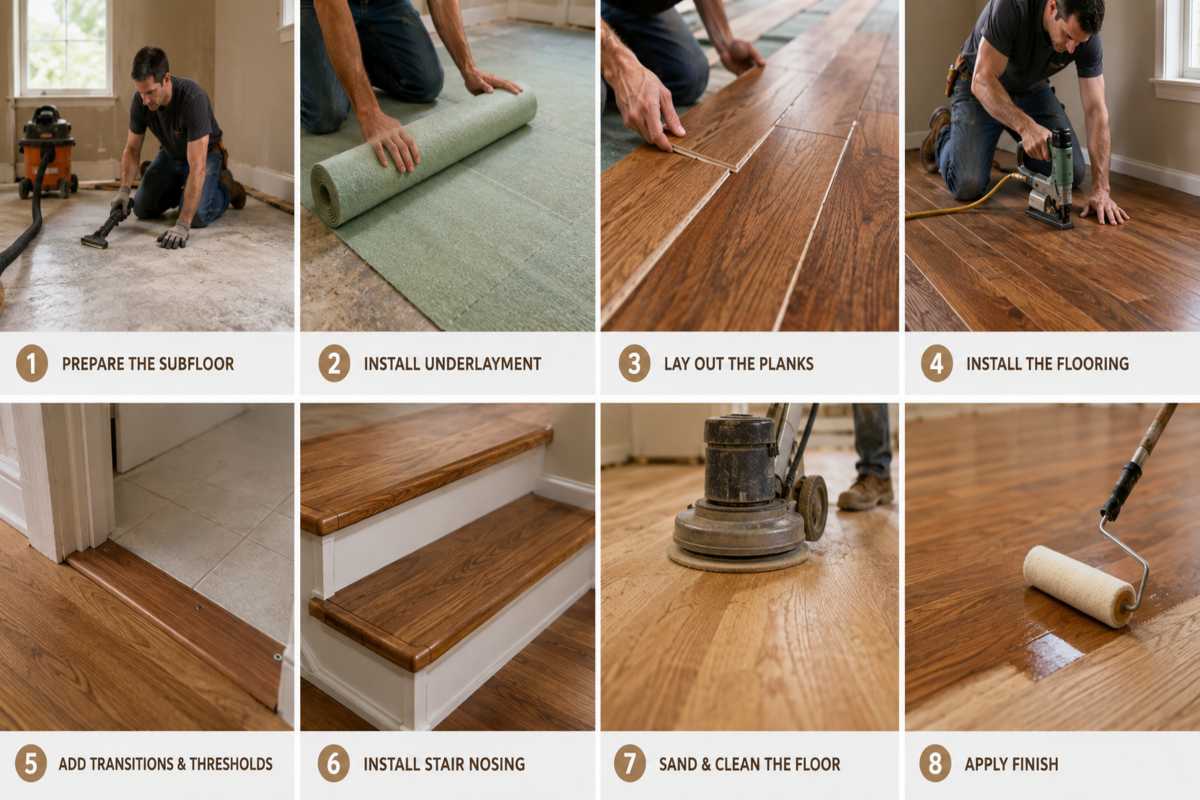
Floating vs Glue Down vs Nail Down
Floating installation involves interlocking planks that click together over an underlayment without being fixed to the subfloor, making it the fastest and most budget friendly method, well suited to engineered hardwood over RAK concrete slabs. Glue down installation bonds planks directly to the subfloor using adhesive, offering a more stable, quieter feel underfoot and better resistance to movement, though it requires a perfectly level concrete surface and longer installation time.
Nail down installation, the traditional method for solid hardwood, secures planks into a timber subfloor and is not commonly used in RAK villas since most local construction uses concrete rather than wood subflooring. For the majority of RAK homes, floating or glue down engineered hardwood delivers the most practical balance of stability, cost, and installation speed.
Herringbone and Wide Plank Patterns
Herringbone patterns arrange short wood planks in a zigzag layout that adds visual depth and a distinctly high end look, popular in formal living areas and entryways across RAK villa renovations. Wide plank flooring, by contrast, uses fewer, larger boards laid in straight rows, creating a more contemporary, seamless appearance that makes rooms feel more expansive, a favored choice in open plan living spaces. Pattern selection affects both material cost and installation labor, since herringbone requires significantly more cutting and precision than standard plank layouts, typically adding 15–20% to installation time.
Transitions, Thresholds and Stair Nosing
Transitions and thresholds manage the height and material change where hardwood flooring meets tile, marble, or carpet, preventing tripping hazards and protecting plank edges from damage at doorways. Stair nosing, a rounded edge profile fitted to the front of each step, is essential wherever hardwood extends onto staircases, since it reinforces the most heavily worn edge of each tread and gives stairs a finished, professional look. These finishing details often require custom cut millwork to match the exact plank species and color, which is where our carpentry works team steps in to handle precise transitions, thresholds, and stair nosing as part of a complete flooring installation.
Best Rooms and Use Cases for RAK Homes
Hardwood flooring performs best in living rooms, bedrooms, and dry, low moisture spaces, while high humidity areas like bathrooms call for alternative materials regardless of how well the hardwood is installed. Matching flooring choice to room function is one of the most overlooked factors in RAK renovations, and it directly affects how long the floor lasts before showing damage.
Living Rooms, Bedrooms and Kitchens
Living rooms and bedrooms are the ideal setting for hardwood flooring, offering consistent foot traffic without the moisture exposure that shortens a floor lifespan, and both spaces benefit from hardwood warmth and acoustic dampening compared to tile. Kitchens can work with hardwood flooring, but only with engineered hardwood and a durable finish, since spills, cooking heat, and higher humidity from cooking make solid hardwood more prone to warping in this specific room. Many RAK homeowners choose engineered hardwood with a matte, water resistant finish specifically for kitchens to balance aesthetics with practical durability.
Where to Avoid Solid Hardwood (Bathrooms and High Moisture Areas)
Solid hardwood should be avoided in bathrooms, laundry rooms, and any high moisture area, since standing water and constant humidity cause warping, cupping, and swelling that no finish can fully prevent long term. Even engineered hardwood, despite its greater stability, is not recommended for direct wet areas like shower zones or spaces prone to flooding.
In RAK specifically, where indoor humidity already fluctuates due to AC use, adding a consistently damp room to the mix accelerates moisture damage significantly, industry guidance generally puts wood flooring’s tolerance at under 60% relative humidity, a threshold bathrooms routinely exceed. For these spaces, tile or waterproof vinyl remains the more practical, long lasting choice.
Hardwood Flooring vs Alternatives
Hardwood flooring outperforms laminate, bamboo, and wood look tile in longevity and resale value, but each alternative has specific advantages that make it a better fit in certain RAK homes depending on budget, moisture exposure, and maintenance preferences. Understanding these trade offs helps homeowners avoid choosing a material that looks similar to hardwood but performs very differently over time.
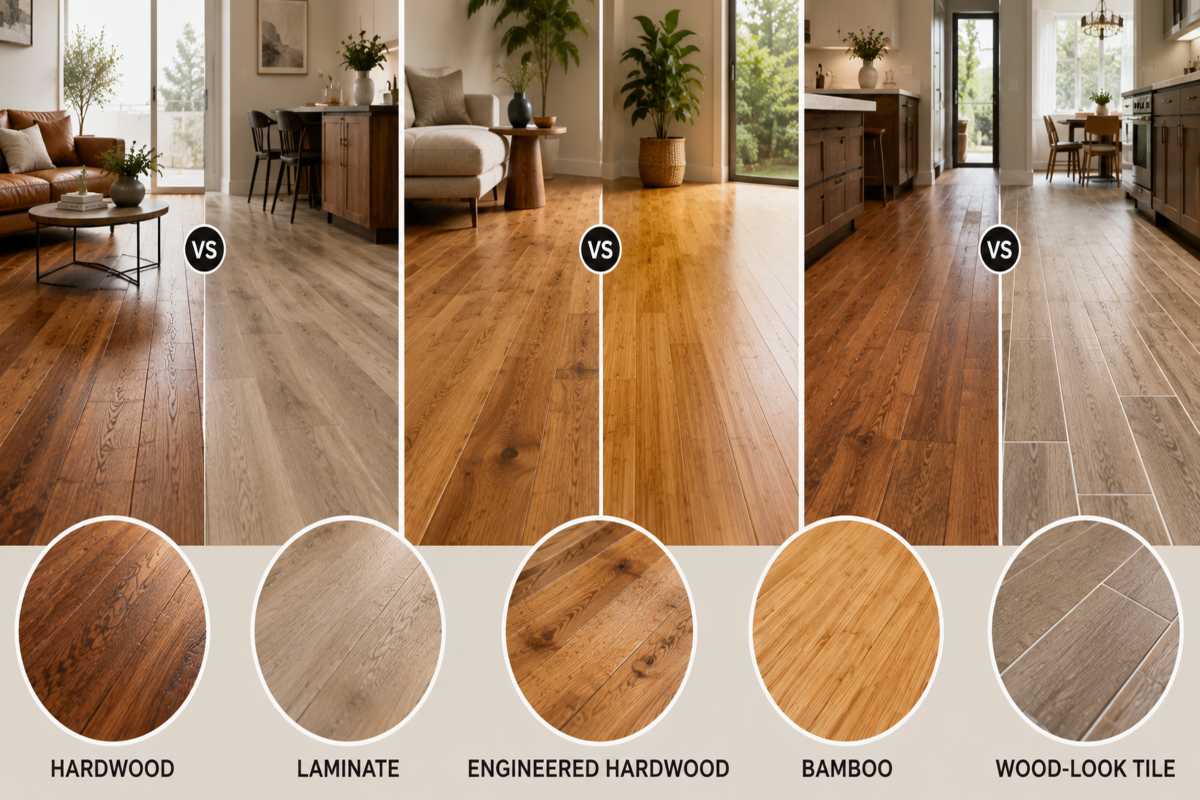
Hardwood vs Laminate
Laminate flooring uses a printed image layer over a composite core to mimic the look of wood, costing significantly less than real hardwood but lacking the ability to be sanded and refinished when it wears down. Hardwood flooring can be restored multiple times over decades, while laminate typically needs full replacement after 15–20 years of wear, making hardwood the stronger long term investment despite the higher upfront cost. Laminate does hold up better against scratches from pets and heavy furniture in some cases, which makes it a reasonable choice for rental properties or budget conscious renovations where longevity matters less than initial cost.
Hardwood vs Bamboo
Bamboo flooring is technically a grass rather than a hardwood, but it is marketed and installed similarly, offering comparable durability at a generally lower price point than traditional hardwood species. Bamboo tends to handle humidity fluctuations reasonably well, making it a viable alternative in RAK homes, though it typically does not match the range of colors, grain patterns, and premium aesthetic that species like oak or walnut provide. For homeowners prioritizing budget and sustainability over traditional wood grain appearance, bamboo is a legitimate hardwood alternative worth considering.
Hardwood vs Tile Look Wood Flooring
Wood look tile replicates hardwood appearance using ceramic or porcelain, offering complete immunity to moisture damage, warping, and humidity driven expansion, a genuine advantage in RAK climate and especially in kitchens or transitional spaces near bathrooms. However, tile lacks the warmth, acoustic softness, and resale appeal that genuine hardwood provides, and it feels noticeably harder and colder underfoot, which matters in bedrooms and living areas where comfort is a priority.
Many RAK homeowners use wood look tile in moisture prone zones while reserving real hardwood for living rooms and bedrooms, getting the best of both materials across the home. Whichever material you choose, keeping it in top condition over time is easier with a structured upkeep plan, our annual maintenance contracts services cover routine flooring checks and maintenance alongside broader home upkeep.
Common Hardwood Floor Problems in RAK Climate
Hardwood flooring in Ras Al Khaimah is most commonly affected by cupping, gaps, warping, and surface damage, nearly all of which trace back to the region humidity swings and the constant contrast between air conditioned interiors and outdoor heat. Recognizing these issues early prevents minor movement from turning into costly structural damage to the flooring.
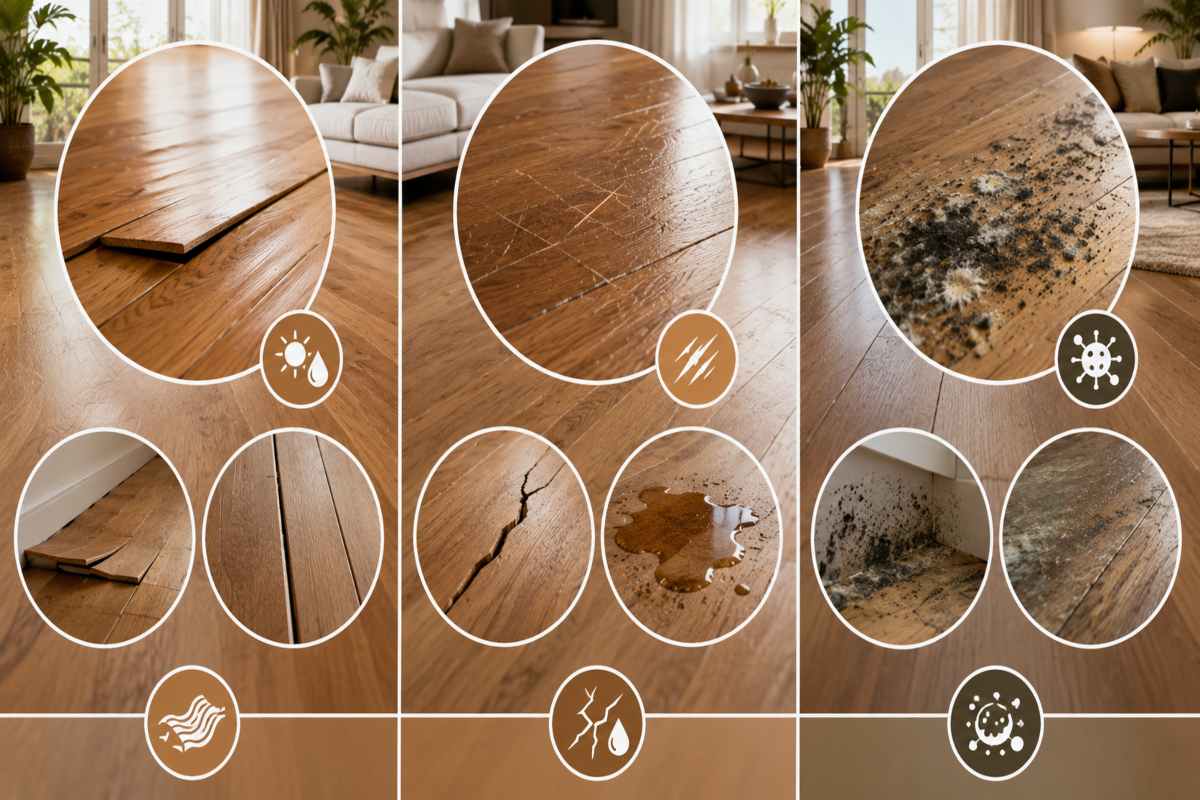
Cupping, Warping and Gaps (Heat/Humidity Related)
Cupping occurs when the edges of a plank rise higher than its center, typically caused by moisture absorption from below, often from a concrete subfloor that was not properly sealed or acclimatized before installation. Gaps between planks usually appear during RAK driest, most air conditioned months, when wood loses moisture and contracts slightly, while warping happens when planks absorb uneven moisture and lose their flat shape entirely.
These issues are largely preventable: engineered hardwood, proper acclimatization before installation, and maintaining stable indoor humidity between 40–60% address the root cause rather than just the symptom, and industry data shows humidity related wood movement drops substantially once relative humidity is kept within this range.
Cracks, Scratches and Water Damage
Cracks typically develop from rapid humidity changes or excessive dryness, appearing as fine splits along the plank grain rather than across it, while scratches accumulate from foot traffic, pet claws, and moved furniture without protective pads. Water damage, from spills, leaks, or high moisture cleaning methods, is one of the most serious threats to hardwood flooring, since standing water can penetrate seams and cause swelling that is difficult to reverse without plank replacement. Addressing spills immediately and avoiding wet mopping are simple habits that prevent the majority of water related hardwood damage in RAK homes.
Mold on Hardwood Floors
Mold on hardwood floors develops when moisture becomes trapped beneath or within the flooring for an extended period, most often due to subfloor moisture, poor ventilation, or unresolved water damage that was not dried properly. In RAK humid coastal climate, this risk is higher than in drier inland regions, making proper subfloor moisture barriers and prompt attention to any water exposure essential preventive steps. Once mold appears, it typically indicates moisture has been present long enough to require professional assessment, since surface cleaning alone rarely resolves the underlying moisture source.
Hardwood Floor Care and Maintenance
Proper hardwood floor care in Ras Al Khaimah centers on using the right cleaning tools, applying protective finishes regularly, and minimizing physical wear from furniture and pets, three habits that together determine how long a floor stays looking new. Since RAK dusty, coastal environment adds fine grit to indoor air more quickly than drier inland climates, consistent maintenance matters more here than in many other regions.
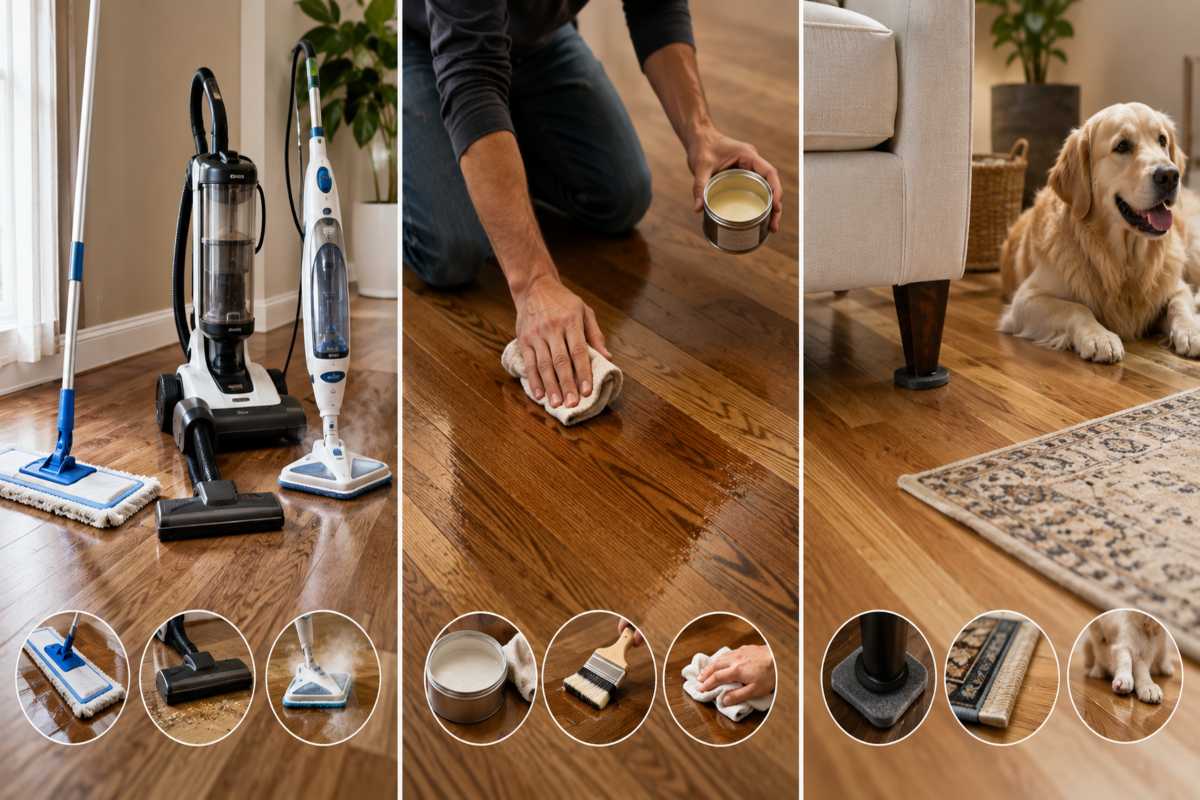
Best Cleaning Tools (Mops, Vacuums and Steam Mops)
Dry or slightly damp microfiber mops are the safest daily cleaning tool for hardwood floors, lifting dust and grit without introducing excess moisture that can seep into seams over time. Vacuums with a hardwood floor setting or soft bristle attachment work well for weekly cleaning, though vacuums designed primarily for carpet can scratch wood surfaces if used with a rotating brush head. Steam mops are best avoided on hardwood entirely, since the heat and moisture they release can damage the finish and, over repeated use, contribute to the same cupping and warping issues linked to humidity exposure in RAK climate.
Polishing, Waxing and Oiling
Polishing restores shine to a hardwood floor existing finish without removing material, making it a low maintenance option suitable every few months depending on foot traffic. Waxing creates a protective surface layer traditionally used on older, oil finished floors, though it requires periodic reapplication and is not compatible with most modern polyurethane finished hardwood.
Oiling penetrates the wood itself rather than sitting on top, offering a natural matte look that is easier to spot repair in high wear areas, but it generally needs more frequent touch ups than a polyurethane finish. Matching the right treatment to your floor existing finish type prevents compatibility issues that can dull or damage the surface.
Protecting Floors from Furniture and Pets
Felt pads under furniture legs prevent the deep scratches and dents that heavy pieces cause when dragged or shifted, and they are one of the simplest, lowest cost protective measures available. Pet nails are a leading cause of surface scratching on hardwood floors, so keeping nails trimmed and placing rugs in high traffic pet areas noticeably reduces long term wear.
Area rugs near entryways also trap dust, sand, and grit before it spreads across the floor, a particularly useful habit in RAK, where outdoor dust finds its way indoors more readily than in less arid climates. For homes and commercial properties looking to maintain hardwood flooring as part of a broader upkeep routine, our residential and commercial services team handles ongoing floor care alongside other maintenance needs.
Refinishing and Restoration Services in Ras Al Khaimah
Refinishing restores a hardwood floor surface by sanding away scratches, discoloration, and wear before applying a fresh finish, making it a far more cost effective solution than full replacement for most RAK homes. Solid hardwood can typically be refinished multiple times over its lifespan, while engineered hardwood ability to be refinished depends on the thickness of its top wood veneer layer.
When to Refinish vs Replace
Refinishing is the right choice when damage is limited to the surface, scratches, dullness, minor discoloration, or an outdated finish color, and the planks themselves remain structurally sound with no widespread warping or water damage. Replacement becomes necessary when boards show deep cupping, extensive water damage, structural rot, or when engineered hardwood veneer layer has already been sanded down to its minimum safe thickness. As a general guide, solid hardwood can usually be refinished every 7–10 years depending on foot traffic, while engineered hardwood with a thin veneer may only tolerate one or two refinishing cycles before replacement becomes the more practical option.
Sanding and Refinishing Process
The refinishing process starts with sanding down the existing finish and any surface imperfections to reveal bare wood, followed by cleaning to remove all dust before a new stain or clear finish is applied. Multiple thin coats of finish are typically applied with drying time between each layer, and the floor needs to cure fully, often 24–72 hours, before furniture is moved back and normal foot traffic resumes. In RAK’s climate, timing refinishing work during periods of stable indoor humidity helps the new finish cure evenly and reduces the risk of early cracking or peeling.
Paint and Stain Removal
Paint or old stain removal from hardwood floors requires careful sanding or chemical stripping to lift the unwanted layer without gouging the wood underneath, a process that demands more precision than standard refinishing. Attempting to remove paint or stain with abrasive scraping alone often damages the wood surface, making professional sanding equipment and technique the safer route for preserving the plank integrity. Once the old layer is fully removed, the floor follows the same refinishing process, sanding, cleaning, and reapplying a finish, to restore a uniform, like new appearance.
Choosing the Right Hardwood Flooring for Your RAK Home
Choosing the right hardwood flooring for a Ras Al Khaimah home comes down to matching wood type, finish, and installation method to your budget, the room’s function, and RAK’s specific climate demands. Getting this decision right upfront prevents the costly cycle of premature refinishing, warping repairs, or full replacement down the line.
Budget, Room Type and Climate Checklist
Start with budget, engineered hardwood typically costs 25–35% less than solid hardwood in the same species while offering better humidity resistance, making it the practical default for most RAK homes rather than a compromise. Next, match the material to room type, living rooms and bedrooms suit both solid and engineered hardwood, kitchens call for engineered hardwood with a durable, water resistant finish, and bathrooms or laundry areas should avoid hardwood entirely in favor of tile or waterproof vinyl.
Finally, factor in RAK climate directly: prioritize engineered over solid hardwood for better dimensional stability, choose matte or brushed finishes over high gloss to hide dust and fine scratches, and ensure proper acclimatization before installation along with stable indoor humidity between 40–60% after the floor is laid. Homeowners who work through budget, room function, and climate fit in that order typically end up with a floor that performs well for 15–20 years or more before requiring major restoration work.
Neighbourhood Coverage
Home Fix provides hardwood flooring installation, refinishing, and maintenance across Ras Al Khaimah key residential communities, including Al Marjan Island, Mina Al Arab, Bab Al Bahr, Al Hamra, and Al Riffa. Each of these areas has its own mix of villa and apartment layouts, which affects everything from subfloor preparation to the most practical installation method for a given home.
Al Marjan Island beachfront villas and apartments sit close to the coast, where higher ambient humidity makes engineered hardwood with proper acclimatization especially important for long term stability. Mina Al Arab waterfront community features a similar mix of villas and townhouses, where floating or glue down engineered hardwood installations over concrete slabs remain the most practical fit.
Bab Al Bahr canal front homes and Al Hamra established villa and apartment developments both see strong demand for wide plank and herringbone hardwood layouts in living and dining areas. Al Riffa, one of RAK larger residential zones, spans a broad range of property types, from standalone villas to compact apartments, each requiring tailored flooring solutions based on room size and layout.
Conclusion
Hardwood flooring in Ras Al Khaimah rewards homeowners who match the right species, finish, and installation method to the region climate, engineered hardwood with matte or brushed finishes, installed with proper acclimatization, consistently outperforms solid hardwood in RAK’s humidity and AC driven conditions. Getting these decisions right at the outset, from budget through room specific placement, is what separates a floor that lasts 15–20 years from one that needs early repair.
Whether you are planning a full villa renovation, refinishing existing floors, or installing hardwood in a single room, working with a team that understands RAK climate specifically makes the difference between a floor that looks good on installation day and one that holds up over time. Home Fix brings that local expertise to every flooring project across Ras Al Khaimah, backed by carpentry, renovation, and maintenance services that support the floor long after installation. Contact Home Fix at +971 52 511 2254 or info@homefix uae.com to get a tailored quote for your home.
Frequently Asked Questions (FAQs)
Is hardwood flooring a good choice for Ras Al Khaimah climate?
Yes, especially engineered hardwood, which handles RAK humidity swings and AC driven temperature changes far better than solid hardwood. Proper acclimatization before installation is key to long term performance.
How much does hardwood flooring cost in Ras Al Khaimah?
Engineered hardwood typically runs AED 80–150 per square foot installed, while solid hardwood ranges from AED 150–220. Exotic species like Ipe or Brazilian hardwood can cost AED 200–350 per square foot.
Is solid or engineered hardwood better for RAK homes?
Engineered hardwood is generally the better choice, offering greater dimensional stability against humidity while costing 25–35% less than solid hardwood in the same species. It’s also easier to install over RAK standard concrete subfloors.
Can hardwood flooring be installed in RAK kitchens?
Yes, but only engineered hardwood with a durable, water resistant finish is recommended. Bathrooms and other high moisture areas should avoid hardwood entirely.
How often does hardwood flooring need refinishing in RAK?
Solid hardwood typically needs refinishing every 7–10 years depending on foot traffic and humidity exposure. Engineered hardwood can usually be refinished once or twice, depending on veneer thickness.
What causes hardwood floors to cup or warp in RAK homes?
Cupping and warping are usually caused by moisture imbalance between the subfloor and indoor air, common when humidity is not controlled between 40–60%. Proper acclimatization and engineered hardwood significantly reduce this risk.
Which areas in Ras Al Khaimah does Home Fix serve for hardwood flooring?
Home Fix installs, refinishes, and maintains hardwood flooring across Al Marjan Island, Mina Al Arab, Bab Al Bahr, Al Hamra, and Al Riffa. Each area villa or apartment layout is assessed for the best installation approach.
How do I maintain hardwood floors in RAK dusty climate?
Use dry microfiber mops and soft bristle vacuum attachments rather than steam mops, which can damage the finish. Regular dusting and felt furniture pads prevent most scratches and wear.