Parquet Flooring in Ras Al Khaimah | Cost and Installation
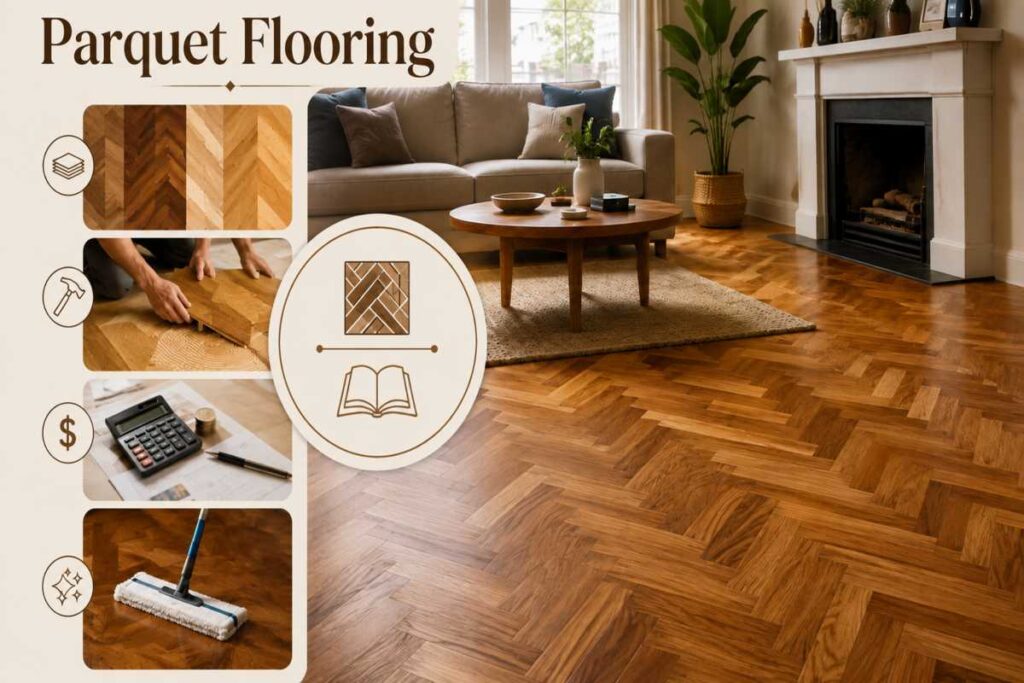
Parquet flooring is a decorative wood flooring style made from small geometric pieces of solid or engineered timber arranged in repeating patterns such as herringbone, chevron or basket weave, prized for adding warmth, texture and a distinctly high end look to any interior. Unlike standard plank flooring, which is laid in long uniform strips, parquet relies on the interplay of individual wood blocks to create visual depth, making it one of the most enduring choices in both classic and contemporary home design.
In Ras Al Khaimah, parquet flooring has become a popular alternative to marble and ceramic tile for homeowner who want the elegance of natural wood without sacrificing durability in a hot, humid climate, engineered parquet in particular can be manufactured with moisture resistant cores that hold up better than solid timber in coastal cities like Ras Al Khaimah. Industry estimates suggest engineered wood flooring, including parquet, can last 20 to 80 years with proper care and periodic refinishing, making it a long term investment rather than a short term style choice.
This guide covers everything you need to know before choosing parquet flooring, the different types and patterns available, wood species and finishes, realistic cost expectations in Ras Al Khaimah, the installation process and how to keep your floors looking new for decades. If you are planning a broader renovation alongside your flooring upgrade, explore Home Fix’s home renovation services for a complete look at what a full home refresh can include.
What Is Parquet Flooring?
Parquet flooring is a type of decorative wood flooring made by arranging small blocks or strips of solid or engineered timber into geometric patterns, rather than laying them as continuous planks. The individual pieces, often called “blocks” or “fingers”, are fitted together in designs like herringbone, chevron or basket weave, creating a mosaic like surface that adds texture and visual interest most other flooring types can’t replicate.
Parquet Flooring Meaning and Origins
The word “parquet” comes from the French parquetry, referring to the technique of assembling small pieces of wood into decorative patterns, a craft that dates back to 16th century European palaces where it replaced marble flooring as a lighter, warmer alternative for grand interiors. Versailles is one of the most famous early examples, with intricate wood parquetry still preserved in its historic halls today.
Over time, the technique moved from royal residences into everyday homes, evolving from hand cut solid wood blocks to the engineered and pre finished parquet tiles widely used now. In modern usage, parquet flooring refers broadly to any patterned wood floor, whether it’s traditional solid oak herringbone or a contemporary engineered version designed for easier installation and better climate resistance.
Parquet vs Standard Wood Flooring
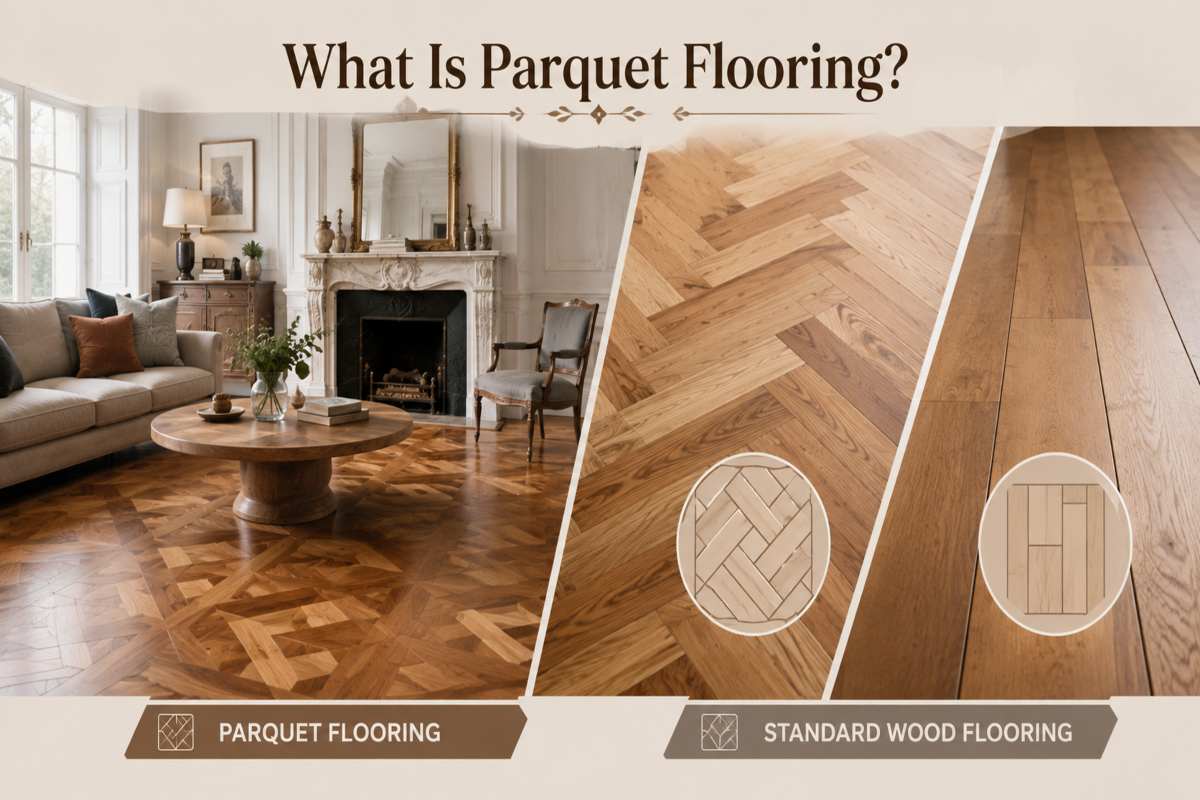
The core difference between parquet and standard wood flooring lies in how the material is cut and laid. Standard wood flooring uses long, uniform planks installed in parallel rows, while parquet uses shorter, uniformly sized pieces arranged in a repeating geometric pattern. This makes parquet more labor intensive to install, since each piece has to align precisely with the next, but it also allows for a level of visual detail and craftsmanship that plank flooring can not achieve.
Parquet also tends to distribute wear more evenly across a room because of its multidirectional grain pattern, whereas plank flooring shows wear more visibly along the length of each board. For homeowners weighing flooring options as part of a larger project, Home Fix flooring and roof services cover both parquet installation and complementary structural work under one team.
Types of Parquet Flooring
Parquet flooring comes in several distinct types, distinguished mainly by construction (solid vs. engineered) and by pattern (herringbone, chevron and others), each offering a different balance of cost, durability and visual style. Choosing the right type depends on the room, the climate and how much wear the floor needs to withstand.
Solid vs Engineered Parquet
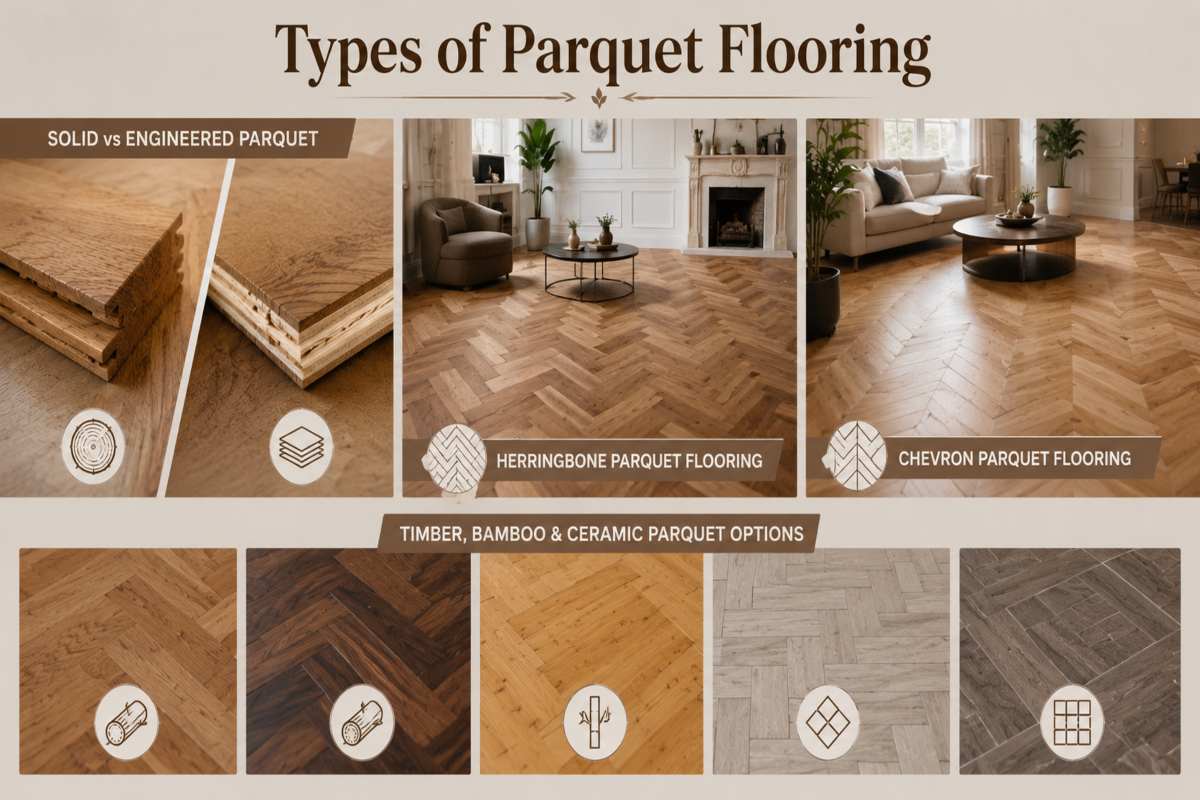
Solid parquet is made entirely from a single piece of hardwood, cut into small blocks and installed directly onto a subfloor, offering a traditional look and the ability to be sanded and refinished many times over its lifespan. Engineered parquet, by contrast, consists of a thin layer of real wood veneer bonded over layers of plywood or high density fiberboard, which makes it more dimensionally stable in fluctuating temperature and humidity, a significant advantage in the UAE, where solid wood is more prone to expansion and contraction. Engineered parquet is generally easier and faster to install, more affordable and better suited to spaces with underfloor heating, while solid parquet remains the preferred choice for homeowners prioritizing longevity and authenticity over cost.
Herringbone Parquet Flooring
Herringbone parquet is arranged in a zigzag pattern where rectangular wood pieces are laid at right angles to one another, creating a distinctive “V” shape that repeats across the floor. It is one of the most recognizable and widely used parquet patterns because it works well in both classic and modern interiors and it tends to make smaller rooms feel more spacious by drawing the eye along the diagonal lines. Herringbone is available in solid oak, engineered oak and various stained finishes, making it one of the more flexible parquet styles to match with existing interior design.
Chevron Parquet Flooring
Chevron parquet uses the same angled block concept as herringbone but with the wood pieces cut at a matching angle so they form a continuous, unbroken “V” pattern rather than a staggered zigzag. The result is a sharper, more uniform look that reads as more formal and streamlined than herringbone, though it typically costs more to install because each piece must be precision cut to align seamlessly. Chevron is a popular choice for statement living rooms and entryways where the flooring itself functions as a design feature.
Timber, Bamboo and Ceramic Parquet Options
Beyond the classic solid and engineered hardwood categories, parquet flooring is also available in timber based composites, bamboo and ceramic or porcelain tile formats designed to mimic the parquet aesthetic. Bamboo parquet flooring offers a sustainable, moisture resistant alternative to traditional hardwood at a comparable price point, making it a practical option for humid climates.
Ceramic and porcelain parquet effect tiles replicate the wood block pattern using printed or textured tile surfaces, giving homeowners the visual appeal of parquet with the water resistance and low maintenance of tile, a strong option for bathrooms, kitchens and outdoor adjacent spaces where real wood isn’t practical.
Popular Parquet Wood Materials
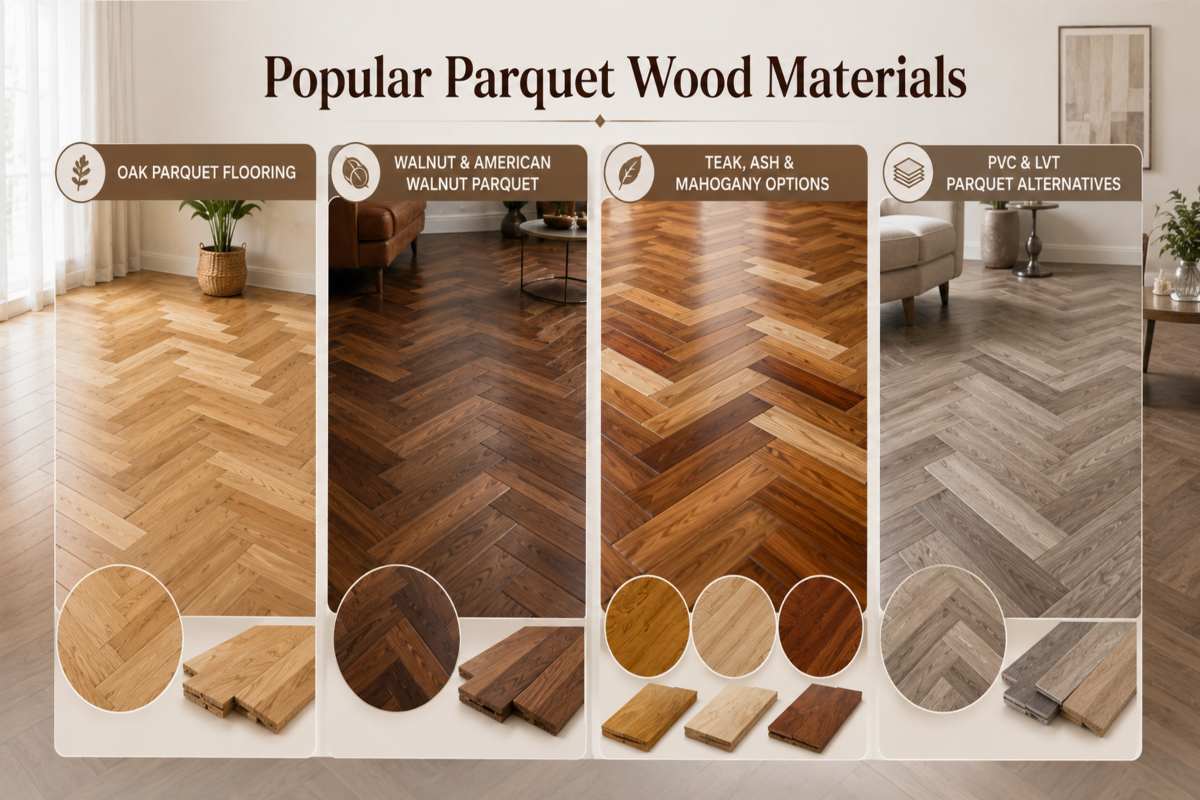
The wood species used in parquet flooring plays a major role in its color, grain pattern, hardness and price, with oak, walnut, teak, ash and mahogany ranking among the most widely used options worldwide. Each material brings a different character to a room, so choosing the right one usually comes down to the desired finish, budget and how much daily wear the floor will see.
Oak Parquet Flooring
Oak is the most popular wood used in parquet flooring, prized for its durability, attractive grain and ability to take stains well, ranging from natural light tones to deep, rich browns. With a Janka hardness rating of roughly 1,290 lbf, oak stands up well to daily foot traffic and furniture movement, which is part of why it remains the industry standard choice for both solid and engineered parquet. It also pairs easily with a wide range of interior styles, from minimalist Scandinavian to classic European, making it a safe long term investment for most homes.
Walnut and American Walnut Parquet
Walnut parquet, particularly American walnut, is valued for its deep chocolate brown tones and fine, straight grain, giving rooms a warmer, more dramatic appearance than lighter woods like oak. It’s a softer wood than oak, which means it is slightly more prone to dents and scratches, but this is often considered part of its character as it develops a rich patina over time. Walnut is typically priced at a premium compared to oak due to lower supply and higher demand, making it a popular choice for feature areas like living rooms and formal dining spaces rather than high traffic zones.
Teak, Ash and Mahogany Options
Teak parquet is prized in warmer climates for its natural oil content, which gives it strong resistance to moisture, insects and warping, a practical advantage in the UAE heat and humidity. Ash offers a lighter, more contemporary look with pronounced grain lines and good shock resistance, making it well suited to modern interiors and busier households. Mahogany, known for its reddish brown hue and fine texture, is often chosen for its formal, luxurious appearance, though it tends to be a pricier option better suited to lower traffic, statement rooms.
PVC and LVT Parquet Alternatives
For homeowners who want the parquet look without the cost or maintenance of real wood, PVC and luxury vinyl tile (LVT) parquet alternatives replicate the herringbone or chevron pattern using durable, water resistant synthetic materials. These options are typically more affordable, easier to install and better suited to bathrooms, kitchens or rental properties where long term wood maintenance isn’t practical.
While they don’t offer the same resale value or authenticity as solid or engineered wood, modern printing technology has made high quality LVT parquet visually close to the real thing. If you are combining new parquet flooring with custom woodwork, built ins or trim details, Home Fix carpentry works team can handle the finishing touches alongside your flooring installation.
Parquet Flooring Colors and Finishes
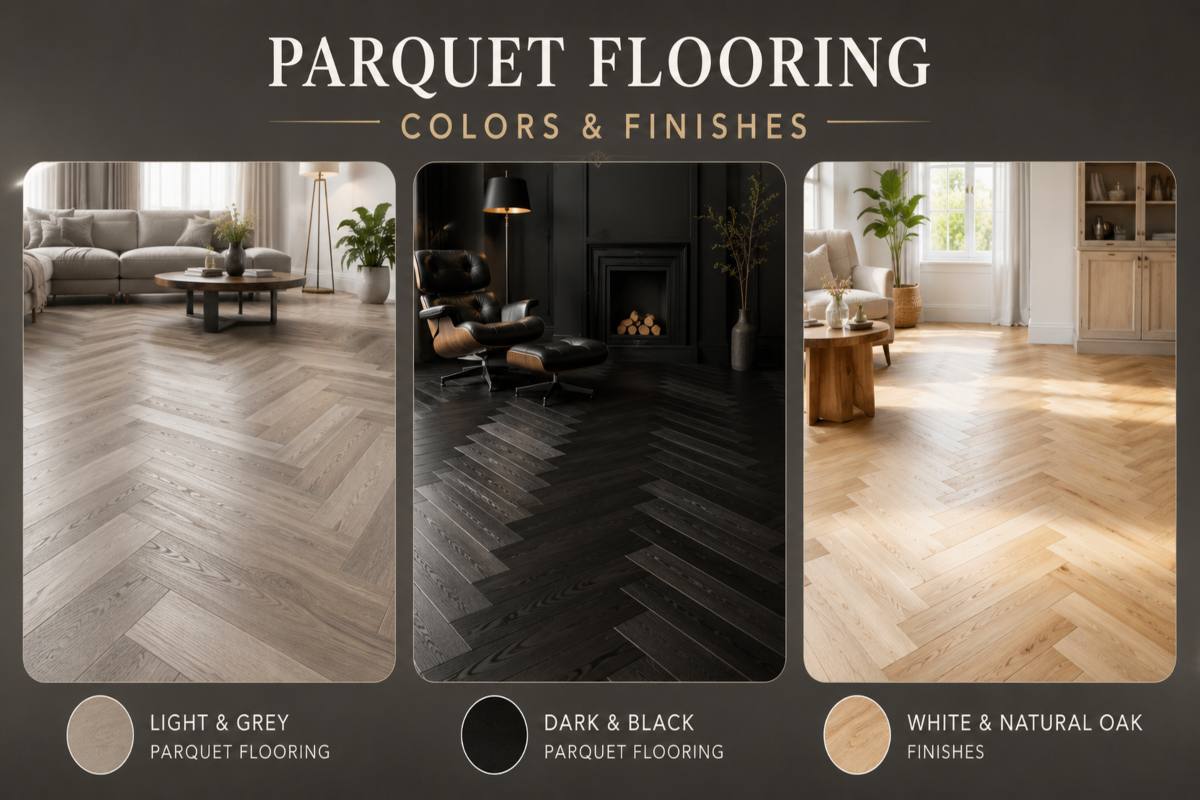
Parquet flooring color is largely determined by the wood species and the stain or finish applied on top, ranging from pale natural tones to deep espresso browns and cool greys, allowing the same herringbone or chevron pattern to suit dramatically different interior styles. The right shade depends on room size, natural light and whether the goal is to make a space feel larger and brighter or warmer and more intimate.
Light and Grey Parquet Flooring
Light and grey parquet flooring has become one of the most requested finishes in recent years, favored for its ability to make rooms feel more open, modern and airy, especially in spaces with limited natural light. Grey toned parquet is typically achieved through a bleaching or whitewashing process applied to oak or ash, which mutes the wood’s natural warmth while still preserving its grain texture. This finish pairs particularly well with contemporary, minimalist and Scandinavian inspired interiors and it tends to show dust and scuffs less noticeably than darker finishes.
Dark and Black Parquet Flooring
Dark and black parquet flooring creates a bold, formal look that works especially well in larger rooms with ample natural light, where the depth of color adds drama without making the space feel closed in. These finishes are usually produced by staining oak or walnut with darker pigments, sometimes combined with a matte or satin sealant to enhance the richness of the tone. While striking, dark parquet does show dust, pet hair and footprints more readily than lighter finishes, so it tends to suit lower traffic formal rooms better than high use family spaces.
White and Natural Oak Finishes
White and natural oak finishes preserve much of the wood’s original color and grain character, offering a timeless, versatile look that works across both traditional and modern design schemes. Natural oak finishes use a clear or lightly tinted sealant that protects the wood without significantly altering its appearance, while white washed finishes apply a diluted white pigment to lighten the tone while still allowing the grain to show through.
Both options tend to age gracefully and are easier to touch up or refinish later since the color variation is subtler than heavily stained alternatives. For homeowners comparing parquet against other flooring finishes before deciding, Home Fix guide to floor tiles design in the UAE offers a useful side by side look at tile based options.
Parquet Flooring Cost
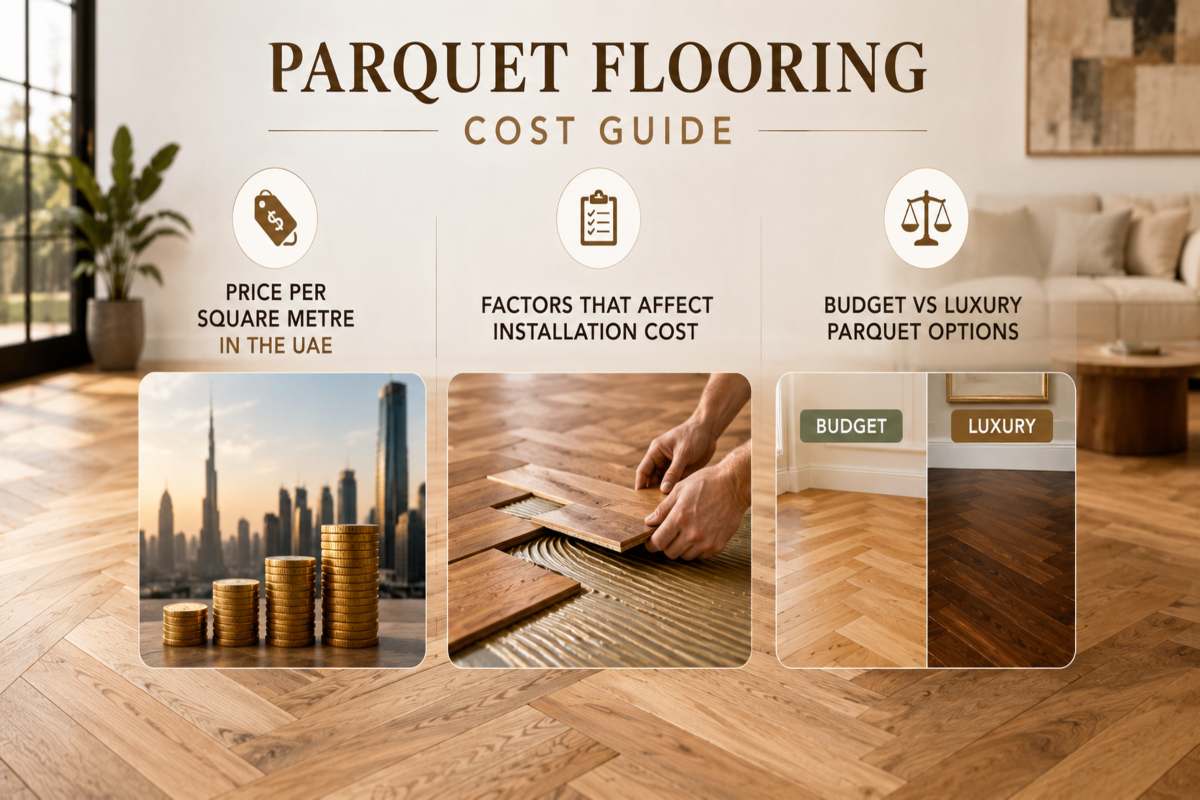
Parquet flooring costs in Ras Al Khaimah typically range from AED 80 to AED 350 per square metre depending on the wood species, construction type and pattern complexity, with engineered options sitting at the lower end and solid hardwood or intricate chevron designs pushing toward the higher end. Getting an accurate estimate for a specific project usually requires factoring in both material and labor costs, since installation complexity varies significantly by pattern.
Price Per Square Metre in Ras Al Khaimah
In the Ras Al Khaimah market, engineered oak parquet generally starts around AED 80 to AED 150 per square metre, while solid oak parquet in classic herringbone patterns can run AED 150 to AED 250 per square metre. Premium materials like walnut, chevron cut hardwood or imported European parquet can exceed AED 300 per square metre before installation costs are added. These figures typically cover the material only, so homeowners should request itemized quotes that separate material cost from labor and subfloor preparation to get a true like for like comparison between suppliers.
Factors That Affect Installation Cost
Several factors influence the final cost of a parquet flooring project beyond the price of the wood itself the complexity of the pattern (chevron and intricate herringbone cost more to install than simple grid layouts due to the precision cutting required), the condition of the existing subfloor (uneven or damaged subfloors need leveling before installation, adding to labor costs) and the total area being covered, since larger projects often benefit from better per square metre pricing. Room accessibility and the need to remove existing flooring can also add to labor costs, particularly in older properties where the original floor needs to be stripped back to a level base first.
Budget vs Luxury Parquet Options
Budget conscious homeowners can achieve the parquet look through engineered wood or LVT parquet effect flooring, which delivers the visual pattern at a fraction of the cost of solid hardwood while still offering good durability for residential use. Luxury parquet options, solid walnut, wide plank chevron or reclaimed antique wood, command a premium both in material cost and installation skill, since these projects typically require more experienced fitters to achieve a seamless finish.
The right choice often comes down to how long the homeowner plans to stay in the property, budget options offer a strong look to cost ratio for shorter term value, while investing in solid hardwood pays off over decades through refinishing rather than replacement.
Parquet Flooring Sizes and Specifications
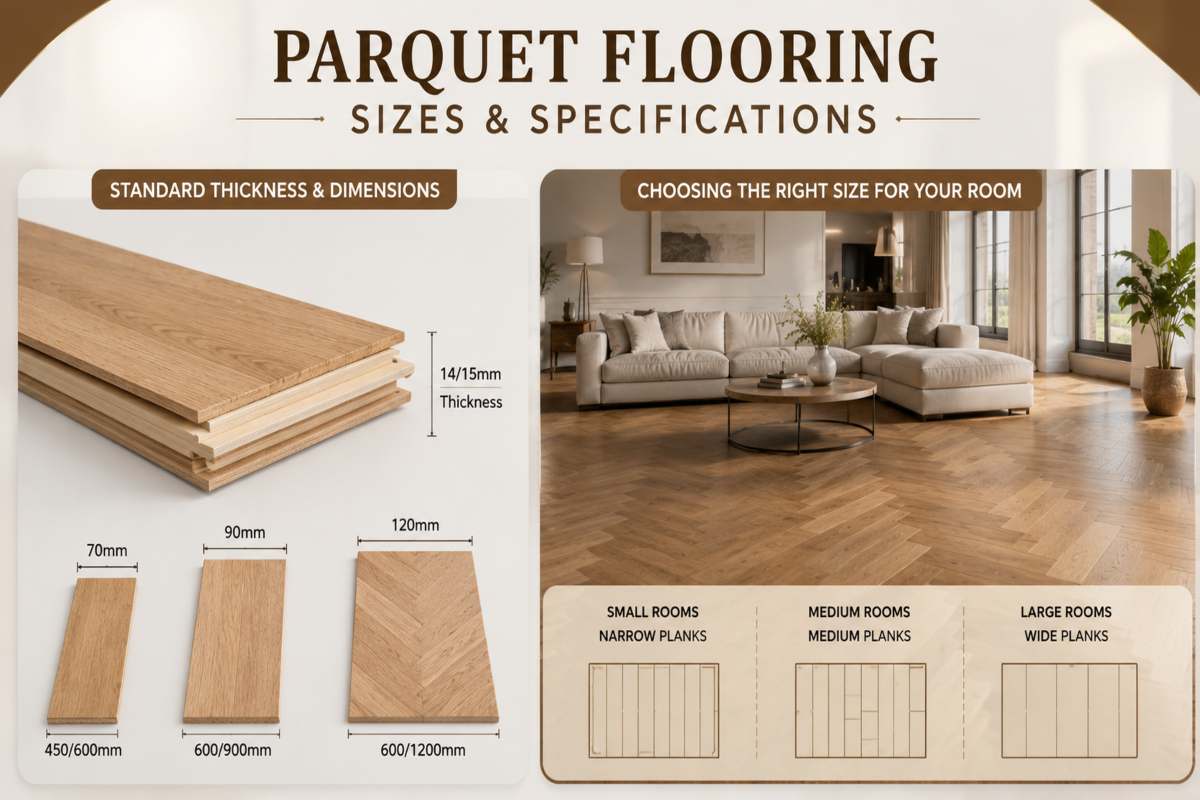
Parquet flooring is typically sold in standard block or plank sizes ranging from 8mm to 22mm in thickness, with individual pieces measured in centimeters rather than the longer plank lengths used for standard wood flooring. Knowing these specifications upfront helps homeowners estimate material quantities accurately and avoid mismatched batches partway through a project.
Standard Thickness and Dimensions
Solid parquet blocks generally range from 14mm to 22mm in thickness, offering enough material depth to allow for multiple rounds of sanding and refinishing over the floor lifespan. Engineered parquet is thinner, typically between 8mm and 15mm, since only the top veneer layer is real wood while the rest is composite backing, this also makes it lighter and easier to install over existing subfloors.
Individual block dimensions vary by pattern herringbone pieces commonly measure around 400mm x 80mm to 600mm x 120mm, while chevron pieces are cut at matching angles (usually 45 or 60 degrees) to fit together seamlessly. Manufacturers typically specify these dimensions clearly on packaging and it’s worth confirming exact sizing with a supplier before ordering, since slight variations between batches can affect pattern alignment.
Choosing the Right Size for Your Room
Smaller block sizes tend to suit smaller rooms better, since a tighter, more detailed pattern doesn’t overwhelm limited floor space the way larger blocks can. In contrast, larger rooms and open plan spaces generally look better with wider planks or larger parquet pieces, which read as more proportionate and reduce the visual “busyness” that can come from too many small repeating units across a big surface.
Thickness selection also matters practically. Thicker solid parquet is a better long term investment for high traffic areas like hallways and living rooms, since it withstands more refinishing cycles, while thinner engineered options work well in bedrooms or lower traffic spaces where refinishing is less of a priority.
How Parquet Flooring Is Installed
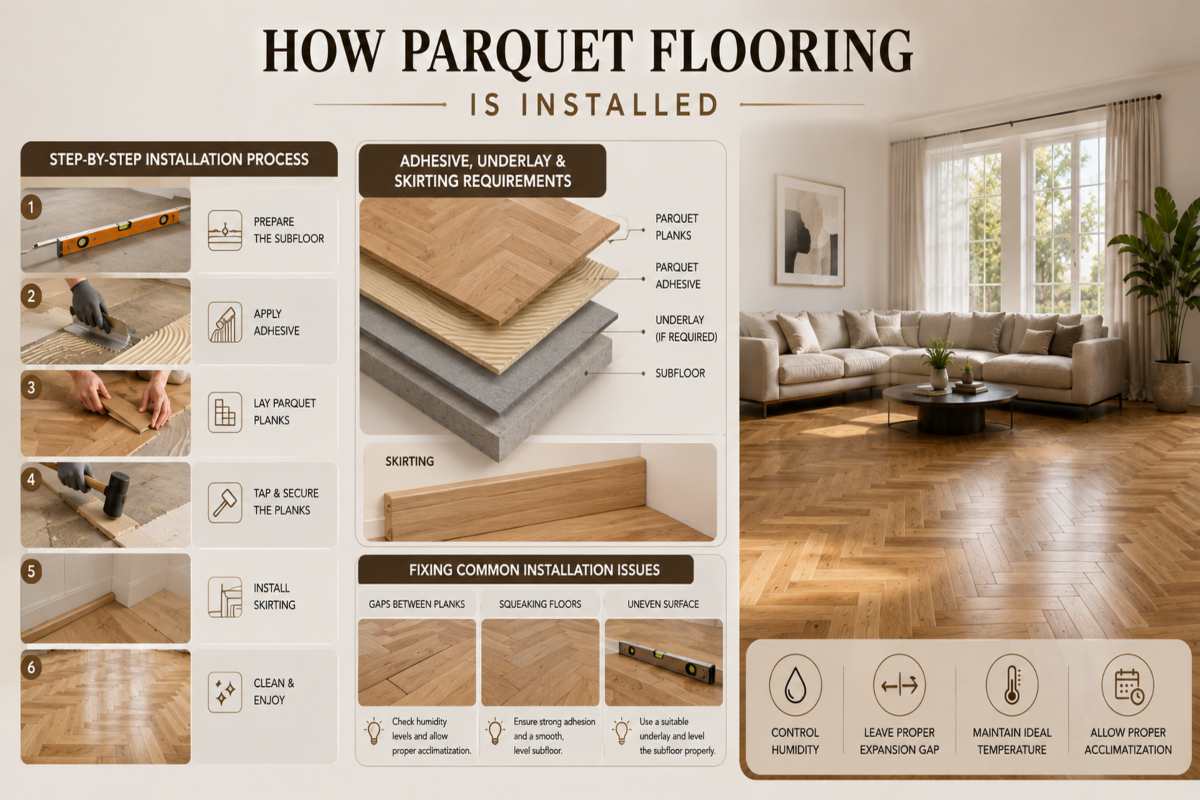
Parquet flooring installation involves preparing a level subfloor, laying individual wood pieces in a chosen pattern using adhesive or a click lock system and finishing with sanding, sealing and skirting, a process that typically takes a trained installer one to three days for an average sized room depending on pattern complexity. Because parquet relies on precise alignment between pieces, professional installation generally delivers better results than DIY attempts, especially for herringbone or chevron patterns.
Step by Step Installation Process
Installation begins with subfloor preparation, where the existing surface is cleaned, leveled and checked for moisture, since any unevenness will telegraph through the finished parquet and affect how well the pieces sit against each other. Installers then establish a center line or starting point in the room to ensure the pattern stays symmetrical as it extends toward the walls, which is particularly important for herringbone and chevron layouts.
From there, each wood piece is laid according to the chosen pattern, either glued directly to the subfloor or, in the case of engineered click lock parquet, fitted together without adhesive. Once the full floor is laid, solid parquet is typically sanded on site to create a perfectly even surface before a protective finish, oil, wax or lacquer, is applied, while pre finished engineered parquet skips this step since it arrives ready to walk on.
Adhesive, Underlay and Skirting Requirements
Solid parquet is almost always glued directly to the subfloor using a flexible wood flooring adhesive designed to accommodate slight movement from temperature and humidity changes, which is especially relevant in the UAE’s climate. Engineered parquet with a click lock system typically requires an underlay layer instead of adhesive, which helps with sound insulation and evens out minor subfloor imperfections.
Skirting boards are fitted around the room’s perimeter after the flooring is laid, both to cover the expansion gap left around the edges and to give the installation a finished, professional look. Skipping the expansion gap is one of the most common installation mistakes, since parquet, like all wood flooring, needs room to expand and contract without buckling.
Fixing Common Installation Issues
The most frequent parquet flooring issues stem from inadequate subfloor preparation, insufficient expansion gaps or moisture exposure during or after installation, all of which can lead to lifting, gapping or warping over time. Lifting or loose pieces are usually addressed by re gluing the affected area after identifying and correcting the underlying moisture or adhesive issue, rather than simply reattaching the piece.
Gapping between blocks, often caused by seasonal humidity changes, can sometimes be minimized with a humidifier in drier months, though persistent gapping may indicate the floor wasn’t given adequate expansion space during installation. For larger issues affecting multiple areas of a floor, it’s generally more cost effective to have a professional assess the subfloor and moisture conditions before attempting repairs, since fixing symptoms without addressing the root cause tends to lead to repeat problems. Homeowners managing flooring installation as part of a wider renovation can also explore Home Fix’s residential and commercial services for end to end project support.
Best Rooms and Applications for Parquet Flooring
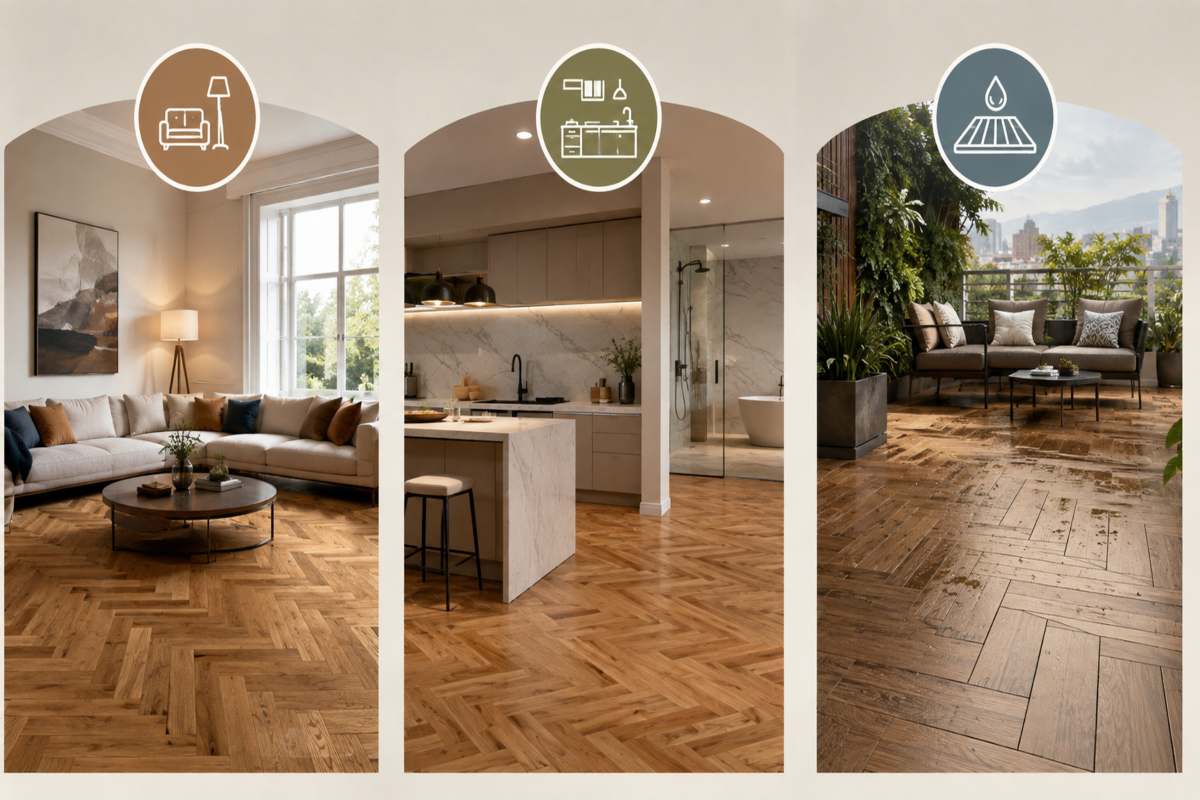
Parquet flooring works best in living rooms, bedrooms and formal entertaining spaces where its warmth and pattern detail can be fully appreciated, while moisture prone areas like kitchens and bathrooms require more careful material selection to avoid damage. Matching the right parquet type to each room’s conditions is the difference between a floor that lasts decades and one that needs early repair.
Living Rooms and Bedrooms
Living rooms and bedrooms are the classic setting for parquet flooring, since both spaces benefit from the warmth, comfort and visual character that wood brings compared to tile or marble. In living rooms, herringbone or chevron patterns in oak or walnut create a natural focal point that pairs well with area rugs and furniture, while bedrooms often favor lighter or more understated finishes to support a calmer, restful atmosphere. These are also the lowest risk rooms for solid hardwood parquet, since they see less moisture exposure and foot traffic than kitchens, hallways or entryways, allowing the wood to age well with minimal maintenance.
Kitchens and Bathrooms
Kitchens and bathrooms present the biggest challenge for parquet flooring because of regular exposure to water, spills and humidity, all of which can damage solid wood over time if not properly sealed and maintained. Engineered parquet with a strong protective finish can work in kitchens when installed with careful attention to sealing and expansion gaps, but bathrooms are generally better suited to ceramic or porcelain tiles designed to mimic the parquet pattern rather than real wood. This tile based approach delivers the visual appeal of parquet with the water resistance these rooms genuinely require, avoiding the warping and lifting that real wood risks in consistently humid conditions.
Outdoor and Waterproof Parquet Options
Outdoor and semi outdoor spaces call for waterproof parquet alternatives rather than traditional solid wood, since direct sun and weather exposure will cause even well sealed hardwood to degrade over time. PVC and composite parquet style decking products replicate the herringbone or chevron look while standing up to UV exposure, moisture and temperature swings, a particularly relevant consideration in the UAE, where outdoor surfaces can reach significantly higher temperatures than indoor flooring. These waterproof options are increasingly popular for covered terraces, balconies and poolside areas where homeowners want the parquet aesthetic without the maintenance burden real wood would carry in an exposed setting.
Parquet Flooring Care and Maintenance
Parquet flooring stays in good condition with regular light cleaning, periodic polishing or sanding to restore the surface and a properly maintained protective seal that shields the wood from moisture and wear. Consistent, low effort maintenance is what allows a well installed parquet floor to last decades rather than needing early replacement.
How to Clean Parquet Floors
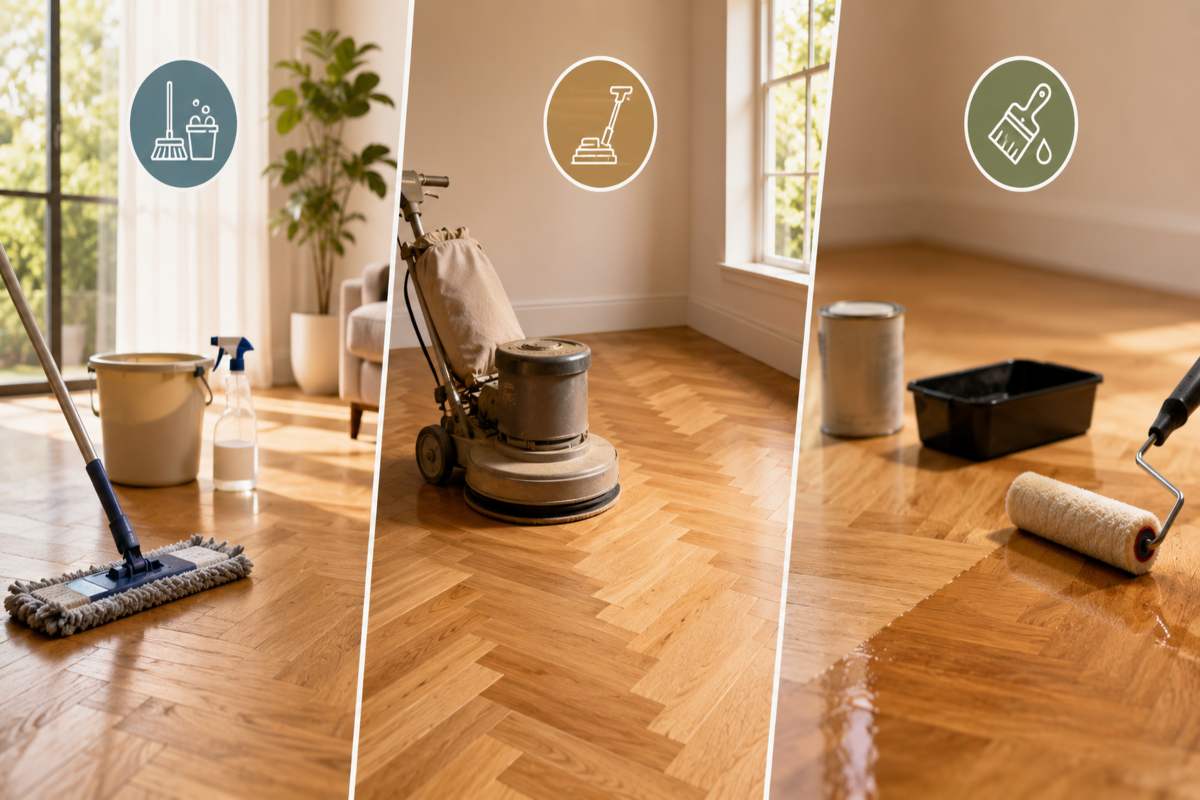
Routine cleaning for parquet floors involves sweeping or vacuuming regularly to remove grit and dust that can scratch the surface underfoot, followed by occasional damp mopping using a well wrung cloth or mop rather than a soaked one, since standing water is one of the fastest ways to damage wood flooring. Harsh chemical cleaners, steam mops and excessive water should be avoided, as they can strip protective finishes or seep between boards and cause swelling. Using a cleaning product specifically formulated for sealed wood floors, applied sparingly, is generally the safest approach for maintaining both the finish and the wood underneath.
Polishing and Sanding Parquet Floors
Polishing parquet floors periodically helps maintain shine and adds a light layer of surface protection and is typically recommended every few months depending on foot traffic, using a polish compatible with the floor’s existing finish. Sanding is a more intensive process reserved for restoring floors that have become visibly worn, scratched or dull over years of use, removing the top layer of the wood to reveal a fresh surface underneath. Solid parquet can typically be sanded and refinished multiple times over its lifespan, often cited as up to 8 to 10 times for quality hardwood, which is one of the key advantages it holds over engineered parquet, whose thinner veneer layer limits it to just one or two sandings before the base layer is exposed.
Sealing, Varnishing and Waxing
The protective finish applied to parquet flooring, whether oil, varnish, lacquer or wax, plays the biggest role in determining how well the floor resists moisture, scuffs and daily wear. Varnish and lacquer create a hard, durable surface layer that’s easy to clean and holds up well in higher traffic areas, while oil and wax finishes penetrate the wood itself, offering a more natural look and easier spot repair but requiring more frequent reapplication.
Re sealing is generally recommended every one to three years depending on finish type and foot traffic, since a worn seal leaves the wood exposed to moisture and staining well before the damage becomes visually obvious. For homeowners planning to refresh parquet flooring as part of a larger interior update, Home Fix apartment renovation services can coordinate flooring care alongside broader design and finishing work.
Parquet Flooring Restoration and Repair
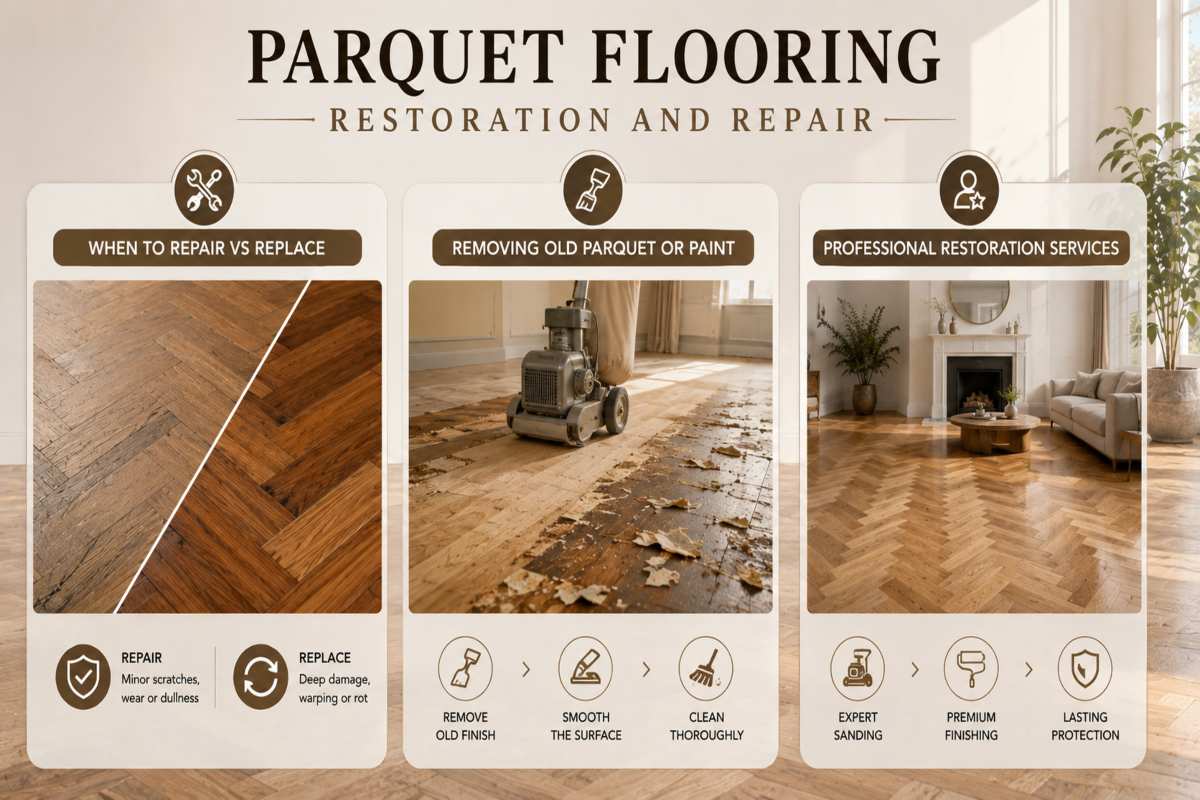
Parquet flooring restoration typically involves sanding down the worn surface, repairing or replacing damaged blocks and reapplying a protective finish to bring an aged floor back to its original condition and it’s almost always more cost effective than full replacement when the underlying wood is still structurally sound. Knowing when a floor can be restored versus when it genuinely needs replacing saves homeowners from unnecessary expense.
When to Repair vs Replace
A parquet floor is generally a good candidate for repair or restoration if the damage is limited to surface level wear, scratches, dullness, minor gapping or a handful of loose or cracked pieces, since sanding and refinishing can resolve most of these issues without touching the subfloor. Replacement becomes the more sensible option when there is widespread water damage, structural warping across large sections of the floor or when solid parquet has already been sanded down close to its wear layer and can’t safely be refinished again. Engineered parquet with visible damage to the veneer layer is also more likely to need replacement than repair, since its thinner top layer offers limited room for sanding compared to solid hardwood.
Removing Old Parquet or Paint
Removing old parquet flooring involves carefully prying up individual blocks, which can be more labor intensive than removing standard plank flooring since older parquet is often glued firmly to the subfloor with adhesives that have hardened over decades. Heat guns or specialized adhesive removers are typically used to soften old glue and minimize damage to the subfloor underneath, particularly important if the existing subfloor will be reused for new flooring. Paint removal from parquet floors, common in older properties where floors were painted over rather than maintained, usually requires a combination of chemical stripper and light sanding, done carefully to avoid gouging the wood before the new finish is applied.
Professional Restoration Services in RAK
Professional parquet restoration in Ras Al Khaimah typically starts with an on site assessment to determine whether the floor needs a full sand and refinish or targeted repairs to specific damaged areas, since mixing approaches unnecessarily can lead to visible inconsistencies in the final finish.
Experienced restoration teams also account for the UAE climate when selecting sealants and finishes, choosing products with strong moisture and heat resistance to extend the time between future restorations. For homeowners restoring parquet flooring as part of a broader interior refresh, Home Fix house renovation ideas guide offers additional inspiration for pairing restored flooring with updated design choices throughout the home.
Parquet Flooring vs Laminate vs Marble
Parquet flooring, laminate and marble each offer a different balance of cost, durability and aesthetic appeal, with parquet sitting between laminate affordability and marble premium price point while offering a warmer, more textured look than either alternative. The right choice ultimately depends on budget, room function and how much long term maintenance a homeowner is willing to take on.
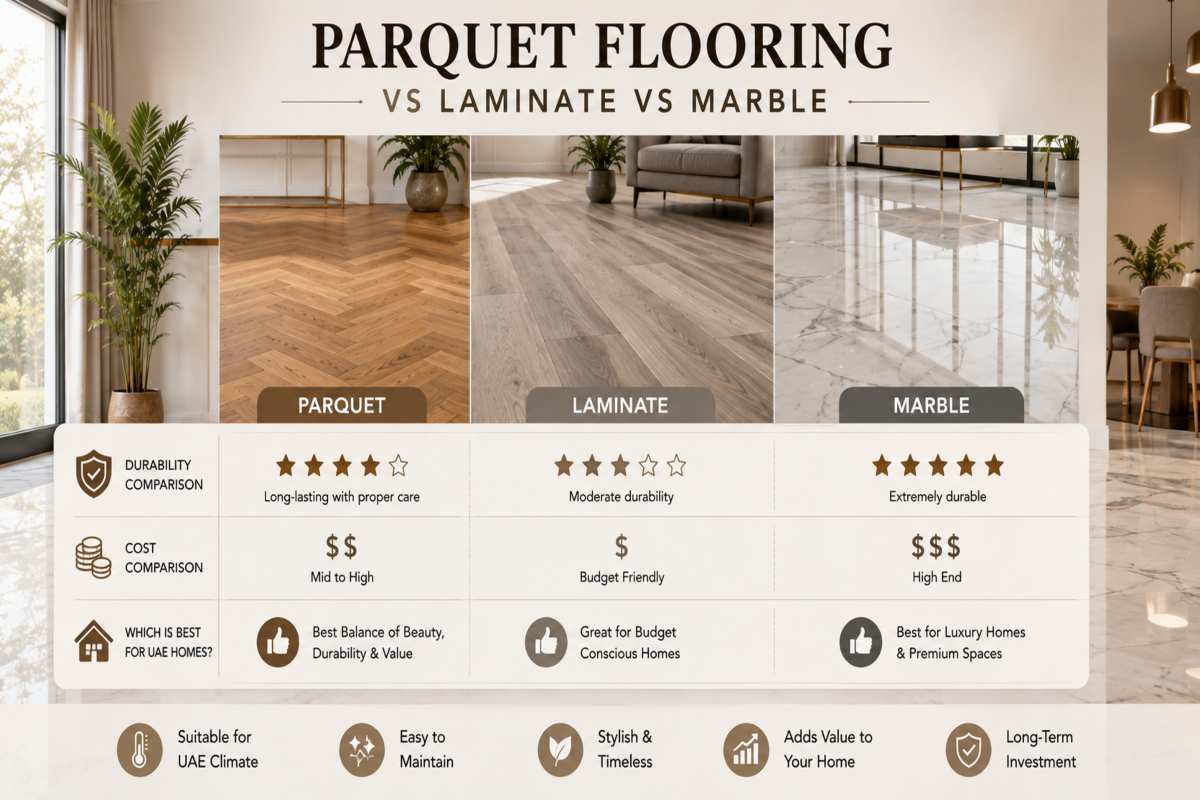
Durability Comparison
Marble is the most durable of the three in terms of resistance to scratches and heat, but it’s also prone to staining and etching from acidic substances and can crack under heavy impact, requiring careful maintenance to preserve its polished surface.
Parquet flooring, particularly solid hardwood, offers strong long term durability because it can be sanded and refinished multiple times over decades, effectively resetting the surface rather than requiring replacement. Laminate flooring is the least durable of the three over the long term, since its printed wear layer can’t be refinished or repaired once damaged, meaning scratched or water damaged sections typically require full plank replacement rather than restoration.
Cost Comparison
Laminate flooring is generally the most budget friendly option, followed by engineered parquet, with solid hardwood parquet and natural marble commanding the highest prices due to material and installation costs. Marble often carries the steepest overall price tag once quarrying, cutting and specialized installation labor are factored in, while parquet cost varies widely depending on wood species and pattern complexity, giving homeowners more flexibility to control spend within the same general category. For homeowners balancing style against budget, engineered parquet frequently offers the closest visual appeal to solid hardwood at a meaningfully lower cost than either solid parquet or marble.
Which Is Best for Ras Al Khaimah Homes?
For Ras Al Khaimah homes, the best choice depends largely on room function and climate considerations marble remains a strong option for entryways and formal living areas where its heat reflective properties and polished look suit the region’s warm climate, while parquet flooring brings warmth and comfort to bedrooms and living spaces where marble can feel cold underfoot.
Laminate works well as a practical, budget conscious option for secondary rooms or rental properties where long term investment in real wood or stone is not a priority. Many homeowners in Ras Al Khaimah end up mixing materials by room rather than choosing one flooring type throughout the property, using parquet in living spaces and bedrooms while reserving marble or tile for entryways, kitchens and bathrooms. For more ideas on blending flooring choices with overall interior style, Home Fix guide to home decoration covers how to coordinate flooring with the rest of a room’s design.
Conclusion
Parquet flooring remains one of the most versatile ways to bring warmth, texture and craftsmanship into a home, whether through classic solid oak herringbone or a moisture resistant engineered alternative built for the UAE’s climate. From choosing the right wood species and pattern to understanding cost, installation and long term maintenance, the details covered in this guide should give homeowners a solid foundation for deciding whether parquet is the right fit for their space and which type will hold up best over time.
Because a well installed parquet floor can be sanded and refinished many times over its lifespan, it’s less a one time purchase than a long term feature that evolves with proper care. Whether you’re installing new parquet, restoring an existing floor or planning it as part of a wider renovation, working with an experienced local team helps avoid the common pitfalls, poor subfloor prep, inadequate expansion gaps or mismatched finishes, that shorten a floor’s lifespan. For expert guidance and hands on support with your next flooring project in Ras Al Khaimah, Home Fix is ready to help bring your vision to life.
Frequently Asked Questions (FAQs)
What is parquet flooring made of?
Parquet flooring is made from small pieces of solid or engineered wood, commonly oak, walnut or teak, arranged into geometric patterns like herringbone or chevron. It can also be found in bamboo, PVC or ceramic tile versions designed to mimic the same visual effect.
Is parquet flooring suitable for the UAE climate?
Yes, particularly engineered parquet, which is more dimensionally stable in heat and humidity than solid wood. Species like teak also perform well due to natural moisture resistance, making them practical choices for Ras Al Khaimah homes.
How much does parquet flooring cost per square metre in Ras Al Khaimah?
Prices typically range from AED 80 to AED 350 per square metre, depending on wood species, construction type and pattern complexity. Engineered oak sits at the lower end, while solid hardwood and chevron patterns cost more.
How long does parquet flooring last?
Well maintained parquet flooring can last several decades, with solid hardwood capable of being sanded and refinished multiple times. Engineered parquet has a shorter refinishing lifespan due to its thinner veneer layer.
Can parquet flooring be installed in kitchens or bathrooms?
Solid wood parquet isn’t ideal for bathrooms due to moisture exposure, but engineered parquet with a strong seal can work in kitchens. Ceramic or porcelain parquet effect tiles are a safer choice for consistently wet areas.
How often does parquet flooring need to be resealed?
Most parquet floors need resealing every one to three years, depending on the finish type and foot traffic. A worn seal leaves the wood vulnerable to moisture damage before it becomes visibly obvious.
Is parquet flooring better than laminate?
Parquet generally outperforms laminate in durability and long term value, since it can be refinished rather than replaced when worn. Laminate is more budget friendly upfront but has a shorter overall lifespan.