
Floor Tiles Design Ras Al Khaimah | 50+ Ideas 2026
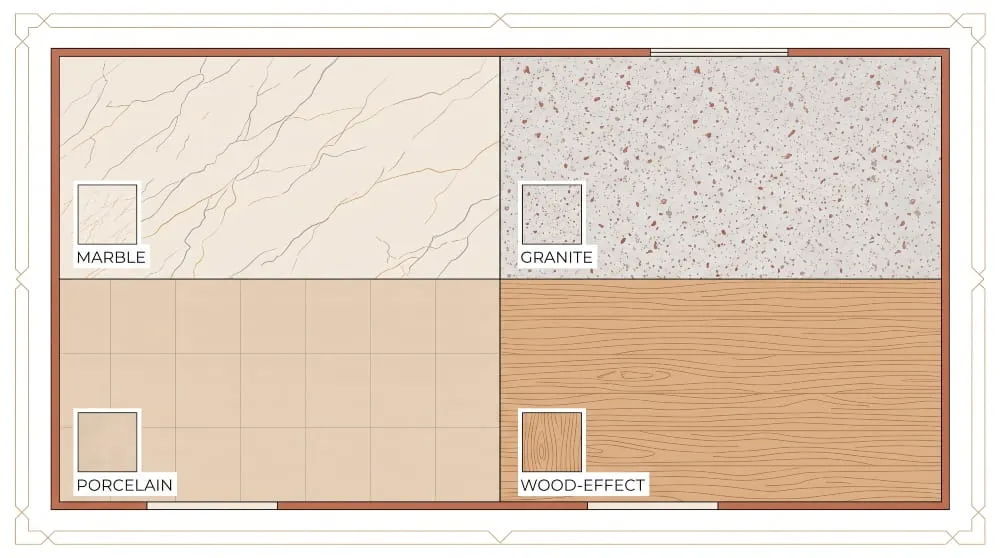
Floor tiles design in Ras Al Khaimah covers the full range of patterns, materials, and finishes homeowners use to style bedrooms, kitchens, bathrooms, and outdoor spaces, from classic marble and granite looks to modern vitrified and wood-effect tiles suited to the region’s climate. With over 4,000 Ras Al Khaimah homes served, Home Fix has seen tile choice consistently rank among the top three factors that shape how a room feels, right alongside lighting and wall colour. This guide breaks down floor tiles design by room, material, and pattern, so you can shortlist a look that fits your space before you compare installation costs.
1. Floor Tiles Design 101: What Style Fits Your Home
The right floor tiles design depends on three practical factors: the size of the room, how much natural light it gets, and how much foot traffic it handles daily, before style preference even comes into play. A large-format matte tile opens up a small room, while a busy hallway needs a finish that hides scuffs rather than a glossy one that shows every mark. Getting this order right is what separates a floor that looks good on installation day from one that still looks good five years later.
Popular Floor Tile Styles in UAE Homes
Ras Al Khaimah homeowners tend to gravitate toward a handful of proven styles: warm marble-look porcelain for living and dining areas, matte vitrified tiles for bedrooms, and textured wood-effect tiles for spaces that want a softer, less formal feel. Herringbone and geometric border patterns have grown popular in entryways and majlis areas, where a distinct design statement near the front door sets the tone for the rest of the home. Coastal properties in areas like RAK also lean toward lighter tones and matte finishes, which show less dust and salt residue than high-gloss options.
How to Choose a Design (Space, Light, Traffic)
Choosing a floor tile design starts with matching the tile to the room’s function, not just its colour scheme. Small or windowless rooms benefit from light, large-format tiles with minimal grout lines, since fewer visual breaks make the space read as bigger and brighter. High-traffic zones, kitchens, hallways, entryways, perform best with matte or textured porcelain, which resists slipping and hides scratches better than polished marble. Lower-traffic spaces like bedrooms have more flexibility, so this is where homeowners can prioritise pattern and warmth over pure durability.
2. Floor Tiles Design by Material
Material is the biggest driver of how a floor tile design performs day-to-day, since it determines everything from heat resistance to maintenance effort in the UAE’s climate. Each material below suits a different mix of budget, room type, and upkeep tolerance. Hence, the right choice usually comes down to matching the material to the space rather than picking the most popular option outright.
Marble Floor Design
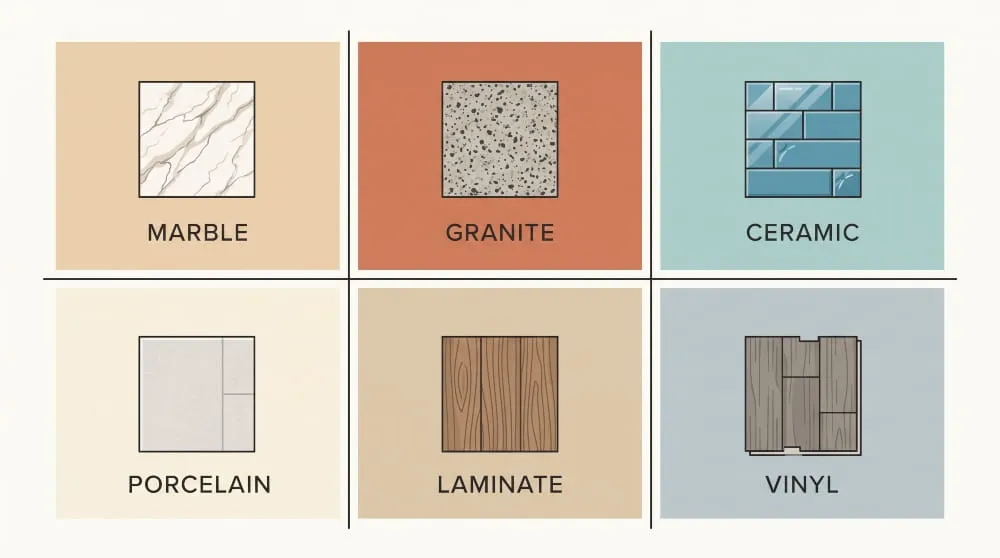
Marble floor design remains the go-to choice for formal living rooms and entryways because of its natural veining and light-reflecting surface, which makes rooms feel larger and more upscale. It stays cool underfoot even in peak summer, a genuine advantage in UAE homes, though it needs periodic sealing and is prone to etching from acidic spills. Homeowners who want the marble look without the maintenance commitment often shift to marble-effect porcelain instead, covered further down this section.
Granite Flooring Design
Granite flooring design is prized for its density and scratch resistance, making it a practical option for kitchens and high-traffic hallways where marble would show wear faster. Its speckled, uniform pattern reads as more casual than marble but holds up better against heat and heavy furniture. Granite typically costs less to maintain long-term since it doesn’t require the same frequency of resealing.
Ceramic & Porcelain Floor Tiles Design
Ceramic and porcelain floor tile designs cover the widest style range of any material, from matte stone-look finishes to glossy marble replicas, while staying significantly cheaper than natural stone. Porcelain is denser and more water-resistant than standard ceramic, which is why it’s the default choice for bathrooms and kitchens across Ras Al Khaimah homes. Both options resist fading under direct sunlight, an important factor in south-facing rooms with large windows.
Vitrified Tiles Flooring Design
Vitrified tiles flooring design uses a manufacturing process that fuses silica and clay at high temperature, producing a tile with near-zero water absorption and exceptional durability. This makes vitrified tiles a strong fit for outdoor-adjacent spaces and high-moisture rooms, since they resist staining and don’t require sealing the way natural stone does. They’re also available in large-format sizes, which suits the minimal-grout-line look many Ras Al Khaimah homeowners now prefer.
Wooden & Laminate Floor Tile Design
Wooden and laminate floor tile design brings warmth to bedrooms and living areas without the humidity risks that solid hardwood carries in the UAE’s climate. Laminate and wood-effect porcelain replicate the grain and texture of real wood while resisting moisture damage, making them a more climate-appropriate choice than genuine hardwood in most parts of the country. This category has grown in popularity for its ability to soften a space that would otherwise feel cold under stone or ceramic.
PVC & Vinyl Floor Tiles Design
PVC and vinyl floor tile designs offer the fastest, most budget-friendly way to change a room’s look, since these tiles install directly over existing flooring without demolition. They’re softer underfoot than stone or ceramic, which makes them a practical choice for playrooms, home offices, and rental properties where a full renovation isn’t justified. Vinyl’s main trade-off is a shorter lifespan than tile or stone, typically 10–15 years compared to several decades for porcelain or granite.
3. Floor Tiles Design by Room
The best floor tiles design for a room depends on how that space is used, since a tile chosen purely on looks can underperform once daily wear, moisture, or foot traffic come into play. Matching material and finish to function is what makes a design hold up rather than just photograph well.
Bedroom Floor Tiles Design
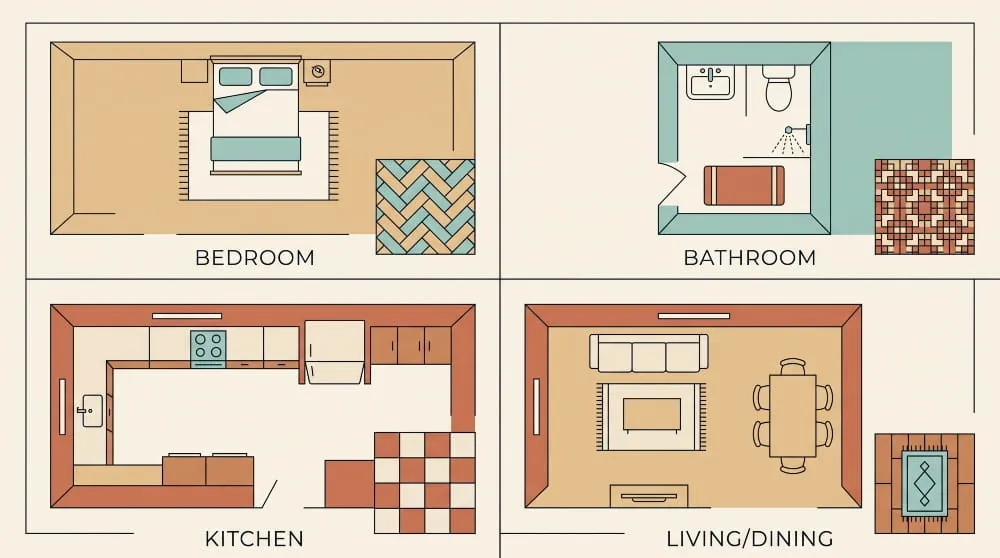
Bedroom floor tiles design has more room for flexibility than any other space in the home, since traffic is lower and comfort tends to matter more than durability. Warm wood-effect porcelain or laminate is a common choice here, softening the room and pairing well with matte finishes that feel gentler underfoot than polished stone. Lighter tones also help small bedrooms feel more open, especially in apartments with limited window space.
Bathroom Floor & Wall Tiles Design
Bathroom floor and wall tiles design prioritises water resistance above all else, which is why porcelain and vitrified tiles dominate this category over natural stone. A textured or matte finish on the floor reduces slip risk in a wet environment, while glossier tiles are typically reserved for walls where grip isn’t a concern. Coordinating the floor and wall tile, same tone, contrasting texture, is the detail that most reliably makes a small bathroom look intentional rather than mismatched.
Kitchen Floor Tiles Design
Kitchen floor tiles design needs to withstand spills, heat, and constant foot traffic without showing wear, which puts porcelain, granite, and vitrified tiles ahead of softer materials like marble or vinyl in this space. Matte and textured finishes are generally preferred over gloss, since kitchens are one of the highest-risk areas for slip accidents in the home. Darker grout lines are a practical add-on here too, as they hide staining far better than white grout over time.
Living & Dining Room Floor Tiles Design
Living and dining room floor tiles design is usually where UAE homeowners invest the most in appearance, since these are the spaces guests see first. Large-format marble or marble-effect porcelain tiles are the most common choice, chosen for their light-reflecting surface and the way minimal grout lines create a seamless, higher-end look across an open-plan layout. For homes that host frequently, a matte or honed finish is often a better long-term choice than high-gloss, since it hides footprints and light scratching far more effectively.
4. Outdoor & Exterior Floor Tiles Design
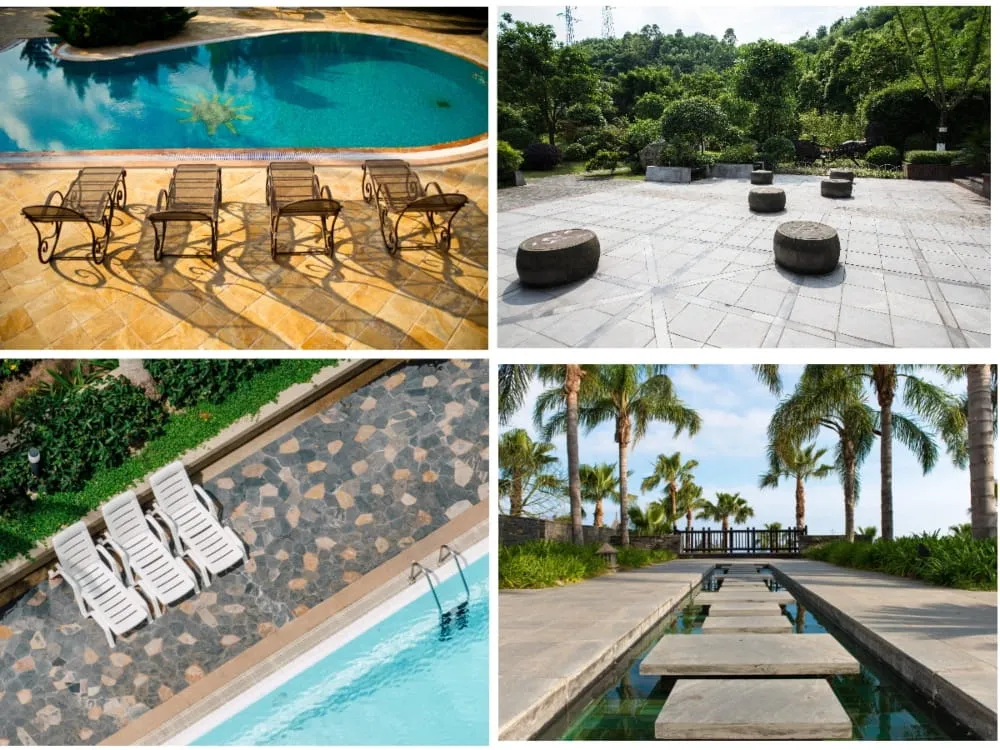
Outdoor and exterior floor tiles design in Ras Al Khaimah prioritises slip resistance and heat tolerance over pure aesthetics, since tiles here face direct sun, dust, and occasional water exposure that indoor flooring never encounters. Textured, unglazed, or matte-finish tiles are the standard choice across these spaces, as gloss finishes become dangerously slippery when wet and tend to fade faster in the heat.
Car Porch & Portico Floor Tiles Design
Car porch and portico floor tile designs call for a tile dense enough to handle vehicle weight and tyre marks without cracking or staining over time. Textured granite and vitrified tiles are the most common picks here, chosen specifically because their rough surface resists slipping even when the area is damp from washing a car or light rain. Darker, speckled patterns are also practical in this zone, since they hide oil marks and tyre residue far better than a plain light tile.
Sitout & Terrace Floor Design
Sitout and terrace floor design blends outdoor durability with a more relaxed, social aesthetic, since these areas double as informal seating and gathering spaces. Matte porcelain and stone-effect vitrified tiles hold up well against sun exposure without fading, while their textured surface stays safe to walk on barefoot even during summer. Homeowners in coastal areas like RAK often lean toward lighter sand or stone tones, which reflect heat rather than absorb it the way darker tiles do.
Garage Floor Tile Design
Garage floor tile design needs to withstand oil stains, heavy loads, and constant vehicle movement, which rules out most decorative finishes in favour of dense, industrial-grade porcelain or vitrified tiles. A textured or slightly rough finish is essential for grip, particularly since garages are prone to water tracking in from outside. Unlike showcase areas of the home, garage flooring is chosen almost entirely for function, with pattern and colour treated as a secondary consideration.
5. Floor Tiles Design Patterns & Finishes
Pattern and finish are what turn a floor tile design from a functional surface into a defining feature of the room, often making a bigger visual impact than the material choice itself. The right pattern can make a small space feel larger, direct movement through an open-plan layout, or simply give a room a distinct character that a plain tile can’t achieve on its own.
Herringbone & Border Patterns
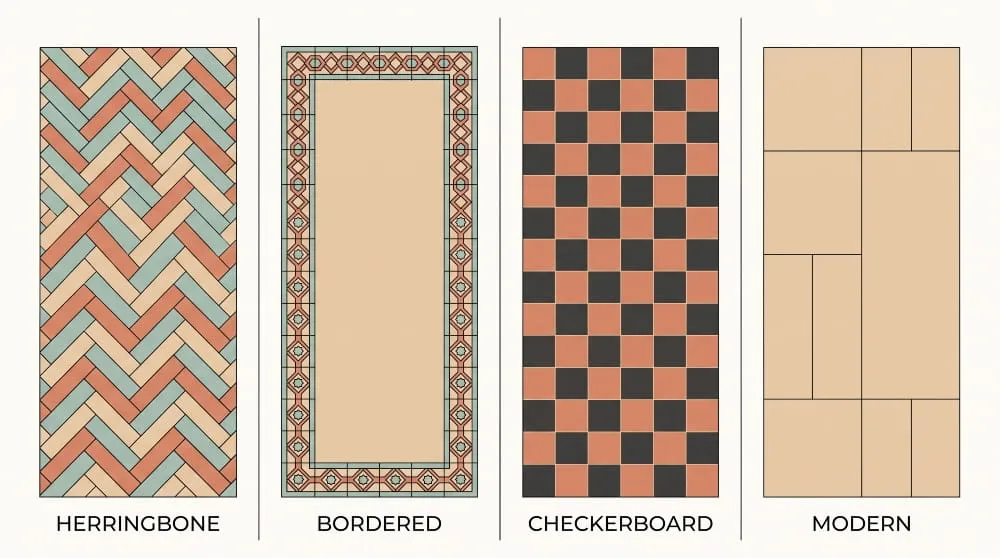
Herringbone and border patterns bring a structured, tailored look to floor tile design, most commonly used in entryways, majlis areas, and hallways where a strong first impression matters. Herringbone’s angled, interlocking layout adds visual movement to a space without needing multiple colours, making it a popular choice for homeowners who want detail without complexity. Border patterns work differently, framing a room’s perimeter with a contrasting tile to create a finished, rug-like effect over the main flooring.
Black & White / Contrast Designs
Black and white contrast designs remain one of the most requested floor tile design styles for entryways and kitchens, valued for the sharp, timeless look they create regardless of changing interior trends. Checkerboard and geometric layouts in this palette work particularly well in smaller spaces, where the contrast draws the eye and adds a sense of intentional design rather than a plain single-tone floor. This style also pairs easily with both classic and modern furniture, which is part of why it hasn’t fallen out of favour.
Modern vs Contemporary Floor Design
Modern and contemporary floor design are often used interchangeably. Still, they represent two distinct directions: modern favours clean lines, minimal grout, and a monochrome or neutral palette, while contemporary is more fluid, mixing textures, tones, and occasionally bold pattern accents within the same space. Ras Al Khaimah homeowners renovating open-plan living areas tend to lean modern for consistency across large surfaces, while contemporary suits homes that want each room to carry its own distinct identity. Neither style is more durable or practical than the other; the choice comes down entirely to the aesthetic the homeowner wants to live with.
6. Floor Tiles Design Cost in the UAE (AED Pricing Table)
Floor tiles design cost in Ras Al Khaimah typically ranges from AED 25 to AED 250+ per square foot installed, with material choice accounting for most of that spread and pattern complexity adding a smaller but noticeable premium on top. Getting a realistic budget upfront helps homeowners narrow down material options before falling in love with a design that’s out of range.
Price by Material
Material is the single biggest cost driver in any floor tile design project, with vinyl and PVC sitting at the affordable end and natural marble at the premium end.
| Material | Approx. Cost (AED per sq ft, installed) |
|---|---|
| PVC / Vinyl tiles | 25 – 45 |
| Ceramic tiles | 35 – 65 |
| Vitrified tiles | 45 – 90 |
| Porcelain tiles | 55 – 120 |
| Granite | 70 – 150 |
| Laminate / wood-effect | 60 – 130 |
| Marble | 120 – 250+ |
These figures cover material and standard installation; they exclude subfloor repair, old tile removal, or custom pattern work, which are priced separately.
Design Complexity vs Cost
Beyond material, the design itself affects the final bill; a single-tone, large-format layout is the cheapest to install because it requires minimal cutting and fewer grout lines to align. Patterns like herringbone, borders, or two-tone contrast designs typically add 15–30% to labour costs, since they demand more precise cutting, more offcuts, and slower installation. Custom or mixed-material designs, such as combining marble borders with porcelain fields, sit at the top of the complexity scale and are priced closer to a bespoke project than a standard tiling job.
7. How Home Fix Installs Your Chosen Design
Once a floor tile design is chosen, installation quality determines whether it lasts the 15–20 years a good tile job should; uneven substrates, poor grout work, and rushed cutting are the most common reasons a beautiful design starts looking tired within a couple of years. Home Fix handles the full process in-house, from subfloor preparation and levelling to precise pattern layout, ensuring designs like herringbone or contrast borders align correctly from the first row rather than drifting off-pattern by the far wall.
For homeowners choosing wood-effect or epoxy-based flooring as part of their design, our dedicated guides cover the installation process and cost in more depth: see our Wood Flooring in the UAE guide and Epoxy Flooring in the UAE guide for material-specific pricing and application steps. For homes combining tile flooring with custom skirting, borders, or wood transitions, our carpentry works guide covers the finishing details that tie a floor design together with the rest of the room.
Every installation includes a walkthrough before work begins, confirming pattern direction, grout colour, and transition points between rooms. These details are far cheaper to adjust on paper than after the tiles are set.
Frequently Asked Questions (FAQ’s)
Which floor tile design is best for small rooms?
Large-format tiles in light, neutral tones with minimal grout lines work best for small rooms, since fewer visual breaks make the floor read as one continuous surface and the space feels larger. Glossy finishes also help by reflecting more light, though matte works nearly as well if the room already gets good natural light.
What is the most durable floor tile design for Ras Al Khaimah homes?
Vitrified and porcelain tiles are the most durable options for Ras Al Khaimah homes, thanks to near-zero water absorption and strong resistance to heat and scratching. Granite is a close second, particularly in high-traffic areas like kitchens and hallways where marble would wear faster.
Can different floor tile designs be mixed within one home?
Yes, mixing designs by room is standard practice, as long as transitions between spaces are planned deliberately rather than left to chance. A common approach is keeping one material family (like porcelain) consistent across open-plan areas, then switching pattern or tone in closed-off rooms like bedrooms.
How much does floor tile design installation cost in Ras Al Khaimah?
Installed costs typically range from AED 25 to AED 250+ per square foot depending on material, with pattern complexity like herringbone or borders adding roughly 15–30% on top of standard installation labour.
Does floor tiles design affect home resale value?
Yes, updated, well-installed flooring is one of the renovation choices buyers notice first, and neutral, timeless designs like marble-effect porcelain or classic herringbone patterns tend to hold broader appeal than highly personalised colour schemes.