What Is Plumbing? The Complete Guide to Plumbing Systems, Pipes, and Terms
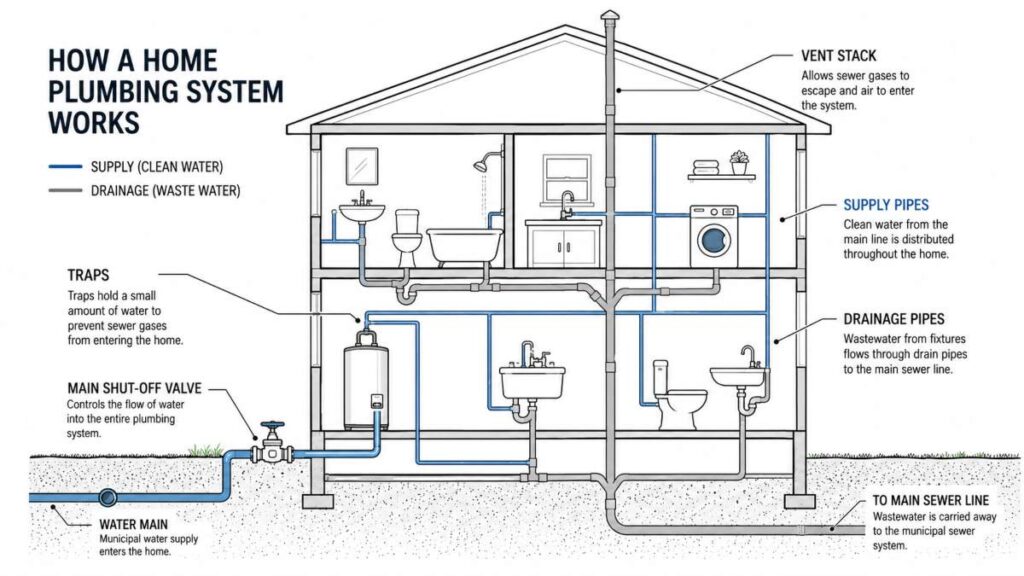
Plumbing is the system of pipes, fittings, valves, and fixtures that brings clean water into a building and carries waste water out. It exists in almost every home, office, and public building. Without it, daily life would stop. There would be no running water, no working toilets, and no safe way to remove waste.
The Word “plumbing” comes from the Latin Word plumbum, meaning lead. Ancient plumbers used lead pipes to move water through cities. Today’s plumbing systems use safer materials like copper, PVC, and PEX, but the core purpose remains the same. A plumbing system still does two main jobs: it supplies clean water, and it removes dirty water.
Every plumbing system has three working parts. The supply system brings in fresh water. The drainage system carries wastewater away. The venting system keeps air pressure balanced so water flows smoothly and sewer gases stay out of the building. These three parts work together every time someone turns on a tap, flushes a toilet, or runs a washing machine.
Plumbing systems also rely on specific components to function correctly. Pipes carry the water. Valves control the flow. Traps block sewer gases from entering the home. Fixtures, such as sinks, toilets, and showers, are where people actually use the water.
This guide explains how plumbing systems work, the materials used to build them, the different types of systems found in homes and commercial buildings, and the common terms plumbers use. By the end, you will understand the basics of how water moves through a building, from the moment it enters until the moment it leaves.
What Is Plumbing?
Plumbing is the system of pipes, valves, fittings, and fixtures used to supply water to a building and remove wastewater from it. It covers everything from the main water line entering a property to the drain that carries waste to the sewer.
A plumbing system has one simple goal. It moves water where it is needed and removes water once it has been used. This applies to homes, offices, factories, and public buildings alike.
Plumbing is not just about pipes. It includes the fixtures people use every day, such as taps, sinks, toilets, and showers. It includes the valves that control water flow and pressure. It also includes the vents that keep the system working safely and quietly.
A plumber is the trained professional who installs, repairs, and maintains these systems. Plumbing as a trade combines knowledge of materials, water pressure, drainage slopes, and safety codes.
How a Plumbing System Works
A plumbing system consists of three interconnected parts: supply, drainage, and venting. Each part has a different job, but all three must work together for water to flow correctly through a building.
Supply System
The supply system brings fresh, clean water into a building. Water enters through a main line, usually connected to a municipal water supply or a private well. From there, it travels through a network of pipes to every tap, toilet, and appliance that needs water.
Supply pipes carry water under pressure. This pressure pushes water upward through multiple floors and out through taps and shower heads. A water meter usually sits near the point where the main line enters the property, recording how much water is used.
Hot and cold water typically travel through separate supply lines. Cold water comes directly from the main line. Hot water passes through a water heater first, then travels through its own set of pipes to reach taps and appliances.
Drainage System
The drainage system removes wastewater after it has been used. Unlike the supply system, drainage relies on gravity rather than pressure. Pipes are slightly angled downward so wastewater flows naturally toward the main sewer line or septic system.
Every fixture connects to the drainage system. Sinks, toilets, showers, and washing machines all send used water into drain pipes. These pipes gradually join larger pipes as they move toward the building’s main drain line.
Drainage pipes are usually wider than supply pipes. This allows solid waste and water to pass through without blocking the system. Proper slope and pipe sizing are essential, since a drain that is too flat or too narrow can clog easily.
Venting System
The venting system allows air to enter and exit the drainage system. This keeps air pressure balanced, so water drains smoothly rather than gurgling or draining slowly.
Vent pipes also serve a safety purpose. They release sewer gases safely outside the building rather than letting them build up inside. Without proper venting, these gases could enter living spaces through drains.
Vents typically run alongside drain pipes and exit through the roof. Every major drain in a building connects to a vent stack, ensuring that air can move freely through the system at all times.
Key Components of a Plumbing System
A plumbing system is built from several core components that work together to move water safely through a building. Each part plays a specific role, and a problem with any single component can affect the entire system.
Pipes and Fittings
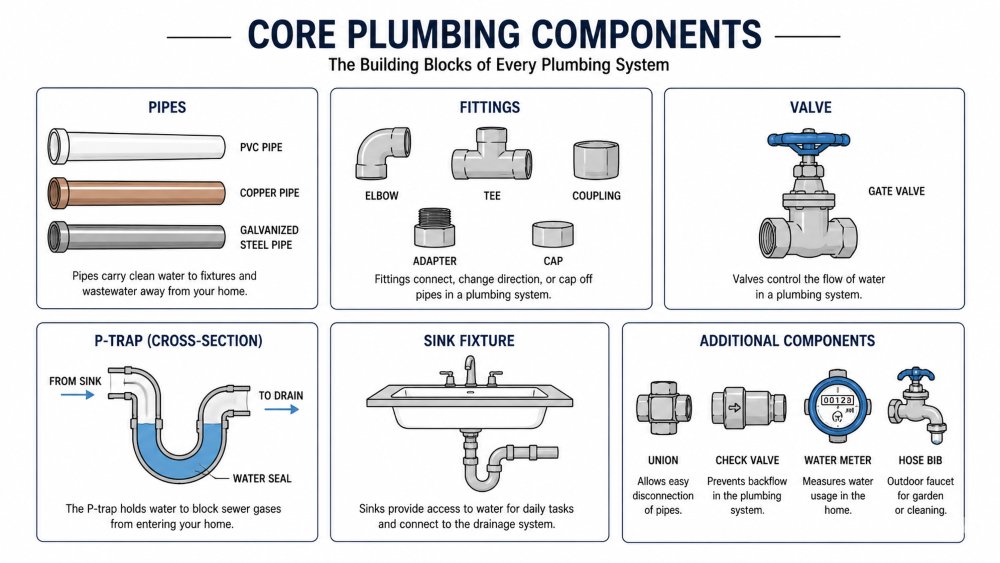
Pipes are the channels that carry water through a building. They form the backbone of both the supply and drainage systems. Pipes come in different materials, including copper, PVC, PEX, and cast iron, each suited to different uses such as hot water lines, drainage, or underground supply.
Fittings are the connector pieces that join pipes together or change their direction. Common fittings include elbows, tees, couplings, and reducers. Elbows allow pipes to turn corners. Tees split one pipe into two directions. Couplings join two straight pipe sections together.
Pipes and fittings must match in size and material to create a secure, leak-free connection. Mismatched fittings are a common cause of leaks and pressure loss.
Valves
Valves control the flow of water through a plumbing system. They allow water to be turned on, turned off, or regulated to a specific pressure or direction.
A shut-off valve completely stops water flow, often used during repairs or emergencies. A gate valve uses a sliding gate to control flow and works well for full on-off control. A check valve allows water to flow in one direction only, preventing it from flowing backward into the supply line.
Isolation valves let plumbers work on a single fixture, such as a sink or toilet, without shutting off water to the entire building. This speeds up repairs and reduces water waste during maintenance.
Traps
Traps are curved sections of pipe found beneath sinks, tubs, and other fixtures. Their main purpose is to retain a small amount of water at all times, preventing sewer gases from rising back up through the drain and into the building.
The most common trap is the P-trap, named for its P-shaped curve. Other types include S-traps and U-traps, which differ in shape but serve the same purpose.
Traps also catch small objects that fall into a drain, such as rings or other items, before they enter the main drainage system. Without a trap, every drain would allow sewer gases to escape directly into the home.
Fixtures
Fixtures are the visible parts of a plumbing system that people interact with directly. These include sinks, toilets, showers, bathtubs, and taps. Fixtures connect to both the supply system, which brings water in, and the drainage system, which carries it away.
Each fixture is designed for a specific use, but all rely on the same underlying plumbing principles. A toilet uses a supply line to refill its tank and a drain line connected to a trap to remove waste. A shower uses a mixing valve to balance hot and cold water before it reaches the showerhead.
Fixtures are often the first sign of a plumbing problem. A slow-draining sink or a running toilet usually indicates an issue in the supply or drainage system connected to that fixture.
Types of Plumbing Pipes (Materials Compared)
Plumbing pipes are made from different materials, each with its own strengths, weaknesses, and best use case. The right material depends on whether the pipe will carry hot or cold water, sit underground, or handle drainage rather than supply. Choosing the wrong material can lead to corrosion, leaks, or a shorter system lifespan.
Copper
Copper has been used in plumbing for decades because it is durable, corrosion-resistant, and able to handle both hot and cold water without breaking down. It does not release harmful chemicals into water, which makes it a safe choice for supply lines.
Copper pipes also resist bacterial growth better than plastic alternatives. This is one reason copper remains a preferred material for water supply lines in many homes, even though it costs more than plastic options.
The main drawback of copper is price. It is more expensive to buy and install than PVC or PEX. Copper can also be vulnerable to certain water conditions, such as highly acidic water, which can cause gradual corrosion over time.
PVC and PEX
PVC (polyvinyl chloride) is a rigid plastic pipe commonly used for drainage, waste, and vent lines. It is lightweight, inexpensive, and corrosion-resistant. However, PVC is not suitable for hot-water supply lines, as high temperatures can cause it to weaken or warp over time.
PEX (cross-linked polyethylene) is a flexible plastic pipe widely used for both hot and cold water supply lines. Its flexibility allows it to bend around corners without as many fittings, often making installation faster than with rigid pipe materials.
PEX is also more resistant to freezing damage than rigid pipes, since it can expand slightly without cracking. Both PVC and PEX are popular in modern plumbing because they cost less than copper and are easier to install.
Cast Iron and Galvanized Steel
Cast iron pipes were widely used in older buildings, particularly for drain lines. They are extremely durable and fire-resistant, but they are heavy and difficult to install compared to modern materials. Over time, cast iron pipes can corrode internally, gradually reducing water flow and leading to blockages.
Galvanized steel pipes were once a common choice for water supply lines. They are steel pipes coated with zinc to resist rust. However, the zinc coating breaks down over time, allowing rust to build up inside the pipe. This corrosion can reduce water pressure and affect water quality.
Both cast iron and galvanized steel are now considered outdated for new installations. They are mostly found in older buildings that have not yet been upgraded to copper, PVC, or PEX systems.
Types of Plumbing Systems
Plumbing systems are not all built the same way. They vary based on the size of the building they serve and the type of water they are designed to handle. Understanding these differences helps explain why a plumbing system in a house looks very different from one in an office tower, and why not all drainage pipes carry the same kind of water.
Residential vs. Commercial
Residential plumbing systems are designed for homes, apartments, and small living spaces. They are generally simpler, with fewer fixtures and lower water demand. A typical residential system serves one household, meaning pipes can be smaller, and water pressure requirements are lower.
Commercial plumbing systems serve larger buildings such as offices, hotels, restaurants, and shopping centers. These systems must handle much higher water usage, often from dozens or hundreds of people at once. As a result, commercial systems use larger pipes, stronger pressure systems, and more complex layouts to meet demand.
Commercial plumbing also tends to involve stricter codes and inspections, since these buildings serve more people and carry greater health and safety responsibilities. Restaurants and hotels, for example, often require specialized systems for kitchens, grease traps, and multiple bathrooms running simultaneously.
The materials and design choices can also differ. Commercial systems are more likely to use larger-diameter pipes and backup systems, since a failure affects many more people than in a single home.
Sanitary vs. Storm Drainage
Not all drainage systems carry the same type of water. Sanitary drainage systems carry wastewater from sinks, toilets, showers, and other fixtures inside a building. This water is directed to a sewer system or septic tank, where it is treated before being released back into the environment.
Storm drainage systems handle a different job entirely. They carry rainwater and runoff away from roofs, streets, and paved surfaces. This water is not treated the same way as sanitary waste, since it does not contain the same waste materials. Storm drainage typically flows directly into rivers, drainage channels, or storm sewers.
Keeping these two systems separate is important. Mixing sanitary waste with stormwater can contaminate natural water sources. Most modern plumbing codes require that sanitary and storm systems remain fully separate, with their own dedicated pipes and discharge points.
Common Plumbing Terms Explained
Plumbing has its own vocabulary, and many terms can sound confusing to anyone outside the trade. Understanding a few key terms makes it easier to follow what a plumber means, whether reading a plumbing diagram or simply trying to understand a household repair.
Trap Types (P-trap, S-trap, U-trap)
A trap is a curved section of pipe that holds a small amount of water to block sewer gases from entering a building. Different trap shapes serve the same basic purpose but are used in different situations.
The P-trap is the most common type found under sinks. It gets its name from its shape, which resembles the letter P when viewed from the side. P-traps are easy to access and clean, making them a standard choice in modern plumbing.
The S-trap has a similar function but uses a different shape, curving more sharply than a P-trap. S-traps were common in older buildings but are less favored today, since their shape makes them more prone to losing their water seal through siphoning, which can allow sewer gases to escape.
The U-trap is often used in larger drainage systems, particularly underground or in main drain lines. It shares the same gas-blocking purpose as smaller traps but is built for higher water volume.
Riser, Vent, NRV, and Other Abbreviations
Plumbing drawings and discussions often use short terms or abbreviations. Knowing what they mean helps make sense of how a system is described.
A riser refers to a vertical pipe that carries water upward through a building, often supplying multiple floors from a single main line. Risers are common in apartment buildings and multi-story commercial structures.
A vent, as covered earlier, allows air to move through the drainage system and releases sewer gases safely outside the building. Vents are essential for keeping drains flowing smoothly without gurgling or slow drainage.
NRV stands for non-return valve, also known as a check valve. This component allows water to flow in only one direction, preventing it from flowing backward into the supply line. NRVs are especially important in systems where backflow could contaminate clean water.
Other common abbreviations include CWS (cold water supply) and HWS (hot water supply), which refer to the two main types of water lines in a building. These terms appear frequently in plumbing plans and technical descriptions, helping identify which pipes carry which type of water.
Common Plumbing Problems (and Why They Happen)
Most plumbing problems develop gradually, often due to wear, blockages, or pressure that builds over time. Recognizing the common causes makes it easier to understand why a system fails and what part of it is usually responsible.
Clogged Drains
Clogged drains are among the most common plumbing problems. They occur when hair, grease, soap residue, or food particles build up in a pipe, restricting water flow. Kitchen sinks often clog from grease that hardens inside the pipe, while bathroom drains tend to clog from hair and soap buildup.
Leaking Pipes
Leaks usually occur at joints, fittings, or weak points in a pipe. Over time, pipes can corrode, especially older metal pipes like galvanized steel, leading to small cracks or pinhole leaks. High water pressure can also stress pipes and fittings, increasing the likelihood of leaks at connection points.
Running or Leaking Toilets
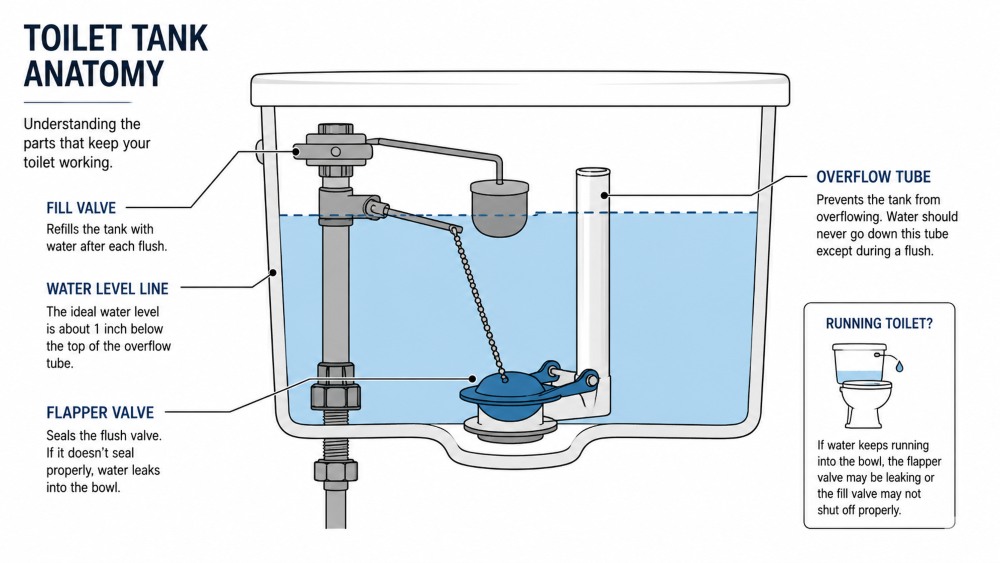
A toilet that keeps running is often caused by a worn flapper valve that fails to seal properly, allowing water to flow into the bowl continuously. This not only wastes water but can also indicate a fill valve that needs adjustment or replacement.
Low Water Pressure
Low water pressure can result from several causes, including mineral buildup in pipes, a partially closed shut-off valve, or a leak elsewhere in the system that reduces overall pressure. Older pipes are especially prone to this, as years of mineral deposits gradually narrow the inside of the pipe.
Slow Drains
Unlike a fully clogged drain, a slow drain usually points to a partial blockage forming inside the pipe. This can result from the same causes as a full clog, but is caught earlier, before the blockage becomes severe enough to completely stop water flow.
Water Heater Issues
Problems with hot water often stem from the water heater rather than the pipes. Sediment buildup inside the tank, a faulty heating element, or a failing thermostat can all result in inconsistent water temperature or a complete loss of hot water.
Sewer Gas Odors
A sewer-like smell usually means a trap has dried out or lost its water seal, allowing sewer gases to rise back through the drain. This commonly happens in rarely used fixtures, where the water in the trap evaporates over time.
Basic Plumbing Tools Every Homeowner Should Know
While most plumbing repairs are best left to a professional, having a few basic tools on hand helps homeowners handle small issues and understand what a plumber is doing during a repair.
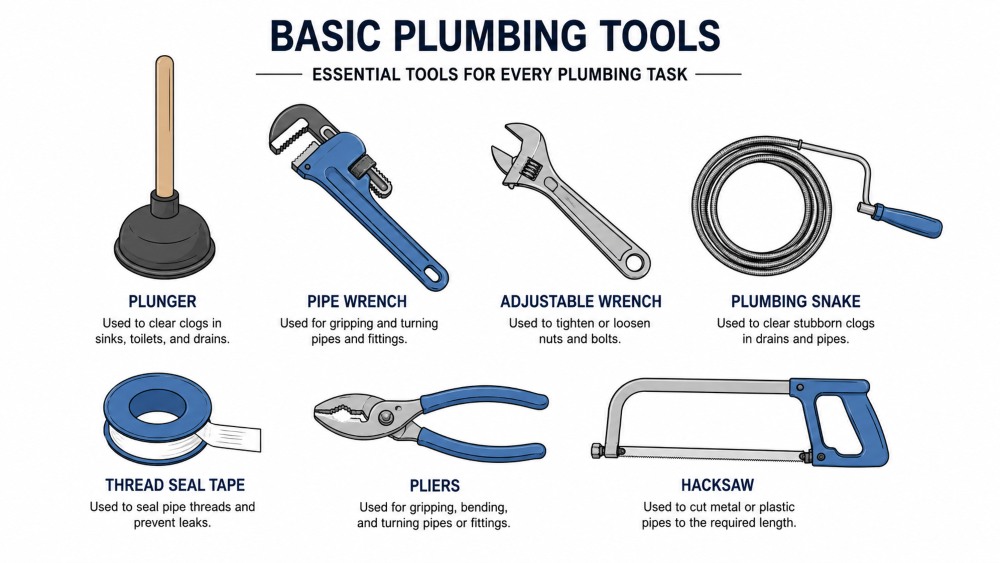
Plunger
A plunger is the most common plumbing tool found in homes. It creates suction to dislodge minor clogs in toilets, sinks, and drains. Different plunger shapes work better for different fixtures, with cup plungers suited to flat surfaces like sinks and flange plungers designed specifically for toilets.
Pipe Wrench
A pipe wrench is used to grip and turn metal pipes and fittings. Its serrated jaws tighten further under pressure, making it useful for loosening or tightening threaded pipe connections without slipping.
Adjustable Wrench
An adjustable wrench works well for fittings and nuts of varying sizes, particularly around supply lines and faucet connections. Its jaw can be adjusted to fit various bolt and nut sizes, making it a versatile tool for a range of plumbing tasks.
Plumbing Snake
A plumbing snake, also called a drain auger, is a flexible cable used to clear clogs that a plunger cannot reach. It is fed into a drain to break up or pull out blockages deeper within the pipe.
Pipe Tape (Thread Seal Tape)
Pipe tape, often called plumber’s tape or thread seal tape, is wrapped around threaded pipe connections to create a watertight seal. It helps prevent leaks at joints where two threaded pipe ends meet.
Pliers
Pliers, particularly slip-joint or locking pliers, are useful for gripping small pipes, removing nuts, or holding fittings steady while another tool is used. Their adjustable jaws make them adaptable to a wide range of pipe and fitting sizes.
Hacksaw
A hacksaw is used to cut through pipes when a section needs to be replaced or shortened. It works on a variety of materials, including PVC and metal pipes, making it useful for many basic plumbing repairs.
Bucket and Towels
Although not technical tools, a bucket and towels are essential for any plumbing repair; they catch water from disconnected pipes or leaks, preventing a mess and water damage during the repair process.
FAQs
What is plumbing?
Plumbing is the system of pipes, valves, fittings, and fixtures used to supply clean water to a building and remove wastewater from it.
What are the three main parts of a plumbing system?
A plumbing system has three main parts: the supply system, which brings in clean water; the drainage system, which removes wastewater; and the venting system, which balances air pressure and safely releases sewer gases.
What is the most common pipe material used today?
PEX and PVC are the most common materials in modern plumbing, since they cost less than copper and are easier to install. Copper is still widely used for supply lines due to its durability.
Why do pipes have traps?
Traps hold a small amount of water at all times to block sewer gases from rising back through the drain and into the building.
What is the difference between sanitary and storm drainage?
Sanitary drainage carries wastewater from sinks, toilets, and showers to a sewer or septic system. Storm drainage carries rainwater and runoff away from roofs and streets, usually discharging directly into rivers or storm sewers.
What does NRV mean in plumbing?
NRV stands for non-return valve, also called a check valve. It allows water to flow in only one direction, preventing backflow into the supply line.
Why does a toilet keep running?
A running toilet is usually caused by a worn flapper valve that fails to seal properly, allowing water to flow into the bowl continuously.
Why does low water pressure happen?
Low water pressure can be caused by mineral buildup in pipes, a partially closed shut-off valve, or a leak elsewhere in the system that reduces overall flow.
What causes a sewer gas smell in a home?
A sewer smell usually means a trap has dried out, often in a rarely used fixture, allowing sewer gases to rise back through the drain.
What is the difference between residential and commercial plumbing?
Residential plumbing serves homes and smaller spaces with lower water demand, while commercial plumbing serves larger buildings with higher usage, larger pipes, and stricter codes.