
Termite Damage Wood Repair in Ras Al Khaimah
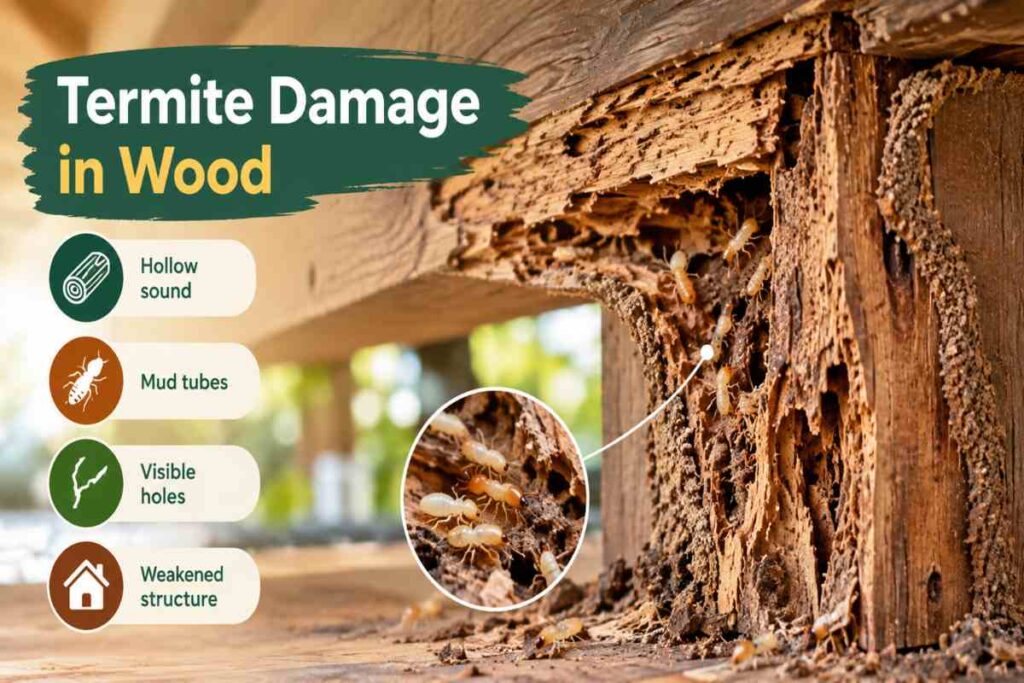
Termite damage wood repair starts with spotting the problem early, hollow sounding timber, blistered or crumbling surfaces, and fine mud tunnels along wardrobes, doors and skirting boards are all signs that termites are already at work, and left untreated, they can turn a repairable piece of furniture into one that needs full replacement. Ras Al Khaimah’s warm, humid climate makes this especially common, research on Anacanthotermes ochraceus, the dominant termite species across the UAE, found that most local wood was highly susceptible to termite feeding, while only certain imported timbers showed real resistance. That is why termite damage in kitchen cabinets, wardrobes and wooden doors so often goes unnoticed until it’s already extensive.
This guide covers how to identify termite damage in wood and furniture, how it differs from wood rot, water damage and other common wood problems, whether termite-damaged wood can be repaired or should be replaced, and how to protect new and existing woodwork going forward. If you are dealing with damaged pieces or planning new installations, our Carpentry Works team handles both repair and termite-resistant carpentry across Ras Al Khaimah.
What Is Termite Damage?
Termite damage is the structural weakening and disfigurement of wood caused by termites feeding on its cellulose, and it is one of the most common, and most overlooked, problems affecting furniture, doors and cabinetry in Ras Al Khaimah homes. Unlike wood rot or water damage, termite damage happens from the inside out, so a piece of furniture can look completely normal on the surface while the wood underneath has been hollowed out to a shell. RAK’s coastal climate makes conditions especially favourable, humidity here regularly climbs above 60% for much of the year, and termites thrive in exactly that combination of warmth and moisture, which is why infestations tend to spread faster and go unnoticed longer than in drier inland areas.
How termites get into furniture and woodwork
Termites usually reach household wood through soil contact, existing cracks, or wood to wood connections rather than by flying in and landing on a wardrobe. Subterranean species build narrow mud tunnels from the ground up through walls, skirting boards or foundations to reach timber, while others enter through second hand furniture, untreated garden wood, or new joinery installed without proper pre treatment. Once inside, they stay hidden within the wood itself, feeding along the grain where moisture is highest, which is why the damage is rarely visible until it is already significant.
Common RAK wood types most at risk
Softer, untreated woods are the most vulnerable, and cost effective materials commonly used in RAK furniture and fittings, MDF, chipboard, and untreated pine, offer little natural resistance once moisture gets in. Denser hardwoods like teak hold up far better outdoors and in humid conditions, but even they can be damaged if installed without proper sealing or pre treatment. This is exactly the kind of detail that gets missed during budget driven renovations, which is why choosing the right material matters as much as the workmanship, something our Home renovation services team factors into every project across Ras Al Khaimah.
Signs of Termite Damage in Wood and Furniture
The clearest signs of termite damage in wood are a hollow sound when you tap it, small pellet like droppings nearby, and blistered or crumbling surfaces on doors, wardrobes and cabinets, often appearing years after the infestation actually began. That delay is what makes termite damage so costly, colonies typically need several years to grow large enough to cause damage that’s actually visible, so by the time a homeowner notices something wrong, the wood underneath may already be extensively hollowed out.
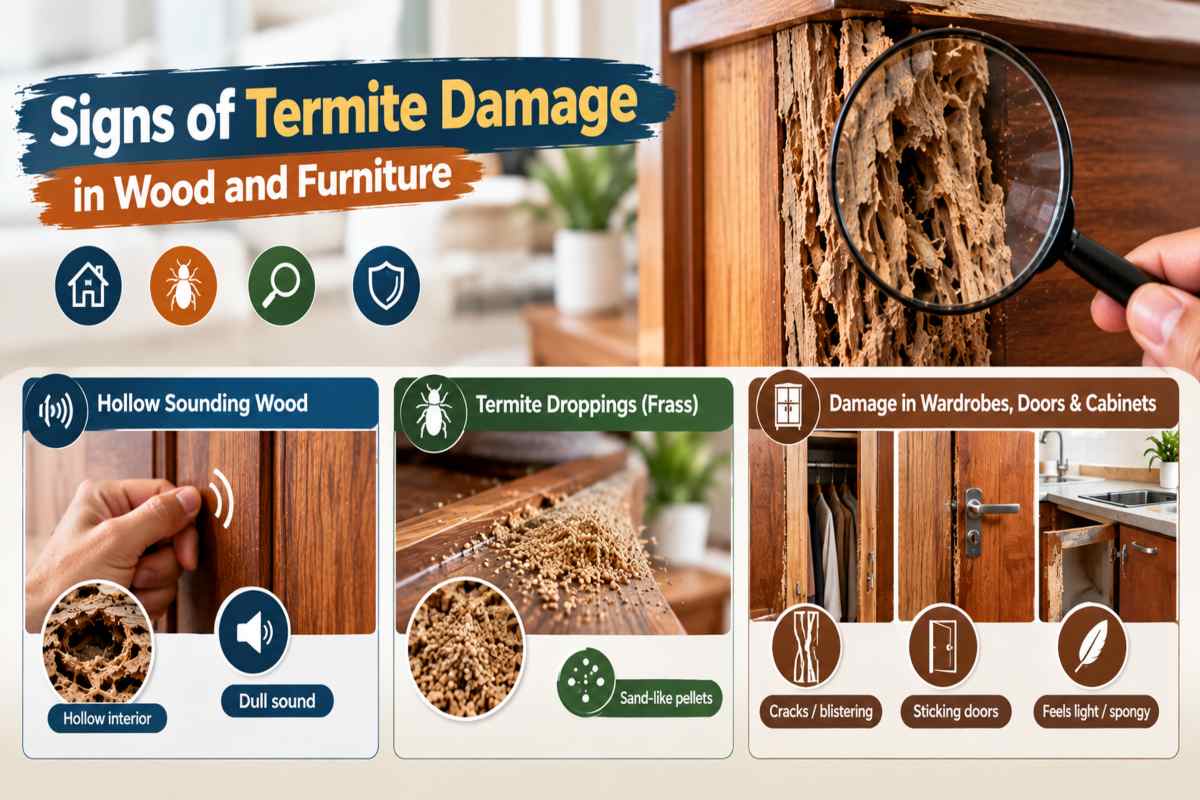
Hollow sounding wood
A dull, hollow sound when you knock on wood is one of the earliest reliable signs of termite activity, because termites feed from the inside of the timber outward, leaving a thin, weakened shell behind. This is especially easy to miss on furniture with painted or varnished surfaces, where the wood can look completely intact while the interior has been eaten away. If a wardrobe panel, door frame or cabinet side sounds noticeably different from surrounding wood when tapped, it is worth inspecting further rather than assuming it’s just an old piece settling.
Termite droppings (frass)
Termite droppings, known as frass, look like small mounds of fine, sand like pellets and are usually found beneath or around infested wood, on windowsills, inside drawers, or at the base of furniture legs. Unlike sawdust from other pests, frass is uniform in colour and texture, and finding it near wooden furniture or fittings is one of the strongest confirmations that termites, rather than a different wood problem, are responsible. Discovering frass is usually the point where a quick DIY fix stops being enough and professional inspection becomes worthwhile.
Damage in wardrobes, doors and kitchen cabinets
Wardrobes, wooden doors and kitchen cabinets are among the most common places termite damage shows up in RAK homes, largely because they combine wood to wall contact, limited airflow and, in kitchens, higher ambient moisture. Warning signs include doors that stick or don’t close properly, wardrobe panels that feel unusually light or spongy, and fine cracks or blistering along cabinet edges. Because these are load bearing or frequently used pieces, damage here tends to escalate quickly once it starts, which is why early Carpentry Repair is usually far cheaper than waiting until full replacement is the only option.
Termite Damage vs Other Wood Problems
Termite damage is often mistaken for wood rot, water damage or mould, but each leaves distinct clues once you know what to look for, termites hollow wood out along the grain while leaving a thin outer shell, whereas rot, water damage and mould tend to soften, discolour or crumble the surface itself. Telling these apart matters because the fix is different in each case, treating termite damage as if it were simple water damage often means the underlying infestation gets missed entirely.
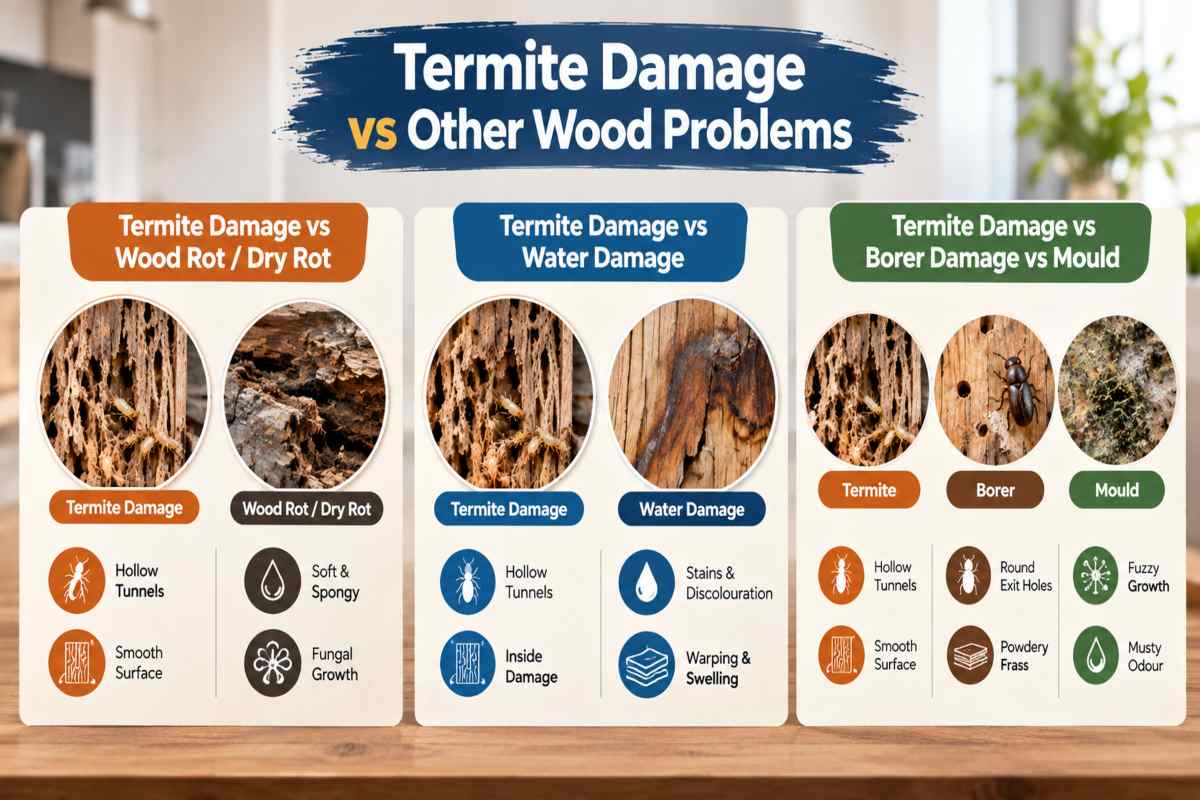
Termite damage vs wood rot / dry rot
Wood rot and dry rot are caused by fungal growth feeding on damp timber, producing a musty smell, dark discolouration, and wood that crumbles into small cube shaped pieces when pressed. Termite damage, by contrast, produces no fungal smell and typically hollows the wood from the inside, leaving thin, paper-like layers or mud tunnels rather than crumbling cubes. If the wood smells damp or musty and breaks apart in blocks, rot is the more likely cause, if it sounds hollow but the surface looks intact, termites are the stronger suspect.
Termite damage vs water damage
Water damage shows up as swelling, warping, staining or a soft, spongy texture on the wood’s surface, and it’s almost always linked to a visible source such as a leak, spill or plumbing issue nearby. Termite damage rarely causes visible swelling or staining, since the destruction happens internally rather than through moisture absorption at the surface. A useful rule of thumb, water damage tends to worsen wherever moisture collects, while termite damage spreads along the wood’s grain regardless of where water sources are.
Termite damage vs borer damage vs mould
Wood borer damage looks similar to termite damage at first glance, but borers leave small, round exit holes and fine wood dust (frass) that is powdery rather than pellet shaped, and the damage tends to be scattered rather than concentrated along tunnels. Mould, meanwhile, is a surface issue, a discoloured, fuzzy or powdery growth that affects appearance and air quality but does not structurally weaken the wood the way termites do.
Termite damage is the one of the three most likely to compromise the wood strength, since colonies can, over time, hollow out enough of a structure timber to affect its load bearing capacity, which is why identifying the correct culprit early makes such a difference to the repair outcome.
How to Treat Termite Infested Wood
The most effective way to treat termite infested wood is professional chemical treatment or fumigation that targets the entire colony, not just the visible activity, because surface sprays alone rarely reach the termites actually doing the damage. Subterranean termite colonies can contain hundreds of thousands of individuals and forage tens of metres from a central nest, which means the infestation in one piece of furniture or one section of flooring is often connected to a much larger colony spread through the soil, walls, or timber elsewhere in the property.
Professional treatment vs DIY methods
Professional termite treatment typically involves identifying the colony access points, applying targeted chemical barriers or bait systems, and treating the wood itself rather than just the exposed surface, which addresses the infestation at its source. DIY methods, sprays, foams, or store bought termite treatments, can kill the termites they directly contact, but they rarely reach the colony structure feeding the infestation, so activity often continues in areas the homeowner can’t see. For isolated, early stage cases, a DIY approach might slow visible damage temporarily, but for anything beyond a single small area, professional treatment is the more reliable route to actually stopping the problem.
Why DIY termite treatment often fails
DIY termite treatment tends to fail because it treats a symptom rather than the cause, killing the termites visible on one piece of wood does nothing to stop the colony from re infesting the same area, or moving to an adjacent one, once conditions are still favourable. This is especially true in structural timber, flooring and roofing, where termites can travel through wall cavities or foundations that a homeowner can not inspect or treat directly. If termite damage has reached flooring, skirting, or roof timber, it is rarely a contained problem, which is why cases like this usually need proper structural assessment through our floor and roof services rather than a surface level DIY fix.
Can Termite Damaged Wood Be Repaired?
Termite damaged wood can often be repaired if the structural core is still sound, but once termites have hollowed out a significant portion of the timber, replacement becomes the safer and more cost effective option. The deciding factor is not how the damage looks on the surface, it’s how much of the wood’s original strength remains underneath, which is why a proper assessment matters more than a visual guess.
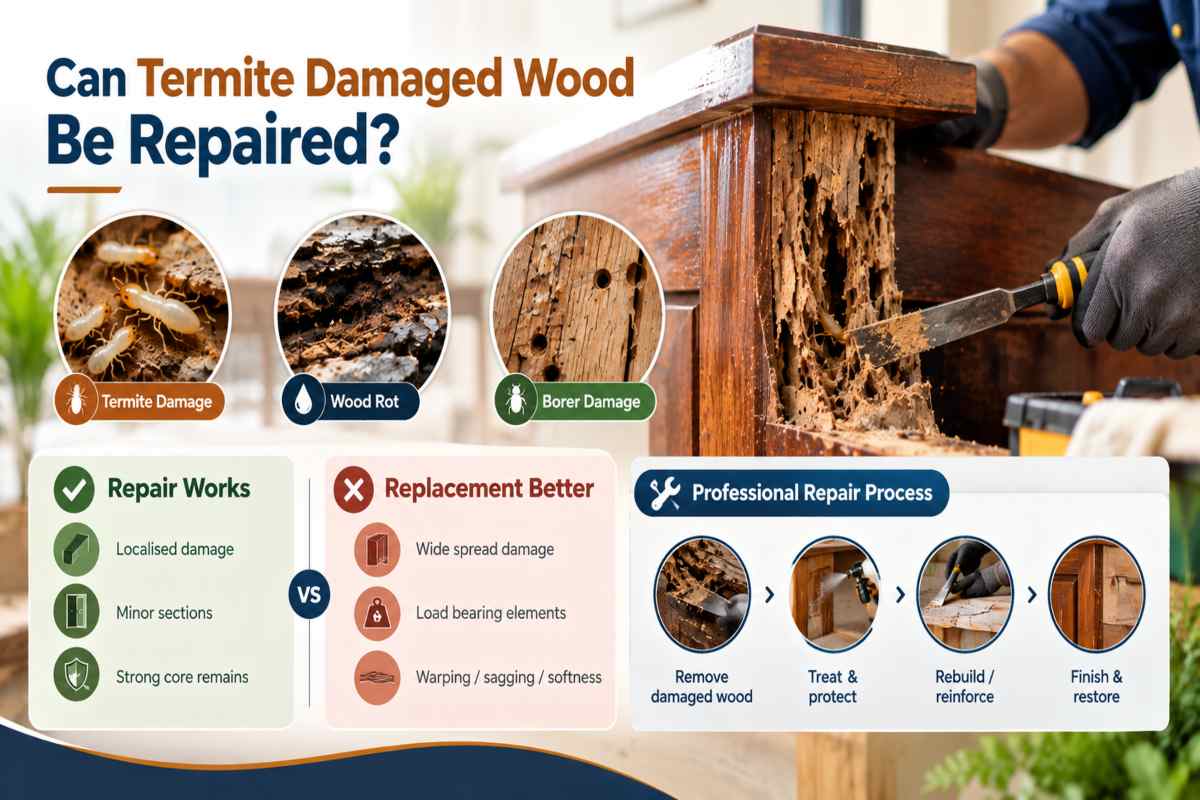
Repair vs replacement how to decide
The general rule is that repair works well when termite damage is localised, a corner of a door frame, a section of skirting, or a single wardrobe panel, and the surrounding wood still holds its structural integrity. Replacement becomes the better option once damage has spread through a large portion of the piece, affects a load bearing element, or has already caused visible sagging, warping or softness across multiple points. In practice, this is a judgement professionals make by testing the wood at several points, not just where the damage is most obvious, since termite tunnelling often extends further than it first appears.
What professional wood repair involves
Professional termite wood repair typically starts with removing all damaged and hollowed material, treating the surrounding wood and any adjoining structure to eliminate remaining termite activity, then rebuilding or reinforcing the affected section with matched or treated timber. For furniture and fittings like wardrobes, doors and cabinets, this often means partial reconstruction rather than a full rebuild, keeping sound sections intact while replacing only what is compromised. Because this work spans both the treatment and carpentry side of the job, it is usually handled as part of a broader repair scope through our Residential and Commercial Services, rather than as a standalone fix.
Preventing Termite Damage in Wooden Furniture
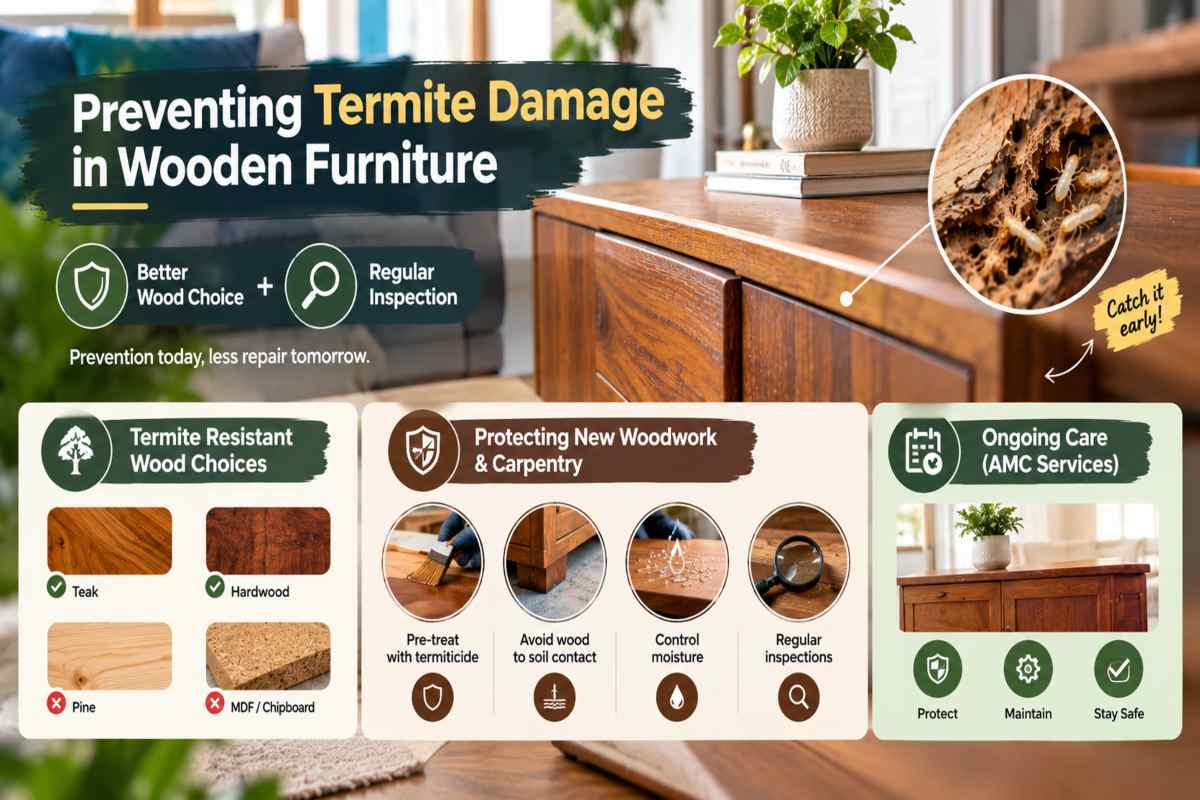
Preventing termite damage in wooden furniture comes down to two things, choosing wood that termites find harder to eat, and treating and inspecting it regularly enough to catch activity before it spreads. Since termite colonies can go undetected for years while feeding inside furniture, prevention is far cheaper than the repair or replacement it avoids.
Termite resistant wood choices
Dense hardwoods like teak carry natural resins that make them significantly less appealing to termites than softer, more porous woods such as pine, MDF or untreated chipboard, which is why they are a better long term choice for furniture and fittings in RAK’s climate. That said, no wood is completely termite proof, even naturally resistant species can be damaged if installed with wood to ground contact, trapped moisture, or without a proper protective treatment. Choosing resistant wood reduces risk considerably, but it works best alongside proper installation and sealing, not as a substitute for it.
Protecting new woodwork and carpentry installations
New woodwork and carpentry are most vulnerable in the first stages of installation, before any treatment has had time to fully protect the timber, so pre treating wood with a termiticide or protective sealant before it is fitted makes a meaningful difference. Beyond the initial installation, ongoing protection matters just as much, avoiding direct wood to soil contact, controlling moisture around wooden fittings, and catching early signs of activity before they spread are what actually keep furniture and woodwork termite free over time. Because this kind of ongoing check is easy to overlook once a project is finished, it is usually built into scheduled upkeep through our AMC Services, rather than left until damage shows up again.
Termite Damage Repair Across RAK
Termite damage repair needs vary noticeably by area within Ras Al Khaimah, largely because proximity to water changes how much moisture surrounding wood is exposed to. Waterfront communities like Mina Al Arab and Al Marjan Island sit directly alongside lagoons, mangroves and canals, which keeps ambient humidity higher around villas and furniture than in more inland parts of the emirate, exactly the conditions termites favour.
Mina Al Arab · Al Marjan Island
In Mina Al Arab, the mangrove lined waterways and lagoon facing villas mean wooden decking, outdoor furniture and ground level joinery are especially exposed to sustained moisture, making early detection and proper wood treatment particularly important. On Al Marjan Island, the same principle applies to beachfront and canal facing properties, where salt air and humidity combine to accelerate both termite activity and general wood wear if furniture and fittings are not treated or maintained regularly. Homeowners in both areas benefit from a maintenance routine that catches termite activity early rather than waiting for visible damage, which is why our home maintenance services in Mina Al Arab and home maintenance services in Al Marjan Island build wood inspection into routine visits rather than treating it as a separate call out.
Conclusion
Termite damage in wood is manageable when it is caught early, but it rarely fixes itself, colonies that go unnoticed for years can quietly turn a repairable wardrobe, door or cabinet into one that needs full replacement. The most reliable path is straightforward, learn to spot the early signs, get an accurate diagnosis instead of guessing between termites, rot or water damage, and treat the wood at its source rather than just the surface.
If you are dealing with termite damage in a home across Ras Al Khaimah, whether it is a single piece of furniture or wood throughout a property, getting it assessed properly is what determines whether repair is still an option. Home Fix Building Maintenance handles this from diagnosis through to repair, replacement and ongoing prevention, so the problem gets solved once rather than needing revisiting every season.
Frequently Asked Questions (FAQs)
How long does termite damage take to appear?
Termite colonies typically take several years to grow large enough to cause damage that is actually visible. By the time hollow sounds, blistering or frass appear, the infestation has usually been active for some time.
Is termite damaged furniture safe to keep?
It depends on how much structural wood remains. Lightly affected pieces can often be treated and repaired, but furniture that is significantly hollowed out loses its strength and stability and should be replaced.
Should I repair or replace termite damaged wood?
Repair works well when damage is localised and the surrounding wood is still sound; replacement is the safer option once damage has spread widely or affects a load bearing section. A professional assessment is the most reliable way to decide.
What does termite damage look like?
Common signs include hollow sounding wood, small pellet like droppings (frass), blistered or crumbling surfaces, and doors or panels that no longer sit or close properly.
Does DIY termite treatment actually work?
DIY sprays can kill visible termites but rarely reach the colony feeding the infestation, so activity often continues out of sight. For anything beyond a single small area, professional treatment is more reliable.
Can termite resistant wood still get infested?
Yes. Woods like teak are more resistant, but no wood is fully termite proof, poor installation, trapped moisture or wood to soil contact can still lead to damage over time.