
Plumbing Materials Guide | Best Pipes and Fittings for RAK
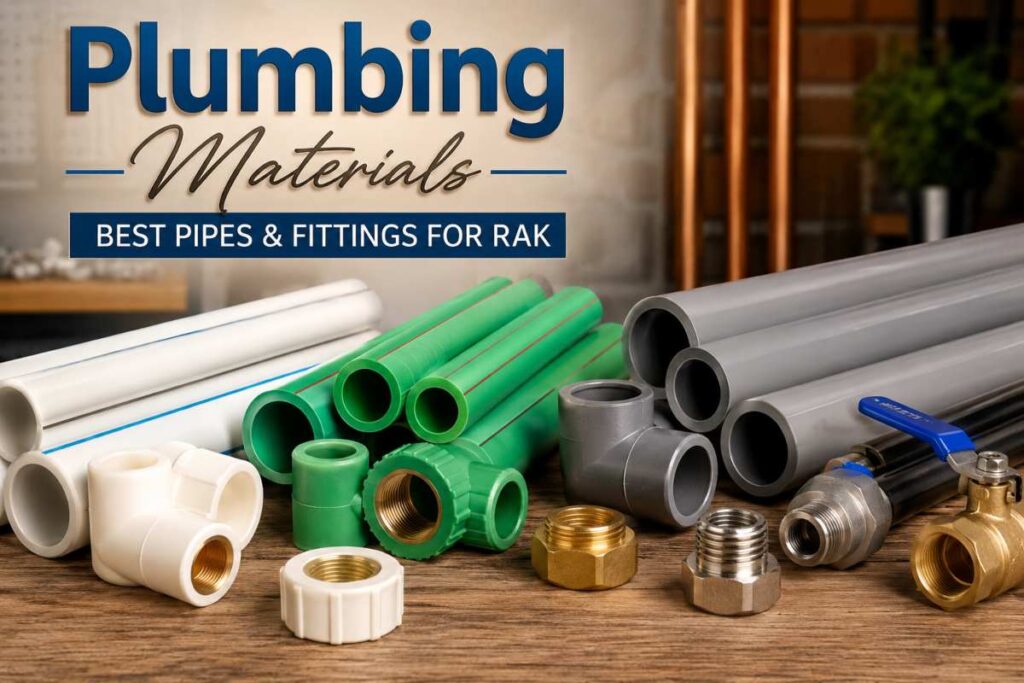
Plumbing materials are the pipes, fittings and fixtures that supply water to a property and carry waste away from it and the right choice depends on whether a line carries hot or cold water, sits indoors or outdoors and how much heat and pressure it needs to withstand. In Ras Al Khaimah, where summer roof space and exposed wall temperatures regularly exceed 50°C, material selection matters more than in most climates, a pipe rated for temperate conditions can soften, warp or fail within a few seasons of Gulf heat. This guide compares every major plumbing material used in RAK homes, with current AED pricing, so you can choose correctly before your next repair, renovation or new installation or bring in our Plumbing Services team to source and install the right materials for you.
What Are Plumbing Materials?
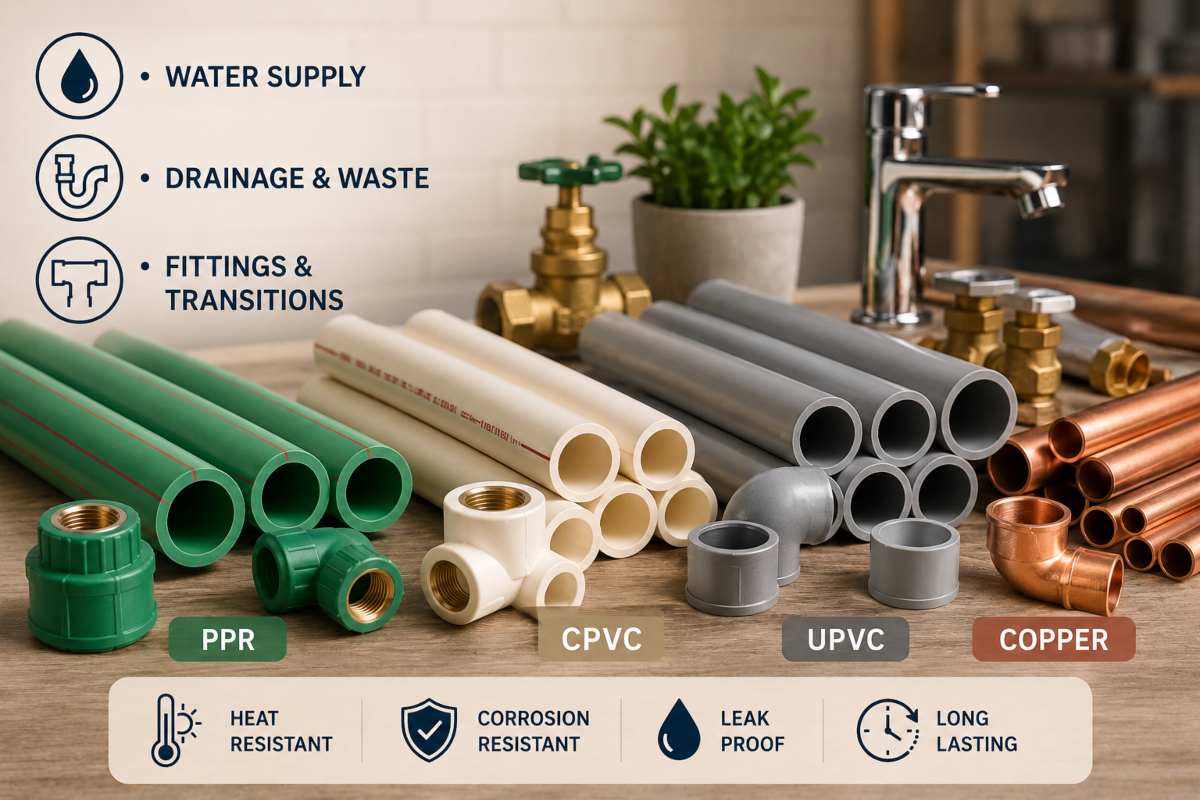
Plumbing materials are the pipes, fittings and fixtures used to move water into a property and carry waste out of it, covering everything from rigid supply pipe to the valves and outlets where water enters or exits the system. Every plumbing item on a job falls into one of three roles, carrying pressurised water supply, carrying gravity fed drainage and waste or joining the two safely at a fitting or transition point. Getting this classification right at the planning stage is what determines which material, PPR, CPVC, UPVC or copper, belongs on which line.
Why the Right Material Choice Matters in RAK Climate
A material that performs reliably in a temperate climate can fail quickly in Ras Al Khaimah’s heat. Standard UPVC, for instance, is rated to withstand sustained temperatures of roughly 60°C and exposed pipework on a villa roof or external wall can reach that threshold in direct summer sun before any hot water even passes through it. Choosing a heat appropriate material from the outset avoids the warping, joint failure and leaks that make up a large share of emergency plumbing callouts across the emirate each summer.
Types of Plumbing Materials and Fittings
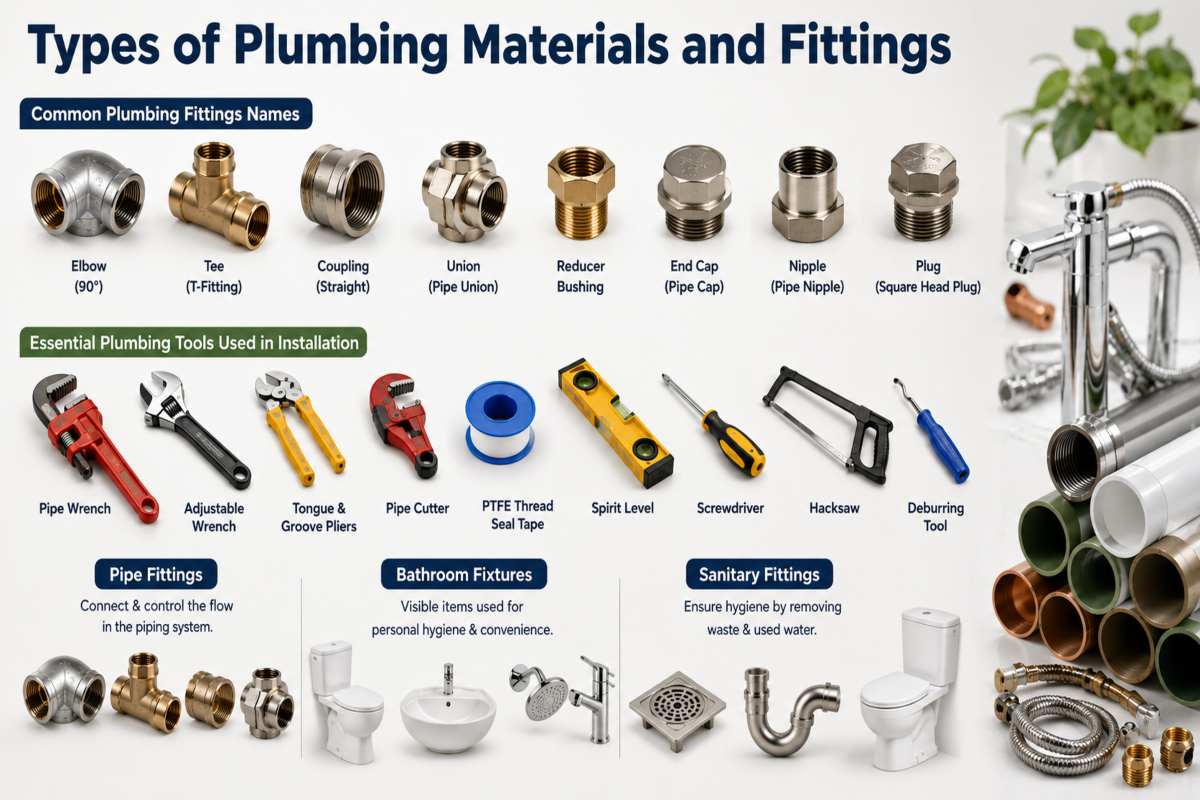
Plumbing fittings are the connective plumbing items, elbows, tees, couplings, unions and reducers, that join lengths of pipe, change direction or transition between materials and diameters and choosing the correct fitting matters as much as choosing the right pipe. Mismatched plumbing fittings are one of the most common causes of slow leaks at a joint, even when the pipe itself is perfectly sound.
Common Plumbing Fittings Names (Elbows, Tees, Couplings and Unions)
An elbow fitting changes the direction of a pipe run, typically at 45 or 90 degrees, while a tee fitting splits one line into two. Couplings join two straight lengths of the same diameter, unions allow a section of pipe to be disconnected for maintenance without cutting it and reducers step a line down to a smaller diameter as it branches toward individual fixtures. Each of these fittings is manufactured in a material specific version, PPR fittings for PPR pipe, CPVC fittings for CPVC pipe and mixing materials at a joint without the correct transition fitting is a frequent point of failure.
Essential Plumbing Tools Used in Installation
Professional installation relies on tools matched to the pipe material, a fusion welding tool for PPR, which heat joins rather than glues, a solvent cement applicator for UPVC and CPVC, a soldering torch and flux for copper, and crimping or expansion tools for PEX. Using the wrong joining method for a given material, gluing PPR instead of fusing it, for example, voids the pressure rating and is a leading cause of preventable leaks on otherwise correctly specified jobs.
Pipe Fittings vs Bathroom Fixtures vs Sanitary Fittings
Pipe fittings connect the concealed supply and drainage network behind the wall, while bathroom fixtures and sanitary fittings are the visible components, taps, mixers, shower valves and drains, that a homeowner interacts with directly. Both need to match in pressure rating and thread size, which is why fixture selection should happen alongside pipe material selection rather than as a separate decision made later in the project.
Bathroom Plumbing Fixtures Explained
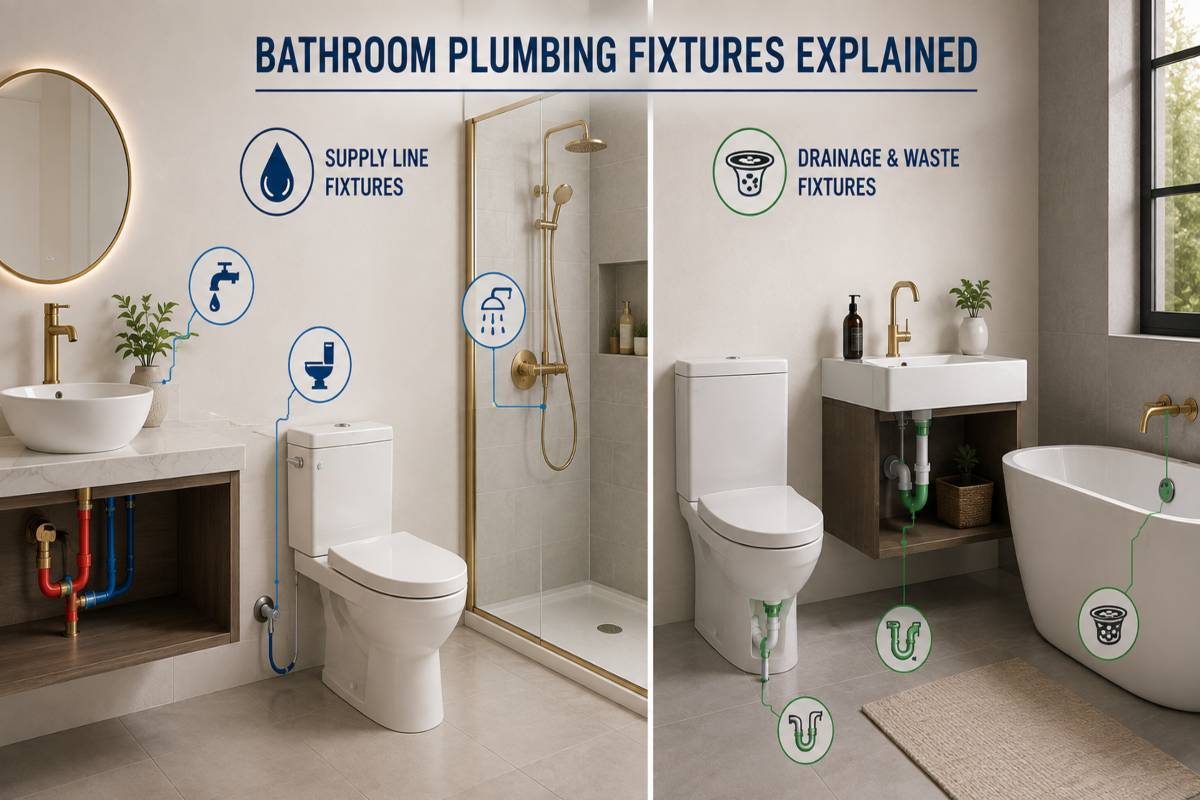
Bathroom plumbing fixtures are the components that deliver or remove water at the point of use, and they fall into two functional groups: supply-side fixtures that bring pressurised water in and drainage-side fixtures that carry wastewater away. Plumbing Maintenance helps keep these fixtures operating efficiently, while matching the fixture type to the correct side of the system keeps water pressure consistent and prevents backflow or slow drainage over time.
Supply Line Fixtures
Taps, mixer valves, shower mixers and angle valves sit on the pressurised side of the system and are typically brass bodied with a chrome or matte finish, since brass resists corrosion under constant water contact far better than plated steel alternatives. Angle valves, in particular, are worth specifying at every fixture connection point rather than only at the main line, as they let a single tap or toilet be isolated for repair without shutting off water to the rest of the bathroom.
Drainage and Waste Fixtures
Floor drains, P traps and waste outlets rely on gravity rather than pressure to move water, which is why UPVC and PVC, smooth bore, chemically resistant and inexpensive, remain the standard choice for drainage fixtures across virtually every UAE property type. A properly installed P trap also does double duty as odour protection, the water it holds forms a seal that stops sewer gas from rising back up through the drain, so its correct installation affects air quality in the bathroom as much as drainage performance.
PPR vs CPVC vs UPVC vs Copper Which Pipe Material Is Best?
There is no single best pipe material for every application, PPR and CPVC are the correct choices for hot water supply in RAK homes, UPVC is correct for cold water and drainage and copper remains a premium option for exposed, high heat runs where its durability offsets the extra cost. The right answer depends entirely on what the line carries and where it runs, not on which material is cheapest or most familiar.
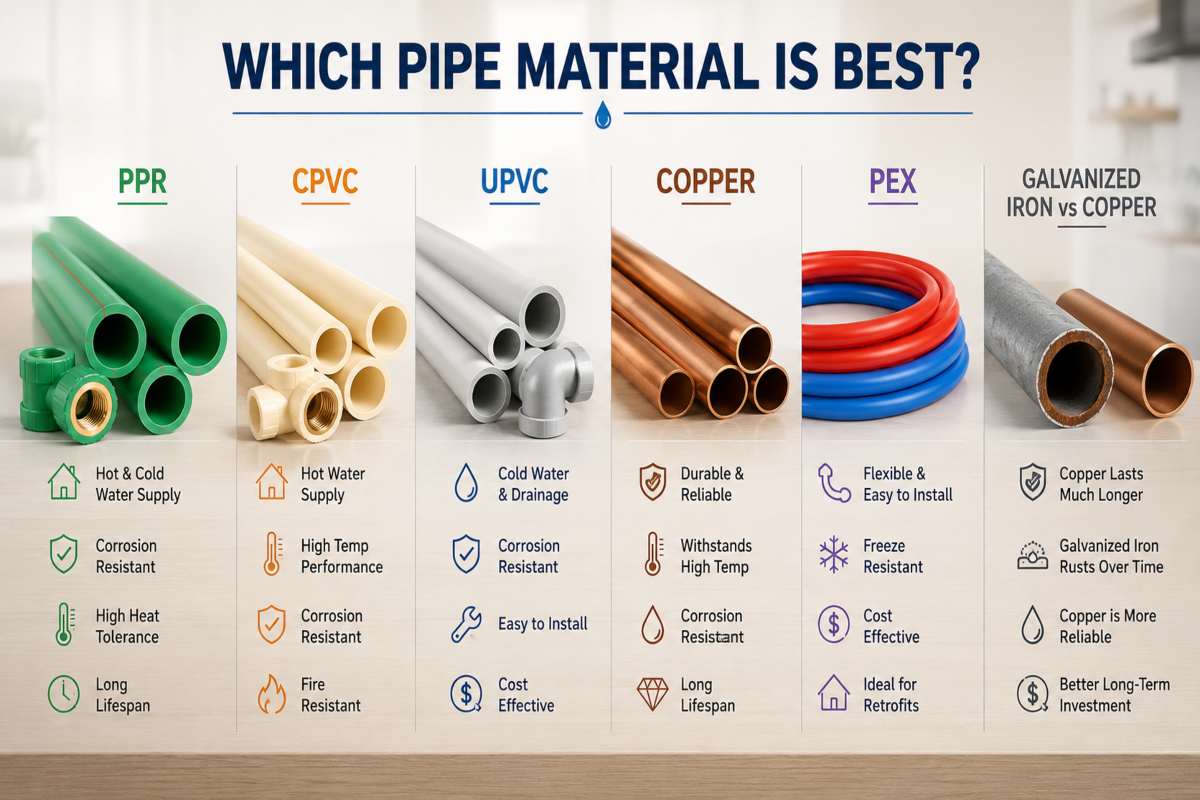
PPR Pipes and Fittings Where They are Used
PPR (polypropylene random copolymer) pipe is heat fused rather than glued or threaded, so the joint becomes a single continuous piece of plastic with no glue line to degrade over time. This makes PPR the preferred choice for concealed hot and cold water supply lines in RAK villas and apartments, particularly where the pipework will be embedded in walls or screed and inaccessible once the job is finished.
CPVC Pipes Best for Hot Water Supply
CPVC undergoes additional chlorination that raises its safe operating temperature to roughly 93°C, well above the 55–65°C that most UAE water heaters produce at the outlet. That makes it one of the two correct plastic materials for domestic hot water risers, alongside PPR and it’s also the only plastic pipe material approved for fire sprinkler systems where a listed rating is required.
UPVC Pipes Best for Cold Water and Drainage
UPVC handles cold water supply, drainage, waste and irrigation reliably and at the lowest cost per metre of any rigid pipe material, but its roughly 60°C temperature ceiling makes it unsuitable for hot water lines. Running hot water through UPVC risks softening, deformation and joint failure over time, which is why it should never be substituted for CPVC or PPR on a heated line, however tempting the price difference.
Copper Pipes Pros, Cons and When to Use Them
Copper handles both hot and cold water, resists bacterial growth better than plastic alternatives and holds up well in exposed, high heat locations, but it costs significantly more than plastic pipe and requires skilled soldering at every joint. Copper demand has been growing at an estimated 8–10% annually across the region, driven largely by HVAC and higher specification projects and it’s a common upgrade choice during a full home renovation, when walls are already open and the long term durability justifies the premium.
PEX Pipes A Flexible Alternative
PEX is a flexible cross linked polyethylene pipe that bends around obstructions without fittings and connects using compression or expansion joints rather than glue or solder, which makes it well suited to retrofit work where snaking a rigid pipe through an existing wall isn’t practical. It costs more than UPVC but installs faster and with fewer joints, which can offset the material cost on labour intensive repair jobs.
Galvanized Iron vs Copper Which Lasts Longer?
Galvanized iron pipe was the older standard for water supply, but its zinc coating degrades over 20–40 years, leading to internal rust, reduced flow and eventual leaks. Copper, by contrast, resists corrosion for 50 years or more and is now the standard replacement wherever galvanized iron is uncovered during renovation work.
Best Plumbing Materials for Ras Al Khaimah Climate
The best material for plumbing for RAK’s climate are PPR and CPVC for any hot or exposed line and UV stabilised UPVC or insulated copper for anything run outdoors, because standard plastics rated for milder climates soften or degrade under sustained Gulf heat. Getting this right at installation is one of the most effective ways to avoid recurring plumbing issues across both villas and commercial properties.
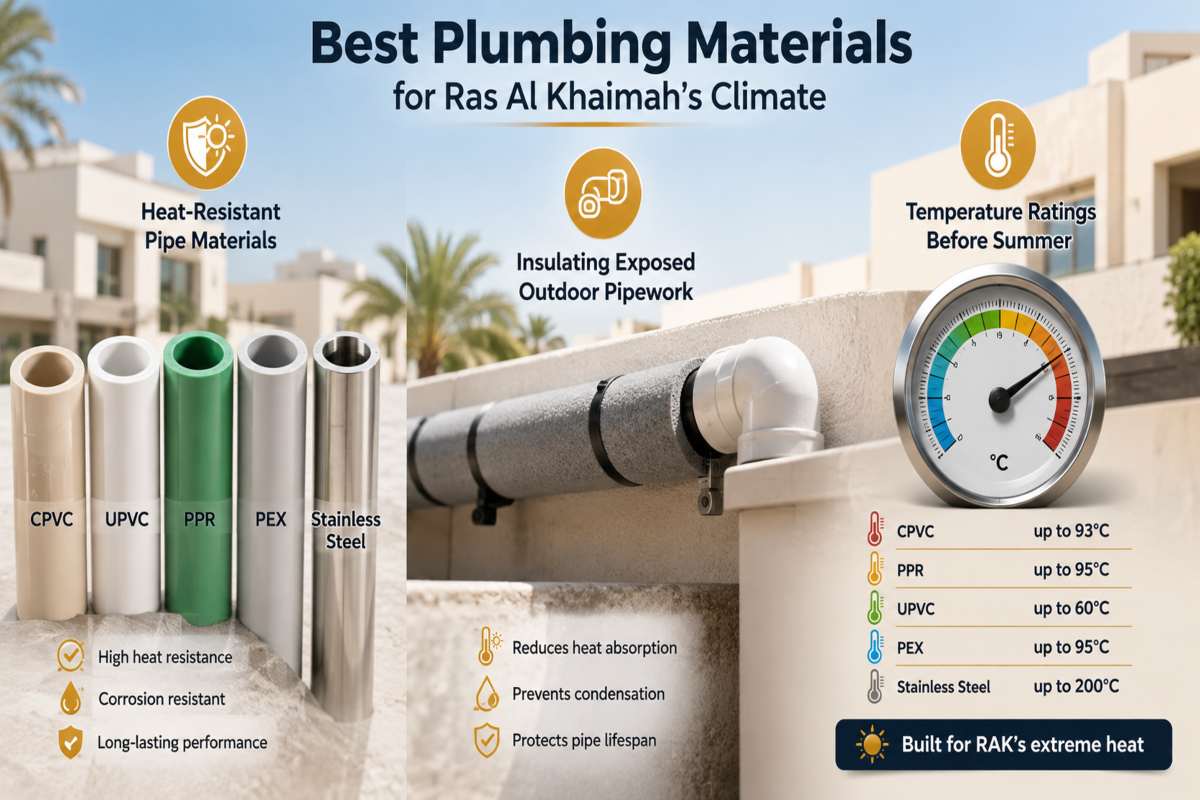
Heat Resistant Pipe Materials That Won’t Warp
PPR and CPVC are formulated specifically to resist heat related deformation, holding their shape and pressure rating even when ambient temperatures around the pipe climb well above what a cold climate rated UPVC product is designed to tolerate. Specifying standard UPVC on a line that will see direct summer sun, even a nominally “cold” line, is one of the most common material mistakes made on Gulf construction sites and one our residential and commercial services team is regularly called in to correct after the fact.
Insulating Exposed Outdoor Pipework
Any pipe run on an external wall, roof or open plant area should be foam jacket insulated regardless of material, both to prevent heat gain in cold lines, which otherwise arrive at the tap lukewarm and to protect fittings from UV degradation over years of direct sun exposure. Insulation is inexpensive relative to the cost of re running a damaged line, making it one of the highest value additions on any RAK villa exterior plumbing.
Temperature Ratings You Need to Know Before Summer
A “cold” water line in RAK can realistically reach 45–50°C in summer if it’s exposed to direct sun or runs through an uninsulated roof space, which is why insulation and heat rated materials matter even on supply lines that never touch a water heater. Checking a pipe’s rated temperature ceiling against its actual exposure, not just its intended use, is the single most reliable way to prevent a warm season leak before it happens.
Choosing Materials by Application
Different parts of a plumbing system need different materials and using a drainage grade material on a pressurised line or vice versa, is both a common defect and a code violation. Matching material to application correctly the first time also reduces long term repair needs, which is why it is a standard checkpoint on our Annual Maintenance Contracts inspections.
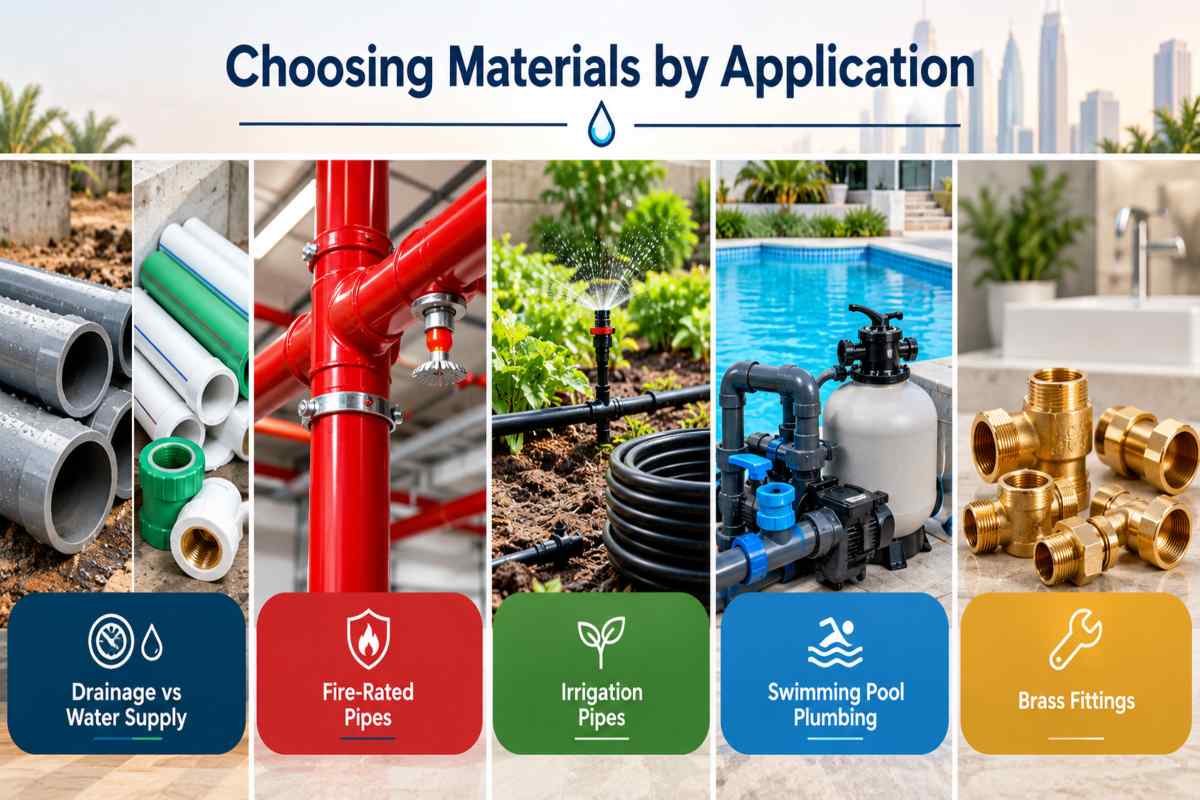
Drainage vs Water Supply Line Materials
Drainage and waste lines run on gravity and low pressure, so UPVC and PVC’s smooth interior and chemical resistance make them ideal, pressurised supply lines need certified pressure rated materials like PPR, CPVC or copper. Substituting one for the other is a frequent source of failed inspections on renovation projects, since a drainage grade pipe simply isn’t built to hold sustained pressure without eventually splitting at a joint.
Fire Rated Pipe Materials for Villas and Commercial Fit Outs
Listed CPVC is the only plastic pipe material approved for fire sprinkler pipework in most UAE developments, PPR and standard UPVC are not certified for this application. This matters for any villa extension or commercial fit out that includes a sprinkler system, where specifying the wrong material can hold up a fire safety inspection and delay handover.
Irrigation Pipe Materials
UPVC and HDPE both perform well for garden and landscape irrigation, with HDPE flexibility making it the better choice for longer runs across uneven ground, since it needs far fewer joints and fittings than a rigid pipe covering the same distance. HDPE for water supply is also increasingly used on larger RAK properties where the irrigation network spans multiple garden zones.
Swimming Pool Plumbing Materials
Pool plumbing typically uses UPVC rated for pool chemical exposure, since it resists the chlorine and pH balancing chemicals used in pool maintenance far better than metal alternatives, which corrode under sustained chemical contact. Fittings and valves around the pump and filter should match this same chemical resistant grade rather than the standard UPVC used elsewhere in the property.
Brass Fittings Where and Why They are Used
Brass fittings connect valves, taps and pump connections because the alloy resists corrosion and holds threads reliably over repeated use, even after years of tightening and loosening during maintenance. The only caveat is confirming the brass is lead free, which is now standard on any fitting sold for residential water supply and worth checking on unbranded or imported stock specifically.
Plumbing Material Prices in Ras Al Khaimah
Plumbing material prices in RAK vary by pipe diameter, brand and certification, with UPVC generally the most affordable option and copper the most expensive, though labour and fittings typically account for a larger share of total job cost than the raw pipe itself.
Pipe Prices by Material and Diameter
| Material | Typical Use | Price Range (AED per metre) |
| UPVC | Cold water, drainage | 8 – 25 |
| PPR | Hot & cold supply | 15 – 45 |
| CPVC | Hot water supply | 20 – 55 |
| Copper | Hot & cold, exposed runs | 45 – 120 |
| PEX | Retrofit supply lines | 18 – 40 |
Prices are indicative and vary with pipe diameter, wall thickness and supplier. A 20mm PPR pipe, for example, sits toward the lower end of its range, while a 32mm or larger diameter used on a main supply riser sits toward the higher end.
Fittings and Fixtures Cost Guide
Standard plastic fittings, elbows, tees and couplings, typically range from AED 5 to AED 35 depending on material and diameter, while brass fittings and mixer valves range from AED 40 to AED 250 depending on finish and brand. CPVC fittings generally cost slightly more than equivalent PPR or UPVC fittings, reflecting the additional chlorination process used to raise the material heat rating.
What Affects Plumbing Material Costs in RAK
Certification matters more than most homeowners expect, NSF and WaterMark certified products cost more upfront but carry warranty protection that uncertified imports do not and certified suppliers are projected to account for roughly 60% of North American market share by 2026 as buyers increasingly prioritise verified quality over price alone, a trend that is mirrored in how UAE contractors source materials today. Diameter, wall thickness and pressure rating (PN10 versus PN20, for example) also move the price within each material category, which is why two quotes for “the same pipe” can differ significantly if the specifications are not identical.
How Home Fix Sources and Installs Genuine Plumbing Materials
Home Fix supplies and installs certified plumbing materials as part of every job, so you are never left sourcing pipe and fittings separately or trying to work out whether a supplier stock actually meets pressure and temperature ratings for RAK conditions. Searching for best material for plumbing near me usually turns up a mix of general hardware stores and specialist suppliers of varying quality, our team removes that guesswork by handling sourcing in house.
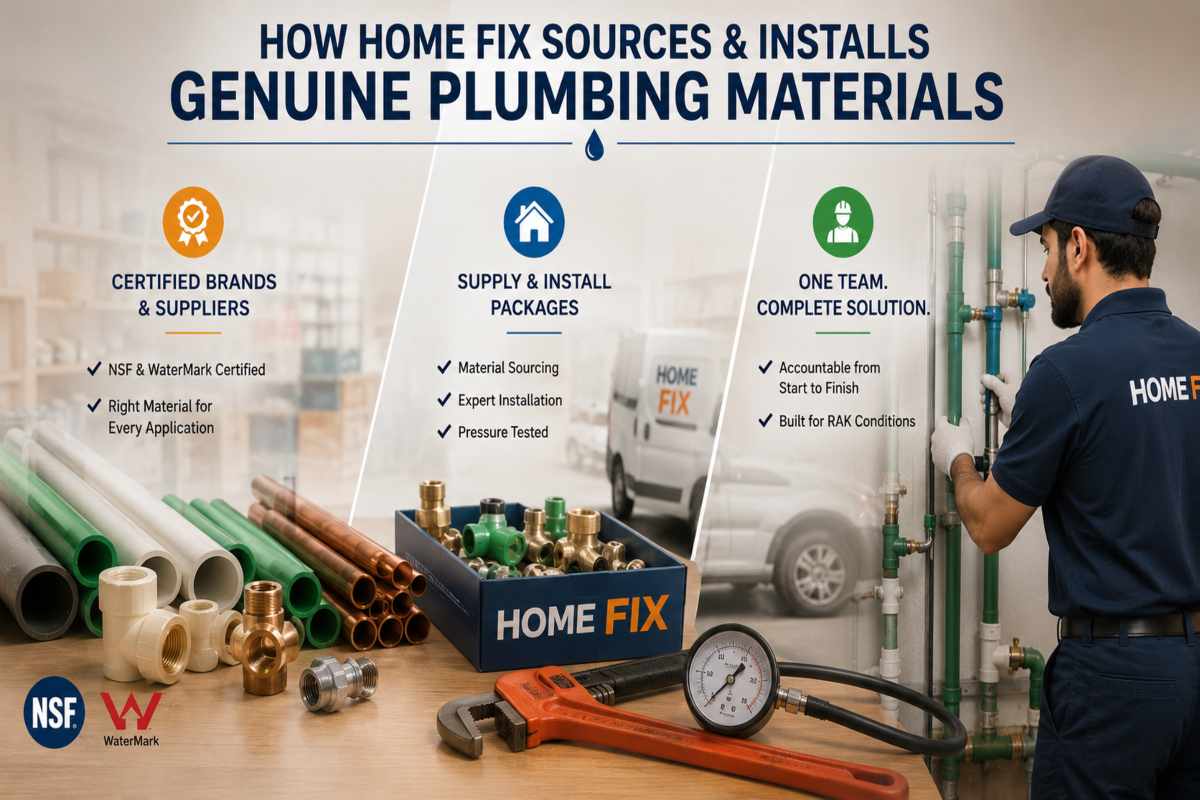
Certified Brands and Suppliers We Work With
We work only with NSF and WaterMark certified plumbing materials suppliers in the UAE, selecting PPR, CPVC, UPVC or copper based on the specific application, hot supply, cold supply, drainage or exposed outdoor runs, rather than defaulting to whichever material is cheapest or most familiar to a given contractor. This matters because uncertified imported stock, while often cheaper upfront, carries no warranty backing if a fitting fails under pressure or heat within the first few years.
Supply and Install Packages for RAK Homes
Whether you need a single fixture replaced or a full villa re pipe, our supply and install packages cover material sourcing, correct joining methods for each pipe type and pressure testing before handover, so the material choice and the installation quality are handled by the same accountable team rather than split between a supplier and a separate contractor.
Conclusion
Choosing the right plumbing material comes down to matching pipe type to application and climate, PPR and CPVC for hot or exposed lines, UPVC for cold water and drainage and copper where its durability and heat resistance justify the added cost. In Ras Al Khaimah specifically, this decision carries more weight than in most climates, a pipe rated for milder conditions can fail within a few seasons once it is exposed to sustained Gulf heat, while the correctly specified material can last decades with minimal maintenance.
If you are planning a repair, renovation or new installation and want the material selection handled correctly the first time, Home Fix sources certified pipes and fittings and installs them to match your property exact requirements, so you are never troubleshooting a preventable leak a few years down the line.
Frequently Asked Questions (FAQs)
Which pipe material is best for hot water in RAK?
PPR and CPVC are both correct choices for hot water supply in Ras Al Khaimah homes. PPR suits concealed, heat fused runs, while CPVC is preferred where the highest sustained temperature or a fire sprinkler listing is required.
Is PPR better than UPVC for UAE homes?
PPR and UPVC serve different purposes rather than one being universally better. PPR handles both hot and cold supply lines, while UPVC is limited to cold water and drainage due to its lower temperature rating.
How long do CPVC pipes last in the UAE climate?
Well installed CPVC typically lasts 25–50 years. Attic and roof space runs exposed to sustained extreme heat can develop hairline cracks at fitting hangers sooner if not properly supported and insulated.
What is the price difference between PPR and copper pipes?
Copper generally costs two to three times more than PPR per metre, plus higher labour costs for soldering versus heat fusion joining. Copper longer service life can offset this premium on high specification installations.
Do plumbing materials need special certification in the UAE?
Yes, pressure rated supply materials should carry recognised certifications such as NSF or WaterMark. Fire sprinkler applications require listed CPVC specifically, as PPR and standard UPVC are not approved for that use.