Floor Covering | The Complete Guide to Types of flooring
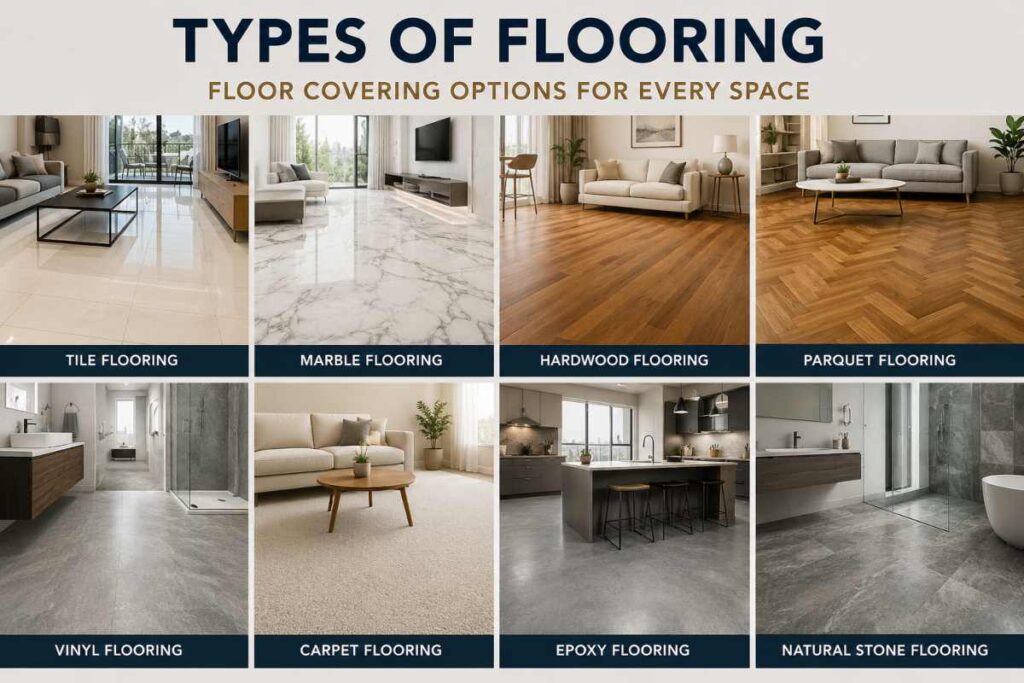
Floor covering or flooring is the single largest visual and functional element of any interior and choosing the right type shapes everything from a room comfort to its long term maintenance cost. Broadly, flooring falls into three categories, hard, resilient and soft coverings, each suited to different rooms, budgets and climates, with the right choice depending on foot traffic, moisture exposure and the look you want to achieve.
In the UAE, where indoor spaces contend with heat, humidity swings and sand fine dust tracked in from outside, flooring choices carry extra weight. A material that performs beautifully in a temperate climate can warp, fade or wear prematurely under Gulf conditions, which is why homeowners here often lean toward tile, marble and engineered hardwood over solid wood or standard laminate. Industry estimates suggest the global flooring market is projected to expand at a compound annual rate of over 6% through the next decade, driven largely by renovation and remodeling activity rather than new construction, a trend mirrored locally as more RAK and UAE households upgrade existing homes rather than build from scratch.
This guide breaks down every major flooring type, how each is structured beneath the surface, where each performs best and how to weigh durability against cost and maintenance before you commit. Whether you’re flooring a single room or planning a full property upgrade as part of broader home renovation services, understanding these categories first will save you from costly material mismatches later. For homeowners ready to move from research to execution, Home Fix home renovation services team can help translate the right flooring choice into a finished space.
What Is Flooring?
Flooring is the permanent finished surface installed over a subfloor to provide a walkable, durable and visually finished base for a room. It serves both a structural role, protecting the subfloor and distributing foot traffic and an aesthetic one, setting the tone for the interior design of a space.
What Is a Floor Covering?
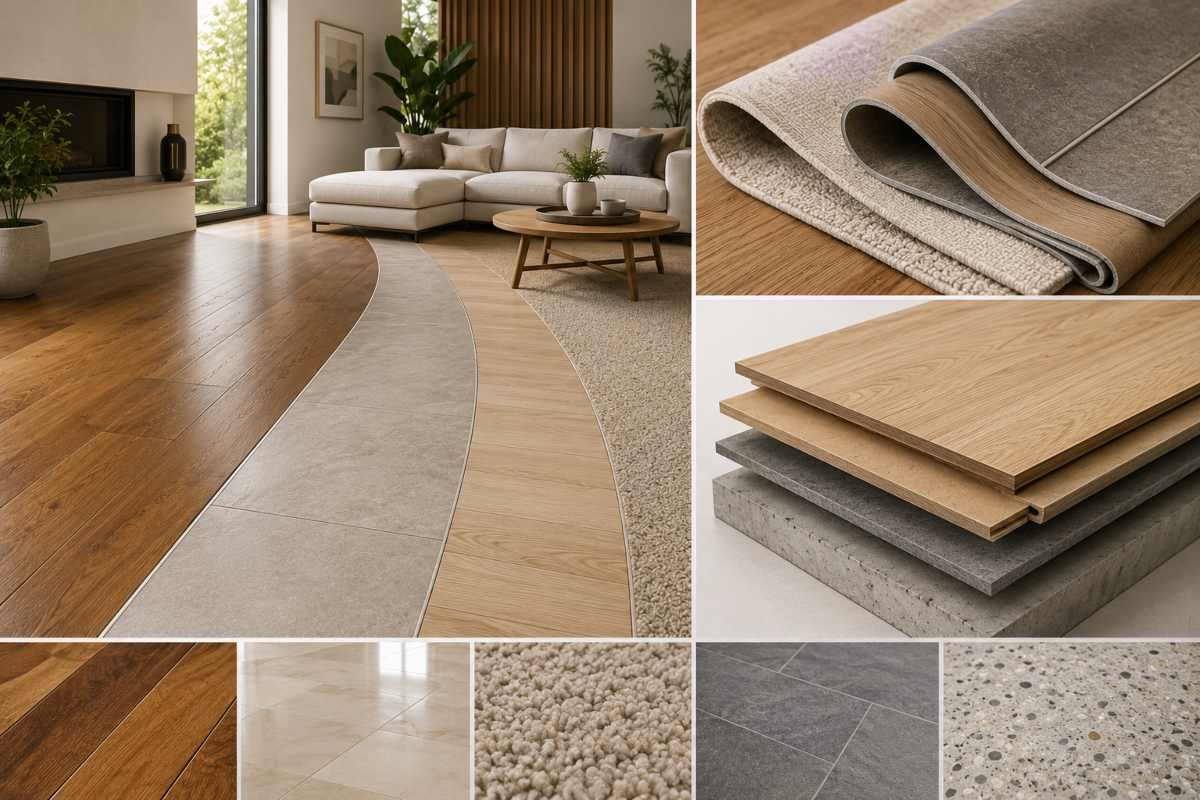
A floor covering is the visible top layer of a flooring system, the material you actually see and walk on, such as tile, marble, vinyl, laminate or carpet. It’s distinct from the subfloor and underlayment beneath it, which exist purely to support and level that finished layer. When people ask what is floor covering, they’re really asking about this surface material, its texture, durability, water resistance and how it holds up to daily use. Floor coverings are typically grouped into hard, resilient and soft categories, each offering a different balance of durability, comfort and cost.
What Is Flooring Made Of?
Flooring materials vary widely depending on category, but they generally fall into a few material families, natural stone and wood (marble, granite, hardwood, parquet), fired ceramic (porcelain and ceramic tile), engineered composites (laminate, engineered wood, luxury vinyl) and textile fibers (carpet, wool and synthetic blends).
Each material is manufactured or cut to a standard thickness and finish, then installed over a prepared subfloor using adhesive, mortar, click lock mechanisms or mechanical fixing, depending on the type. According to industry material science data, porcelain tile absorbs less than 0.5% water by weight, making it one of the most moisture resistant flooring materials available, a key reason it remains a dominant choice in humid climates like the UAE’s.
Flooring decisions rarely stop at the floor itself, many renovation projects also involve reassessing roofing and structural elements at the same time. Home Fix flooring and roof services cover both, helping homeowners plan material choices that work together across a full property upgrade.
The Main Categories of Flooring
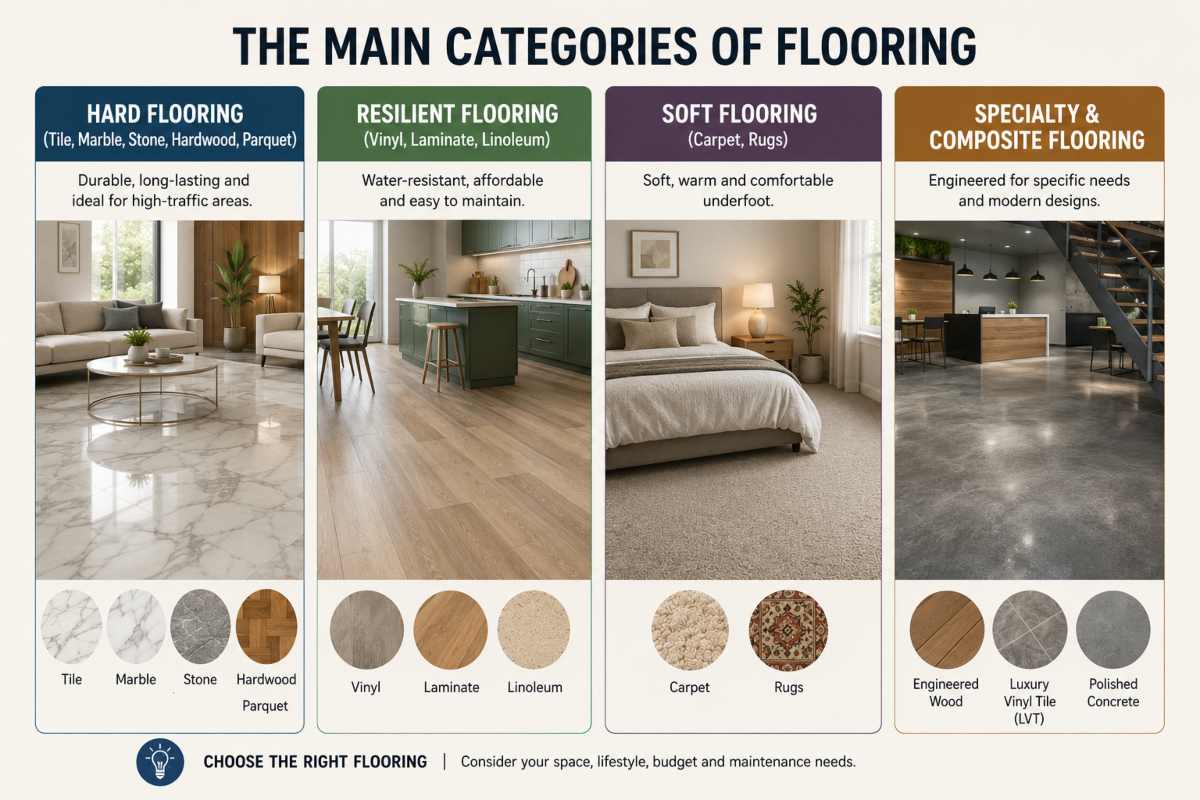
Flooring falls into four broad categories, hard, resilient, soft and specialty flooring, each defined by the material’s composition, installation method and how it performs under daily wear. Understanding these categories is the fastest way to narrow down options before comparing individual products.
Hard Flooring
Hard flooring covers rigid, dense materials such as ceramic and porcelain tile, natural stone, marble, hardwood and parquet. These materials are prized for their longevity and structural stability, with well installed stone or tile floors commonly lasting 25 years or more with minimal degradation. Marble and natural stone bring a premium, high end finish but require periodic sealing to resist staining, while ceramic and porcelain tile offer similar durability at a lower cost and near zero maintenance.
Wood based hard flooring splits into two main paths, solid hardwood flooring, prized for its ability to be sanded and refinished multiple times over its lifespan and parquet flooring, which arranges wood pieces into geometric patterns for a distinctive decorative effect. In the Ras Al Khaimah climate, engineered versions of these wood floors are generally favored over solid wood, since engineered constructions resist the warping and gapping that heat and humidity fluctuations can cause.
Resilient Flooring
Resilient flooring refers to semi flexible synthetic materials, primarily vinyl, laminate and linoleum, that offer a durable, water resistant surface at a lower installation cost than hard flooring. Vinyl, particularly luxury vinyl tile (LVT) and plank (LVP), has become one of the fastest growing flooring categories globally due to its realistic wood and stone visuals combined with full waterproofing.
Laminate flooring uses a high resolution printed image layer sealed under a hard wearing protective coating, giving it the look of wood or stone at a fraction of the cost, though it is more moisture sensitive than vinyl and better suited to lower humidity rooms. Linoleum, made from natural materials like linseed oil and cork dust, offers a more eco conscious resilient option, though it sees less use in the region than vinyl and laminate.
Soft Flooring
Soft flooring encompasses carpet and area rugs, valued primarily for comfort, insulation and acoustic dampening rather than raw durability. Wall to wall carpet remains common in bedrooms and formal living areas where a warmer underfoot feel is prioritized, while area rugs offer a flexible, non permanent way to introduce soft flooring over hard surfaces without full room installation. Soft flooring generally has a shorter functional lifespan than hard or resilient options and requires more frequent cleaning, making it a less common choice for high traffic or humid areas of Ras Al Khaimah homes.
Specialty and Composite Flooring
Specialty and composite flooring includes purpose built systems such as epoxy flooring, rubber flooring and other engineered composites designed for specific performance needs rather than general residential use. Epoxy, for instance, is a resin based coating applied directly over concrete to create a seamless, chemical and impact resistant surface, making it a common choice for garages, warehouses and commercial or industrial spaces. These specialty categories typically prioritize function, resistance to chemicals, heavy loads or moisture, over the decorative range offered by hard or resilient flooring.
How Flooring Is Structured
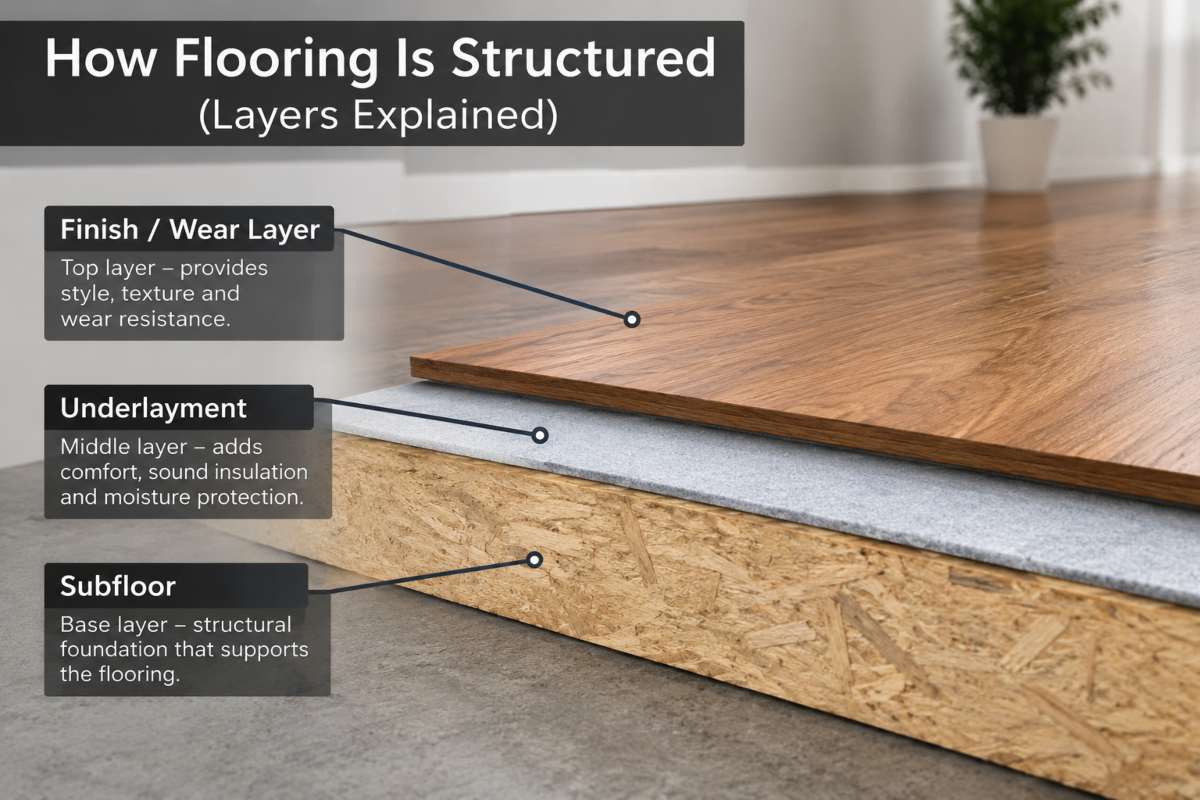
Every flooring system is built from three distinct layers, the subfloor, the underlayment and the finish or wear layer, with each layer serving a specific structural or performance role rather than simply stacking materials on top of one another. Understanding these layers explains why two floors that look identical on the surface can perform very differently underfoot.
Subfloor
The subfloor is the structural base beneath all flooring, typically made of concrete slab or plywood and it’s what the entire floor system stability depends on. In most Ras Al Khaimah construction, this is a poured concrete slab, which needs to be level, dry and crack free before any finish flooring is installed, uneven subfloors are one of the most common causes of premature tile cracking or vinyl plank separation. Subfloor preparation, including leveling compounds and moisture testing, is a step that is easy to underestimate but directly determines how long the finished floor above it will last.
Underlayment
The underlayment is a thin intermediate layer installed between the subfloor and the finish flooring and its job is to smooth minor imperfections, add cushioning and in many cases provide moisture or sound insulation. For resilient and laminate flooring specifically, underlayment also helps reduce the hollow “clicking” sound common with floating floor installations, while for tile and stone it can include an uncoupling membrane that prevents subfloor cracks from transferring up into the finish layer. Not every flooring type requires a separate underlayment, some engineered products come with it pre attached, but skipping it where it’s needed is a frequent cause of early flooring failure.
Finish/Wear Layer
The finish or wear layer is the visible top surface that determines a floor’s appearance, texture and resistance to scratches, stains and daily wear. On resilient flooring like vinyl and laminate, this is a distinct protective coating measured in mils, with thicker wear layers (typically 12–20 mils for residential use) correlating directly to longer product lifespans under foot traffic. On hardwood and parquet, the wear layer is the wood veneer itself, which is why solid and engineered wood floors can be sanded and refinished, a maintenance advantage resilient flooring doesn’t share, since its wear layer can’t be restored once worn through.
Structural flooring work often overlaps with broader interior carpentry, particularly around trims, transitions and subfloor framing in older properties. Home Fix carpentry works team handles this kind of structural and finish carpentry alongside flooring installation, ensuring the layers beneath a new floor are properly prepared before installation begins.
Flooring by Application
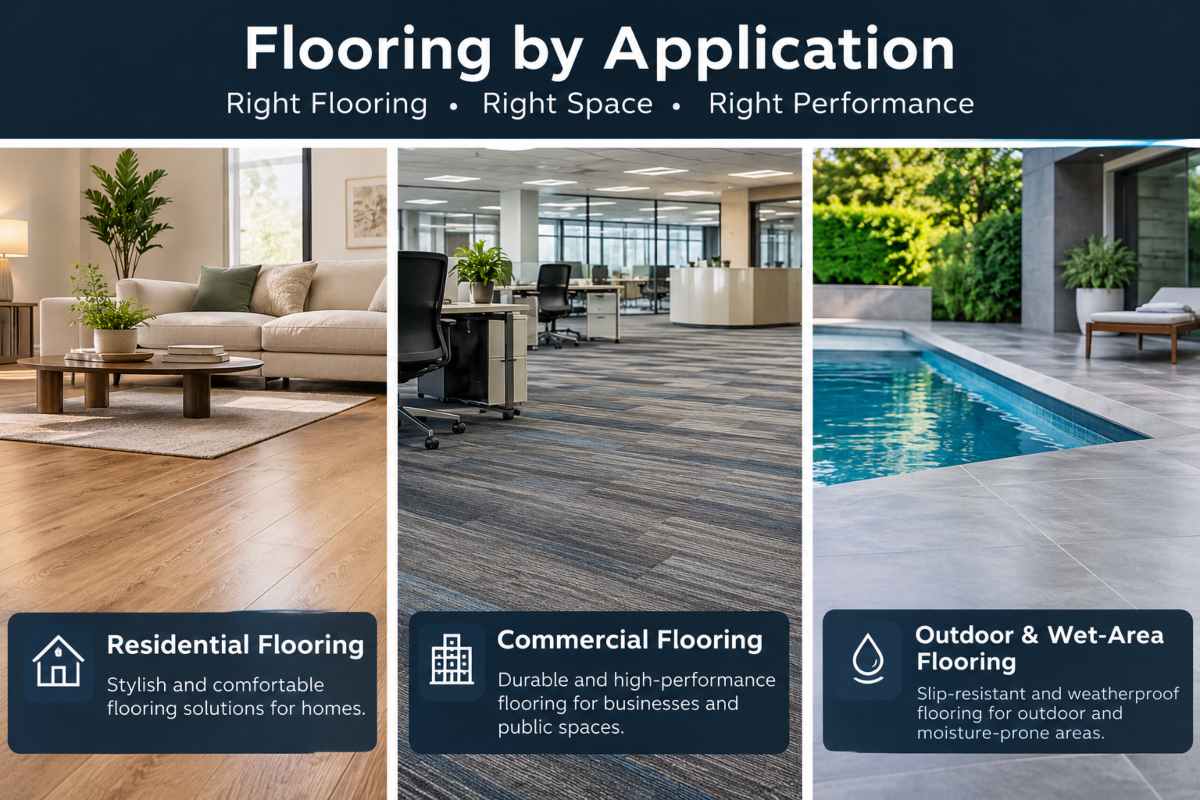
Flooring requirements shift significantly depending on where it’s installed, since a material well suited to a quiet bedroom can fail quickly in a high traffic commercial lobby or an outdoor courtyard. Matching flooring type to application is one of the most overlooked steps in planning a renovation and it’s often the difference between a floor that lasts a decade and one that needs replacing within a few years.
Residential Flooring
Residential flooring prioritizes comfort, aesthetics and a balance of durability against cost, since homes see lower and more predictable foot traffic than commercial spaces. Bedrooms and living areas often favor engineered hardwood, parquet or carpet for warmth and visual appeal, while kitchens, bathrooms and entryways lean toward tile or vinyl for their water resistance and easier cleaning. In Ras Al Khaimah homes specifically, marble and porcelain tile remain especially popular residential choices, valued for staying cool underfoot in a hot climate while resisting the fine dust and sand that regularly enters homes from outside.
Commercial Flooring
Commercial flooring is selected primarily for durability, heavy foot traffic resistance and low long term maintenance rather than decorative warmth, since these spaces see continuous use across long operating hours. Porcelain tile, polished concrete and engineered vinyl are common in retail and office environments because they hold up under constant movement while remaining easy to clean at scale. Commercial grade flooring is typically rated by wear layer thickness or PEI (Porcelain Enamel Institute) rating and materials rated for Class 4 or 5 commercial traffic can withstand several times the foot traffic of standard residential grade products before showing visible wear.
Outdoor and Wet Area Flooring
Outdoor and wet area flooring must resist moisture, UV exposure and temperature swings that would damage standard indoor materials, making slip resistance and water tolerance the primary selection criteria. Natural stone, textured porcelain and specially rated outdoor tiles are common choices for terraces, pool decks and courtyards, while epoxy and sealed concrete are frequently used in wet utility areas like garages and laundry rooms. For bathrooms and other high moisture indoor zones, flooring is typically chosen with a minimum slip resistance rating and full water sealing at joints, since standard laminate and unsealed hardwood are unsuitable for sustained moisture exposure.
Flooring Types, Pros and Cons Compared
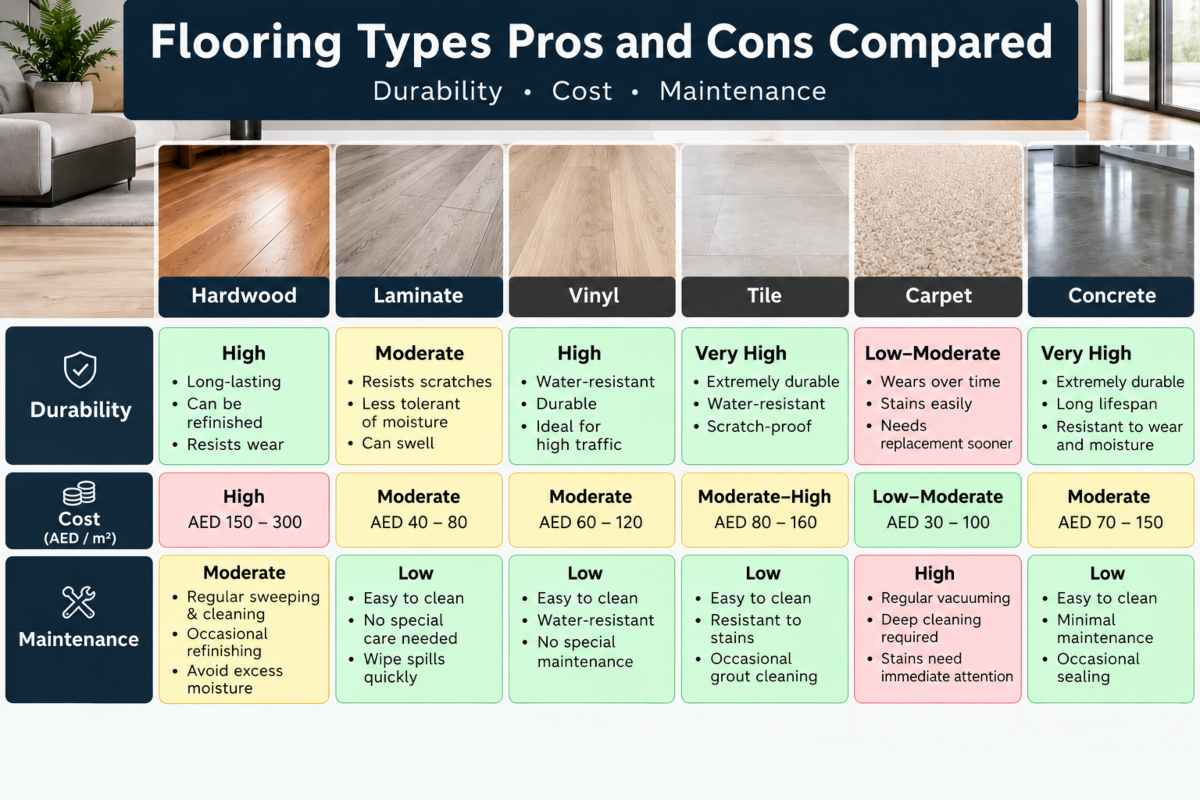
Choosing between flooring types ultimately comes down to weighing four factors against each other, durability, cost, maintenance and climate suitability, since no single material scores highest on all four at once. Comparing options against these criteria side by side makes trade offs clearer than evaluating materials in isolation.
Durability Comparison
Durability varies widely across flooring types, with hard flooring generally outlasting resilient and soft options under equivalent conditions. Marble, natural stone and porcelain tile can remain structurally sound for 25 years or more with proper installation, while engineered hardwood and parquet typically last 20–30 years and can be refinished to extend that further. Vinyl and laminate fall in the 10–20 year range depending on wear layer thickness and foot traffic, while carpet has the shortest practical lifespan, often needing replacement within 5–10 years in active households.
Cost Comparison
Cost differences across flooring types stem from material sourcing, manufacturing complexity and installation labor rather than durability alone. Natural marble and stone sit at the premium end due to quarrying and cutting costs, followed by solid hardwood and parquet, which require skilled installation and finishing. Porcelain tile, engineered wood and luxury vinyl occupy a mid range tier that balances appearance against affordability, while laminate and carpet typically offer the lowest upfront cost, though lower cost often trades off against a shorter functional lifespan, which matters when calculating long term value rather than just initial spend.
Maintenance Comparison
Maintenance demands differ sharply by material, tile, marble and porcelain require little beyond routine cleaning and occasional resealing for stone, while hardwood and parquet need periodic refinishing and protection from standing water. Resilient flooring like vinyl and laminate demands minimal upkeep day to day but can’t be repaired locally the way wood can, damage usually means replacing the affected plank or section. Carpet requires the most active maintenance, including regular deep cleaning to prevent dust, allergens and staining from building up in the fibers.
Climate Suitability
Climate suitability is arguably the most important comparison factor for Ras Al Khaimah homeowners, since heat, humidity swings and airborne dust affect materials differently than in temperate regions. Porcelain tile and marble perform exceptionally well locally, staying cool underfoot and remaining dimensionally stable regardless of temperature shifts, while solid hardwood is more prone to expansion, contraction and warping without careful climate control. Engineered hardwood, quality laminate and luxury vinyl offer more climate resilient alternatives to solid wood, making them practical choices for homeowners who want a wood aesthetic without the stability risks solid wood carries in this environment.
These trade offs look different depending on whether flooring is going into a private home or a commercial unit, since traffic patterns and budget priorities shift accordingly. Home Fix residential and commercial services teams can help weigh these factors against your specific property type before recommending a material.
How to Choose the Right Flooring
Choosing the right flooring comes down to matching a material’s strengths to three practical filters, the room it is going in, the budget available, and how much ongoing maintenance you are realistically willing to do. For homeowners in Ras Al Khaimah, a fourth factor sits alongside these three by default: the local climate, which narrows the field before looks or budget even come into play. Running a flooring decision through all four filters, rather than picking on appearance alone, is what prevents costly mismatches down the line.
By Room
Room by room selection starts with traffic and moisture exposure, since a material that suits a bedroom rarely suits a kitchen or bathroom equally well. High moisture areas like bathrooms, kitchens and laundry rooms call for tile, porcelain, or vinyl due to their water resistance, while living rooms and bedrooms have more flexibility to prioritize comfort with hardwood, parquet, or carpet.
Entryways and hallways, which absorb the heaviest daily foot traffic in most homes, generally perform best with durable hard flooring like porcelain tile, a practical fit in Ras Al Khaimah homes, where sand and dust tracked in from outside make easy to clean surfaces especially valuable at these high contact points.
By Budget
Budget filtering works best when it accounts for lifetime cost instead of just the upfront price per square meter, since cheaper materials often carry shorter lifespans and higher replacement frequency. Laminate and standard vinyl offer the lowest entry cost for homeowners prioritizing initial spend, while porcelain tile and engineered wood sit in a mid range that balances affordability against a longer service life.
For buyers calculating true value, dividing total installed cost by expected lifespan in years often reveals that a pricier material lasting 25 years can be more economical than a cheaper one requiring replacement every 8–10 years, a calculation that matters even more in Ras Al Khaimah’s climate, where the wrong low cost material can fail well ahead of its expected lifespan.
By Lifestyle and Maintenance Preference
Lifestyle and maintenance tolerance often matter as much as budget, particularly for households with children, pets, or limited time for upkeep. Families wanting minimal maintenance typically gravitate toward porcelain tile or luxury vinyl, both of which resist scratches, stains, and water damage without special care, a common priority among Ras Al Khaimah homeowners managing heat, humidity, and dust with limited time for upkeep.
Homeowners willing to invest more time in upkeep, periodic resealing, refinishing, or careful cleaning, can access the aesthetic and resale advantages of natural stone or solid hardwood, materials that reward maintenance with a longer usable lifespan and a look that is difficult to replicate with engineered alternatives.
Conclusion
Flooring ultimately comes down to matching material to purpose, hard flooring for longevity, resilient flooring for budget and water resistance, soft flooring for comfort and specialty materials for high demand spaces and in the UAE’s climate, options like porcelain tile, marble and engineered wood consistently outperform solid hardwood and standard laminate, a consideration worth weighing given that the flooring market is growing at over 6% annually, driven largely by renovation rather than new construction, whichever category fits your space and budget, Homefix can help turn that choice into a finished floor.
Frequently Asked Questions (FAQs)
What is the most common type of flooring?
Tile, particularly ceramic and porcelain, is the most widely used flooring type globally and in the UAE, thanks to its balance of durability, water resistance and low maintenance. Porcelain tile absorbs less than 0.5% water by weight, which makes it especially dominant in hot, humid climates where moisture resistance is a priority.
What is the difference between flooring and floor covering?
Flooring refers to the entire installed system, including the subfloor, underlayment and finish layer, while a floor covering specifically means the visible top surface material, such as tile, vinyl or carpet, that sits on top of that system. In everyday use the two terms are often used interchangeably, but technically, floor covering is one component within the broader flooring structure.
Which flooring type lasts the longest?
Natural stone, marble and porcelain tile typically last the longest, often remaining structurally sound for 25 years or more with proper installation and care. Solid hardwood can match or exceed that lifespan since it can be sanded and refinished multiple times, whereas resilient options like vinyl and laminate generally last 10–20 years before needing replacement.
Which flooring is best for UAE homes and climate?
Porcelain tile, marble and engineered hardwood are generally the best suited flooring types for UAE homes, since they resist the heat, humidity fluctuations and fine dust common in the region without warping or degrading. Solid hardwood and standard laminate are more climate sensitive and tend to underperform in this environment compared to engineered or stone based alternatives.