Door Hinge Repair in Ras Al Khaimah | Complete Guide

Most door hinge problems in Ras Al Khaimah can be fixed without replacing the hinge or the door. Tightening loose screws, re anchoring a stripped screw hole or silencing a squeak solves the majority of cases and replacement is only needed when a hinge is bent, cracked or badly corroded. Local conditions make hinge trouble more common than many homeowners expect. Average annual relative humidity in the area is about 58%, ranging from 46% in May to 69% in January.
That is enough to make timber doors swell, loosen screw seats, push hinges out of alignment, and salt in the coastal air age metal fittings even faster. This guide explains how to tell which problem you have, how to repair it and when the job is better handed to a professional team such as Home Fix Building Maintenance carpentry works service.
What Is Door Hinge Repair and When Is Repair Enough?
Door hinge repair means restoring a hinge and its mounting so the door swings freely, closes fully and sits square in the frame. It covers tightening or re-anchoring screws, cleaning and lubricating the knuckle, realigning the leaf and swapping out a single worn part. Repair is enough whenever the hinge is still structurally sound and the fault lies in the fixings, the alignment or the friction.
Most interior doors hang on three hinges and heavier solid or entrance doors often use four. The load is shared, so one weak hinge pushes extra weight onto the others and the door starts to drop. That is why a small fault, caught early, is usually a quick job.
Repair vs replacement at a glance
Repair is the right call when the hinge leaf is straight, the pin moves smoothly and the trouble comes from loose or stripped screws, dry or dirty movement or a slight sag. Replacement is the better call when the metal itself has failed, meaning the leaf is bent or cracked, the pin is so worn that the door drops even with tight screws or rust has eaten into the hinge. A hinge that is too small for the weight of the door will also keep failing however many times it is repaired.
A hinge that is too small for the weight of the door will also keep failing however many times it is repaired.
| What you notice | Usually | Why |
| Squeaking or stiff movement | Repair | Friction in the knuckle, not a failed part |
| Loose hinge or wobbling door | Repair | Screws or screw holes have lost their grip |
| Slight sag or door rubbing the frame | Repair | Alignment or screw seating is off, not the hinge |
| Bent or cracked hinge leaf | Replace | The metal has lost its strength and shape |
| Heavy rust or a worn pin | Replace | Corrosion and wear cannot be reversed |
| Door drops again after re-tightening | Replace the hinge, then check the frame | The fixing point may be damaged as well |
Signs Your Door Hinge Needs Repair
A door hinge needs repair when the door makes noise, feels loose, drops out of line, catches on the frame or no longer latches cleanly. These symptoms usually appear gradually and the sooner you spot them, the smaller the fix tends to be. The five signs below are the ones worth checking first.
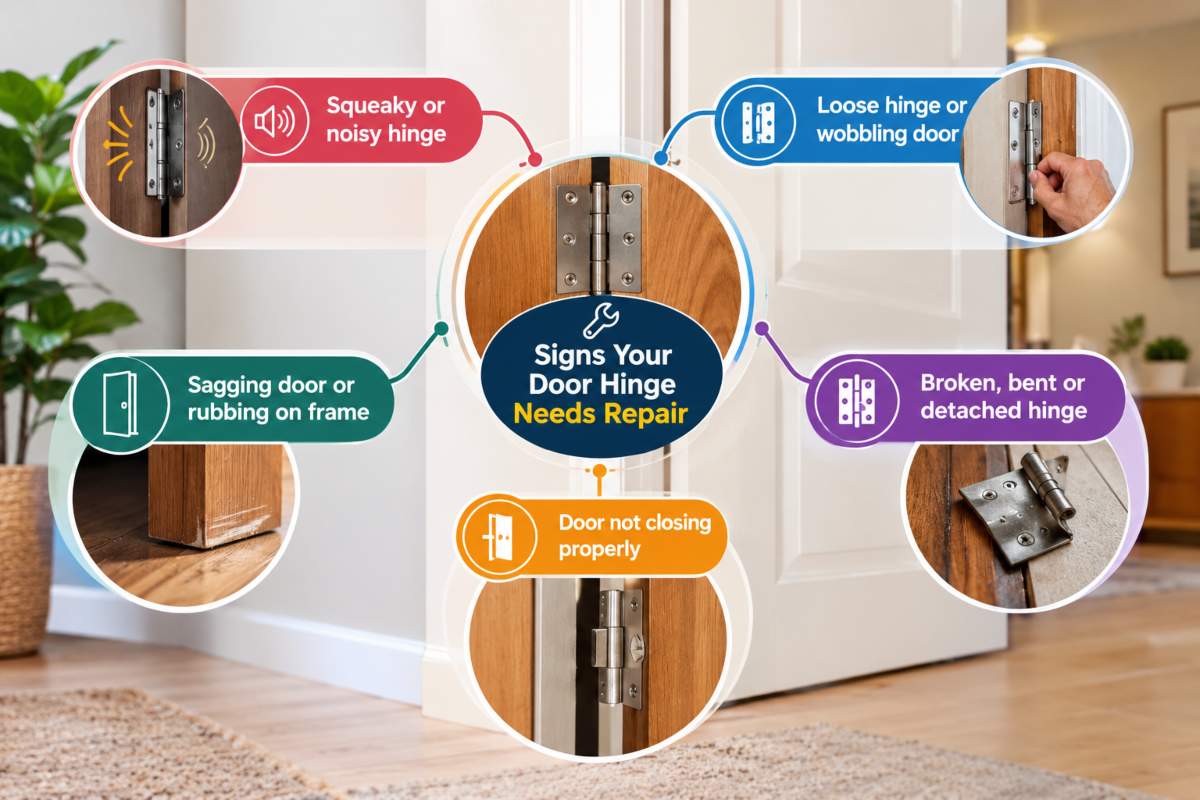
Squeaky or noisy hinge
A squeak or grinding sound when the door swings means metal is rubbing on metal without enough lubrication or that dust and old grease have built up inside the knuckle. On its own it is a minor fault. Left alone, the friction wears the pin and knuckle and a hinge that was only noisy can become one that binds or sags. A stiff swing that comes with the noise is a sign the wear has already started.
Loose hinge or wobbling door
If the door shifts or rattles when you push it or you can see a hinge leaf moving against the frame, the screws have loosened or the holes they sit in have widened. Wood is the usual culprit, because it expands and shrinks with humidity and slowly releases its grip on the threads. A wobbling door puts extra strain on the remaining hinges, so it is worth attending to early.
Sagging door or door rubbing on the frame
A door that has dropped will scrape along the floor, rub against the frame or leave a worn patch on the strike side. A useful check is to look at the gap around the door, it should be even and if it is tight at the top corner on the latch side and wide at the bottom, the door has dropped on its hinges. This is most often the top hinge pulling away from the frame under the weight of the door.
Door not closing properly
When the latch no longer meets the strike plate, the door bounces back, stays ajar or needs a shove to click shut. The cause is almost always a small change in alignment. Because a hinge problem shifts the door a few millimetres, the latch misses its mark even though nothing looks obviously broken. If the door closes fine in cooler months and sticks in humid ones, swelling is a likely contributor alongside the hinge.
Broken, bent or detached hinge
A hinge leaf that has cracked, bent or pulled fully away from the door or frame needs prompt attention, because the door is now hanging on fewer points than it was designed for. Look for splintered wood around the screw holes and gaps where the hinge should sit flush. If the surrounding frame is damaged, the job may extend beyond the hinge itself and become part of wider home renovation work, so it is worth having it assessed before you refit the door.
Why Door Hinges Fail in Ras Al Khaimah Homes
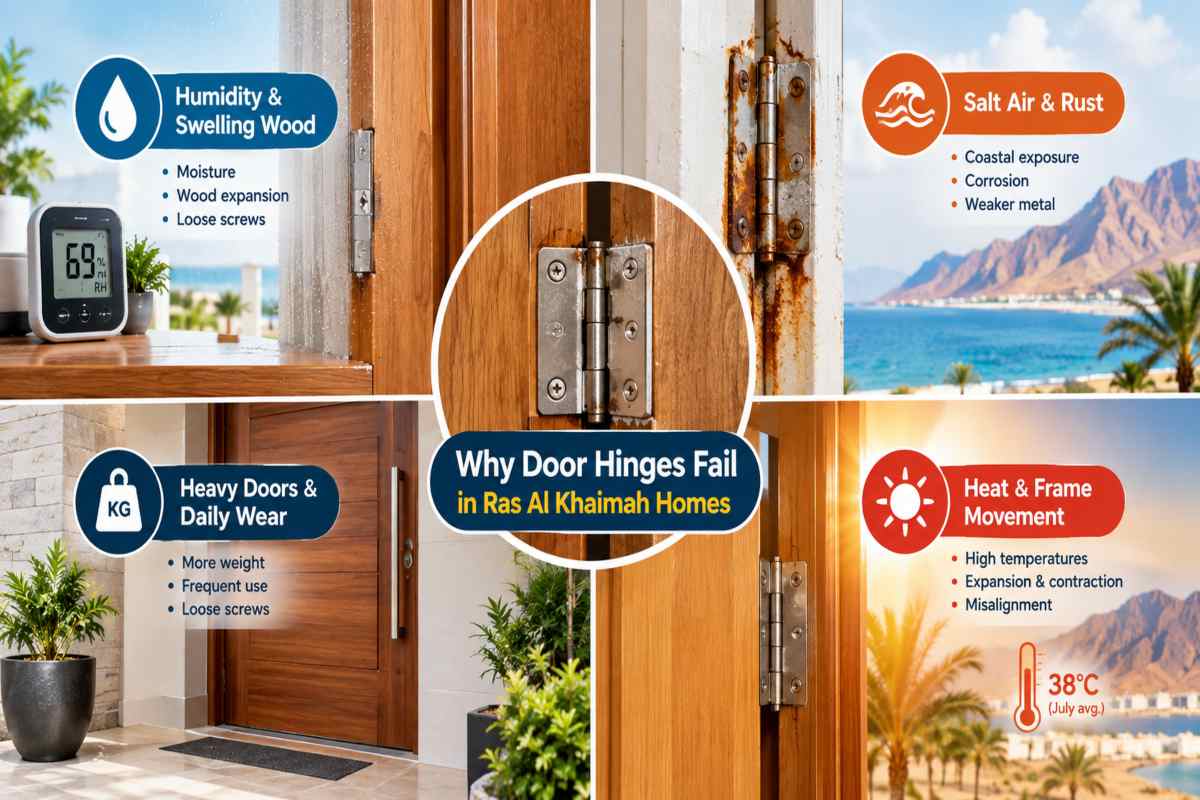
Door hinges fail in Ras Al Khaimah mainly because of moisture, salt, weight and heat working on the same fixings year after year. Each one loosens screws, corrodes metal or moves the frame and they often act together. Knowing which cause is behind your problem also tells you whether a simple repair will last.
Humidity and swelling wood
Timber takes on moisture from the air and gives it back and the seasonal swing here is wide. Monthly average relative humidity runs from about 46% in May to 69% in January, so wooden doors and frames are constantly expanding and shrinking. Each cycle loosens the grip of screw threads in the wood, until a hinge that was tight at installation starts to shift. Swelling can also make a door bind against the frame, which pulls harder on the hinges every time it opens. If the wood around a hinge feels soft, crumbly or hollow, the problem may be decay or pest damage rather than swelling and that needs a different fix, such as termite damage wood repair, before any hinge is refitted.
Salt air and rust on coastal properties
Properties near the coast are exposed to salt carried in the air, which settles on metal fittings and speeds up corrosion. Rust builds first in the knuckle and around the screw heads, where it stiffens movement and weakens the hinge from the inside. Plain steel hinges suffer most, while stainless steel or brass fittings hold up far better in these conditions. Bathrooms and doors facing the sea are typically the first to show orange staining or a gritty, resistant swing.
Heavy main doors and daily wear
Entrance doors are usually solid timber, steel or a heavy composite and every opening puts a large leverage load on the top hinge. Add a door closer, frequent traffic and slamming from wind or children and the screws work loose even in good wood. Hinges that are too small or too few for the weight of the door wear out faster than correctly sized ones. In busy family homes, a main door can take hundreds of swings a week, so small faults get worse quickly.
Heat and door frame movement
Average daytime highs reach about 38°C in July and that heat makes frames, doors and metal fittings expand and contract at different rates. Over many summers this subtle movement can open gaps around the frame, shift the strike plate out of line and pull screws slightly out of their seating. Doors on sun-facing walls take the most punishment, because one side heats faster than the other. The result is often a door that fits well in winter and rubs or catches in summer.
Tools and Materials You Will Need
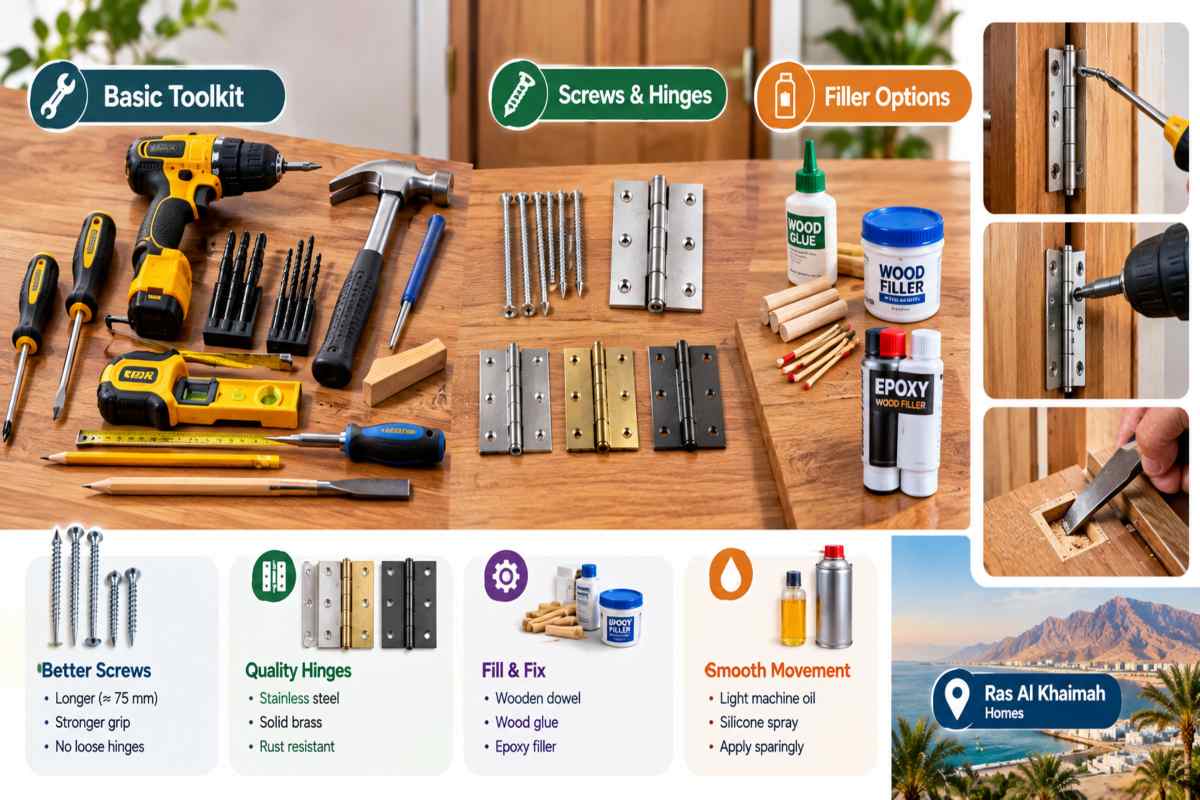
Most door hinge repairs need only a screwdriver, a drill, a few longer screws and something to fill damaged screw holes. A handful of inexpensive items covers loosening, squeaks, sagging and stripped holes and you only need to buy a new hinge if the old one is bent, cracked or corroded.
Basic toolkit
A screwdriver that fits the screw heads exactly is the most important tool, because a badly fitting bit rounds the head and turns a five-minute job into a long one. A cordless drill with a driver bit speeds up the work and a small drill bit lets you make pilot holes so new screws bite cleanly without splitting the wood.
A hammer and a thin nail set or punch help with stuck hinge pins and a wooden wedge or folded cardboard under the door holds it steady while the hinges are off. A pencil and a tape measure are useful for marking hinge positions and checking gaps and a spirit level confirms the door hangs true before you finish. For repairs on timber doors, a chisel is handy if a hinge recess needs deepening or trimming so the leaf sits flush.
Replacement screws, hinges and filler options
Longer screws are the cheapest and most effective fix for a loose hinge. The usual practice is to replace the short factory screws with ones around 75 mm (3 inches) long in at least the top hinge, so they pass through the frame and anchor into the solid framing behind it instead of only gripping the thin jamb. Where a screw hole is stripped, pack it with wooden dowel or matchsticks coated in wood glue, let it set, trim it flush and drive the screw into fresh wood. Two-part epoxy wood filler works for larger or damaged holes and it can be drilled and screwed into once cured.
When a hinge itself needs replacing, match its size, thickness and screw layout to the old one so the recess lines up without extra chiselling. Stainless steel and solid brass hinges resist rust far better than plain steel, which makes them the sensible choice for bathrooms, balcony doors and coastal properties. Heavy entrance doors need a hinge rated for their weight, often with ball bearings so the door swings smoothly under load. A small amount of light machine oil or silicone spray is enough for lubrication and it is best applied sparingly to avoid drips on flooring and paint.
How to Fix a Door Hinge Step by Step Methods
Most door hinge problems can be fixed with basic tools in under an hour by tightening the screws, repairing the screw holes, lubricating the knuckle or correcting the alignment. Match the method to the symptom, start with the simplest fix and work up only if the fault comes back.
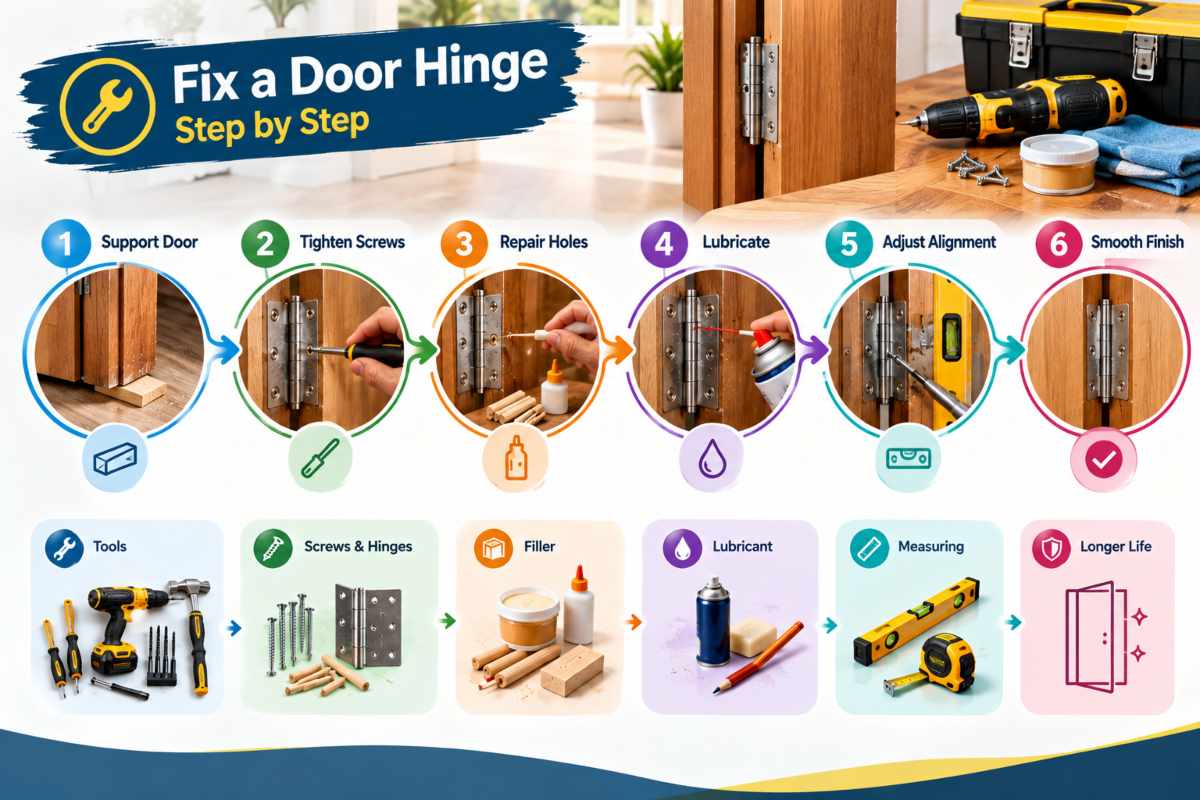
How to tighten a loose door hinge
Start by opening the door and supporting the free edge with a wedge or folded cardboard so its weight isn’t hanging on the hinges. Then check every screw, because loosening is rarely limited to one. Tighten each with a screwdriver that fits the head exactly and stop as soon as the screw is snug so you don’t strip the hole. If a screw keeps spinning without gripping, the hole has widened and the next method is the right fix. If all the screws hold and the door still moves, the problem is the hinge itself, so check the leaf for bending.
Stripped hinge screw hole repair
A stripped hole can’t hold a screw, but you can give it fresh wood to bite into. Remove the screw, coat a few wooden toothpicks or a small dowel with wood glue and push them into the hole until it is packed tight. Let the glue set, snap or trim the ends flush with the surface, then drive the screw back in through the new material. For larger damage, use a two-part epoxy wood filler instead, wait for it to cure fully and drill a small pilot hole before fitting the screw. A slightly longer screw also helps, because it reaches solid wood beyond the damaged area.
How to fix a squeaky hinge without oil (WD-40 alternatives)
You can silence most squeaks with things you already have at home. Lift the hinge pin out, rub it with a dry bar of soap, a candle stub or a soft graphite pencil until it is lightly coated and slide it back in. Swing the door a few times to spread the coating through the knuckle. These dry lubricants don’t drip onto flooring or paint and they attract less dust than oily sprays. A silicone spray or a small amount of grease works as well if you’d rather use a purpose-made product. If the squeak returns within days, the pin may be worn.
How to remove a stuck hinge pin
Place a wedge under the door to hold it steady, then work on one hinge at a time so the door never loses its support. Set the tip of a nail or thin punch under the bottom of the pin and tap upward with a hammer in short, firm strikes until the pin rises enough to grip and pull out. If the pin is rusted in place, a few drops of penetrating oil left to soak for several minutes will loosen it. Painted-over hinges may need the paint scored around the pin head first. Support a heavy door with a second person.
How to fix a sagging door without replacing the hinge
A sagging door is usually caused by the top hinge pulling away from the frame and longer screws often solve it. Replace one or two of the short screws in the top hinge with screws around 75 mm long, so they pass through the jamb and anchor into the solid framing behind it. As they tighten, they draw the door back up into line. If the gap around the door is still uneven, slip a thin cardboard shim behind the bottom hinge leaf to nudge the door into position. Repair the screw holes first if they are stripped or the long screws won’t hold.
Fixing a door that rubs or won’t close
First find where the door is touching, using the shiny or scuffed patches on the edge as a guide. Tighten the hinges and correct any sag before touching the wood, because a hinge fault is often the real cause. If the door swells in humid weather, sand or plane the rubbing edge lightly and seal the bare wood with paint or varnish so it doesn’t absorb moisture again. If the door hangs true but the latch misses the strike plate, move the plate slightly or file its opening until the latch catches cleanly. For heavy doors or where the frame has shifted or cracked, professional help from a team offering residential and commercial services will get a lasting result.
Door Hinge Repair by Door Type
The right door hinge repair depends on what the door is made of. Timber needs its screw seating and swelling checked, uPVC and aluminium doors usually just need adjusting, bathroom hinges need rust dealt with and heavy main doors need correctly rated hinges. Using the wrong method for the material is a common reason a repair fails.
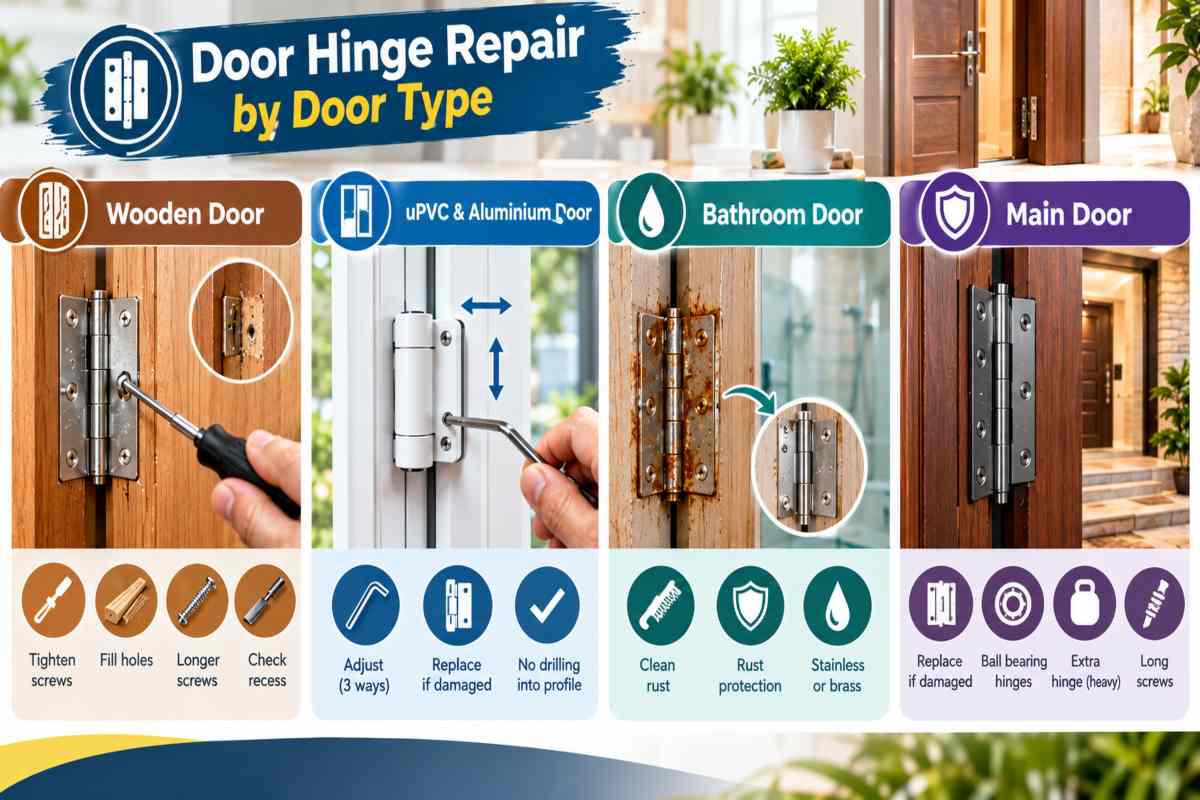
Wooden door hinge repair
Timber doors fail at the screws, because wood moves with humidity and slowly loosens its grip on the threads. Start by tightening the screws, then repair any stripped holes with glued dowel or wood filler and refit longer screws in the top hinge so they reach the solid framing behind the jamb. Check that each hinge leaf sits flush in its recess, since a leaf that sits proud pushes the door out of line and deepen the recess slightly with a chisel if needed. If the door has swollen or bowed rather than simply dropped, the hinges may only be reacting to the shape of the door and the underlying warp needs attention, as covered in this guide on how to fix a warped wooden door.
uPVC and aluminium door hinge repair
Most uPVC and aluminium doors use adjustable hinges, so many faults can be fixed without removing anything. A hex key usually adjusts the door in three directions, sideways to even the gaps, up or down to lift a sagging edge and in or out to change how tightly the door presses on its seals. Make small quarter-turn adjustments and test the door after each, so you don’t overcorrect. If a hinge is cracked, the plastic cover is broken or the screws keep spinning in the profile, replace the hinge with the same make and size, because the fixings are fitted to the frame’s internal reinforcement. Never drill into the profile without confirming what is behind it.
Bathroom door hinge rust repair
Steam and splashes keep bathroom hinges damp, so rust appears here before anywhere else in the home. Light surface rust can be removed by taking the hinge off, scrubbing it with a wire brush or fine abrasive pad and applying a rust converter or a coat of rust-inhibiting paint before refitting. Where rust has pitted the metal, stiffened the knuckle or eaten into the screws, replacement is the better answer. Marine-grade 316 stainless steel is the standard choice for damp or salt-exposed spots and solid brass is a good alternative. Sealing the bare edges of a timber bathroom door with paint or varnish also slows down moisture getting in and loosening the fixings.
Main door hinge replacement
Replace a main door hinge when the leaf is bent or cracked, the pin is worn so the door drops even with tight screws or corrosion has weakened the metal. Work on one hinge at a time so the door stays supported by the others and have a second person help, since entrance doors are heavy. Choose a replacement with the same size, thickness and screw layout as the old one so it fits the existing recess and prefer ball-bearing hinges in stainless steel or brass for smooth movement under load. Heavy doors often need a fourth hinge to share the weight. Fit long screws into the frame and check that the door closes cleanly and the latch meets the strike plate before you finish.
Cracked Door Frame Around the Hinge What to Do
A cracked door frame around a hinge can be repaired when the crack is shallow and the wood behind it is still solid. It needs a proper frame repair when the crack runs through the jamb, the wood is soft or the hinge screws no longer hold. The quickest way to tell the difference is to check how deep the crack goes and how the surrounding wood feels.
Minor cracks vs structural damage
A minor crack is a hairline split in the paint or the surface of the wood, usually along the grain and often right next to a screw hole. It doesn’t widen when the door is opened and closed and the wood around it is firm. Press the tip of a screwdriver into the frame beside the crack, if it resists, the wood is sound. These cracks can be filled with wood glue or epoxy filler, clamped or held until they set and then sanded and repainted.
Structural damage looks and feels different. The crack runs through the full thickness of the jamb or splits it in two, the wood is soft, crumbly or hollow under the screwdriver or the frame has pulled away from the wall and left a visible gap. Splintering around several screw holes and cracks that reappear after filling also point to a deeper problem. Soft or powdery wood suggests moisture damage or pests rather than simple wear and filling it only hides the fault.
When frame repair is needed
Frame repair is needed when the hinge can no longer be anchored in the wood, however well you tighten or pack the holes. Signs include screws that spin freely even in repaired holes, a crack that extends well beyond the hinge, a door that keeps dropping after the hinge is fixed and a jamb that moves when you push it. In these cases, the damaged section is cut out and replaced with new timber or the frame is reinforced with epoxy and a solid patch, so the hinge has fresh wood to bite into.
Widespread rot, insect damage or a frame that has shifted away from the wall usually means replacing the entire frame, since patching a compromised structure rarely lasts. Metal frames follow the same logic, light surface rust can be cleaned and treated, while perforated or bent steel needs cutting out and replacing. Because frame work involves removing the door, aligning the new section and making good the surrounding wall, it is usually best done by a professional. Fixing the hinge without fixing the frame simply moves the failure to the next screw.
Door Hinge Replacement When and How
Replace a door hinge when the metal itself has failed, meaning it is bent, cracked, badly rusted or worn so the door drops even with tight screws. The job takes about ten minutes per hinge with basic tools and the main decisions are choosing the right size and material and fitting the new hinge into the existing recess.
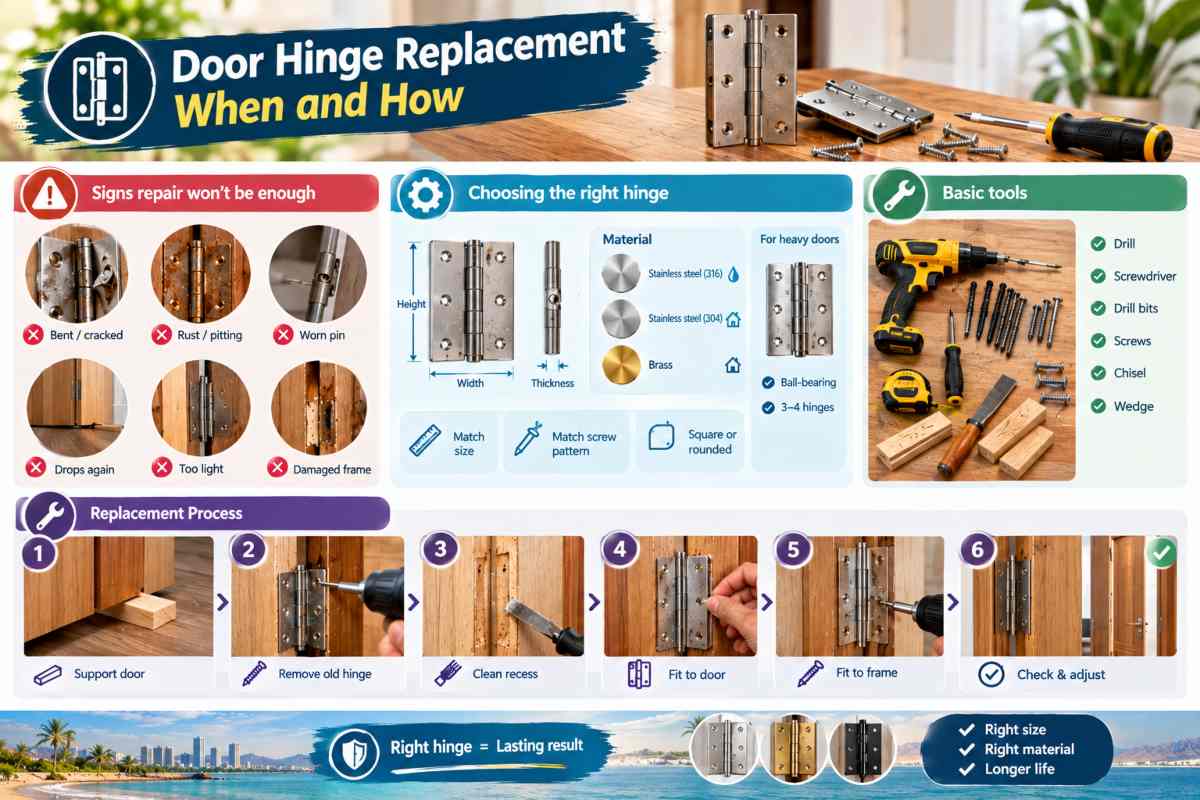
Signs repair won’t be enough
A hinge is past repair when a fix does not last. The clearest signs are a leaf that is visibly bent or cracked, a pin with so much play that the door rocks even with the screws tight and rust that has pitted the metal or seized the knuckle. A door that drops again within days of re-tightening or hinges that are too light for the door weight, will keep failing however carefully they are repaired. Check the fixings as well, if the frame or door edge is damaged, a new hinge needs sound wood to bite into, so fix that first.
Choosing the right hinge
Match the new hinge to the old one in three measurements, the height of the leaf, the width when opened flat and the thickness of the metal. Matching these means the hinge drops straight into the existing recess with no chiselling and the screw holes line up. Check the screw pattern and the corner shape, which is either square or rounded, since a mismatch leaves a gap or forces you to reshape the recess.
Material matters as much as size in a coastal setting. Plain steel and zinc-plated hinges rust quickly where the air carries salt, so choose 316 marine-grade stainless steel for exposed or damp positions or solid brass for interior doors. Standard 304 stainless works indoors but can still stain near the sea. Heavier doors need ball-bearing hinges rated for their weight and they usually need three hinges, with a fourth for very heavy doors, so the load is shared.
Basic replacement process
Work on one hinge at a time so the door stays supported by the others. Support the door edge with a wedge, unscrew the old hinge from the frame first and then from the door and clean out any dust, old paint or debris from the recess. Fit the new hinge to the door edge, then to the frame, starting with the screws closest to the pin so it seats squarely.
Use longer screws in the top hinge so they reach the solid framing and add a pilot hole to prevent splitting. Once all the hinges are changed, swing the door slowly and check that the gaps are even, the latch meets the strike plate and nothing rubs. If the door still catches at the bottom, look at the floor rather than the hinges, since a raised or uneven surface can make a correctly hung door drag and that is a job for flooring and roof services, not a hinge fix.
DIY vs Hiring a Professional
DIY is a sensible choice for a light interior door with a simple fault such as a loose screw, a squeak or a slight sag. Hire a professional when the door is heavy, the frame is damaged or the door still won’t hang right after a basic fix. The deciding factors are the weight of the door, the condition of the wood or frame and whether the fault keeps coming back.
When DIY is safe
DIY works when the problem is limited to the fixings or the friction and the door is light enough for one person to lift off its hinges. Tightening screws, packing a stripped hole with glued dowel, lubricating a squeaky pin and fitting longer screws in the top hinge all fall into this group. You need only basic tools and a mistake is easy to reverse. A quick test is to ask whether the wood around the hinge is firm and the frame is intact. If both are true and the door is a standard interior one, a careful DIY repair is usually enough.
When to call a professional (heavy doors, frame damage, alignment issues)
Heavy doors are the first reason to call for help. Solid timber, steel and large entrance doors can weigh enough that a slip while supporting them risks injury and damage to the frame or floor. Removing and rehanging them safely takes two people and the right support.
Frame damage is the second. If the jamb is cracked through, soft to a screwdriver probe or pulling away from the wall, a hinge repair on its own will not hold and the section needs cutting out and rebuilding. Alignment problems are the third, a door that still rubs, drops or won’t latch after you have tightened and adjusted the hinges usually has a deeper cause, such as a shifted frame or an uneven opening. Repeated failures are a sign that the fix is treating a symptom.
What a professional visit includes
A professional visit starts with a diagnosis rather than a quick fix. The technician checks the hinges, the screw seating, the condition of the door and frame, the gaps around the door and how the latch meets the strike plate, then identifies the actual cause of the fault. The repair itself might include re-anchoring the hinges with longer screws, rebuilding damaged screw holes, replacing worn hinges with correctly rated ones, adjusting or planing the door or repairing the frame.
The visit usually ends with a test of the door’s swing and latch, so it opens, closes and seals properly before the job is signed off. For properties with many doors, such as villas, rental units or commercial spaces, catching small faults early is cheaper than fixing failures later. An AMC service covers regular inspections and repairs, which keeps hinges, doors and frames in working order across the year.
Conclusion
Most door hinge problems in Ras Al Khaimah can be fixed fast and cheaply if you act early. A squeak, a loose screw or a slight sag is a small repair, but left alone it strains the other hinges, wears the frame and turns into a bigger bill. With monthly humidity ranging from about 46% to 69%, timber doors and their fixings move more here than in drier places, so a hinge that feels slightly off is worth checking sooner rather than later.
Start with the simplest fix, replace a hinge only when the metal has failed and choose stainless steel or brass for damp and coastal spots. If the door is heavy, the frame is cracked or the fault keeps returning, the safest option is to bring in a professional. The team at Home Fix Building Maintenance repairs and replaces door hinges for homes and properties across Ras Al Khaimah. Call +971 52 511 2254 or visit the website to book an inspection.
Frequently Asked Questions (FAQs)
Can a loose door hinge be fixed without replacing it?
Yes. Most loose hinges only need the screws tightened or a stripped hole packed with glued dowel and refitted with a longer screw. Replacement is only needed if the hinge is bent, cracked or badly rusted.
Why does my door keep sagging after tightening the screws?
The screw holes are usually stripped or the short screws only grip the thin frame and not the solid framing behind it. Repair the holes and fit longer screws (about 75 mm) in the top hinge. If it still drops, the hinge or frame may be damaged.
What can I use instead of WD-40 for a squeaky hinge?
Rub a dry bar of soap, a candle or a soft graphite pencil on the hinge pin, then refit it and swing the door a few times. These leave no drips and attract less dust. Silicone spray is another clean option.
How much does it cost to replace a door hinge in the UAE?
A simple hinge repair or replacement in the UAE typically costs around AED 120 to 250, based on one published price list. Heavy doors, stainless or brass hinges and frame damage raise the price.
Is it worth repairing a door hinge or replacing the whole door?
Repairing the hinge is almost always cheaper if the door itself is sound, flat and free of rot or pest damage. Replace the door only when it is warped beyond repair or the wood is decayed.