
Electrical Box Guide | 9 Types & Sizes for UAE Homes
An electrical box is a protective enclosure that houses wiring connections, switches, outlets, and meters, keeping them safe from damage, moisture, and accidental contact. Every home in the UAE relies on dozens of these boxes, from the small switch box behind a light panel to the outdoor meter box mounted on the villa wall. Choosing the right type, material, and size matters more here than in most climates, since heat, humidity, and coastal air in places like Ras Al Khaimah can wear down poor-quality fittings faster than in other climates. This guide walks through every common electrical box you’ll find in a UAE home: what each one does, which size is right for which job, and when it’s time to bring in a licensed electrician instead of handling it yourself.
What Is an Electrical Box? (And Why Every UAE Home Needs the Right One)
An electrical box is a protective enclosure that houses wiring connections, switches, outlets, or meters. It shields live wires from damage, moisture, and accidental contact, and it’s present behind almost every socket, switch, and junction in your home, even if you never see it.
What an Electrical Box Does
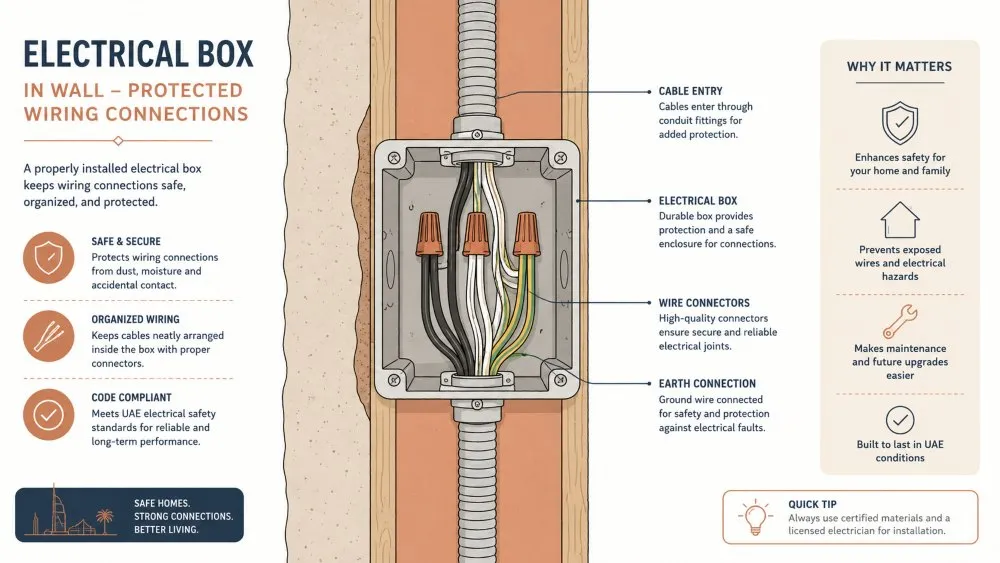
An electrical box serves three core purposes. First, it contains and protects wire connections, preventing exposed wiring from coming into contact with flammable materials such as wood or insulation. Second, it provides a secure mounting point for outlets, switches, and fixtures, so they don’t shift or pull loose over time. Third, it gives electricians a defined, code-compliant space to work within, making inspections, repairs, and future upgrades far easier.
Without a proper box, wiring connections are left exposed. That raises the risk of short circuits, electric shock, and fire, which is why building codes require an approved box at every connection point.
Why Box Choice Matters in the UAE’s Heat and Humidity
The UAE’s climate places unusual demands on electrical fittings. Summer temperatures regularly exceed 45°C, and in coastal areas like Ras Al Khaimah, salt-laden air and high humidity accelerate corrosion in metal components and covers.
The wrong box material or rating in these conditions can lead to:
- Corrosion in metal boxes and connectors, weakening electrical connections over time
- Moisture ingress in boxes without proper IP-rated seals, especially outdoors or near pools
- Heat-related degradation of plastic boxes not rated for high ambient temperatures
- Premature failure of covers, gaskets, and locks exposed to sun and salt air
Types of Electrical Boxes Explained
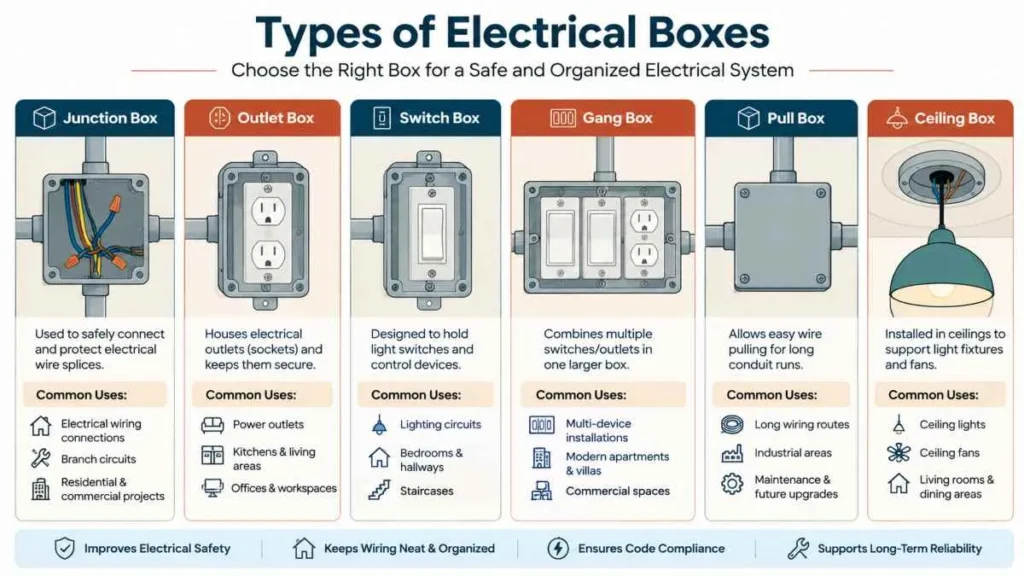
Not all electrical boxes serve the same purpose. Each type is designed for a specific job, and choosing the wrong one can create both safety risks and installation headaches. Here’s a breakdown of the main types found in UAE homes.
Junction Boxes
A junction box is used purely to house and protect wire splices, points where two or more wires connect, but no device (switch, outlet, or fixture) is attached. They’re common in ceiling voids, wall cavities, and along cable runs where wiring needs to branch off in different directions.
Junction boxes must always remain accessible and never be permanently buried behind drywall or tiling, since electricians may need to inspect or modify the connections inside later.
Outlet and Switch Boxes
These are the boxes you interact with daily, even without realising it. An outlet box houses the wiring behind a power socket, while a switch box holds the wiring and mounting bracket for a light switch. Both are typically rectangular and sized to fit a single device, though depth and width vary depending on how many wires need to fit inside.
Gang Boxes (Single vs Double vs Triple)
“Gang” refers to the number of devices a single box can hold side by side. A single-gang box fits one switch or outlet. A double-gang box fits two devices, common where a light switch and dimmer sit together, or two outlets share a wall plate. Triple-gang boxes accommodate three devices and are typically used in kitchens, media walls, or utility rooms where multiple switches or outlets cluster in one spot.
Choosing the correct gang size upfront avoids a cramped, unsafe installation or an oversized box with unused space that weakens the wall mounting.
Pull Boxes and Terminal Boxes
Pull boxes are used in longer wiring runs to make it easier to pull cable through conduit without excessive bending or strain on the wires. They don’t house switches or outlets. Their sole job is to provide access points along a cable path.
Terminal boxes house the circuit’s endpoint connections, where wires terminate and connect to a device, panel, or piece of equipment. They’re often used in more technical or commercial-style installations, though they do appear in villas with larger electrical layouts.
Ceiling and Floor Boxes
Ceiling boxes support light fixtures, fans, or chandeliers and are rated to bear more weight than a standard wall box, particularly important for ceiling fans, which pull and vibrate over time. Floor boxes are installed in the floor slab or raised flooring to bring power, data, or both to a fixed point in the middle of a room, and are common in home offices, open-plan living areas, or conference-style setups where a wall outlet isn’t practical.
Electrical Box Materials: PVC vs Metal vs Steel
The material an electrical box is made of affects its durability, safety rating, and resistance to heat, moisture, and corrosion. In the UAE, this choice carries more weight than in milder climates, since the wrong material can fail years earlier than expected.
PVC/Plastic Boxes — Where They Work Best
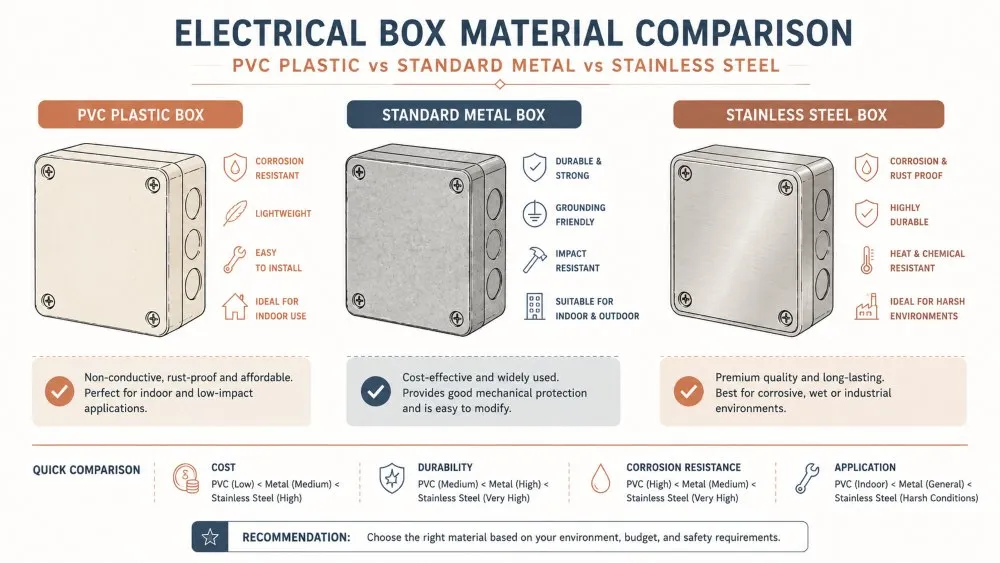
PVC and plastic electrical boxes are lightweight, inexpensive, and naturally resistant to corrosion since they don’t rust. They’re non-conductive, which adds a layer of safety against accidental shock, and they’re easy to cut and fit during installation.
They work best for:
- Indoor residential wiring, such as standard outlet and switch boxes
- Dry, low-heat areas away from direct sun exposure
- Junction boxes concealed within walls or ceiling voids
Where they fall short is in high-heat or high-impact locations. Prolonged direct sun exposure or proximity to heat sources can cause some plastics to warp or become brittle over time, so they’re generally not the first choice for exposed outdoor installations in the UAE without a rated enclosure.
Metal and Stainless Steel — Durability Trade-Offs
Metal boxes, including standard steel and stainless steel, offer superior mechanical strength and are often required in commercial or high-load installations, such as boxes supporting heavy fixtures or equipment. Stainless steel in particular resists corrosion far better than standard steel, making it a stronger long-term option in humid or coastal conditions.
The trade-off is cost and installation complexity. Metal boxes are heavier, require grounding as part of the installation, and standard (non-stainless) steel is vulnerable to rust if the protective coating is scratched or compromised, something worth watching in RAK’s salt-air environment.
Which Material Suits UAE’s Climate
For most indoor residential use, PVC boxes remain the practical, cost-effective choice. For outdoor installations, meter boxes, or anything exposed to coastal humidity, stainless steel or a properly IP-rated plastic enclosure performs best, since standard steel corrodes faster near the coast and untreated plastic can degrade under constant sun.
As a general rule for RAK homeowners:
- Indoors, dry areas → PVC/plastic
- Outdoors, coastal exposure → Stainless steel or IP-rated weatherproof plastic
- Heavy fixtures or commercial-grade needs → Metal, with corrosion protection factored in
Electric Meter Boxes: A Closer Look
The meter box is one of the most important electrical enclosures in any home. It houses the utility meter that measures electricity consumption, and it’s often the first point of contact between the public grid and your property’s internal wiring. In the UAE, meter boxes are also more exposed to the elements than any other box in the home, which makes their condition worth understanding.
Indoor vs Outdoor Meter Boxes
Indoor meter boxes are typically found in apartment buildings or villas with an enclosed utility area that is sheltered from direct sun, rain, and dust. They’re generally easier to maintain since they’re protected from weather extremes.
Outdoor meter boxes, common on villa exteriors and boundary walls, face far more wear. They’re exposed to direct sun, seasonal rain, dust storms, and, in coastal areas like RAK, salt-laden air. Outdoor units need a weatherproof rating and a well-sealed enclosure to prevent moisture ingress, which can corrode internal components or interfere with meter readings.
Meter Box Covers, Doors, and Locks
A meter box isn’t just the enclosure itself; its cover, door, and locking mechanism matter just as much. The cover shields the meter from rain and direct sunlight, while the door allows utility staff access for readings and maintenance without unnecessarily exposing the internals.
Locks serve a dual purpose: preventing tampering with the meter and protecting residents from accidental contact with live components. A damaged or missing lock, a cracked cover, or a door that no longer seals properly should be treated as a maintenance priority, as it leaves the meter exposed to weather and safety risks.
3-Phase Meter Boxes for Villas
Most standalone villas in the UAE run on a 3-phase electrical supply rather than the single-phase connection typical of smaller apartments. This is because villas generally have higher electrical loads, larger AC systems, pools, and multiple large appliances running simultaneously.
3-phase meter boxes are physically larger than single-phase units to accommodate the additional wiring and metering components, and the utility provider typically installs them as part of the initial villa connection. If you’re renovating or expanding a villa’s electrical capacity, it’s worth confirming with a licensed electrician whether your existing 3-phase meter box and its enclosure are still adequately sized and sealed for the added load.
Electrical Box Sizes: How to Choose the Right One
Picking the right size electrical box isn’t just about fitting a device into a wall. Boxes that are too small create cramped, unsafe wiring conditions, while oversized boxes waste space and can weaken the wall mounting. Getting the size right from the start saves rework later.
Standard Size Chart (4×4, 6×6, and Common Back-Box Dimensions)
Electrical boxes come in a range of standard sizes, each suited to different applications:
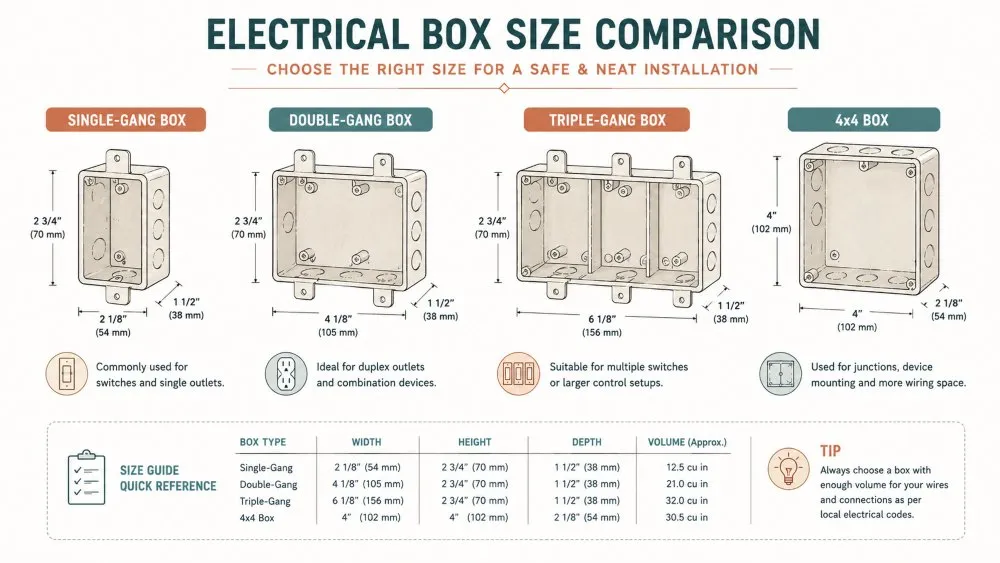
- 4×4 inch boxes – One of the most common sizes for single switches, outlets, and junction points in residential walls
- 6×6 inch boxes – Used where more wires need to be housed, such as junction points with multiple branch circuits, or larger fixtures
- Single-gang back boxes – Typically around 2 x 3.5 inches, sized for one switch or outlet
- Double-gang back boxes – Roughly 4.5 x 3.5 inches, to accommodate two devices side by side
- Triple-gang back boxes – Wider still, generally used in kitchens or utility areas with multiple switches grouped together
Depth also varies; shallow boxes (around 1.5 inches) suit simple single-wire connections. In comparison, deeper boxes (2.5 to 3.5 inches) are needed when multiple cables, connectors, or extra components from a dimmer switch need to fit inside.
How Wire Count and Device Type Affect Sizing
Box size isn’t just about the device going into it; it’s also about how many wires terminate inside. Electrical codes specify a minimum internal volume based on the number of conductors, devices, and connectors in the box to prevent overcrowding that can lead to overheating or damaged insulation.
As a general guide:
- More wires or branch circuits passing through a junction box require a larger internal volume
- Devices with bulkier wiring, such as dimmer switches or GFCI outlets, need extra depth compared to a standard switch
- Combination devices (a switch and outlet in one gang) require more internal space than a single device alone
This is why an electrician calculates box size based on the specific circuit, rather than picking a single size for every location in the home. Undersized boxes are a common issue during electrical inspections and rewiring work, and they’re straightforward to fix when caught early.
Outdoor & Weatherproof Electrical Boxes
Any electrical box installed outside needs more than just a sturdy enclosure; it needs a rating that guarantees protection against water, dust, and, in coastal areas, salt exposure. Choosing the wrong outdoor box is one of the most common causes of premature electrical failures in homes in the UAE.
IP65 vs IP66 Ratings Explained
IP (Ingress Protection) ratings tell you exactly how well sealed a box is against dust and water. The two digits each mean something specific: the first indicates dust protection, the second indicates water protection.
- IP65 – Fully dust-tight, protected against low-pressure water jets from any direction. Suitable for most outdoor locations, covered patios, garden walls, and areas with occasional rain exposure.
- IP66 – Fully dust-tight, protected against powerful water jets from any direction. A higher level of protection is better suited to more exposed locations, near sprinklers, close to the coast, or anywhere facing direct, heavy rain.
For most UAE villa exteriors, IP65 is the minimum standard worth specifying. For anything closer to the sea or exposed to stronger weather, IP66 offers better long-term protection.
Best Practice for RAK’s Coastal Humidity and Sea-Air Exposure
Ras Al Khaimah’s coastal location means salt-laden air is a constant factor for any exposed electrical fitting, not just those directly on the waterfront. Salt accelerates corrosion in metal components, seals, and even some lower-grade plastics over time.
Best practice for outdoor boxes in RAK includes:
- Choosing IP66-rated enclosures for anything within close range of the coastline
- Favouring stainless steel or UV-stabilised, corrosion-resistant plastic over standard steel
- Scheduling periodic checks of seals, covers, and locks, since gaskets can degrade faster in this environment than manufacturer guidelines (often based on milder climates) suggest
- Ensuring cable entry points are properly sealed, as this is a common weak point where moisture gets in, even on a well-rated box
Pool-Area and Underground Box Requirements
Electrical boxes near swimming pools are subject to stricter safety requirements, given the combined risks of water and electricity. Pool-area boxes need a high IP rating (typically IP65 or above), correct clearance distances from the water’s edge, and in many cases, connection through a residual current device (RCD) for added shock protection.
Underground and in-ground boxes face a different challenge: sustained exposure to ground moisture rather than rain. These require enclosures specifically rated for underground or direct-burial use, properly sealed cable entries, and correct depth placement to avoid damage from ground movement or future landscaping work.
Given the safety stakes involved, pool-area and underground electrical work should always be carried out and signed off by a licensed electrician rather than treated as a DIY project.
Covers, Connectors & Accessories
An electrical box is only as good as the accessories that complete it. Covers, connectors, and small fittings might seem minor, but they directly affect safety, weatherproofing, and how easily a box can be adapted for future changes.
Choosing the Right Cover Plate
A cover plate does more than tidy up the look of a switch or outlet; it protects the wiring and connections behind it from dust, moisture, and accidental contact. The right choice depends on the box’s location and purpose:
- Standard plastic or metal plates are suitable for indoor switches and outlets in dry areas.
- Weatherproof, gasketed covers are essential for any outdoor box, sealing out rain and dust while still allowing access.
- Blank cover plates are used on junction boxes that don’t house a visible device, keeping the enclosure sealed and code-compliant
- Childproof or tamper-resistant covers add an extra layer of safety in family homes, particularly for outlets within reach of young children.
A mismatched or poorly fitted cover plate is a common, easily overlooked issue, one that leaves wiring more exposed than homeowners realise until it’s pointed out during an inspection.
Extension Rings and Knockouts Explained
Extension rings are add-on components that increase the depth or capacity of an existing electrical box. They’re commonly used when a wall gets an extra layer of finish (such as new tiling or panelling) that leaves the original box sitting too far back, or when additional wiring needs more room than the box currently allows. Rather than replacing the entire box, an extension ring is fitted on top to bring it flush again.
Knockouts are the pre-scored, removable sections found on the sides or back of a box, designed to be punched out to create an entry point for cable or conduit. Using the correct knockout, rather than drilling a new hole, keeps the box structurally sound and maintains its weatherproof or safety rating where applicable.
Both components are small details, but they matter during renovations or electrical upgrades, where existing boxes often need to be adapted rather than replaced outright.
Installation Basics: Concealed vs Surface Mount
How an electrical box is installed, hidden within the wall or mounted on top of it, affects both appearance and practicality. Neither method is universally “better”; the right choice depends on the wall structure, the room, and whether the installation is new construction or a retrofit.
When Concealed Boxes Are Used
Concealed (or flush-mount) boxes sit inside the wall cavity, with only the cover plate and device visible on the surface. This is the standard approach in most UAE homes, giving a clean, finished look with no wiring or box edges on display.
Concealed installation works best for:
- New builds or full renovations, where walls are open, and wiring can be planned in advance
- Living areas, bedrooms, and anywhere a polished finish matters
- Homes with solid block or concrete walls, where a cavity can be properly chased and sealed
The trade-off is accessibility. Once a wall is finished, modifying a concealed box, adding a device, or increasing box size means cutting into plaster or tiling, making changes more disruptive and costly later.
When Surface-Mount Is the Safer/Faster Choice
Surface-mount boxes sit directly on top of the wall, with cables run externally or through visible conduit rather than hidden inside the wall cavity. While less common in finished living spaces, they have clear practical advantages in the right setting.
Surface mount tends to be the better option for:
- Garages, storage rooms, plant rooms, and other utility spaces where appearance is a lower priority
- Retrofits and additions where opening up a finished wall isn’t practical or cost-effective
- Temporary or semi-permanent setups, such as construction sites or short-term installations
- Situations where faster installation and easier future access matter more than a concealed finish
Surface-mount also simplifies inspection and maintenance, since the box and wiring remain visible and accessible without opening the wall. For homeowners weighing a renovation, this is often a practical middle ground in rooms where a fully concealed retrofit would mean significant, disruptive rework.
FAQs
What is an electrical box called?
It’s most commonly called an electrical box, junction box, or back box; the terms are often used interchangeably depending on its purpose. Specific types also go by their own names, such as a switch box, outlet box, or meter box.
What size electrical box do I need for a standard outlet?
A standard single outlet typically uses a single-gang box, around 2 x 3.5 inches, with a depth of 1.5 to 2.5 inches depending on the number of wires inside. The exact size depends on your wiring setup, so it’s best to have it confirmed by an electrician before installation.
Are plastic electrical boxes safe outdoors?
Standard plastic boxes aren’t suitable for unprotected outdoor use, since sun and heat exposure can cause them to warp over time. However, UV-stabilised, IP-rated weatherproof plastic enclosures are safe and widely used outdoors, including in coastal areas such as Ras Al Khaimah.
What’s the difference between a junction box and a pull box?
A junction box houses wire splices and connections where two or more wires join. A pull box doesn’t connect wires at all; it simply provides an access point along a cable run to make pulling wire through conduit easier.
Do I need a permit to replace an electrical box in the UAE?
Minor like-for-like replacements are sometimes straightforward, but any electrical work involving new circuits, rewiring, or changes to a property’s electrical layout typically requires a licensed electrician and may require approval under your emirate’s regulations. It’s always safer to consult a licensed professional before starting any electrical work.