
Plumbing Works Ras Al Khaimah | Everything You Need to Know
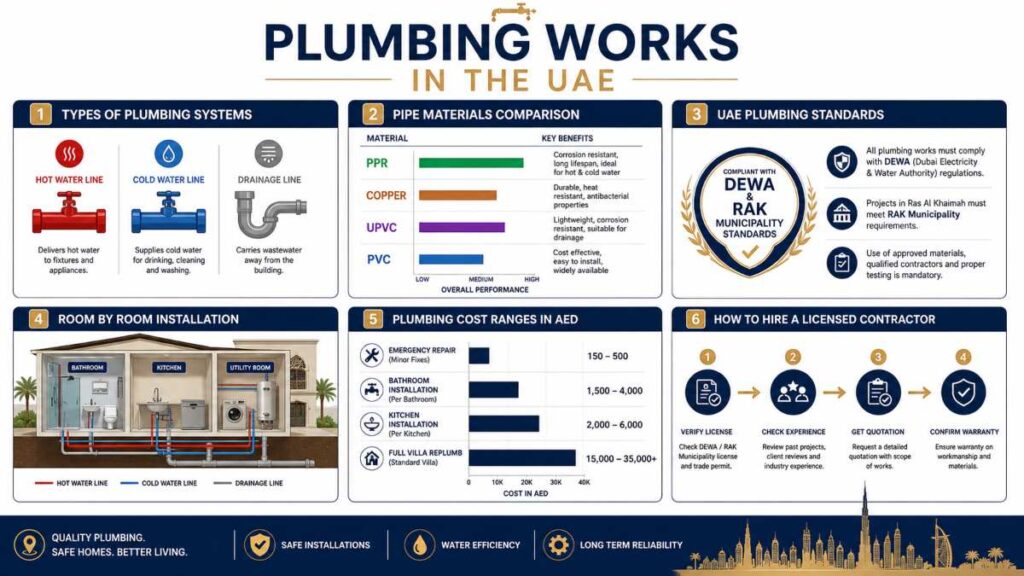
Plumbing works are the backbone of every functional property in the UAE. Whether you own a villa in Ras Al Khaimah, manage a commercial building, or are overseeing a new fit-out project, the quality of your plumbing system determines the comfort, safety, and long-term value of your property. Yet despite how essential plumbing is, most property owners know very little about how it works, what materials are used, what UAE regulations require, or how to choose the right contractor.
This covers everything you need to know about plumbing works in the UAE from system types and pipe materials to local standards, room-by-room installation, maintenance, costs, and how to hire a qualified professional. Whether you are planning a new installation, dealing with a repair, or simply want to make an informed decision, this is the only resource you need.
What Are Plumbing Works? Definition and Scope
Plumbing works refer to the complete system of pipes, fittings, fixtures, valves, and drainage components that manage the flow of water and waste in a building. In the UAE, plumbing work covers everything from the water supply entering your property to the drainage leaving it and every connection point in between.
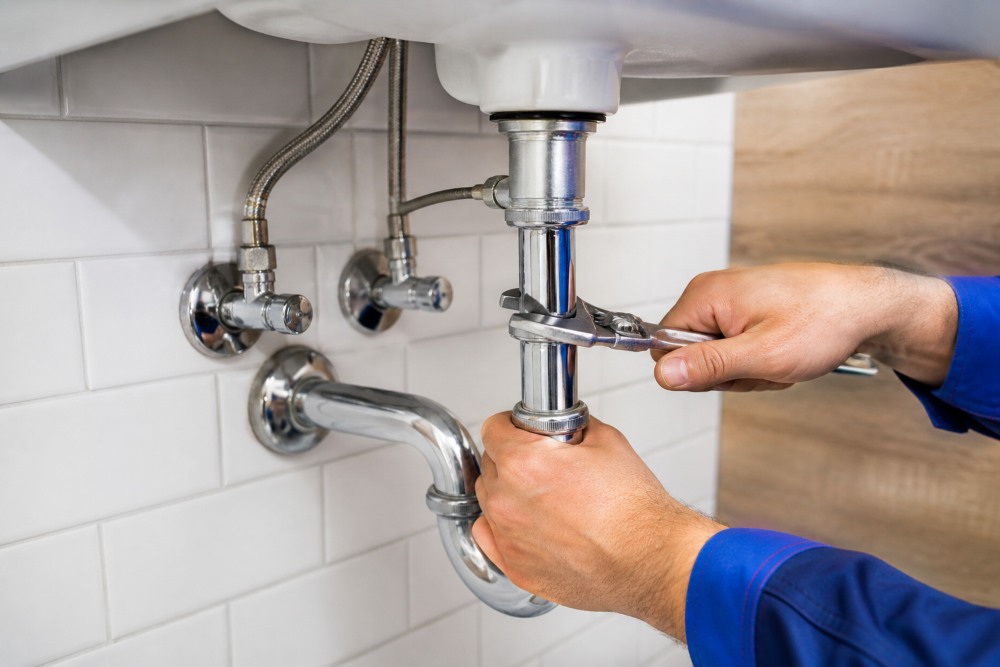
What Is a Plumbing System?
A plumbing system is an interconnected network of pipes and components designed to deliver clean water to fixtures such as taps, showers, and appliances, and to remove wastewater safely from the building. In residential and commercial properties across the UAE, a complete plumbing system includes the cold-water supply line, the hot-water system, all sanitary fittings, drainage pipes, vent pipes, and connections to the municipal sewer or septic system.
Plumbing Works vs Drainage What Is the Difference?
Plumbing and drainage are related but distinct. Plumbing refers to the supply side bringing clean water in and distributing it throughout the building. Drainage refers to the waste side removing used water and sewage from the building safely. In practice, a professional plumbing contractor handles both systems together, since they are designed and installed as a unified network.
First Fix vs Second Fix Plumbing Explained
First-fix plumbing is everything that happens before the walls and floors are closed, laying the pipes, running the supply lines, and installing the drainage system. Second-fix plumbing is everything that happens after the finishes are in—connecting the taps, fitting the sanitary ware, installing the shower trays, and commissioning the system. Both stages require skilled tradespeople and must comply with UAE building standards.
What Does Plumbing Include in a Building?
In a complete building context, plumbing includes cold and hot water supply systems, drainage and waste systems, sanitary fixtures and fittings, water heaters, pressure-regulation valves, isolation valves, vent stacks, trap systems, and connections to fire suppression systems, where required. In larger buildings, plumbing forms part of the MEP package mechanical, electrical, and plumbing and is designed by a specialist engineer before construction begins.
Types of Plumbing Systems Used in UAE Buildings
Not all plumbing systems are the same. The type of system installed in a property depends on its size, use, and age. Understanding the different systems helps you communicate clearly with your contractor and make better decisions when specifying or upgrading your property.
Hot and Cold Water Supply Systems
Every property in the UAE has a cold water supply system connected to the municipal network or a rooftop storage tank. Hot water is typically provided through a centralised water heater or individual instantaneous units. In larger properties and hotels, a centralised hot-water circulation system keeps hot water available at every tap, eliminating long wait times. Given the UAE’s extreme heat, insulation of both hot and cold supply pipes is essential to maintain temperature and prevent energy loss.
Drainage and Wastewater Systems
The drainage system removes all wastewater from sinks, showers, baths, toilets, and appliances. In the UAE, drainage systems must be designed with sufficient slope typically 1 to 2 percent gradient to allow waste to flow freely without blockages. All drainage systems must connect either to the municipal sewer network or to an approved septic tank system in areas where municipal sewerage is not available.
Sanitary Plumbing Systems
Sanitary plumbing refers specifically to the system of pipes and traps that handle toilet waste and grey water from bathrooms and kitchens. Every sanitary fixture must be fitted with a trap, a water seal that prevents sewer gases from entering the building. In UAE properties, the most common traps used are P-traps, bottle traps, and floor traps, depending on the fixture and layout.
Venting Systems and Why They Matter in UAE Properties
A vent system is a network of pipes that allows air into the drainage system to prevent the water seals in traps from being siphoned out by negative pressure. Without proper venting, you will experience gurgling drains, slow drainage, and a sewer smell inside the property. In older UAE buildings, inadequate venting is one of the most common causes of persistent drainage problems.
Swimming Pool and Irrigation Plumbing
Many villas and commercial properties in the UAE include swimming pools, landscaped gardens, and irrigation systems, all of which require specialist plumbing design. Pool plumbing involves circulation pumps, filtration systems, backwash lines, and return jets. Irrigation plumbing requires pressure-regulated supply lines, drip or spray emitters, and timer-controlled valve systems. Both must be designed to handle the extreme heat and UV exposure common across Ras Al Khaimah and the wider UAE.
Plumbing Pipes and Materials: What Is Used in UAE Properties
Choosing the right pipe material is one of the most important decisions in any plumbing project. The UAE’s climate with air temperatures regularly exceeding 45°C and ground temperatures even higher places enormous stress on plumbing materials. Not every pipe type that works in Europe or Asia performs reliably in the Gulf.
PVC vs PPR vs Copper Pipe Comparison for UAE Conditions
PVC (polyvinyl chloride) pipe is the most widely used material for drainage and cold water supply in the UAE. It is affordable, lightweight, and corrosion-resistant. However, standard PVC becomes brittle under prolonged UV exposure and is not suitable for hot water supply lines.
PPR (polypropylene random copolymer) pipe has become the preferred material for both hot and cold water supply systems in residential and commercial properties in the UAE. PPR pipe is heat-resistant up to 95°C, has a long service life of over 50 years under normal conditions, and is joined by heat-fusion welding, which creates leak-free joints. It is the most widely specified pipe for new builds across Ras Al Khaimah.
Copper pipe was the traditional choice for hot water supply in older UAE buildings. It is highly durable, naturally antimicrobial, and well-suited to temperature extremes. The main drawbacks are the higher cost and the need for skilled soldering. Many older villas in the UAE still have copper supply systems that perform reliably for decades after installation.
UPVC (unplasticised PVC) is used extensively for drainage, soil pipes, and external supply lines. It is more rigid and chemically resistant than standard PVC and holds up well in buried applications.
Pipe Material Comparison Table for UAE Properties
The table below compares the four most common pipe materials used in UAE plumbing work across key performance factors relevant to the Gulf climate.
| Pipe Material | Best Use | Heat Resistance | Lifespan | Cost Level | UAE Suitability |
|---|---|---|---|---|---|
| PPR | Hot & Cold Water Supply | Up to 95°C | 50+ years | Medium | Excellent |
| Copper | Hot Water Supply | Up to 200°C | 50+ years | High | Excellent |
| UPVC | Drainage & Soil Pipes | Up to 60°C | 30–50 years | Low | Very Good |
| PVC | Cold Water & Drainage | Up to 40°C | 20–30 years | Low | Good (Drainage Only) |
| PEX | Hot & Cold Water Supply | Up to 95°C | 40–50 years | Medium | Good |
For new residential plumbing in the UAE, PPR pipe for hot and cold water supply, combined with UPVC for drainage, is the most widely recommended combination. This pairing offers excellent heat resistance, long service life, and competitive cost. Where budgets allow, copper supply with UPVC drainage remains a premium and highly durable option.
Plumbing Fittings Types and Names Explained
Plumbing fittings are the connecting components that join pipes, change direction, reduce diameter, or allow isolation of sections of the system. The most common fittings used in UAE plumbing works include elbows (which change pipe direction at 90 or 45 degrees), tees (which create branch connections), couplings (which join two pipes of the same diameter), reducers (which connect pipes of different diameters), union fittings (which allow pipes to be disconnected without cutting), and end caps. For PPR systems, all fittings are heat-fused to the pipe body, creating a seamless joint with no potential leak points.
Why Copper Is Used for Plumbing
Copper has been used in plumbing for thousands of years because it is naturally resistant to bacteria, does not corrode in normal water conditions, handles both high and low temperatures reliably, and has a very long service life. In the UAE context, copper’s ability to withstand high temperatures without deforming makes it a reliable choice for supply systems, particularly in hotels and high-specification residential developments.
Plumbing Valves, Traps and Accessories Explained
Beyond pipes and fittings, a properly designed plumbing system includes a range of valves, traps, and accessories that control flow, prevent contamination, and ensure safe operation.
Types of Valves Used in Plumbing
Gate valves are traditional isolation valves used to open or close a section of pipework fully. They are reliable for infrequent operation but are not designed for flow regulation. Ball valves use a rotating ball with a hole through the centre to control flow. They are the preferred isolation valve in modern UAE plumbing installations because they are fast-acting, long-lasting, and provide a complete seal when closed. Check valves, also known as non-return valves, allow water to flow in one direction only and prevent backflow contamination. Pressure-reducing valves (PRVs) reduce high incoming mains pressure to a safe operating level for the internal system essential in UAE properties where mains pressure can be unpredictable. Gate valves, ball valves, check valves, and PRVs are all standard components in a well-designed UAE plumbing system.
P-Trap, S-Trap and Bottle Trap Which One to Use?
A trap is a bent section of pipe that retains a small volume of water to create a seal against sewer gases. The P-trap is the most widely used in modern bathrooms and kitchens in the UAE. It connects horizontally to the wall drain and is a standard-compliant fitting for washbasins, kitchen sinks, and bath outlets. The S-trap connects vertically through the floor and is found in older UAE properties where the drain exits through the floor rather than the wall. The bottle trap is a compact, aesthetically designed trap fitted beneath washbasins where space is limited, or the pipework needs to be concealed within a pedestal. All three serve the same function the choice depends on the drainage outlet’s position and the space’s aesthetic requirements.
What Is an NRV (Non-Return Valve) in Plumbing?
A non-return valve, or NRV, is a one-way valve that allows water or fluid to flow in one direction and automatically closes to prevent reverse flow. In UAE plumbing systems, NRVs are typically installed on hot water supply lines to prevent hot water from flowing back into the cold supply, on pump discharge lines to prevent water hammering when the pump stops, and on water heater connections to protect the unit from backflow pressure. They are a small but critical component in preventing system damage and contamination.
Plumbing Sealants and Tapes Suitable for UAE Conditions
PTFE tape, commonly called white plumber’s tape, is the standard sealant used on threaded pipe connections throughout the UAE. It creates a watertight seal on male threads before a fitting is tightened. For larger threaded connections and valves, jointing compound provides a more robust seal. Silicone sealant is used around bath and shower edges and sanitary ware to prevent water ingress at the junction between fixtures and wall tiles. In the UAE’s high-temperature environment, only high-temperature-rated silicone should be used in areas near water heaters or solar systems.
Plumbing Standards and Regulations in the UAE
Plumbing works in the UAE are governed by a framework of national and emirate-level regulations that every contractor must comply with. Understanding these requirements protects you as a property owner and ensures your installation passes inspection.
DEWA Regulations for Plumbing Work in Dubai
The Dubai Electricity and Water Authority sets the standards for all water supply connections and plumbing installations in Dubai. DEWA regulations specify the permitted pipe materials for different applications, the minimum pipe sizes for residential and commercial supply, pressure requirements at the point of connection, and procedures for inspecting and approving new plumbing installations before they are commissioned. Any contractor undertaking plumbing works in Dubai must be registered with DEWA and must obtain the appropriate NOCs and permits before work commences.
UAE Plumbing Standards for Residential and Commercial Buildings
Across the UAE, plumbing works must comply with the UAE Fire and Life Safety Code, the relevant authority regulations in each emirate, and international standards, including British Standard BS EN and ISO standards for pipe materials and fittings. In Ras Al Khaimah, the relevant authority is RAK Municipality, which enforces its own set of building and MEP regulations aligned with national standards. All plumbing materials used must be certified and approved; uncertified or substandard materials are a common problem with unlicensed contractors and can result in failed inspections and costly remedial work.
Permits and Inspections: What Is Required Before Work Starts?
For any significant plumbing works in the UAE including new installations, major modifications, or drainage alterations a permit is required from the relevant authority before work begins. This typically involves submitting plumbing drawings prepared by a qualified engineer, obtaining approval from the authority, carrying out the works in accordance with the approved drawings, and arranging a final inspection before the system is commissioned and covered up. Skipping the permit stage is a common shortcut taken by unlicensed contractors and exposes property owners to significant liability.
Plumbing in MEP Projects
In commercial buildings, hotels, and large residential developments across the UAE, plumbing is designed and managed as part of the MEP package (mechanical, electrical, and plumbing). The MEP engineer designs all three systems as an integrated whole, coordinating pipe routes, duct positions, and cable trays to avoid clashes and optimize the use of available space. A plumbing method statement and risk assessment are standard requirements on all UAE MEP projects and must be submitted to the main contractor and client before work begins.
Plumbing Works for Homes: Room-by-Room Breakdown
For homeowners in Ras Al Khaimah and across the UAE, understanding the plumbing work required in each room helps you plan renovations, communicate clearly with your contractor, and budget accurately.
Bathroom Plumbing Layout and Fixtures
A standard bathroom in a UAE villa or apartment includes a washbasin with hot and cold supply, a toilet with cold water supply and flush cistern, a shower or bathtub with hot and cold supply and a thermostatic mixing valve, a floor drain, and all associated drainage connections. The supply pipes are typically PPR or copper, and the drainage runs in UPVC to the main soil stack. Bathroom plumbing must include properly trapped waste outlets on every fixture and a correctly ventilated drainage system to prevent odour problems.
Kitchen Plumbing Sink, Dishwasher and Under-Sink Connections
Kitchen plumbing in UAE homes typically includes hot and cold supply to the kitchen sink, a waste outlet with a trap and drainage connection, a supply connection for the dishwasher, and, in some properties, a filtered drinking water tap fed from a separate supply line or an under-sink purifier. The kitchen drainage must be sized correctly to handle the volume of wastewater from the sink and dishwasher simultaneously without backing up.
Toilet Plumbing Installation
Toilet plumbing in the UAE includes a cold water supply line to the cistern, a wax ring or gasket seal between the toilet base and the floor flange, the soil pipe connection running to the main stack, and an isolation valve on the supply line to allow the cistern to be serviced without shutting off the entire bathroom water supply. In newer UAE properties, wall-hung toilets with concealed cisterns are increasingly popular and require a different installation method involving a steel frame and an in-wall cistern unit.
Shower Drain Plumbing
A shower drain in a UAE bathroom must be correctly trapped and connected to the drainage system with sufficient fall to prevent water pooling. Linear drains have become a popular choice in high-end bathroom renovations in the UAE because they allow a fully tiled floor with a single drainage channel along one edge. Regardless of the drain type, the trap must be accessible for cleaning, as hair and soap buildup are inevitable in the UAE’s humid conditions.
Water Heater Plumbing Connections
Water heaters in UAE homes are either storage-tank or instantaneous (tankless) heaters. Both types require a cold-water supply connection, a hot-water outlet to the distribution system, a pressure relief valve with a discharge pipe routed safely, and an isolation valve on the supply line. For storage heaters, an expansion vessel is often required to handle the pressure increase as water heats up. Solar water heating systems, which are widely used in UAE villas, require additional connections between the roof-mounted collector and the storage tank.
Washing Machine Plumbing Installation
A washing machine requires a cold water supply connection fitted with a standpipe and trap for the discharge hose. In UAE homes, the machine discharge is typically routed to a standpipe in the utility room or bathroom that connects directly to the drainage system. A properly sized standpipe prevents siphoning and allows the discharge to vent properly. The supply connection must include an isolating valve so the machine can be disconnected without shutting off the main water supply.
Plumbing Maintenance and Repair in the UAE
Even the best-installed plumbing system requires regular maintenance. The UAE’s hard water, high temperatures, and heavy sediment content make plumbing systems here more prone to scale buildup, valve failure, and pipe degradation than in many other regions.
Common Plumbing Problems in UAE Properties
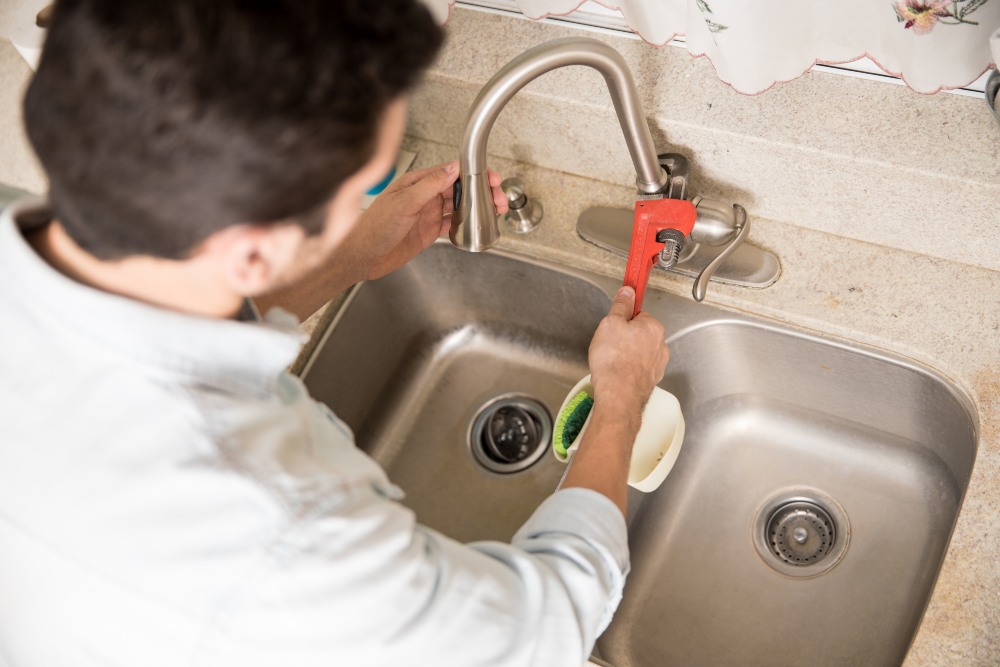
The most frequently reported plumbing problems in UAE villas and apartments include blocked drains caused by scale buildup and debris, leaking taps and mixer valves caused by worn cartridges, burst or pinhole leaking pipes caused by scale and corrosion in older copper systems, running toilets caused by failed cistern internals, low water pressure caused by scaled-up PRVs or pipework, and leaking water heater connections caused by failed pressure relief valves. Most of these problems are preventable with regular maintenance.
How to Identify and Fix a Plumbing Leak
The early signs of a plumbing leak include unexplained increases in your EtihadWE water bill, damp patches on walls or ceilings, discoloration or staining around pipe connections, and the sound of running water when all fixtures are closed. If you suspect a leak, turn off the main isolation valve and check whether your water meter continues to move if it does, water is escaping somewhere in the system. A professional plumber can use pressure-testing and leak-detection equipment to locate and repair the leak without unnecessary demolition.
Plumbing Maintenance Checklist for Homeowners
A basic annual plumbing maintenance check for UAE properties should include inspecting all visible pipe connections for signs of leakage or corrosion, testing all isolation valves to confirm they operate freely, descaling taps and shower heads to remove limescale buildup, cleaning all floor trap covers and checking the water seal is intact, checking the water heater anode rod where applicable and flushing sediment from the tank base, testing the pressure relief valve on the water heater, and confirming the PRV is operating within the correct pressure range.
When to Call an Emergency Plumber in Ras Al Khaimah
You need an emergency plumber immediately if you experience a burst pipe flooding your property, a complete loss of water supply to the building, a sewage backup coming up through floor drains, a water heater failure that is causing hot water to discharge uncontrollably, or a gas water heater with a suspected gas leak. In all these situations, shut off the main water supply at the isolation valve if possible and contact licensed emergency plumbing services immediately.
Why Preventive Plumbing Maintenance Matters in the UAE
The UAE’s hard water supply deposits limescale throughout plumbing systems over time. This scale restricts flow, reduces boiler and heater efficiency, and eventually causes pipe and valve failure. A planned annual maintenance programme ideally included in a property’s Annual Maintenance Contract with a licensed provider prevents the majority of emergency call-outs and significantly extends the life of the entire plumbing installation.
Plumbing Works in Ras Al Khaimah: Costs and What to Expect
One of the most common questions property owners ask before commissioning plumbing works is how much it will cost. Plumbing costs in the UAE vary widely depending on the scope of work, the materials specified, the property size, and the contractor selected.
How Much Do Plumbing Works Cost in Ras Al Khaimah?
The table below provides indicative cost ranges for the most common plumbing works carried out in residential properties in the UAE. These figures are for guidance only to always obtain a detailed written quotation before authorising any works.
What Should a Plumbing Quotation Include?
A professional plumbing quotation should clearly state the scope of work to be carried out, the materials to be used and their specification, the supply and labour costs broken down separately, the estimated duration of the works, any exclusions from the quoted price, the payment terms, and the warranty on both materials and artistry. If a contractor provides only a single lump-sum figure with no breakdown, treat it as a red flag.
Plumbing Works for Villas vs Apartments Key Differences
Villa plumbing is typically more complex than apartment plumbing because villas have more floors, longer pipe runs, more sanitary fixtures, external landscaping and pool connections, and often rooftop solar or storage tank systems. Apartments benefit from simpler riser connections and shared infrastructure. Still, access for repairs can be complicated by building management rules and the need to coordinate with neighbours when work affects shared stacks.
Annual Maintenance Contracts for Plumbing What Is Covered?
An Annual Maintenance Contract with a licensed plumbing provider covers scheduled inspection and servicing of your plumbing system throughout the year, priority response to emergency call-outs, discounted rates on parts and additional labour, and a documented service record for your property. For property owners in Ras Al Khaimah, an AMC is the most cost-effective way to maintain plumbing infrastructure and avoid the much higher cost of reactive emergency repairs.
How to Read a Plumbing Plan and Design
If you are involved in a new build, renovation, or fit-out project in the UAE, you will need to review a plumbing plan at some point. Understanding the basics of plumbing drawings helps you make informed decisions and catch errors before work begins.
Plumbing Symbols and What They Mean
Plumbing drawings use standardised symbols to represent different components. A circle with a cross typically represents a floor drain. A rectangle with a curved line represents a washbasin. Solid lines represent supply pipes and broken lines represent drainage pipes. Arrows indicate the direction of flow. Triangles represent valves. Numbers alongside pipes indicate the pipe diameter in millimetres. A legend is always included on a professional plumbing drawing to explain every symbol used.
How to Read a Residential Plumbing Plan
A residential plumbing plan shows the layout of all supply and drainage pipes on each floor of the property. The plan is drawn to scale and shows the position of every fixture, valve, and connection point. When reviewing a plumbing plan, check that every wet room has both supply and drainage connections shown, that the drainage has a clear route to the main stack or an external drain, that isolation valves are shown at appropriate points, and that the pipe sizes are correctly specified for the number of fixtures being served.
Plumbing Riser Diagram Explained
A riser diagram is a schematic drawing that shows the vertical arrangement of the plumbing system through all floors of a building. It is not drawn to scale but shows the relationship between floors, the position of the main stack, branch connections on each floor, vent connections at the top of the stack, and the connection to the underground drainage at the base. Riser diagrams are standard documents on all UAE commercial and multi-storey residential plumbing projects.
Plumbing Floor Plan Layout
A plumbing floor plan shows the horizontal pipe routes on each floor, typically overlaid on the architectural floor plan. Each pipe is labelled with its diameter and material. The drainage pipes are shown with their direction of fall indicated by arrows. Supply pipes are shown running from the riser or water meter to each fixture. A good plumbing floor plan is the foundation document for every installation. Without it, pipes are run by guesswork, resulting in a system that is difficult to maintain and prone to problems.
Choosing a Plumbing Contractor in the UAE What to Look For
Hiring the wrong plumbing contractor is one of the most costly mistakes a property owner can make. Poor artistry, substandard materials, and unlicensed work can lead to water damage, failed inspections, and costly remedial work. Here is what to look for when choosing a plumbing contractor in Ras Al Khaimah.
Qualifications and Certifications to Check Before Hiring
In the UAE, plumbing contractors must hold a valid trade licence issued by the relevant emirate authority RAK Municipality in Ras Al Khaimah or the relevant DED authority in Dubai. For works involving DEWA-regulated connections in Dubai, the contractor must also hold DEWA registration. The technicians carrying out the work should hold recognised plumbing qualifications, and the contractor should be able to provide copies of their licence and insurance documents on request. Do not accept a contractor who cannot provide these documents.
Questions to Ask a Plumbing Contractor Before Work Begins
Before authorising any plumbing works, ask the contractor whether they hold a valid UAE trade licence, whether they will obtain the necessary permits for the work, what materials they intend to use and whether those materials are UAE authority-approved, what warranty they provide on their workmanship, and whether they carry public liability insurance. A qualified contractor will answer all of these questions clearly and without hesitation.
What a Proper Plumbing Work Quotation Should Include
As noted above, a professional quotation must break down the scope of work, materials, labour, timeline, exclusions, and payment terms. It should also specify the pipe material and fitting standard to be used, the make and model of any fixtures or valves being supplied, and whether VAT is included or excluded from the quoted price. A quotation that does not specify the materials to be used leaves you with no basis for complaint if inferior materials are installed.
Red Flags to Avoid When Hiring a Plumbing Company in the UAE
Walk away from any contractor who cannot produce a valid trade licence, who demands full payment upfront before work begins, who quotes a price significantly lower than all other quotations without explanation, who proposes to carry out permitted work without obtaining the necessary approvals, or who is unwilling to provide a written quotation or warranty. In the UAE plumbing market, extremely low prices almost always indicate either unlicensed workers, substandard materials, or both.
Conclusion
Plumbing works are not a luxury; they are a fundamental requirement of every safe, comfortable, and functional property in the UAE. From the moment water enters your villa or commercial building to the moment waste leaves it, every pipe, fitting, valve, and fixture plays a role in keeping your property operational, hygienic, and compliant with local regulations. Preventive maintenance is equally important. The UAE’s hard water, extreme temperatures, and heavy seasonal use put plumbing systems under constant stress. A planned Annual Maintenance Contract with a licensed provider is far less expensive than the emergency repairs that result from a neglected system. Regular inspections, valve testing, descaling, and pressure checks extend the life of your plumbing installation significantly and protect the long-term value of your property.
Frequently Asked Questions (FAQs)
What is the difference between plumbing and drainage?
Plumbing refers to the supply side, bringing clean water into the building and distributing it to fixtures. Drainage refers to the waste side, removing used water and sewage safely. In practice, a professional plumbing contractor in Ras Al Khaimah handles both systems together, since they’re designed and installed as a single, unified network.
Which pipe material is best for a villa in Ras Al Khaimah?
PPR pipe is the most widely recommended choice for hot and cold water supply in Ras Al Khaimah, thanks to its heat resistance up to 95°C, 50+ year service life, and leak-free heat-fusion joints. It’s typically paired with UPVC for drainage. Copper remains a premium alternative where budget allows, particularly in hotels and high-specification residential developments.
How much do plumbing works cost in Ras Al Khaimah?
Costs vary depending on the scope of work, materials specified, property size, and whether it’s a repair, installation, or full villa replumb. Always request a detailed, itemised written quotation from your contractor before authorising any work, a single lump-sum figure with no breakdown is a red flag.
Do I need a permit for plumbing work in Ras Al Khaimah?
Yes. Any significant plumbing works including new installations, major modifications, or drainage alterations, require a permit from RAK Municipality before work begins. This typically involves submitting plumbing drawings prepared by a qualified engineer, obtaining approval, carrying out the work to the approved drawings, and arranging a final inspection before the system is commissioned.
What should I check before hiring a plumbing contractor in Ras Al Khaimah?
Confirm the contractor holds a valid trade licence issued by RAK Municipality, ask whether they’ll obtain the necessary permits, request a fully itemised written quotation covering materials, labour, and timeline, and check they carry public liability insurance. Walk away from any contractor who can’t produce a trade licence, demands full payment upfront, or quotes a price significantly lower than others without explanation.