
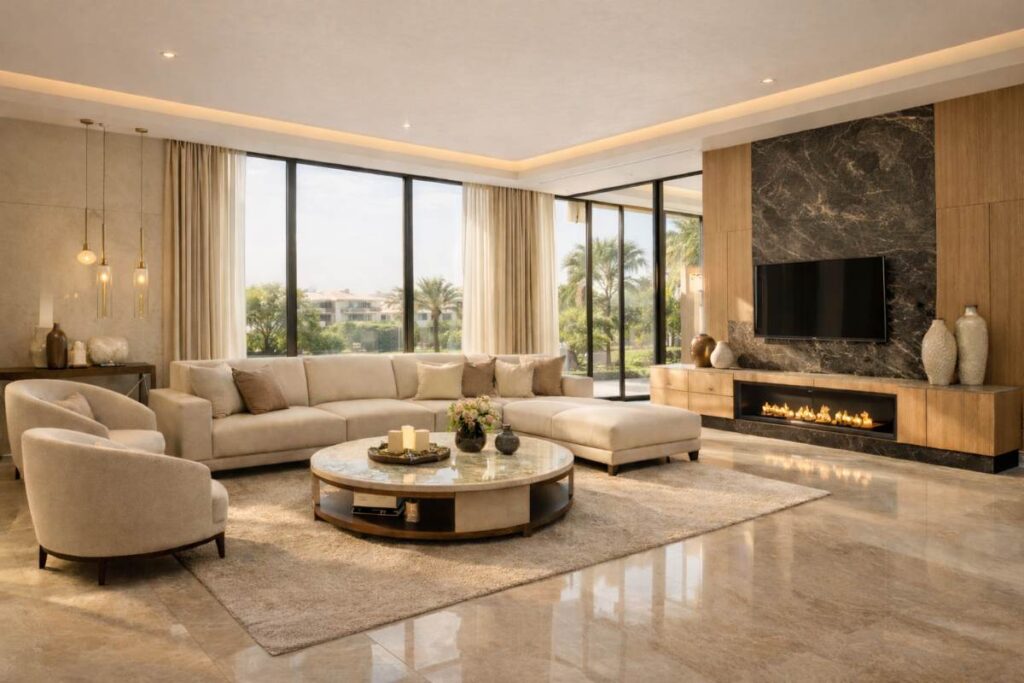
Interior design has become an essential part of modern living, especially in rapidly urbanising countries such as the United Arab Emirates. Today, homeowners focus not only on comfort but also on creating stylish and functional spaces that reflect their personality and lifestyle. With evolving architecture and modern residential communities across the country, the demand for professional interior design solutions continues to increase.
In 2026, interior design trends in the UAE combine luxury aesthetics, minimalism, and smart home technology. Villas, apartments, and townhouses are being designed with open spaces, natural lighting, and energy-efficient solutions that improve both comfort and visual appeal.
Choosing the right interior design style is important because it affects how a home looks, feels, and functions. From contemporary luxury to minimalist spaces, modern homes in the UAE reflect a balance between traditional influences and modern design principles.
Why Interior Design Trends Are Changing in the UAE
The transformation of residential architecture in the UAE has significantly influenced interior design trends. Rapid urban development, smart city initiatives, and sustainable construction practices have encouraged designers to adopt new approaches that emphasise efficiency and aesthetics.
Modern homeowners are looking for interiors that provide comfort while also supporting modern lifestyles. As a result, interior design now focuses on several key elements.
Open layouts that connect living spaces seamlessly
Energy-efficient lighting and smart home integration
Natural materials that add warmth and elegance
Furniture designs that combine style with practicality
Interior layouts that improve ventilation and natural light
These factors are shaping the way homes are designed across the UAE in 2026.
Modern Minimalist Interior Design
Minimalist interior design remains one of the most popular styles for modern homes. This design philosophy focuses on simplicity, functionality, and clean aesthetics.
Minimalist homes usually feature neutral colour palettes, simple furniture, and uncluttered layouts. Instead of decorative complexity, the focus is placed on balance and space efficiency.
Key features of minimalist interiors include:
Neutral styles such as white, beige, and light grey
Open floor layouts that maximise space
Furniture with simple geometric shapes
Limited decorative elements
Use of natural light to enhance openness
Minimalist design is particularly well-suited to apartments because it creates a spacious, organised environment.
Luxury Contemporary Interior Design
Luxury contemporary interiors are widely seen in modern villas and high-end residences across the UAE. This style combines elegance with modern architectural features to create sophisticated living environments.
Contemporary luxury interiors often include high-quality materials and unique design elements.
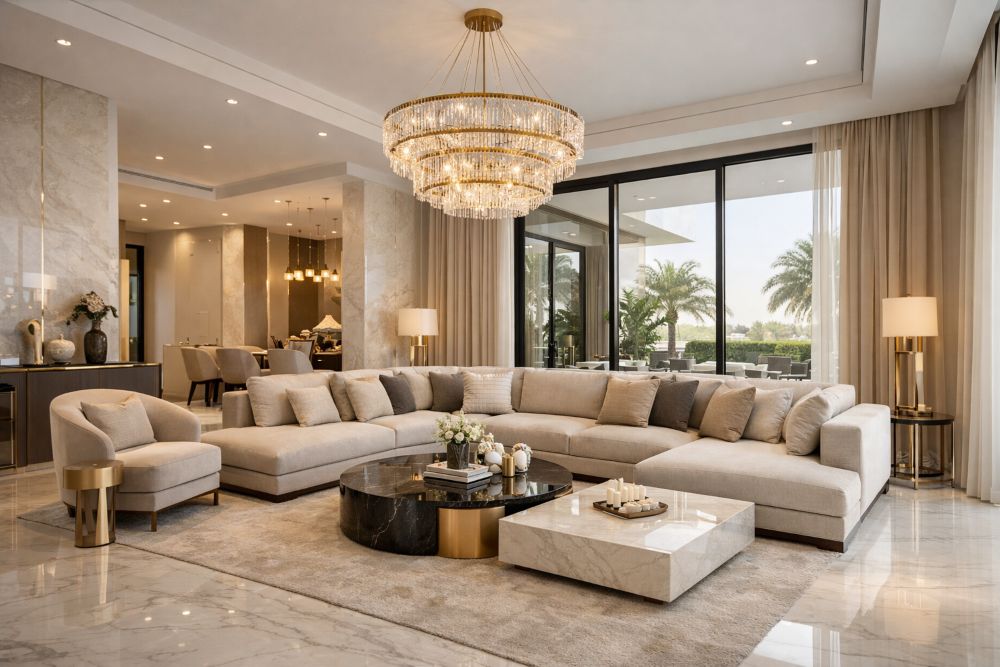
Common features include:
Marble flooring and natural stone finishes
Large glass windows that enhance natural lighting
Elegant chandeliers and designer lighting fixtures
Custom furniture and decorative panels
Neutral colour schemes with metallic accents
These elements create a refined and modern living space that reflects luxury and comfort.
Modern Arabic Interior Design
Modern Arabic design blends traditional Middle Eastern aesthetics with modern architectural concepts. This style reflects regional culture while maintaining a contemporary appearance.
Interior designers often combine traditional patterns with modern furniture and lighting solutions.
Common elements include:
Decorative geometric patterns
Rich textures and fabrics
Warm colour palettes inspired by desert landscapes
Ornamental lighting fixtures
Elegant arches and architectural details
This style is particularly popular in larger villas where homeowners want to incorporate cultural heritage into modern homes.
Scandinavian-Inspired Interior Design
Scandinavian design has become increasingly popular worldwide, including in the UAE. This style highlights simplicity, functionality, and natural materials.
Scandinavian interiors are known for their bright and airy appearance.
Key characteristics include:
Light colour schemes such as white and soft grey
Natural wood furniture and flooring
Simple decorative elements
Comfortable and practical furniture
Large windows that maximise natural light
This design style works well for both villas and apartments because it creates a relaxing and welcoming environment.
Smart Home Interior Design
Technology is playing a significant role in modern home design. Smart home systems allow homeowners to control lighting, climate, and security through automated systems.
Smart interior design focuses on integrating technology without compromising aesthetics.
Examples of smart interior features include:
Automated lighting systems
Smart thermostats for climate control
Voice-controlled devices
Integrated home security systems
Energy-efficient appliances
These features improve convenience while reducing energy consumption.
Interior Design Ideas for Villas and Apartments in the UAE
Interior design approaches often differ depending on the type of property.
Villa Interior Design
Villas typically offer more space and design flexibility. Designers often incorporate luxurious materials, large statement furniture, and spacious layouts.
Common villa design features include open living areas, high ceilings, and decorative lighting.
Apartment Interior Design
Apartments require efficient space planning. Designers focus on maximising functionality through smart storage solutions and multifunctional furniture.
Open layouts and minimalist designs are often preferred because they create the illusion of larger spaces.
Interior Design Colour Trends for 2026
Colour selection plays a crucial role in shaping a home’s overall atmosphere. In 2026, interior design trends in the UAE emphasise calm and natural colour palettes.
Popular colour trends include:
Soft beige and warm neutral tones
Light grey combined with white interiors
Earth-inspired colours such as sand and terracotta
Deep accent colours like navy blue or forest green
Metallic finishes for decorative contrast
These colours help create elegant interiors while maintaining a relaxing atmosphere.
Lighting Design Trends in UAE Homes
Lighting is one of the most important elements of interior design. Proper lighting enhances the beauty of a space and improves functionality.
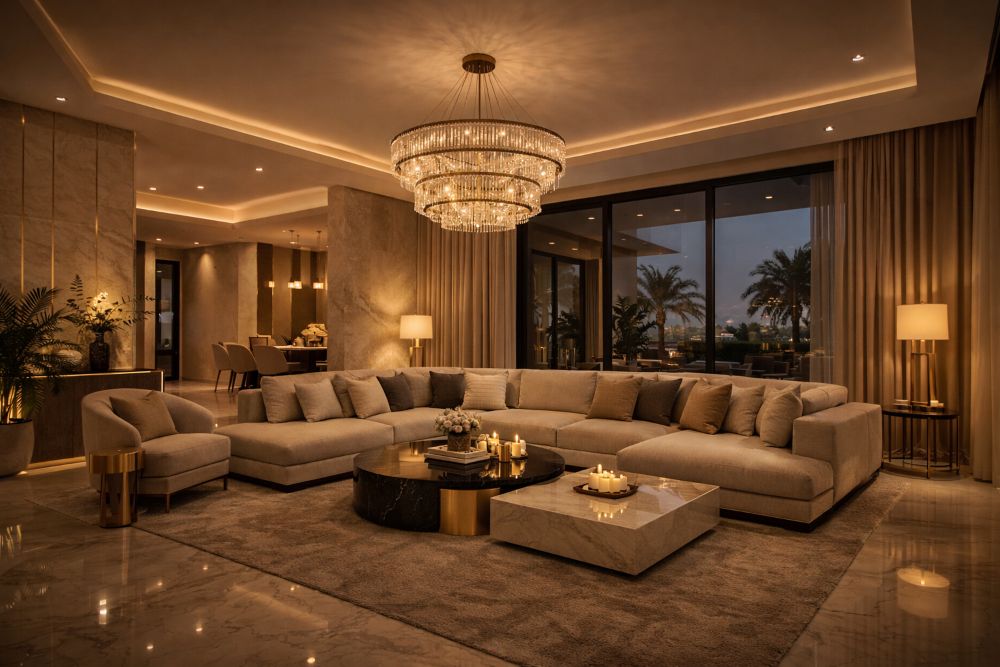
Modern lighting trends include:
LED lighting systems for energy efficiency
Layered lighting with ceiling lights, wall lights, and floor lamps
Decorative pendant lights for dining areas
Smart lighting systems controlled by mobile applications
Good lighting design improves mood, visibility, and energy efficiency.
Furniture and Material Trends in 2026
Furniture and materials used in modern interiors reflect both comfort and durability.
Popular materials in UAE homes include:
Natural wood for warmth and texture
Marble surfaces for luxury aesthetics
Glass elements for modern designs
Metal accents for contemporary interiors
Textured fabrics for comfortable seating
High-quality materials not only improve the visible appeal of interiors but also increase the longevity of furniture and design elements.
Interior Design Style Best For Key Features
Below is a simple comparison of popular interior design styles used in homes in the UAE.
| Design Style | Property Type | Key Features |
|---|---|---|
| Minimalist Design | Apartments | Clean lines, neutral colours |
| Contemporary Luxury | Villas | Marble, designer lighting |
| Modern Arabic Traditional | Homes | Cultural patterns and textures |
| Scandinavian Modern | Apartments | Light colors, natural materials |
| Smart Home Design | Modern villas | Technology integration |
How Renovation Improves Interior Design
Renovation plays a key role in updating outdated interiors. Many homeowners choose renovation projects to improve the layout, lighting, and overall appearance of their homes.
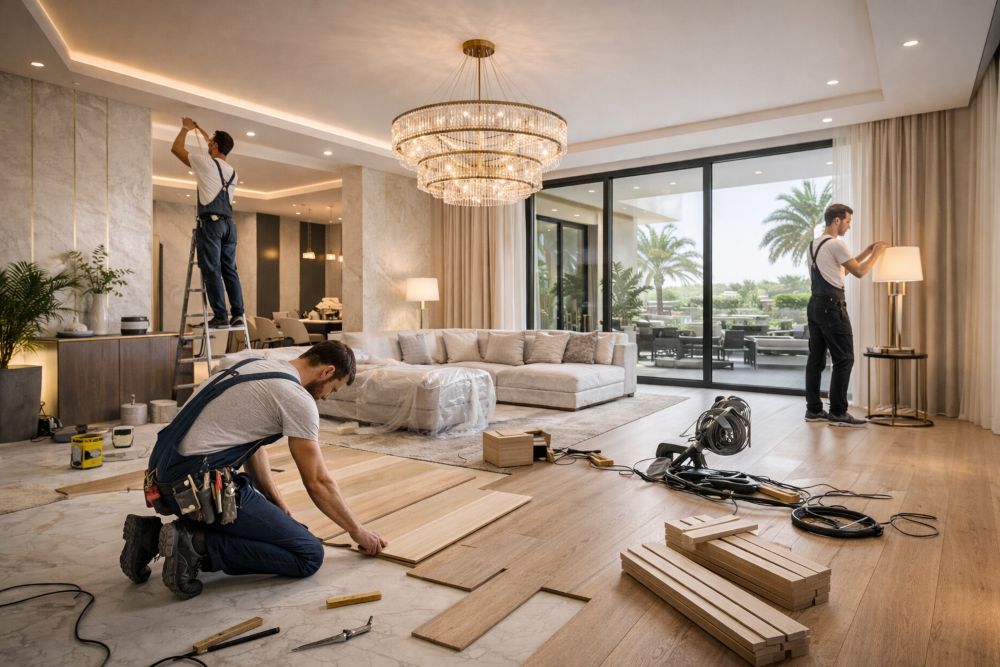
Renovation projects may include:
Flooring upgrades
Lighting improvements
Kitchen remodeling
Bathroom design updates
Custom carpentry and storage solutions
Professional renovation services help ensure that these improvements are completed efficiently and safely.
Choosing the Right Interior Design Style
Selecting the right design style depends on several factors, including space availability, lifestyle needs, and personal taste.
Homeowners should consider the following aspects:
Space planning and layout design
Lighting and ventilation conditions
Furniture selection and comfort
Material durability and maintenance
Budget and renovation scope
Consulting experienced professionals can help homeowners make informed decisions about their interior design projects.
Conclusion
Interior design continues to evolve as homeowners seek stylish, comfortable, and functional living spaces. In the UAE, modern homes reflect a blend of contemporary luxury, minimalism, cultural influences, and advanced technology.
Whether designing a new villa or renovating an apartment, choosing the right interior design style can significantly enhance both comfort and property value. With proper planning and professional guidance, homeowners can create interiors that combine beauty, efficiency, and long-term durability.
Frequently Asked Questions (FAQs)
What is the most popular interior design style in the UAE?
Modern minimalist and contemporary luxury designs are among the most popular styles because they provide elegant layouts and efficient space utilisation.
How does interior design increase property value?
Well-planned interior design enhances visual appeal, functionality, and overall living comfort, thereby increasing a property's market value.
Which interior design style works best for small apartments?
Minimalist and Scandinavian styles are ideal for apartments because they maximise space while maintaining a clean and modern appearance.
Why is smart home technology important in interior design?
Smart home technology improves convenience, energy efficiency, and security while integrating modern automation into residential spaces.
How often should homeowners renovate their interiors?
Interior renovations are typically recommended every 5 to 10 years, depending on design trends, material wear, and lifestyle changes.