

Home renovation is one of the most effective ways to improve comfort, functionality, and property value. Whether you own an apartment or a villa, upgrading interior spaces can significantly enhance the overall living experience. However, renovation projects can quickly become expensive if they are not properly planned.
Many homeowners in the UAE begin renovation projects with enthusiasm, but later face unexpected costs. Poor planning, last-minute design changes, and the selection of unsuitable materials are among the most common reasons renovation budgets increase.
Careful planning and smart decision-making can help property owners complete renovation projects successfully without overspending. When homeowners approach renovation strategically, they can create modern, comfortable living spaces while controlling overall expenses.
This explains practical strategies to reduce renovation costs while still achieving high-quality results.
Why Smart Planning Is Essential for Renovation Projects
Planning is the foundation of any successful renovation project. Without a clear strategy, homeowners often encounter delays, budget overruns, and construction complications.
Before starting any renovation work, it is important to evaluate the property’s condition and identify areas that require improvement. Creating a renovation plan helps homeowners prioritize essential upgrades while avoiding unnecessary expenses.

A well-structured plan should include:
- A clear renovation budget
- A list of priority improvements
- Estimated timeline for the project
- Selection of suitable materials
- Professional consultation if required
Planning also allows homeowners to anticipate potential challenges. When problems are identified early, they can be resolved without significantly affecting the renovation budget.
Set a Realistic Renovation Budget
One of the most important steps in saving money during renovation is creating a realistic budget. Many renovation projects exceed the initial budget because homeowners underestimate material and labour costs.
A renovation budget should include several key components:
- Material costs such as flooring, tiles, paint, and fixtures
- Labour charges for contractors and technicians
- Permit and inspection costs if required
- Transportation and equipment expenses
- Emergency funds for unexpected repairs
Experts recommend reserving at least 10–15 percent of the budget for unforeseen issues. Unexpected problems, such as hidden plumbing damage or electrical upgrades, can arise during renovation work.
When homeowners prepare for these possibilities, they can avoid financial stress and keep the project running smoothly.
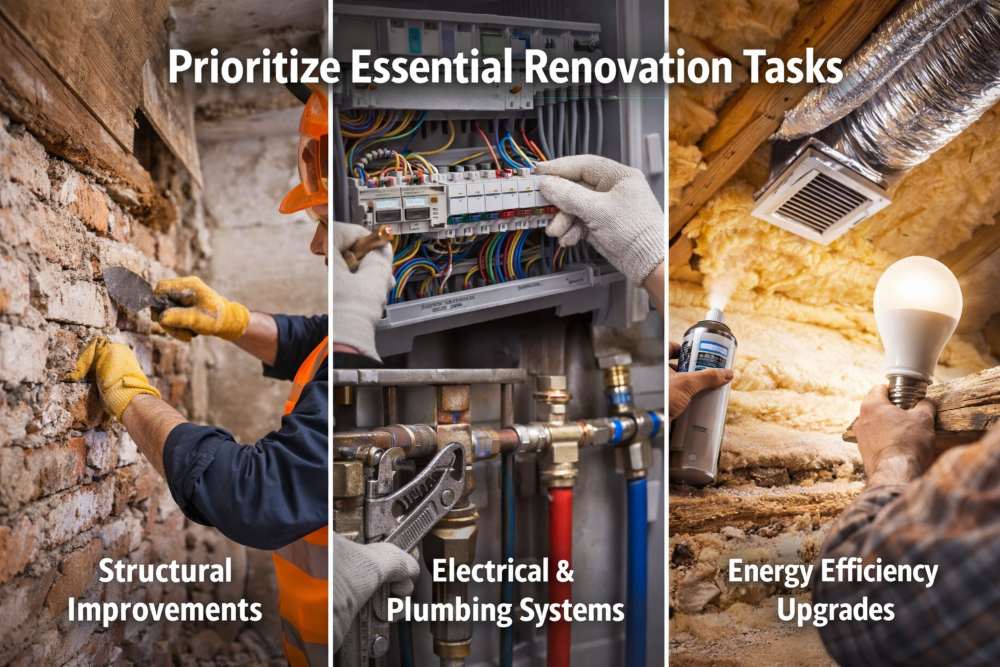
Prioritise Essential Renovation Tasks
Another effective way to save money is to prioritize renovations based on necessity rather than aesthetics. Many homeowners try to renovate every room at once, which can significantly increase costs.
Instead, focus first on improvements that affect functionality and safety.
Structural Improvements
Structural elements of a property should always be addressed before cosmetic upgrades. Repairs to walls, ceilings, or flooring should take priority because they affect the building’s stability.
Electrical and Plumbing Systems
Outdated electrical wiring or damaged plumbing systems can lead to serious issues if ignored. Upgrading these systems early ensures safety and prevents expensive repairs later.
Energy Efficiency Upgrades
Improving insulation, lighting systems, and ventilation can reduce energy consumption. These improvements often lower utility costs in the long term.
Prioritizing these essential tasks helps homeowners allocate their budget efficiently.
Choose Cost-Effective Materials Without Sacrificing Quality
Materials account for a large portion of renovation expenses. Selecting suitable materials can significantly reduce costs while maintaining durability and visual appeal.
Many modern construction materials offer a balance between affordability and performance. For example, laminate flooring and ceramic tiles often offer aesthetics similar to those of more expensive materials.
Compare Materials Before Buying
Before purchasing materials, homeowners should compare different options based on durability, maintenance requirements, and installation costs.
Buy Materials During Seasonal Discounts
Many construction suppliers offer promotions throughout the year. Purchasing materials during sales can help reduce overall renovation expenses.
Consider Long-Term Value
While cheaper materials may seem attractive initially, they may require frequent replacement. Investing in durable materials often reduces maintenance costs over time.
Careful material selection ensures that renovation projects remain cost-effective and long-lasting.
Work With Experienced Renovation Professionals
Hiring experienced professionals may seem expensive at first, but it often saves money in the long run. Skilled technicians complete renovation work efficiently and minimize costly mistakes.
Professional contractors offer several advantages:
- Accurate cost estimation
- Efficient project management
- High-quality artistry
- Compliance with safety standards
- Proper use of construction materials
Experienced professionals can also recommend cost-effective solutions that homeowners may not consider during planning.
Reuse and Restore Existing Materials
Many renovation projects involve replacing items that could actually be restored or refurbished. Reusing existing materials can significantly reduce renovation costs.

Examples of refurbishment include:
- Repainting cabinets instead of replacing them
- Polishing wooden furniture or doors
- Restoring flooring instead of installing new materials
- Replacing fixtures while keeping the existing structure
This approach not only saves money but also preserves the home’s original character.
Avoid Frequent Design Changes During Renovation
Design changes during construction are one of the most common reasons renovation budgets increase. When homeowners modify plans after work begins, contractors may need to adjust materials, labour schedules, and installation processes.
To avoid unnecessary expenses:
- Finalize the renovation design before construction begins
- Confirm all material selections early
- Communicate clearly with contractors about project expectations
When renovation plans are finalized early, the project progresses smoothly without unexpected cost increases.
Compare DIY Renovation vs Professional Services
| Renovation Approach | Advantages | Limitations |
|---|---|---|
| DIY Renovation | Lower labor cost, flexible schedule. | Limited expertise, risk of mistakes. |
| Professional Services | Skilled artistry, faster completion. | Higher initial cost. |
| Hybrid Approach | Combine DIY with professional support. | Requires careful planning. |
Some homeowners attempt to complete renovation tasks themselves to reduce costs. While this approach can work for simple tasks, complex projects often require professional expertise.
For tasks such as electrical work, plumbing, or structural changes, professional services are usually the safest option.
Long-Term Benefits of Smart Renovation Planning
When renovation projects are carefully planned, homeowners enjoy several long-term benefits.
These benefits include:
- Improved property functionality
- Higher property value
- Reduced maintenance costs
- Better energy efficiency
- Enhanced comfort and aesthetics
Smart renovation planning ensures that every improvement contributes to the property’s overall quality and durability.
Conclusion
Renovating a home does not always require a large budget. With careful planning, smart material choices, and professional guidance, homeowners can upgrade their living spaces while keeping expenses under control.
By focusing on essential improvements, selecting durable materials, and avoiding unnecessary design changes, renovation projects become more efficient and cost-effective. A well-planned renovation not only enhances a home’s comfort and functionality but also increases its long-term value.
Frequently Asked Questions (FAQs)
What is the best way to reduce home renovation costs?
The most effective way to reduce renovation costs is careful planning. Setting a realistic budget, prioritizing essential upgrades, and selecting cost-effective materials can help control expenses.
How much should homeowners budget for unexpected renovation costs?
Experts recommend allocating 10 to 15 per cent of the renovation budget for unexpected repairs or design adjustments.
Is DIY renovation a good way to save money?
DIY renovation can reduce costs for small tasks such as painting or minor repairs. However, professional services are recommended for complex work such as electrical or plumbing installations.
When is the best time to purchase renovation materials?
Materials are often cheaper during seasonal promotions or clearance sales. Purchasing materials during these periods can significantly reduce renovation costs.
How can homeowners avoid overspending during renovation?
Overspending can be avoided by finalising the design before construction begins, setting a strict budget, and avoiding frequent changes during the renovation process.