Common Electrical Hazards in RAK Homes and How to Avoid
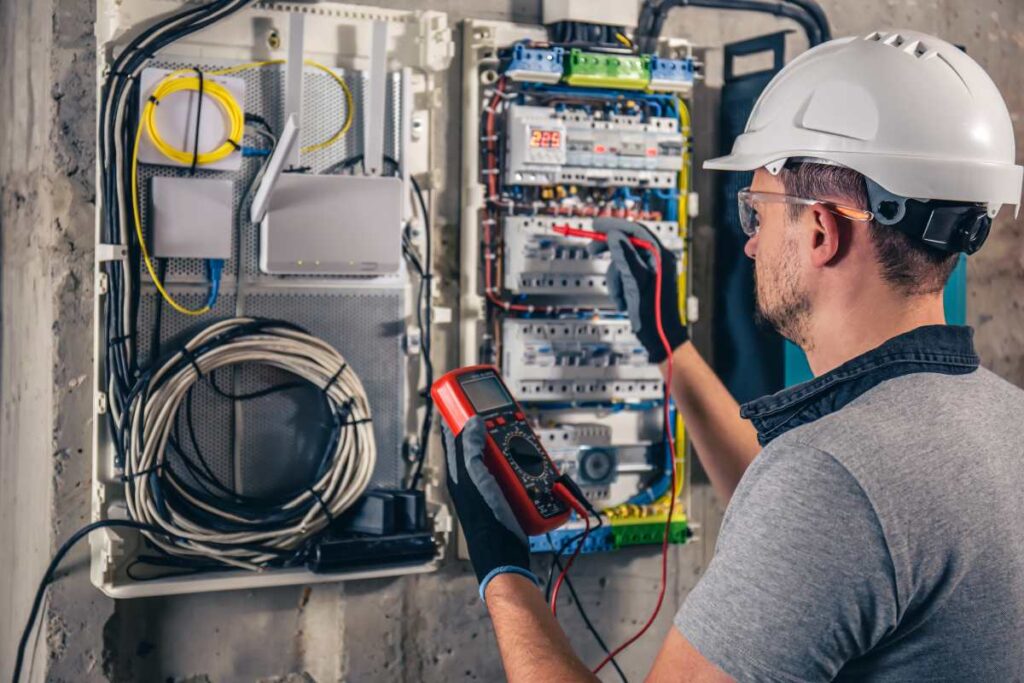
Electrical hazards are one of the highest causes of house fires and injuries across the UAE. From overloaded sockets to faulty wiring in older villas and apartments across Ras Al Khaimah, understanding the risks and how to prevent them could save your home and your family. At Home Fix Building Maintenance, our licensed electricians across RAK have seen these hazards firsthand and we know exactly what to look for before they become dangerous.
Why Electrical Hazards Matter in the UAE
Electrical hazards are responsible for thousands of home fires and injuries across the UAE every year yet the majority are entirely preventable. In a country where rapid urban development, extreme temperatures, and a mix of old and new building stock create unique electrical challenges, understanding and managing electrical hazards in the home is not just a precaution, it is a responsibility every resident should take seriously.
Most Common Electrical Hazards in UAE Homes
What sets UAE homes apart from those in other countries is the combination of extreme climate, ageing infrastructure in older buildings, and intensive daily electrical demand. Recognising these dangers is the essential first step toward prevention.
Overloaded Sockets and Extension Leads
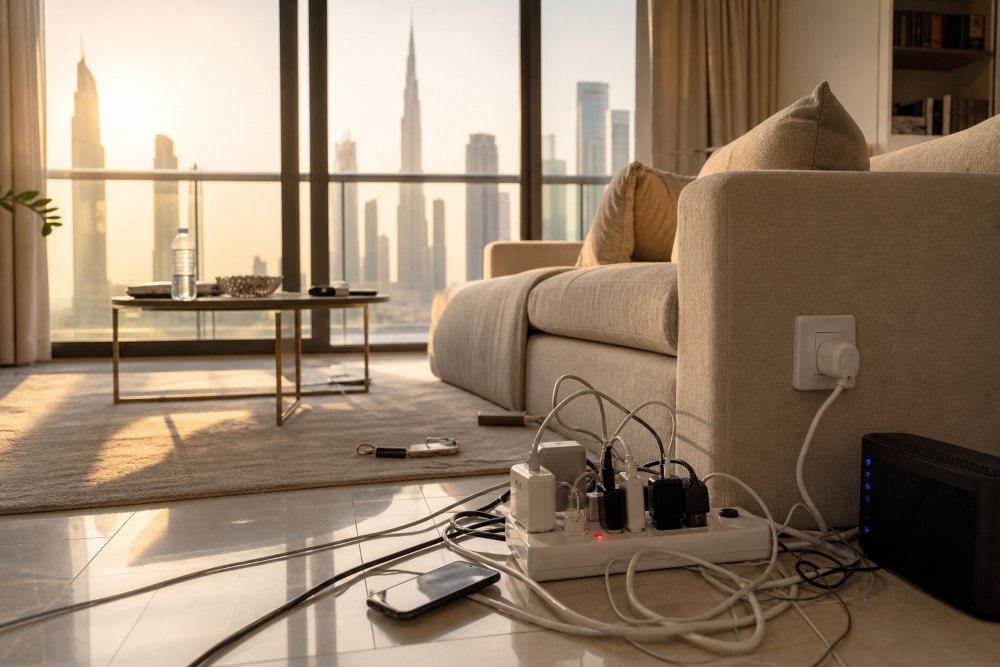
One of the most widespread electrical hazards in Ras Al Khaimah homes and apartments is socket overloading. UAE properties particularly older apartment buildings were designed with fewer power points than modern lifestyles demand. As a result, residents routinely rely on multi-plug adapters and daisy-chained extension leads that push circuits well beyond their safe operating capacity. Air conditioners, washing machines, refrigerators, and electric ovens should each be connected to dedicated circuits never shared sockets. When a circuit is overloaded, cables overheat, insulation degrades, and the risk of fire increases dramatically.
Warning: Never plug an air conditioner, washing machine, or oven into a multi-plug adapter or extension lead. These high-wattage appliances require direct, dedicated wall socket connections. Overloading is a leading cause of electrical fires in residential buildings in the UAE.
What Is an Electrical Hazard Sign and Why Does It Matter?
An electrical hazard sign is a standardised warning symbol used to alert people to the presence of dangerous electrical voltage or equipment that could cause serious injury or death. These signs are not decorative; they are a legal safety requirement in residential buildings, commercial properties, and public infrastructure across the UAE.
Recognising electrical hazard signs and understanding what they communicate is a basic safety skill every UAE homeowner, tenant, and property manager should have.
The Standard Electrical Hazard Sign
The most widely recognised electrical hazard sign is a yellow triangle with a black lightning bolt pointing down. This symbol is used internationally under ISO 7010 safety standards, and you will find it on:
- Distribution boards and consumer units
- Electrical substations and transformer enclosures
- High-voltage equipment and switchgear panels
- Electrical junction boxes and meter cupboards
- Warning labels on high-wattage appliances
In the UAE, this sign must be displayed on all electrical installations that carry a risk of electric shock or electrocution in compliance with UAE municipality and DEWA safety regulations.
Danger Electrical Hazard Sign What It Means
A danger electrical hazard sign carries a higher level of warning than a standard caution sign. In most safety classification systems:
| Sign Type | Colour | Meaning |
|---|---|---|
| Danger | Red and White | Immediate risk of death or serious injury |
| Warning | Yellow and Black | Potential hazard — proceed with caution |
| Caution | Yellow | Minor risk if safe procedures are not followed |
A dangerous electrical hazard sign displayed on a panel or enclosure means the voltage inside is high enough to kill. Never open, touch, or tamper with any enclosure displaying this sign without proper authorization and protective equipment.
Electrical Hazard Sign Board in UAE Properties
In UAE residential and commercial buildings, electrical hazard sign boards are required by law on:
- Main distribution boards (DB boards) in apartments and villas
- Electrical rooms in commercial buildings
- External meter boxes and utility cupboards
- Rooftop electrical installations, including AC disconnect switches
- Any area where live electrical work is being carried out
If your property’s DB board or electrical cupboard does not display a visible electrical hazard sign board, this is a compliance gap that a licensed electrician should correct.Home Fix Building Maintenance provides full electrical compliance checks as part of our home maintenance services in Al Marjan Island and across all RAK neighbourhoods.
Electric Shock Hazard Sign
The electric shock hazard sign is specifically used where contact with exposed conductors or live terminals is possible. You will commonly see this sign on:
- Open wiring panels during maintenance work
- Electrical testing equipment
- Temporary site installations during construction or renovation
If you see an electric shock hazard sign displayed anywhere in your home particularly near open panels or during renovation work do not approach the area until a licensed electrician confirms it is safe.
Electrical Hazard Warning Signs to Recognise
Beyond the standard yellow triangle, these are the key electrical hazard warning signs UAE residents should be able to identify:
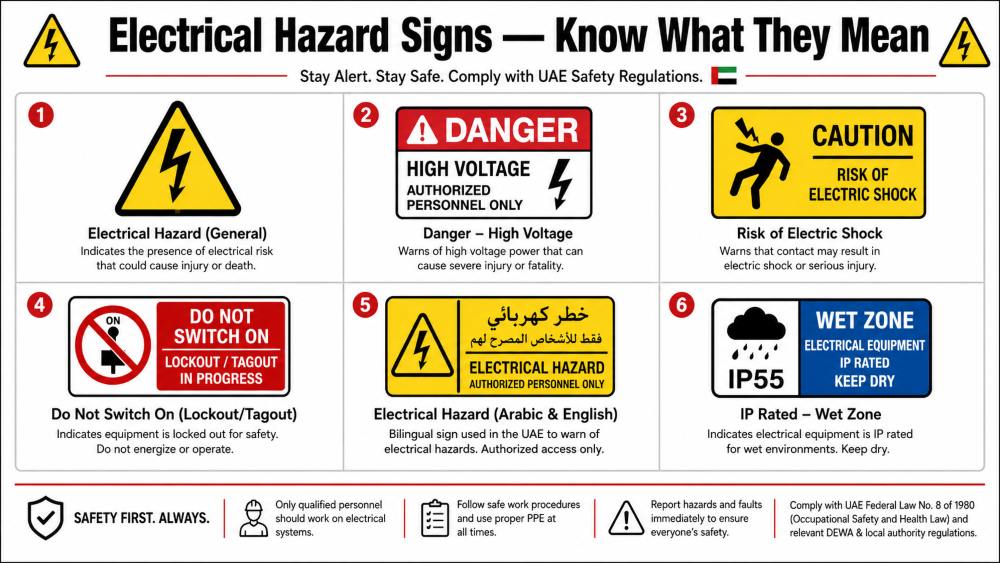
Lightning bolt in yellow triangle: General electrical hazard, risk of electric shock
Red danger sign with lightning bolt: High voltage, danger of death
Yellow warning with hand and lightning bolt: Electric shock risk from contact
Do not switch on the sign: Equipment under maintenance, do not restore power
Lockout sign: Electrical isolation in progress, authorised personnel only
Safety Signs for Electrical Hazards UAE Requirements
Under UAE safety regulations, safety signs for electrical hazards must be:
- Permanently fixed and clearly visible
- Made from durable, weather-resistant materials for outdoor installations
- Compliant with ISO 7010 international safety sign standards
- Written in both English and Arabic, where required by the relevant authority
Electrical Hazard Sign in Arabic
In the UAE, electrical hazard signs in public buildings, residential towers, and commercial properties must include Arabic text alongside the international symbol. The standard Arabic text used on electrical hazard signs is:
خطر كهرباء عالية الجهد (Danger High Voltage)
or for general electrical warnings:
تحذير خطر كهربائي (Warning Electrical Hazard)
If your building’s electrical signs display English only, this may not meet full UAE bilingual safety signage requirements particularly in properties managed under RAK municipality or DEWA regulations.
What to Do If You See an Electrical Hazard Sign
If you notice an electrical hazard sign in a damaged, missing, or faded condition anywhere in your property:
- Do not ignore it the sign is there because a real risk exists
- Keep children and untrained persons away from the marked area
- Contact a licensed electrician to inspect the installation
- Replace damaged or missing signs immediately this is a legal compliance requirement
At Home Fix Building Maintenance, our licensed electricians inspect, repair, and certify electrical installations across Ras Al Khaimah ensuring your property meets all UAE electrical safety standards, including proper hazard signage.
+971 52 511 2254 | homefix-uae.com
Electrical Overheating in UAE Homes: Causes, Warning Signs & Prevention
Electrical overheating occurs when wiring, sockets, or appliances carry more current than they are rated for, or when connections loosen and generate heat due to resistance. In the UAE, the risk is higher than in cooler climates ambient summer temperatures above 45°C in Dubai and Ras Al Khaimah push indoor wiring and consumer units closer to their thermal limits even before extra load is added, which is why overheating incidents rise sharply between June and September.
What causes electrical overheating in UAE homes
- Overloaded circuits running AC units, water heaters, and kitchen appliances on the same circuit draws more current than the wiring is rated to carry.
- Loose or corroded connections a poorly tightened terminal creates resistance, and resistance generates heat at that single point rather than spreading it safely across the circuit.
- Ageing or undersized wiring older villas in Al Riffa, Al Jazeera Al Hamra, and similar established communities were often wired for lower electrical loads than modern households now demand.
- Poor ventilation around consumer units distribution boards installed in enclosed cupboards or in direct sunlight, traps heat that would otherwise dissipate.
- Non-compliant extension cords and adapters cheap multi-socket adapters left plugged in permanently are among the most common sources of overheating in UAE apartments.
Warning signs to check for
- A warm or hot wall socket or switch plate to the touch
- A burning or “hot plastic” smell near an outlet, plug, or the consumer unit
- Discolouration or scorch marks around a socket or switch
- Circuit breakers that trip repeatedly under normal use
- Flickering lights when a large appliance switches on
Prevention
Distribute high-draw appliances AC units, water heaters, ovens across separate circuits rather than sharing a single circuit. Have a licensed electrician torque-check terminal connections during your AMC visit, since loose connections rarely show symptoms until they’ve already overheated. Replace any extension cord or adapter that feels warm during normal use immediately, rather than continuing to use it. In villas built before 2015, a wiring load assessment is worth scheduling if you’ve added AC units, EV charging, or major appliances since the original build. Home Fix Building Maintenance licensed electricians diagnose the risk of overheating as part of every wiring inspection link this phrase to your repair page rather than leaving it as plain text.
Faulty or Outdated Wiring in UAE Properties
Thousands of residential buildings across the UAE, particularly those constructed before 2005 contain electrical wiring that has either degraded naturally over time or was installed to standards no longer considered safe. In Ras Al Khaimah’s extreme summer climate, where roof and wall cavity temperatures can exceed 70°C, wire insulation degrades much faster than in temperate climates. Electrical hazards caused by degraded wiring are particularly dangerous because they are invisible hidden behind walls and ceilings until a fault triggers a fire or a serious shock.
Water and Electricity A Particularly High Risk in the UAE
Bathrooms and kitchens in UAE homes present heightened electrical safety risks due to the combination of water, steam, and the region’s naturally high ambient humidity especially in coastal areas of Ras Al Khaimah. Electrical fittings installed in wet zones must carry appropriate IP (Ingress Protection) ratings IP44 minimum for bathroom zones, and IP65 or above near showers and baths. Older properties often have standard fittings with no water resistance, creating a serious and ongoing hazard.
Unlicensed Electrical Work A Hidden Hazard Across the UAE
It is illegal in the UAE to carry out electrical installation or modification work without a licence issued by the relevant authority DEWA in Dubai, ADDC or AADC in Abu Dhabi, or SEWA in Sharjah. Despite this, unlicensed electrical work by untrained handypersons remains common in older residential buildings. Illegal wiring modifications, incorrect cable sizing, missing earth connections, and bypassed circuit breakers create electrical hazards that may not trigger an immediate problem but represent a serious long-term fire and electrocution risk.
How the UAE Climate Increases Electrical Risk
Ras Al Khaimah and the wider UAE present a uniquely challenging environment for electrical systems. The combination of extreme summer heat, high coastal humidity, frequent sandstorms, and intensive AC use creates conditions that accelerate electrical wear far beyond typical levels in more temperate countries.
Extreme summer heat above 45°C accelerates the breakdown of cable insulation and shortens the safe service life of wiring systems by 30 to 40 percent compared to European climates. High coastal humidity causes salt-laden air to corrode electrical contacts, terminals, and switchgear particularly in properties within 5km of the coast. Fine sand particles from sandstorms enter distribution boards and junction boxes, causing tracking faults and arcing between conductors over time. UAE properties also run air conditioning 8 to 14 hours daily for up to 8 months per year, placing electrical systems under sustained and intense load stress.
How to Prevent Electrical Hazards in Your UAE Home
The vast majority of home electrical hazards are preventable through routine inspections, proper appliance use, and targeted upgrades.
Install RCD Protection Throughout Your Property
A Residual Current Device (RCD) also known as a safety switch is the single most important electrical safety upgrade any UAE homeowner can make. RCDs detect abnormal current flow and cut power in as little as 30 milliseconds, preventing potentially fatal electric shocks and dramatically reducing fire risk. Modern properties in Ras Al Khaimah built to current standards include RCD protection as standard, but many older buildings do not. A licensed electrician can install RCDs in your consumer unit for a relatively modest cost.
Commission a Professional Electrical Inspection
All Ras Al Khaimah homeowners, particularly those in properties more than 10 years old, should commission a professional electrical inspection by a RAK Municipality-licensed contractor. A full inspection covers wiring condition, earthing integrity, circuit breaker function, socket and switch condition, and consumer unit safety. In Dubai, DEWA itself offers inspection services for residential properties.
Use Surge Protection for Electronics and Appliances
Given the UAE’s summer grid demand peaks and resulting voltage fluctuations, surge protection is strongly recommended for all sensitive electronics TVs, computers, home theatre systems, smart home hubs, and kitchen appliances. A whole-home surge protection device fitted at the consumer unit provides comprehensive coverage for all circuits simultaneously and is the preferred solution for UAE villas and larger apartments.
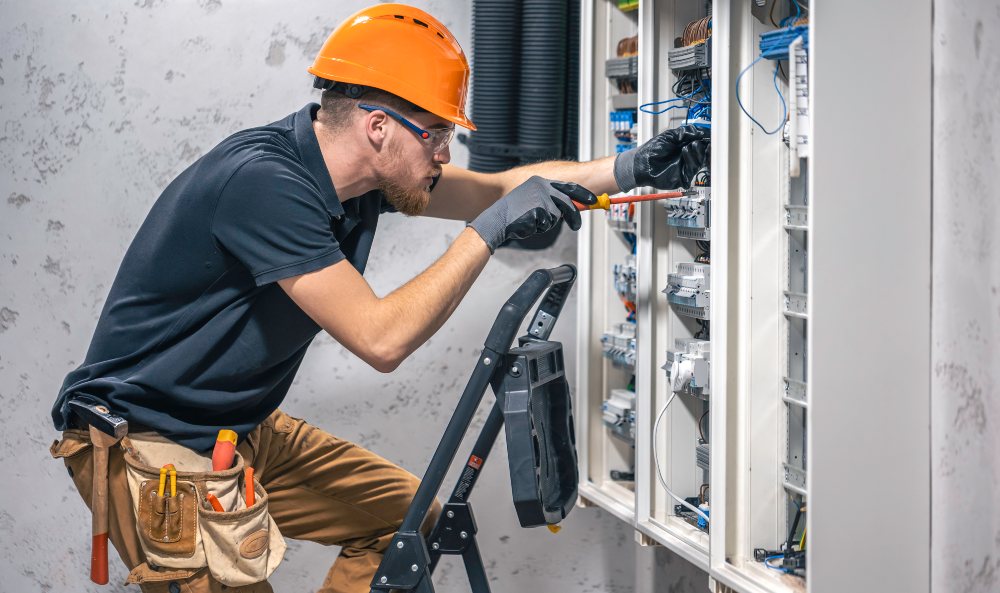
Home Electrical Safety Checklist for UAE Residents
Use this checklist to assess the electrical safety of your home in Ras Al Khaimah. If any item cannot be confirmed, contact a RAK Municipality-licensed electrician promptly.
- RCD protection installed and tested in the last 12 months
- No multi-plug adapters used with high-wattage appliances such as AC, oven or washing machine
- All bathroom and kitchen fittings carry appropriate IP water resistance ratings
- No visibly damaged, frayed or heat-discoloured cables anywhere in the property
- Consumer unit clearly labelled and all breakers functioning correctly
- Surge protection fitted for computers, TVs and sensitive home electronics
- No overloaded extension leads particularly in living rooms and home offices
- Outdoor electrical sockets fitted with weatherproof covers
- No electrical sockets within reach of water sources in the kitchen or bathrooms
- All electrical work carried out by a licensed UAE contractor only
- Professional electrical inspection completed within the last 5 years
UAE Electrical Safety Regulations You Need to Know
Emirate-level utility authorities govern electrical installations in the UAE, each enforcing specific codes based on IEC (International Electrotechnical Commission) standards.
DEWA Regulations Dubai
In Dubai, all electrical installations must comply with the regulations of the Dubai Electricity and Water Authority (DEWA), which are based on IEC 60364. Any electrical work beyond basic like-for-like replacement requires a licensed contractor to submit work completion certificates to DEWA. Unauthorised connections or modifications can result in the disconnection of the supply and significant fines.
ADDC, AADC and SEWA Other Emirates
Abu Dhabi properties fall under ADDC or AADC regulations. SEWA or the respective emirate authority regulates properties in Sharjah, Ajman, Umm Al Quwain, and Fujairah. All follow similar IEC-based standards with some local variations always confirm the applicable authority for your specific property location before commissioning electrical work.
Always ask to see a contractor’s licence before allowing any electrical work to begin. This protects you legally and ensures the work meets UAE safety standards.
What to Do in an Electrical Emergency in the UAE
Knowing how to respond correctly to an electrical emergency can prevent a serious incident from becoming a tragedy.
Electric shock: Do NOT touch the person. Switch off the power at the mains immediately. Call 998 for an ambulance, or 999 for the police and general emergencies.
Electrical fire: Never use water on an electrical fire. Isolate power at the mains if safe to do so. Use a CO2 or dry powder extinguisher. Evacuate and call 997 for Civil Defence.
Burning smell or sparks: Switch off the affected circuit at the consumer unit. Unplug all appliances in the area. Do not use the circuit until a licensed electrician has inspected it.
Frequent tripping: Repeated circuit breaker trips indicate overload or a fault. Do not simply reset. Call a DEWA-approved electrician to diagnose the underlying cause before using the circuit again.
UAE Emergency Numbers: Civil Defence Fire 997, Ambulance 998, Police 999, Electricity Emergency (EtihadWE) 991, Water Supply Emergency (EtihadWE) 992.
Conclusion
Electrical hazards in UAE homes are serious, but they are entirely preventable with the right knowledge and the right professional support. Whether your property is a modern apartment on Al Marjan Island or an older villa in Al Hamra, regular electrical inspections and prompt repairs are the most effective way to keep your home and family safe.
Do not wait for a warning sign to become an emergency. If you have noticed any electrical fault in Ras Al Khaimah home or business, such as flickering lights, tripping breakers, warm sockets, or burning smells, contact Home Fix Building Maintenance today for a fast, professional inspection.
What makes electrical safety in the UAE uniquely important is the environment itself. The extreme summer heat, high coastal humidity, heavy year-round AC demand, and the legacy of older building stock create a combination of pressures that wear electrical systems down faster than in almost any other part of the world. Ignoring these realities is not just an oversight it is a risk to your property, your belongings, and most importantly, your family.